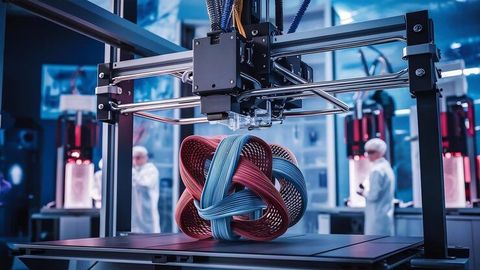
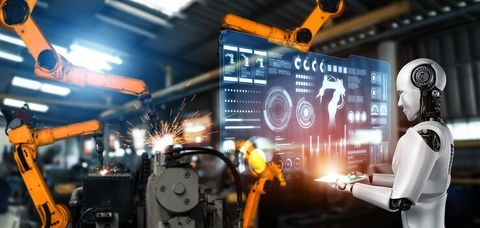
Industrial cybersecurity refers to the technologies, policies, and practices used to protect manufacturing facilities, industrial networks, and automated production systems from digital threats. As factories become more connected through artificial intelligence (AI), robotics, cloud computing, and the Industrial Internet of Things (IIoT), protecting their digital infrastructure has become an important part of modern industrial operations.
Traditional factories often operated with limited connections between production equipment and external computer networks. However, smart factories now use interconnected systems to monitor machinery, manage production schedules, collect operational data, and control industrial processes. These developments improve visibility and coordination but also create additional cybersecurity risks.
Industrial cybersecurity focuses on protecting two important technology environments:
Information Technology (IT): Includes business applications, databases, employee computers, enterprise networks, and digital records.
Operational Technology (OT): Includes programmable logic controllers (PLCs), industrial sensors, robotics, supervisory control and data acquisition (SCADA) systems, and manufacturing equipment.
Industrial Control Systems (ICS) connect different parts of the operational environment and help regulate physical processes. If these systems become compromised, attackers may interfere with machinery, interrupt production, or access confidential information.
Therefore, industrial cybersecurity combines network security, endpoint protection, identity management, threat intelligence, and industrial risk management to maintain reliable factory operations.
Why Industrial Cybersecurity Matters Today
Smart manufacturing depends on continuous communication between machines, employees, suppliers, and digital platforms. This connectivity makes cybersecurity an important consideration for manufacturers across industries, including automotive production, pharmaceuticals, electronics, food processing, energy, and chemical manufacturing.
A cybersecurity incident can affect more than digital information. It may interrupt production lines, damage industrial equipment, affect product quality, or create safety concerns for employees.
Major Cybersecurity Threats in Smart Factories
Several types of digital threats can affect connected industrial environments.
Ransomware Attacks
Ransomware is malicious software that prevents organizations from accessing important systems or information. In manufacturing environments, such incidents can interrupt production planning, inventory management, and industrial network operations.
Industrial Control System Vulnerabilities
Outdated software, weak authentication, and incorrectly configured controllers can create opportunities for unauthorized access. Attackers may attempt to manipulate PLCs, SCADA platforms, or other industrial control technologies.
Phishing and Social Engineering
Employees may receive deceptive emails or messages designed to obtain login credentials or encourage unsafe actions. Compromised employee accounts can become an entry point into business and industrial networks.
Supply Chain Cybersecurity Risks
Factories depend on equipment manufacturers, software developers, maintenance contractors, and technology suppliers. Security weaknesses within these connected organizations can introduce risks into factory networks.
Industrial IoT Security Issues
Connected sensors, cameras, smart meters, and monitoring devices collect information from industrial environments. Devices with weak passwords, outdated firmware, or unnecessary network access may become potential entry points for attackers.
Key Benefits of Industrial Cybersecurity
Protects industrial automation systems and manufacturing data.
Reduces the possibility of unauthorized access to production networks.
Supports operational continuity during cybersecurity incidents.
Improves visibility into connected machinery and industrial devices.
Helps protect intellectual property and confidential business information.
Strengthens cybersecurity risk management across supplier networks.
Supports workplace safety by reducing risks associated with compromised control systems.
Recent Updates and Emerging Industrial Cybersecurity Trends
Industrial cybersecurity has continued to evolve during 2025 and 2026. Increasing connectivity, ransomware activity, artificial intelligence, and regulatory developments are influencing how manufacturers approach operational technology security.
Artificial Intelligence in Industrial Threat Detection
AI-powered cybersecurity tools are becoming increasingly relevant to industrial environments. These technologies can analyze network traffic, identify unusual communication patterns, and highlight suspicious activities.
Machine learning models can also help security teams identify deviations in normal equipment behavior. However, AI systems require reliable training data and appropriate oversight because inaccurate alerts can affect operational decisions.
Increasing Attention to OT Network Visibility
Manufacturers are placing greater emphasis on understanding which devices communicate across their industrial networks. OT asset discovery and network monitoring help identify unknown devices, outdated equipment, and unexpected connections.
According to the SANS 2026 State of ICS/OT Security report, 34% of surveyed organizations experienced a confirmed ICS/OT cybersecurity incident during the previous 12 months. The report also highlighted the importance of operational resilience and incident recovery.
Developments in Industrial Cybersecurity Threats During 2026
Kaspersky ICS CERT published its Q1 2026 industrial automation threat report on June 9, 2026. It reported that malicious objects were blocked on 19.6% of globally monitored ICS computers during that quarter. Its findings highlighted continuing cybersecurity activity affecting industrial environments.
NIST Updates to Operational Technology Security Guidance
On September 21, 2026, the National Institute of Standards and Technology (NIST) published the initial public draft of Revision 4 of its SP 800-82 operational technology security guide. The draft introduces an opportunity to review updated guidance for protecting industrial systems while considering their reliability, performance, and safety requirements. Public comments are due November 30, 2026.
Important Industrial Cybersecurity Trends
Technology or trend | Industrial application |
|---|---|
AI threat detection | Identifying unusual network activities |
Zero Trust Security | Verifying every access request |
OT network monitoring | Observing industrial communications |
Cloud security | Protecting connected manufacturing data |
Digital twins | Evaluating industrial processes digitally |
Secure remote access | Controlling external system connections |
Automated incident response | Supporting faster security investigations |
These developments demonstrate how industrial cybersecurity is moving beyond traditional antivirus protection toward continuous monitoring, risk management, and operational resilience.
Laws, Regulations, and Industrial Cybersecurity Policies
Industrial cybersecurity is influenced by national cybersecurity laws, critical infrastructure policies, data protection requirements, and international technical standards. Requirements vary depending on the country, industrial sector, and type of equipment involved.
Manufacturers operating internationally may need to consider multiple regulatory frameworks.
European Union: NIS2 Directive
The Network and Information Security Directive 2 (NIS2) establishes cybersecurity risk management and incident reporting requirements for covered organizations in important sectors.
Manufacturing is included within the directive's scope, covering specified industrial activities such as medical device manufacturing, electronics, machinery, and certain other production categories.
EU member states were required to transpose NIS2 into national legislation by October 17, 2024. Covered organizations must consider requirements relating to cybersecurity risk management, incident handling, business continuity, and supply chain security.
European Union: Cyber Resilience Act
The Cyber Resilience Act (CRA) introduces cybersecurity requirements for products with digital elements made available in the European Union.
The regulation entered into force on December 10, 2024. Its reporting obligations started on September 11, 2026, requiring manufacturers to report actively exploited vulnerabilities and severe incidents affecting covered products.
The main requirements will apply from December 11, 2027. These developments are relevant to manufacturers of connected industrial equipment, digital hardware, and software products.
United States: CISA Cybersecurity Guidance
The Cybersecurity and Infrastructure Security Agency (CISA) provides guidance for organizations operating critical infrastructure and industrial control systems.
On May 6, 2025, CISA, the FBI, the Environmental Protection Agency, and the Department of Energy published recommendations for reducing cyber threats to operational technology.
The guidance emphasizes reducing unnecessary internet exposure, improving remote access security, and strengthening protection for industrial control environments.
International Standards: IEC 62443
The IEC 62443 series provides internationally recognized cybersecurity standards for industrial automation and control systems.
It addresses areas such as:
Industrial network security architecture.
Security requirements for industrial components.
Risk assessment and security management.
System integration and maintenance.
Protection of industrial automation environments.
Manufacturers can use these standards to develop structured industrial cybersecurity programs.
Industrial Cybersecurity Tools and Resources
Industrial cybersecurity requires a combination of monitoring platforms, security frameworks, network assessment tools, and incident response resources. The appropriate technologies depend on the size of the factory, its industrial equipment, and its security requirements.
Network Monitoring and Security Assessment Tools
1. Wireshark
Wireshark is a network protocol analyzer used to examine network traffic and investigate communication issues. Security teams can use it to understand network behavior and identify unusual communication patterns.
2. Zeek
Zeek is a network security monitoring platform that analyzes network traffic and generates detailed activity records. It can support investigations into suspicious connections and unusual network behavior.
3. Microsoft Defender for IoT
This platform supports industrial asset discovery, OT network monitoring, and threat detection. It helps organizations gain visibility into connected industrial devices and identify potential security risks.
4. Nozomi Networks
Nozomi Networks focuses on OT and IoT cybersecurity. Its technologies support industrial asset visibility, network monitoring, vulnerability identification, and threat detection.
5. Claroty
Claroty provides cybersecurity technologies for industrial, healthcare, and other connected operational environments. Its capabilities include asset discovery, risk assessment, and OT threat monitoring.
Important Cybersecurity Frameworks and Resources
Resource | Main purpose |
|---|---|
NIST SP 800-82 | Operational technology security guidance |
IEC 62443 | Industrial automation cybersecurity standards |
NIST Cybersecurity Framework | Organizational cybersecurity risk management |
CISA ICS Resources | Industrial cybersecurity guidance |
MITRE ATT&CK for ICS | Understanding industrial attack techniques |
ENISA Resources | European cybersecurity guidance |
Recommended Industrial Security Practices
Organizations can strengthen their industrial cybersecurity programs through practical security measures.
Maintain an updated inventory of industrial assets.
Separate IT and OT networks using appropriate security controls.
Apply multi-factor authentication to remote access.
Monitor industrial network traffic continuously.
Maintain secure backups of important production configurations.
Review vendor access and third-party connections.
Conduct regular vulnerability assessments.
Establish incident response and disaster recovery procedures.
Train employees to recognize phishing and suspicious activities.
These measures help organizations develop a structured approach to manufacturing cybersecurity and industrial risk reduction.
Frequently Asked Questions About Industrial Cybersecurity
1. What is industrial cybersecurity?
Industrial cybersecurity involves protecting manufacturing networks, industrial automation systems, connected machinery, and operational technology from digital threats. It combines technical controls, monitoring, security policies, and risk management to support safe and reliable industrial operations.
2. What is the difference between IT security and OT security?
IT security focuses on protecting business information, computer networks, databases, and applications. OT security focuses on protecting systems that monitor or control physical equipment and industrial processes. Both are important because modern factories increasingly connect their IT and OT environments.
3. Why are smart factories vulnerable to cyberattacks?
Smart factories use connected devices, automated machinery, cloud platforms, and remote monitoring technologies. These connections can increase the attack surface. Outdated software, weak passwords, unsecured devices, and insufficient network segmentation can create additional cybersecurity risks.
4. How does AI help industrial cybersecurity?
AI can analyze large amounts of network and equipment data to identify unusual activities. It can support threat detection, security investigations, and predictive risk analysis. However, AI should work alongside human security teams and established operational safety procedures.
5. Which standards are important for industrial cybersecurity?
IEC 62443, NIST SP 800-82, and the NIST Cybersecurity Framework are important references. They provide guidance on industrial system protection, cybersecurity risk assessment, network architecture, and security management.
Conclusion
Industrial cybersecurity has become an essential part of modern manufacturing as factories increasingly depend on connected machinery, industrial automation, artificial intelligence, and digital infrastructure. While these technologies improve production visibility and operational efficiency, they also introduce cybersecurity challenges that require continuous attention.
Protecting smart factories involves more than securing computers and business applications. Organizations must also protect industrial control systems, programmable logic controllers, connected devices, remote access connections, and manufacturing networks.
International standards such as IEC 62443, NIST security guidance, and regulatory frameworks such as NIS2 and the Cyber Resilience Act provide important foundations for developing effective cybersecurity strategies.
By combining industrial network monitoring, access management, vulnerability assessments, employee awareness, secure backups, and incident response planning, manufacturers can strengthen their digital infrastructure.
As industrial automation continues to develop, cybersecurity will remain an important factor in building reliable, resilient, and secure smart factories worldwide.