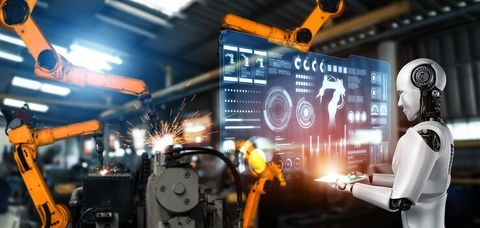
Global supply chain transformation refers to the changes businesses make to how they source raw materials, manufacture products, manage inventory, transport goods, and distribute products across international markets. It involves improving traditional supply chain operations through digital technology, automation, data analytics, and more flexible business strategies.
In 2026, global supply chains are becoming more interconnected but also more complicated. International trade policies, geopolitical developments, environmental requirements, changing consumer expectations, and technological innovation are influencing how organizations manage their operations.
Traditional supply chains often depend on a limited number of suppliers, fixed transportation routes, and manual inventory processes. These approaches can create difficulties when unexpected disruptions occur.
Modern supply chain transformation focuses on developing stronger networks that can respond to changing conditions. Organizations are increasingly adopting supply chain management software, enterprise resource planning (ERP) systems, warehouse automation, and logistics management platforms.
Several important developments are shaping this transformation:
Digital supply chain management: Using connected systems to monitor purchasing, production, inventory, and transportation.
Artificial intelligence: Applying predictive analytics to improve demand forecasting and operational planning.
Supplier diversification: Working with suppliers across different geographical regions to reduce dependency.
Warehouse automation: Introducing robotics, automated storage, and inventory tracking technologies.
Sustainable logistics: Reducing emissions through improved transportation planning and resource management.
These developments demonstrate how supply chain transformation has become an important part of international business planning.
Traditional vs. Modern Supply Chain Management
Area | Traditional Approach | Modern Approach |
|---|---|---|
Inventory | Manual tracking | Automated monitoring |
Transportation | Fixed routes | Data-driven route planning |
Procurement | Limited supplier networks | Diversified supplier networks |
Forecasting | Historical estimates | AI-based predictions |
Warehousing | Manual operations | Robotics and automation |
Risk management | Reactive planning | Predictive risk assessment |
Why Global Supply Chain Transformation Matters Today
Global supply chains influence manufacturing, retail, agriculture, electronics, healthcare, automotive production, and international transportation. Changes in one region can affect production and distribution activities across several countries.
For example, a shortage of semiconductor components can affect automobile manufacturing, consumer electronics, and industrial equipment production. Similarly, interruptions at major shipping routes can delay international deliveries and affect inventory availability.
Supply chain transformation helps organizations prepare for these challenges while improving operational coordination.
Managing International Supply Chain Risks
Geopolitical tensions, trade restrictions, natural disasters, and transportation interruptions create uncertainty for international businesses.
Organizations are increasingly using supply chain risk management software to identify potential disruptions and evaluate alternative suppliers.
Important risk management practices include:
Identifying suppliers located in politically or environmentally sensitive regions.
Maintaining alternative transportation routes.
Monitoring international trade developments.
Establishing emergency inventory planning.
Evaluating supplier reliability and financial stability.
Improving Inventory and Warehouse Management
Inventory management is another important part of supply chain transformation.
Businesses need accurate information about available products, incoming materials, and expected demand. Poor inventory planning can result in shortages, excess stock, and production delays.
Modern warehouse management systems (WMS) provide digital tools for monitoring inventory movements, organizing warehouse activities, and improving product traceability.
Automated inventory management also helps organizations coordinate warehouse operations with procurement and transportation departments.
Supporting Global Manufacturing and Trade
Manufacturers increasingly depend on international networks for raw materials, components, production equipment, and finished products.
Digital procurement software and enterprise resource planning systems help coordinate these activities across different locations.
Transformation can also create opportunities for emerging manufacturing economies. Countries with developed infrastructure, skilled workforces, and reliable trade networks may attract additional international production activities.
Recent Global Supply Chain Developments and Trends in 2025–2026
Several developments during the past year have influenced international supply chain strategies. Technology adoption, trade uncertainty, regional manufacturing growth, and environmental regulations remain important areas of attention.
Artificial Intelligence and Predictive Analytics
Artificial intelligence is becoming increasingly important in supply chain management.
In 2026, organizations are exploring AI-powered systems to analyze purchasing patterns, predict demand, monitor inventory, and identify potential transportation disruptions.
Gartner's June 30, 2026, technology trends announcement highlighted agentic AI and physical AI among the important developments shaping supply chain technology.
These technologies are supporting more intelligent operational planning and automated decision-making.
Common applications include:
AI demand forecasting software.
Predictive inventory management.
Automated warehouse planning.
Intelligent transportation management.
Supplier risk monitoring.
AI-powered procurement analytics.
Changing International Trade Patterns
International trade patterns are changing as businesses reconsider their supplier locations and manufacturing networks.
UN Trade and Development (UNCTAD), in its January 15, 2026, assessment, identified slower trade growth, rising protectionism, geopolitical uncertainty, and changing global value chains as important developments.
Businesses are increasingly considering nearshoring, regional manufacturing, and supplier diversification to strengthen operational resilience.
Growth of AI-Related Manufacturing
Demand for artificial intelligence infrastructure is influencing international manufacturing and transportation.
Semiconductors, data center equipment, electronic components, and advanced computing hardware have become important areas of international trade.
A March 19, 2026, McKinsey analysis identified AI-related products as a major contributor to global trade growth during 2025.
This development is increasing the importance of semiconductor supply chain management, electronics manufacturing, and specialized logistics networks.
Sustainable Supply Chain Management
Environmental considerations are becoming more important in international procurement and transportation.
Organizations are examining their energy consumption, manufacturing emissions, packaging materials, and transportation activities.
Important developments include:
Electric vehicles for selected transportation operations.
Renewable energy in manufacturing facilities.
Carbon emissions monitoring.
Sustainable packaging materials.
Improved shipment consolidation.
Supply chain carbon accounting.
Global Trade Outlook for 2026
The World Trade Organization's March 2026 outlook projected merchandise trade volume growth of 1.9% for 2026 under its baseline scenario, following stronger growth of 4.6% in 2025.
The organization highlighted geopolitical developments, energy markets, tariffs, and AI-related trade as important influences on international commerce.
These developments show why organizations need flexible supply chain planning rather than depending entirely on historical trade patterns.
International Laws, Regulations, and Supply Chain Policies
Global supply chain operations are influenced by international trade agreements, customs requirements, environmental regulations, labor standards, and national security policies.
Businesses operating across multiple countries must understand the rules applicable to their products, suppliers, and transportation activities.
European Union Carbon Border Adjustment Mechanism
The European Union's Carbon Border Adjustment Mechanism (CBAM) addresses carbon emissions associated with certain imported products.
Its definitive regime began on January 1, 2026. It introduces requirements involving authorized importers, emissions reporting, and CBAM certificates for covered goods.
The mechanism initially covers sectors including:
Iron and steel.
Aluminium.
Cement.
Fertilizers.
Electricity.
Hydrogen.
International manufacturers exporting covered products to the European market need to understand the relevant emissions information and documentation requirements.
EU Deforestation Regulation
The European Union Deforestation Regulation (EUDR) addresses deforestation associated with certain commodities and products.
It covers cattle, cocoa, coffee, oil palm, rubber, soya, wood, and specified derived products.
The current application timetable identifies December 30, 2026, for large and medium-sized operators and traders, and June 30, 2027, for micro and small enterprises.
Businesses must prepare relevant product information, geographical origin records, and due diligence documentation.
EU Forced Labour Regulation
The European Union adopted Regulation (EU) 2024/3015 to prohibit products made with forced labour from entering or being exported from the EU market.
The regulation applies from December 14, 2027.
It covers products regardless of their country of origin. Businesses should therefore evaluate supplier relationships, production locations, and potential labor-related risks throughout their supply chains.
United States Import and Trade Requirements
The United States applies customs regulations, import restrictions, sanctions, and trade compliance requirements to international supply chains.
The Uyghur Forced Labor Prevention Act (UFLPA) is particularly relevant to importers because it establishes a rebuttable presumption against goods connected to the Xinjiang Uyghur Autonomous Region.
Importers need appropriate documentation to demonstrate supply chain origins and compliance with applicable requirements.
International Trade Standards
The World Trade Organization (WTO) provides an international framework for trade rules and cooperation.
Its agreements influence customs procedures, tariffs, market access, and international trade relationships.
Organizations should regularly review relevant national legislation, customs requirements, product standards, and trade agreements before entering new markets.
Tools and Resources for Modern Supply Chain Management
Technology platforms and analytical tools are helping organizations coordinate international operations, improve visibility, and manage supply chain risks.
The following resources are relevant to different areas of supply chain transformation.
Supply Chain Management Software
1. SAP Integrated Business Planning
SAP Integrated Business Planning supports demand planning, inventory optimization, supply planning, and coordination across business operations.
2. Oracle Fusion Cloud Supply Chain Management
Oracle Fusion Cloud SCM provides tools for procurement, manufacturing, inventory management, logistics, and supply chain planning.
3. Blue Yonder
Blue Yonder provides supply chain planning, warehouse management, transportation management, and demand forecasting technologies.
Logistics and Transportation Management
4. Manhattan Associates
Manhattan Associates develops warehouse management and transportation management technologies for complex distribution networks.
5. project44
project44 provides transportation visibility and shipment tracking capabilities that help organizations monitor logistics activities.
Analytics and Business Intelligence
6. Microsoft Power BI
Power BI helps organizations analyze inventory performance, transportation activity, supplier performance, and operational data.
7. Tableau
Tableau provides data visualization and reporting tools for understanding supply chain performance and identifying operational patterns.
International Trade and Regulatory Resources
8. World Trade Organization
The WTO publishes international trade statistics, policy information, and global trade reports.
9. UN Trade and Development
UNCTAD provides research on international trade, economic development, investment, and global value chains.
10. European Commission Trade and Customs Resources
The European Commission provides regulatory information, customs guidance, CBAM documentation, and EUDR implementation resources.
Important Supply Chain Performance Indicators
Organizations can use the following indicators to evaluate operational performance.
Performance Indicator | What It Measures |
|---|---|
Order Fulfillment Rate | Percentage of orders completed successfully |
Inventory Turnover | Frequency of inventory replacement |
On-Time Delivery | Percentage of deliveries arriving as scheduled |
Supplier Reliability | Consistency of supplier performance |
Forecast Accuracy | Difference between predicted and actual demand |
Warehouse Accuracy | Accuracy of recorded inventory |
Lead Time | Time between placing an order and receiving it |
Combining these indicators with supply chain analytics software can help organizations understand operational weaknesses and identify areas for improvement.
Frequently Asked Questions About Global Supply Chain Transformation
1. What is global supply chain transformation?
Global supply chain transformation involves improving how organizations source materials, manufacture products, manage inventory, and distribute goods internationally. It commonly includes digital technologies, automation, supplier diversification, and improved logistics planning.
2. How does artificial intelligence improve supply chain management?
Artificial intelligence analyzes large datasets to identify demand patterns, forecast inventory requirements, monitor transportation activity, and recognize potential disruptions. These capabilities help organizations make more informed operational decisions.
3. What are the biggest global supply chain challenges in 2026?
Major challenges include geopolitical uncertainty, changing tariffs, transportation disruptions, supplier dependency, environmental requirements, cybersecurity risks, and shortages of specialized materials.
4. Why is supply chain diversification important?
Supplier diversification reduces dependence on a limited number of manufacturers or geographical regions. It can help organizations maintain production when individual suppliers experience operational interruptions.
5. Which technologies are shaping the future of supply chains?
Important technologies include artificial intelligence, machine learning, warehouse robotics, Internet of Things (IoT) devices, blockchain-based traceability, cloud ERP platforms, and predictive analytics software.
Conclusion
Global supply chain transformation in 2026 represents an important development in international manufacturing, logistics, and trade management. Businesses are moving toward more connected, automated, transparent, and flexible operating models.
Artificial intelligence, predictive analytics, warehouse automation, and digital procurement platforms are changing how organizations coordinate their international activities. At the same time, geopolitical uncertainty, environmental regulations, and evolving trade policies continue to create operational challenges.
Understanding supply chain management software, international trade compliance, inventory planning, and supplier risk assessment is becoming increasingly important for organizations operating across different markets.
Looking ahead, successful supply chain transformation will depend on balancing technological innovation with operational resilience, regulatory awareness, and responsible resource management. These developments will continue to influence the structure of global trade and manufacturing networks throughout 2026 and beyond.