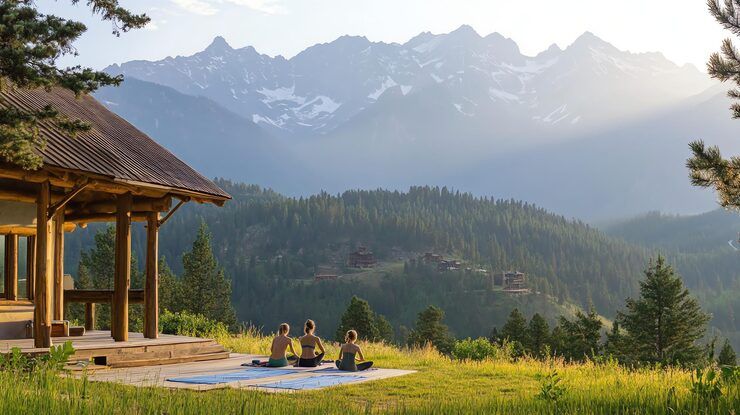
Green mountain retreats are destinations located in or near forested mountains, highland valleys, and other natural landscapes. They provide opportunities to experience outdoor recreation, observe wildlife, explore local culture, and spend time away from densely developed urban environments.
These destinations range from small mountain villages and forest lodges to protected landscapes, rural guesthouses, and environmentally conscious accommodation surrounded by natural scenery. Their appeal often comes from a combination of mountain views, fresh-air environments, walking trails, local food traditions, and opportunities to explore nearby communities.
The term does not describe one specific destination. It can apply to mountain regions across the world, including the European Alps, the Himalayas, the Appalachian Mountains, the Andes, and forested highlands in Southeast Asia.
Understanding Green Mountain Retreats
A mountain retreat typically combines accommodation or recreational facilities with access to the surrounding natural environment. Some destinations focus on hiking and wildlife observation, while others emphasize cultural experiences, quiet landscapes, outdoor photography, or wellness activities.
The word green can describe forested scenery, environmentally responsible practices, or both. However, a mountain location is not automatically environmentally sustainable. Water consumption, energy use, construction, waste management, and visitor numbers all influence its environmental impact.
Common features of green mountain destinations include:
Forest walking trails and nature paths
Mountain viewpoints and scenic routes
Rivers, waterfalls, and alpine lakes
Local cultural attractions
Wildlife observation areas
Environmentally conscious accommodation
Regional food and agricultural traditions
Outdoor recreation and educational programs
The experience varies according to elevation, climate, accessibility, season, and the type of landscape.
Different Types of Mountain Retreats
Mountain destinations can be grouped according to their environment and main activities.
| Destination Type | Typical Features | Common Activities |
|---|---|---|
| Forested mountain regions | Dense woodland and shaded trails | Hiking and nature observation |
| Alpine landscapes | High peaks and mountain lakes | Scenic walks and seasonal recreation |
| Highland villages | Traditional architecture and local culture | Cultural exploration |
| River-valley retreats | Rivers, waterfalls, and green valleys | Walking and landscape photography |
| Conservation areas | Protected habitats and wildlife | Guided nature education |
| Sustainable rural stays | Local materials and resource management | Regional food and cultural experiences |
Choosing a destination requires considering both the landscape and the practical conditions of the visit.
How Mountain Retreats Are Planned
Responsible mountain tourism requires coordination between accommodation providers, local communities, land managers, transportation networks, and conservation authorities.
Planning considerations include the location of buildings, access roads, water availability, sewage treatment, waste disposal, trail maintenance, and protection of sensitive habitats.
In mountainous environments, steep slopes and heavy rainfall can also increase erosion and landslide risks. Construction and visitor infrastructure therefore need to account for local geography and climate.
Why Green Mountain Retreats Matter
Mountain retreats contribute to outdoor recreation, regional economies, cultural awareness, and environmental education. They can also provide opportunities for visitors to understand how communities live within landscapes shaped by forests, agriculture, rivers, and changing weather conditions.
Nature-Based Tourism
Nature-based tourism encourages people to explore landscapes through activities such as hiking, birdwatching, photography, and wildlife observation.
These activities can help visitors appreciate the ecological importance of forests, mountain watersheds, and natural habitats. However, poorly managed tourism can cause trail erosion, wildlife disturbance, water pollution, and excessive pressure on local infrastructure.
Responsible visitor management is therefore essential.
Benefits for Local Communities
Mountain tourism can support local food producers, guides, accommodation providers, transport operators, craftspeople, and cultural organizations.
Community participation is particularly important when tourism takes place near traditional villages or Indigenous territories. Local knowledge can help visitors understand regional history, agricultural practices, wildlife, and cultural traditions.
Tourism planning should also consider residents' access to water, housing, transportation, and other essential resources.
Environmental Sustainability
Sustainable mountain destinations aim to reduce environmental pressure while maintaining the quality of the visitor experience.
Useful practices include:
Energy-efficient buildings
Renewable electricity where appropriate
Water conservation
Responsible wastewater treatment
Waste reduction and recycling
Locally appropriate construction materials
Protection of native vegetation
Wildlife-sensitive visitor management
Well-maintained walking trails
These measures can reduce certain environmental impacts, although their effectiveness depends on local conditions and implementation.
Health and Outdoor Recreation
Mountain landscapes provide opportunities for walking, moderate physical activity, and time in natural surroundings. Trails can accommodate different experience levels, from short scenic walks to demanding high-elevation routes.
Visitors should consider elevation, terrain, temperature, and weather when choosing activities. High-altitude destinations may require additional acclimatization, and remote trails can involve risks associated with limited communication and emergency access.
Recent Developments and Trends
During 2025 and 2026, sustainable tourism discussions increasingly focused on climate resilience, biodiversity protection, community participation, and the management of visitor pressure in mountain regions.
International Year of Sustainable and Resilient Tourism
The United Nations designated 2027 as the International Year of Sustainable and Resilient Tourism through a resolution adopted by the General Assembly in 2024.
The initiative provides an international framework for promoting tourism practices that consider environmental sustainability, economic resilience, and the needs of local communities. Its relevance to mountain retreats includes climate adaptation, responsible destination planning, and the protection of natural and cultural resources.
Climate Change and Mountain Destinations
Mountain regions are experiencing environmental pressures associated with changing temperatures, shifting precipitation patterns, glacier retreat, and changes in seasonal snow conditions.
These changes can influence hiking seasons, water availability, slope stability, wildlife habitats, and the reliability of mountain infrastructure.
During 2025 and 2026, climate adaptation remained an important topic in mountain tourism planning, particularly for destinations dependent on snow, glaciers, or fragile alpine ecosystems.
Growing Attention to Responsible Travel
Travel planning increasingly includes questions about public transportation, environmental management, local food, accommodation practices, and the effects of tourism on communities.
However, environmental claims should be assessed carefully. Terms such as eco-friendly, green, and sustainable can have different meanings and do not automatically demonstrate that a destination meets independent environmental standards.
Visitors can look for transparent information about energy use, waste management, water conservation, local participation, and recognized sustainability certifications.
Digital Destination Planning
Digital mapping, online trail information, weather forecasting, and visitor-management systems are increasingly useful in mountain regions.
These tools can help travelers assess accessibility and conditions before departure. They are especially important where weather changes quickly or where trail access depends on seasonal maintenance.
Laws, Policies, and Environmental Protection
Green mountain retreats are governed by different laws depending on their country, land ownership, protected status, and location. Regulations may cover land use, building permits, water extraction, wildlife protection, waste disposal, tourism operations, and public access.
Protected Areas and National Parks
National parks and protected landscapes often have rules governing camping, fires, trail access, wildlife interactions, and construction.
Some areas prohibit off-trail walking to protect fragile vegetation or prevent erosion. Others restrict visitor numbers or close trails during breeding seasons, wildfire danger, or severe weather.
Visitors should follow the rules established by the relevant park or land-management authority.
Environmental Impact Assessment
Large tourism developments can require environmental assessments before construction or expansion.
These assessments may examine effects on water resources, vegetation, wildlife, landscape character, transportation, and local communities. The exact requirements depend on the applicable national and regional legislation.
Environmental review can be particularly important in mountain environments because steep slopes, limited infrastructure, and sensitive watersheds can increase the consequences of poorly planned development.
Sustainable Tourism Policies
Governments and tourism organizations may encourage energy efficiency, waste reduction, responsible water management, conservation, and local economic participation.
International frameworks, including the United Nations Sustainable Development Goals, provide broader guidance on responsible consumption, climate action, biodiversity protection, and sustainable communities.
These frameworks do not replace national laws. Individual destinations must still comply with applicable local requirements.
Responsible Visitor Conduct
Visitors can help protect mountain landscapes by staying on designated trails, respecting wildlife, following fire restrictions, reducing litter, and avoiding unnecessary disturbance to local communities.
In remote areas, carrying appropriate equipment and checking official safety information can also reduce risks to visitors and rescue personnel.
Tools and Resources for Planning
Digital resources can help travelers compare mountain destinations and prepare for changing outdoor conditions.
Mapping and Hiking Applications
Mapping applications can provide walking routes, elevation profiles, estimated distances, and information about nearby landmarks.
Useful features include:
Offline maps
Elevation gain and descent
Trail difficulty information
GPS navigation
Route recording
Emergency location sharing
Digital navigation should be supplemented with official trail information, particularly in remote or poorly connected areas.
Weather and Safety Resources
Weather forecasts are essential for mountain travel because conditions can change rapidly with elevation.
Before departure, check:
Temperature and wind chill
Rainfall and thunderstorms
Snow and ice conditions
Avalanche warnings where relevant
Wildfire alerts
Daylight hours
Trail and road closures
Local park authorities and mountain rescue organizations may provide more specific safety guidance than general weather applications.
Sustainable Accommodation Checklist
When researching mountain accommodation, consider the following criteria.
| Evaluation Area | Useful Questions |
|---|---|
| Energy | Are energy-saving measures explained? |
| Water | How is water consumption managed? |
| Waste | Are recycling and waste reduction practices documented? |
| Construction | Are local materials or established buildings used appropriately? |
| Community | Does the destination involve local residents and businesses? |
| Transport | Can visitors arrive by public transportation? |
| Conservation | Are wildlife and surrounding habitats protected? |
| Certification | Is any sustainability claim independently verified? |
This checklist helps distinguish documented environmental practices from general promotional language.
Official Tourism and Conservation Resources
National tourism organizations, local park authorities, environmental agencies, and regional visitor centers can provide information about trail conditions, protected areas, accommodation regulations, and seasonal activities.
Consulting these sources before travelling helps ensure that plans reflect current access restrictions and environmental conditions.
Frequently Asked Questions
What is a green mountain retreat?
A green mountain retreat is a destination in or near a forested or mountainous landscape that provides opportunities for relaxation, outdoor recreation, nature observation, or cultural exploration. The term may also refer to destinations that adopt documented environmental practices.
When is the best time to visit a mountain retreat?
The best season depends on elevation, climate, and planned activities. Spring and summer may be suitable for many hiking destinations, while autumn can provide changing foliage in some regions. Winter conditions may require specialized equipment and additional preparation.
How can visitors identify environmentally responsible accommodation?
Look for transparent information about energy efficiency, water management, waste reduction, local community participation, and conservation practices. Independent environmental certifications can provide additional evidence, but their standards and scope should be checked.
Are mountain retreats suitable for families?
Many destinations have short walking paths, scenic viewpoints, and accessible visitor areas suitable for families. However, steep trails, high elevations, extreme weather, and remote locations may require additional precautions. Check route difficulty and local safety guidance before choosing activities.
What should travelers prepare before visiting a mountain destination?
Travelers should check weather forecasts, transportation, accommodation arrangements, trail conditions, emergency contacts, and any protected-area restrictions. Appropriate footwear, water, layered clothing, navigation tools, and a basic first-aid kit may also be necessary.
Conclusion
Green mountain retreats combine scenic landscapes, outdoor recreation, local culture, and opportunities to understand natural environments. They range from forested valleys and traditional mountain villages to alpine destinations and protected conservation areas.
Their long-term value depends on responsible planning that considers water resources, biodiversity, infrastructure, visitor safety, and the needs of local communities. Recent attention to climate resilience and sustainable tourism reinforces the importance of protecting mountain environments while allowing people to experience them.
By researching current conditions, choosing appropriate activities, evaluating environmental claims carefully, and respecting local regulations, travelers can plan more informed visits to mountain destinations while helping preserve the landscapes that make these places distinctive.