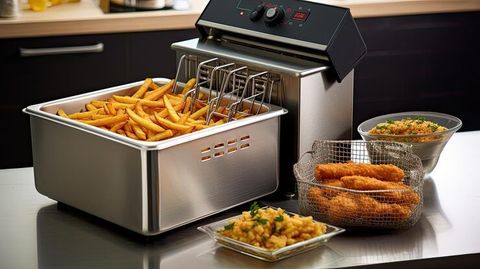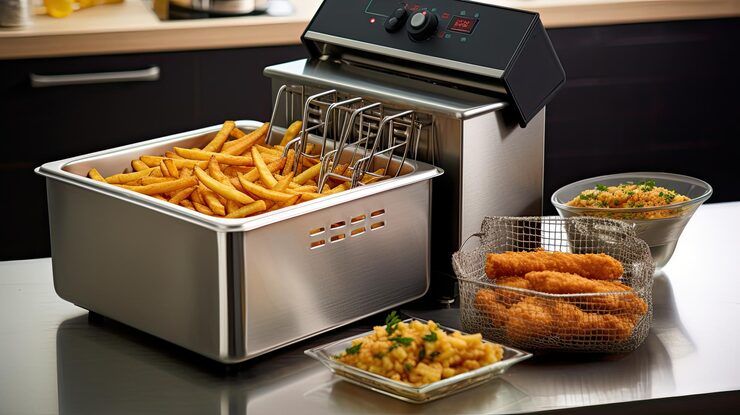
Snack frying machines are food-processing systems designed to cook products such as potato chips, banana chips, extruded snacks, crackers, pellets, and other fried foods. They are used in small food-processing facilities, commercial kitchens, and large-scale manufacturing plants.
Frying involves transferring heat from hot oil or another suitable frying medium to food. This process changes the food's texture, moisture content, color, and flavor. Equipment design influences how consistently these changes occur and how efficiently a production line operates.
Modern snack frying systems can range from manually operated batch fryers to automated continuous frying lines. The appropriate configuration depends on the food product, production capacity, desired texture, oil-management requirements, and applicable food safety standards.
Understanding Snack Frying Equipment
Snack frying machines generally use heated oil to cook prepared food products. Depending on the design, products may be placed in baskets, conveyed through a heated oil bath, or fed continuously into a frying chamber.
Common equipment types include:
Batch fryers: Cook defined quantities of snacks in separate batches.
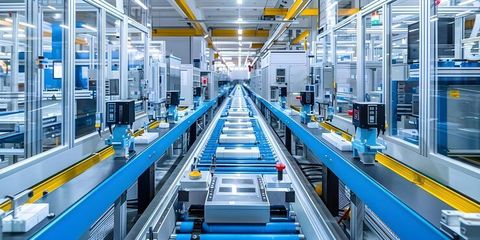
Continuous fryers: Move food through a controlled frying zone using conveyors.
Industrial deep fryers: Support larger production volumes and consistent heat distribution.
Vacuum fryers: Fry selected products under reduced pressure, allowing moisture removal at lower temperatures than conventional atmospheric frying.
Specialized chip fryers: Process products such as potato, plantain, banana, or vegetable chips.
Oil filtration systems: Remove food particles and other suspended material from frying oil.
Oil heating systems: Maintain the required temperature through controlled heating.
Conveyors and de-oiling equipment: Transfer products between processing stages and remove excess surface oil.
A complete snack-processing line may also include washing, slicing, blanching, drying, seasoning, cooling, weighing, and packaging equipment.
How Snack Frying Machines Work
The frying process begins with preparing food to achieve consistent size, moisture content, and composition. These characteristics affect cooking time, oil absorption, and final product quality.
The prepared product then enters the fryer, where controlled heat transfers energy into the food. Water inside the product evaporates, while the surface develops its characteristic texture and color.
After frying, products may pass through draining or de-oiling equipment. They are then cooled and may receive seasoning before packaging.
Several operating variables influence the outcome:
Frying temperature
Residence time
Product thickness
Initial moisture content
Oil condition
Oil circulation
Loading rate
Filtration frequency
Controlling these variables helps maintain consistency between production batches and reduce avoidable product defects.
Different Frying System Configurations
| Equipment Type | Typical Application | Main Consideration |
|---|---|---|
| Batch fryer | Small or varied production runs | Manual handling and batch consistency |
| Continuous fryer | High-volume snack production | Stable feed rate and residence time |
| Vacuum fryer | Selected fruit and vegetable snacks | Pressure control and specialized equipment |
| Electric fryer | Facilities using electric heating | Electrical capacity and energy use |
| Gas-fired fryer | Industrial food production | Combustion safety and heat control |
| Oil filtration unit | Batch and continuous systems | Oil cleanliness and maintenance |
Equipment selection should be based on the product being processed rather than production capacity alone.
Why Snack Frying Machines Matter
Snack frying equipment plays an important role in food manufacturing because it helps control product quality, production speed, food safety, and resource use.
Consistent Product Quality
Variations in temperature, moisture, and cooking time can lead to uneven color, excessive oil absorption, inconsistent crispness, or burnt surfaces.
Temperature sensors, automated controls, and carefully designed oil circulation systems can help maintain more consistent frying conditions.
Production Efficiency
Automated frying systems can reduce repetitive manual handling and coordinate cooking with upstream and downstream equipment.
In continuous production, synchronizing the feeding system, fryer conveyor, oil filtration, seasoning equipment, and packaging line helps prevent bottlenecks.
Oil Management
Frying oil gradually changes during use because of heat, oxygen exposure, moisture, and food particles. These changes can affect flavor, color, foaming, and product quality.
Appropriate filtration, temperature management, cleaning, and oil replacement practices help maintain process control.
Energy and Resource Management
Heating oil requires substantial energy, particularly in high-volume production. Insulation, heat recovery, efficient burners or heating elements, and appropriate operating schedules can help reduce energy demand.
Actual performance depends on equipment design, product throughput, operating temperature, maintenance, and production conditions.
Recent Developments in Snack Frying Technology
During 2025 and 2026, food-processing technology continued to emphasize automation, process monitoring, energy efficiency, and more effective control of frying oil.
Automated Temperature Monitoring
Industrial food processors increasingly use digital temperature sensors, programmable logic controllers, and automated alarms to monitor frying conditions.
These technologies help operators identify temperature fluctuations and maintain defined operating parameters. However, automation does not eliminate the need for calibration, inspection, and trained supervision.
Improved Oil Filtration
Modern frying systems can incorporate continuous filtration, sediment removal, and oil-circulation controls. These features help remove suspended food particles and support consistent operating conditions.
Filtration does not reverse every chemical change that occurs in heated oil. Operators must still assess oil quality and replace it according to established procedures.
Energy-Efficient Heating
Equipment development has continued to focus on improved insulation, controlled heat transfer, and reduced energy losses. Some production facilities also evaluate heat recovery systems that reuse energy from hot exhaust streams or other process stages.
The suitability of these approaches depends on factory layout, production volume, local energy infrastructure, and the characteristics of the food product.
Digital Production Monitoring
Connected sensors and industrial monitoring software can record temperature, processing time, energy use, production volume, and maintenance information.
These records help identify recurring process variations and support quality assurance. Their effectiveness depends on accurate measurements, appropriate software configuration, and consistent operating procedures.
Food Safety Laws and Regulations
Snack frying machines must be operated within the food safety and workplace safety framework applicable to their location. Requirements vary by country and can include equipment hygiene, food-contact materials, oil quality, labeling, temperature control, and worker protection.
Food Safety Requirements in India
In India, the Food Safety and Standards Authority of India (FSSAI) regulates food safety under the Food Safety and Standards Act, 2006, and associated regulations.
Food-processing facilities must comply with applicable licensing, hygiene, sanitation, and food safety requirements. The FSSAI's Schedule 4 requirements address hygienic and sanitary practices for food businesses.
Operators should establish procedures for cleaning equipment, preventing contamination, maintaining suitable processing conditions, and documenting relevant quality checks.
Food Safety in the United States
In the United States, the Food and Drug Administration regulates many aspects of food manufacturing under applicable federal food safety requirements.
The Current Good Manufacturing Practice, Hazard Analysis, and Risk-Based Preventive Controls framework under 21 CFR Part 117 applies to covered facilities, subject to relevant exemptions and qualifications.
Facilities must determine which requirements apply to their activities and maintain appropriate food safety procedures.
Worker and Machinery Safety
Industrial fryers operate with hot oil, heated surfaces, moving equipment, and electrical or fuel-powered systems. Important safety measures can include:
Emergency stop mechanisms
Suitable machine guarding
Temperature and pressure controls
Safe oil-drainage procedures
Fire prevention and suppression systems
Ventilation and extraction
Protective equipment
Staff training and maintenance records
Risk assessments should consider oil splashes, burns, equipment entanglement, electrical hazards, and fire exposure.
Tools and Resources for Snack Frying Operations
Several practical tools can help operators evaluate equipment, manage production, and maintain quality.
Equipment Evaluation Checklist
Before selecting or assessing a frying system, record the following information:
| Factor | Information to Evaluate |
|---|---|
| Product type | Chips, pellets, crackers, or other snacks |
| Production capacity | Required kilograms per hour |
| Frying method | Batch, continuous, or vacuum frying |
| Temperature range | Product-specific operating requirements |
| Heating source | Electricity, gas, or another approved source |
| Oil filtration | Filtration method and maintenance needs |
| Energy consumption | Measured energy per unit of production |
| Cleaning | Access for sanitation and inspection |
| Safety | Guards, alarms, emergency stops, and fire controls |
| Compliance | Applicable food safety and machinery requirements |
Process Monitoring Tools
Temperature data loggers and industrial control systems can help track operating conditions. Production records can also document frying time, oil replacement, filtration, cleaning, and equipment maintenance.
Oil Quality Assessment
Food-processing facilities can use appropriate testing procedures to evaluate oil degradation. Depending on the process and jurisdiction, these may include measurements of total polar compounds and other indicators of oil condition.
Test results should be interpreted using applicable food safety guidance and established internal procedures.
Maintenance and Production Records
A structured maintenance log can record inspections, blade or conveyor adjustments, sensor calibration, heating-system checks, oil-filter maintenance, and cleaning activities.
These records help identify repeated equipment problems and support more consistent production planning.
Frequently Asked Questions
What are snack frying machines used for?
They cook snack products such as potato chips, banana chips, vegetable snacks, crackers, and selected extruded products. The specific equipment depends on the product's composition, shape, moisture content, and production requirements.
What is the difference between batch and continuous frying?
A batch fryer processes a defined quantity of food at a time. A continuous fryer moves food through the frying zone continuously, making it suitable for coordinated high-volume production.
How can frying oil quality be maintained?
Appropriate temperature control, filtration, removal of food particles, routine oil-quality assessment, cleaning, and timely oil replacement help maintain suitable frying conditions. Filtration alone cannot reverse all forms of oil degradation.
Which factors influence snack frying machine capacity?
Capacity depends on the product type, loading rate, fryer dimensions, oil temperature recovery, residence time, moisture content, and the performance of connected processing equipment.
What safety measures are important when operating industrial fryers?
Important measures include machine guarding, temperature controls, suitable ventilation, safe oil handling, fire protection, emergency stops, personal protective equipment, and regular operator training.
Conclusion
Snack frying machines are important components of modern food-processing operations. Batch fryers, continuous frying systems, vacuum fryers, oil filtration units, and automated controls support different products and production requirements.
Recent technological developments emphasize process monitoring, improved oil management, energy efficiency, and coordinated production lines. However, reliable results still depend on appropriate equipment selection, preventive maintenance, operator training, and effective food safety procedures.
Before selecting or operating a frying system, manufacturers should evaluate production capacity, product specifications, energy use, sanitation requirements, oil quality, and applicable regulations. Integrating these considerations helps maintain consistent snack quality while supporting safer and more efficient food manufacturing.