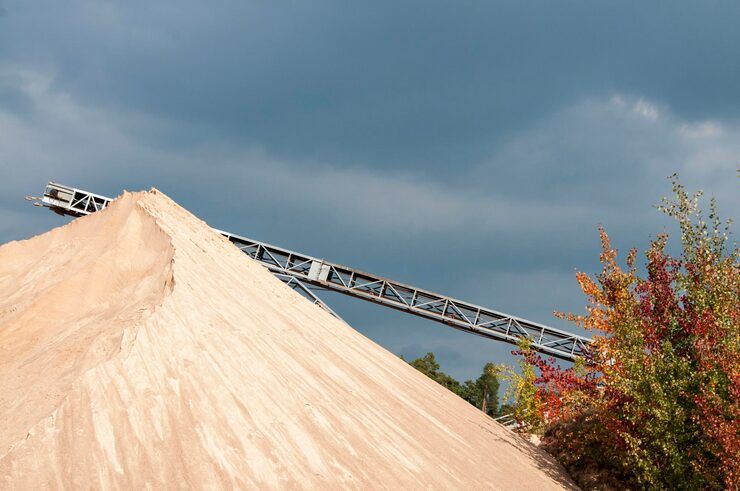
Sand washing plants are industrial processing systems designed to remove unwanted materials from sand and improve its quality for construction, manufacturing, and other industrial applications. These systems commonly process natural sand, crushed stone sand, and selected mineral materials to reduce clay, silt, dust, and other impurities.
Sand is an important raw material in concrete, mortar, asphalt, glass manufacturing, foundry operations, and infrastructure development. However, naturally extracted or mechanically crushed sand can contain contaminants that affect its performance in specific applications.
A sand washing plant combines equipment such as washing screens, hydrocyclones, pumps, dewatering screens, and water treatment systems to separate unwanted particles and manage process water. The configuration depends on the incoming material, required sand specifications, available water, and intended use of the finished product.
Understanding Sand Washing Equipment
A sand washing plant can operate as a standalone unit or as part of a larger aggregate processing facility. Its main purpose is to improve material consistency through washing, classification, separation, and moisture reduction.
Common equipment includes:
Sand washing machines: Agitate sand with water to remove adhering impurities.
Hydrocyclones: Separate particles according to their behavior in a rotating fluid flow.
Vibrating screens: Classify material by particle size and separate unwanted fractions.
Dewatering screens: Remove excess water from washed sand.
Slurry pumps: Transport mixtures of water and fine mineral particles.
Thickeners: Concentrate suspended solids in process water.
Filter presses: Separate water from sludge or fine solids.
Water recycling systems: Recover and reuse process water.
Not every installation requires all these components. A compact plant processing relatively clean sand may use a simpler arrangement, while material containing substantial clay or fine particles may require more extensive treatment.
How a Sand Washing Plant Works
The processing sequence varies by plant design, but most systems follow several common stages.
Material feeding: Raw sand enters the plant through a conveyor, hopper, or feeder. Initial screening may remove oversized stones and debris.
Washing and scrubbing: Sand is mixed with water to loosen clay, silt, dust, and other adhering particles. Some materials require more intensive scrubbing than others.
Classification: Screens and hydrocyclones separate particles according to size and settling behavior. The process helps direct unwanted fine material away from the product stream.
Dewatering: Washed sand passes through a dewatering screen or similar equipment to reduce its moisture content.
Water recovery: Process water containing suspended solids may enter a settling tank, thickener, or treatment system. Recovered water can then be returned to the washing circuit when suitable.
Quality testing: Samples are examined to determine whether the finished sand meets the required specifications for its intended application.
Why Sand Washing Plants Matter
Sand washing plants help improve the consistency of materials used in construction and industrial production. Excessive clay, silt, or organic contamination can interfere with bonding, workability, particle packing, or other material properties.
Construction and Infrastructure
Concrete, mortar, asphalt, and other construction materials depend on aggregates that meet specified grading and quality requirements.
A properly configured washing plant can reduce unwanted fines and help produce sand with more consistent characteristics. However, washing alone does not guarantee suitability for every construction application. Laboratory testing and compliance with relevant material standards remain important.
Industrial Mineral Processing
Some manufacturing processes require sand with controlled particle sizes and low levels of particular contaminants.
For example, glass manufacturing can require carefully controlled silica content and impurity levels. Foundry operations may require sand with specific grain characteristics and performance properties.
These applications may need additional processing, such as attrition scrubbing, magnetic separation, or specialized mineral purification.
Water Conservation
Water is a major input in wet sand processing. Recycling process water can reduce the need for additional water intake and help limit wastewater discharge.
Closed-loop or partially recycled water systems may include settling tanks, thickeners, pumps, and filtration equipment. Their effectiveness depends on water quality, suspended solids, plant design, and operating conditions.
Recent Developments in Sand Washing Technology
During 2025 and 2026, aggregate processing continued to emphasize water recovery, improved process monitoring, fine-particle management, and energy efficiency.
Water Recycling and Recovery
Water management has become an important consideration for sand processing facilities operating in areas with limited water availability or strict discharge requirements.
Modern plant designs may combine settling tanks, thickeners, filter presses, and automated water-level controls to recover process water. The appropriate arrangement depends on the amount of fine material entering the system and the quality of water required for reuse.
Processing Manufactured Sand
Manufactured sand produced by crushing rock is increasingly important in regions where natural sand extraction is constrained or where local geology favors crushed aggregates.
Manufactured sand can contain angular particles, stone dust, and variable quantities of fine material. Washing and classification equipment can help manage these characteristics, although the correct process depends on the rock type and required product specifications.
Automation and Process Monitoring
Industrial plants increasingly use sensors and automated controls to monitor water flow, pump performance, screen operation, and equipment loading.
Such systems can help operators identify process variations and respond to changing feed conditions. Automation does not eliminate the need for sampling, equipment inspections, or maintenance.
Because implementation dates vary by manufacturer and facility, individual technology claims should be evaluated against documented operating data rather than assumed to apply to every sand washing plant.
Laws, Regulations, and Environmental Policies
Sand washing plants must comply with applicable environmental, mining, industrial, and workplace regulations. Requirements differ by country, state, and local authority.
Environmental Requirements in India
In India, aggregate processing facilities may be subject to environmental clearance requirements, pollution-control permissions, water-use restrictions, and conditions governing the handling of sludge and wastewater.
The Central Pollution Control Board and relevant State Pollution Control Boards provide regulatory guidance and oversee aspects of pollution prevention and environmental compliance.
A facility's obligations depend on its location, scale, source of raw material, and specific activities. Operators should verify current requirements with the relevant authorities before establishing or modifying a plant.
Water and Wastewater Management
Wet processing can generate water containing suspended clay, silt, and fine mineral particles. Uncontrolled discharge may affect nearby waterways, drainage systems, or land.
Appropriate controls can include:
Settling ponds or tanks
Water clarification systems
Sludge thickening
Filtration equipment
Controlled wastewater discharge
Monitoring of discharge quality
Safe sludge storage and disposal
Recovered solids may sometimes be reused in suitable applications, but this depends on their composition and applicable regulations.
Workplace Safety
Sand washing plants contain rotating machinery, conveyors, pumps, electrical systems, and wet working surfaces.
Safety measures may include machine guards, emergency stops, electrical protection, safe access platforms, hearing protection, and procedures for maintenance and lockout.
Facilities that handle dry material may also require dust-control systems. Wet processing reduces some airborne dust during washing but does not remove every dust hazard associated with material handling.
Tools and Resources for Sand Washing Plants
Technical resources can help operators evaluate equipment requirements, monitor performance, and plan environmental controls.
Equipment Selection Checklist
Before selecting or modifying a plant, document the following information:
| Evaluation Factor | Information to Assess |
|---|---|
| Feed material | Natural sand, crushed sand, or mineral material |
| Throughput | Required tonnes per hour |
| Particle distribution | Proportion of coarse, medium, and fine particles |
| Contamination | Clay, silt, organic matter, or mineral impurities |
| Product specifications | Required grading and cleanliness |
| Water availability | Supply volume and quality |
| Water recovery | Settling, thickening, and filtration requirements |
| Energy use | Pump, screen, and conveyor power |
| Waste management | Sludge volume and disposal requirements |
| Maintenance | Wear parts, inspections, and downtime |
Useful Technical Resources
Central Pollution Control Board: Environmental regulations and pollution-control guidance in India.
State Pollution Control Boards: Local permissions, monitoring requirements, and wastewater guidance.
Bureau of Indian Standards: Relevant specifications and testing methods for construction materials.
Manufacturer technical manuals: Equipment capacities, operating limits, maintenance schedules, and installation requirements.
Laboratory testing facilities: Particle-size analysis, silt-content testing, moisture measurement, and other material assessments.
A spreadsheet can also help track production, water consumption, moisture content, energy use, and the quantity of material rejected during processing.
Frequently Asked Questions
What is a sand washing plant used for?
A sand washing plant removes unwanted fine particles and contaminants from sand. It can also classify material, reduce excess moisture, and recover process water for reuse.
Which equipment is commonly used in sand washing plants?
Common components include washing machines, vibrating screens, hydrocyclones, slurry pumps, dewatering screens, settling tanks, thickeners, and filtration systems. The exact arrangement depends on the incoming material and required product quality.
Can sand washing plants recycle water?
Yes. Many plants use settling tanks, thickeners, or filtration systems to recover water from process streams. The amount of water that can be reused depends on treatment efficiency, material characteristics, and the quality required for further processing.
What determines the capacity of a sand washing plant?
Capacity depends on feed material, particle-size distribution, clay content, equipment design, water availability, and the required finished-product specifications. Actual operating capacity should be verified under representative conditions.
Which regulations apply to sand washing plants?
Requirements vary by location and may cover environmental clearance, water extraction, wastewater discharge, sludge handling, mining permissions, air pollution, and workplace safety. Operators should consult the relevant environmental and industrial authorities for current requirements.
Conclusion
Sand washing plants play an important role in producing cleaner and more consistent sand for construction, infrastructure, glass manufacturing, foundry operations, and other industrial applications.
Their performance depends on appropriate equipment selection, effective washing and classification, reliable dewatering, and careful management of process water. Modern approaches increasingly emphasize water recovery, automation, and the processing of manufactured sand.
Before selecting a plant, operators should assess raw material characteristics, production requirements, finished-product standards, energy consumption, water availability, maintenance needs, and environmental obligations. Combining suitable processing technology with regular quality testing and responsible waste management can support reliable and efficient sand production.