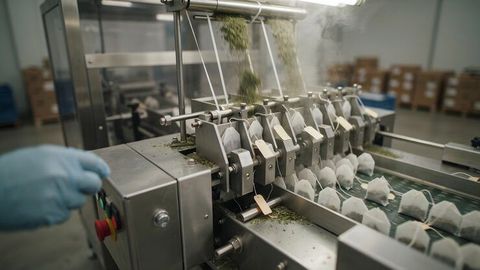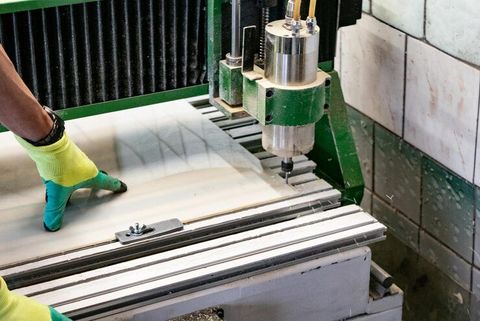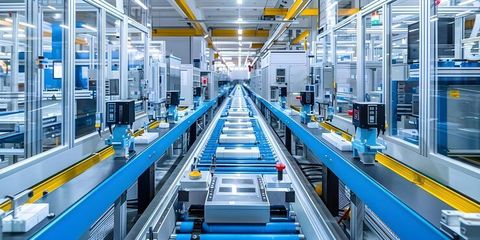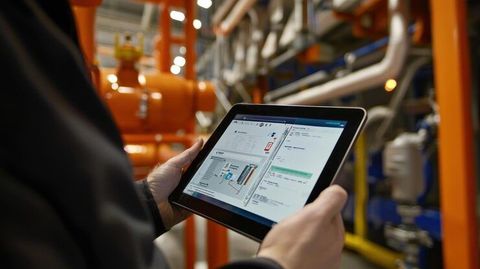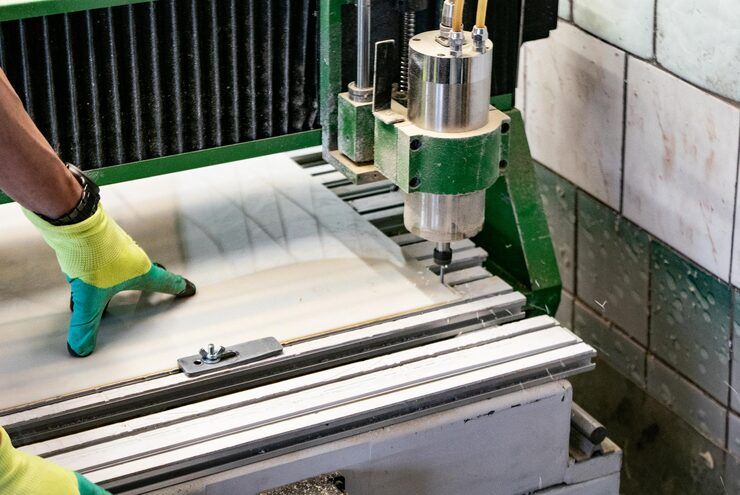
Plastic cutting machines are industrial tools used to cut plastic sheets, films, pipes, panels, molded components, and other polymer materials into specific shapes and dimensions. They are used in manufacturing, packaging, construction, automotive production, electronics, signage, and plastic recycling.
Different plastics require different cutting methods. Thin films may be cut with rotary blades, rigid sheets may require saws or CNC routers, and certain compatible materials can be processed using laser or waterjet systems. The correct method depends on the material's thickness, hardness, heat sensitivity, shape, and required edge quality.
Plastic cutting technology has developed from manually operated tools to computer-controlled systems that improve repeatability and support complex designs. Modern equipment can combine digital design files, automated material feeding, precision cutting heads, and inspection systems to support consistent production.
Understanding Plastic Cutting Machines
Plastic cutting machines vary in design according to the material being processed and the intended application.
Some machines are designed for straight cuts, while others can produce complex shapes, openings, curves, and repeated patterns. Industrial systems may process individual components or handle continuous sheets and rolls.
Common machine types include:
CNC routers: Use computer-controlled cutting tools to shape rigid plastic sheets and components.
Panel saws: Cut rigid plastic boards and panels into defined dimensions.
Laser cutting machines: Use concentrated laser energy to cut compatible plastic materials.
Waterjet cutting machines: Use a high-pressure water stream, sometimes combined with an abrasive, to cut suitable materials.
Guillotine cutters: Make straight cuts through compatible sheets or stacked materials.
Rotary cutters: Process films, flexible sheets, and certain continuous materials.
Pipe cutting machines: Cut plastic pipes and tubing to specified lengths.
Granulators: Reduce plastic scrap into smaller particles for suitable recycling processes.
Not every machine is suitable for every polymer. Material compatibility, ventilation requirements, cutting temperature, tool wear, and the possibility of hazardous emissions must be considered before choosing a process.
How Plastic Cutting Technology Works
The basic process begins with selecting the correct material and defining the required dimensions.
For computer-controlled production, a design may be created in computer-aided design software and converted into machine instructions. The operator then positions the material, configures the cutting parameters, and checks that the machine is suitable for the intended task.
During cutting, the material is separated through mechanical force, concentrated heat, or a high-pressure fluid stream, depending on the technology.
After processing, the component may undergo dimensional inspection, edge finishing, cleaning, or additional fabrication.
Accurate cutting depends on several factors:
Material thickness and composition
Tool geometry and condition
Cutting speed and feed rate
Machine calibration
Material support and clamping
Temperature management
Design tolerances
Operator training
The correct combination of these factors helps reduce scrap and improve dimensional consistency.
Why Plastic Cutting Machines Matter
Plastic cutting equipment is important because modern manufacturing requires components with consistent dimensions, repeatable shapes, and suitable surface quality. Accurate cutting also helps reduce material waste and supports efficient production planning.
Industrial Applications
Plastic cutting machines are used across several industries.
Packaging: Cutting plastic films, sheets, and packaging components into required sizes.
Construction: Processing acrylic panels, PVC sheets, insulation materials, and plastic pipes.
Automotive manufacturing: Shaping polymer panels, interior components, protective covers, and technical plastic parts.
Electronics: Producing plastic enclosures, insulation components, and precision panels.
Signage and displays: Cutting acrylic letters, display panels, and decorative components.
Medical manufacturing: Processing compatible plastic materials used in selected equipment housings and components.
Recycling: Preparing plastic scrap for subsequent size reduction and material recovery.
The required machine depends on the production environment and the properties of the plastic being processed.
Improving Production Accuracy
Computer-controlled cutting systems can follow digital designs and repeat cutting patterns across multiple components. This is useful when manufacturers need consistent dimensions or intricate shapes.
Automated material feeding and nesting software can also help arrange parts on a sheet to reduce unused material. However, actual results depend on sheet dimensions, part geometry, cutting tolerances, and the amount of material required for each cut.
Reducing Material Waste
Plastic sheets and panels can generate offcuts during fabrication. Careful layout planning, accurate cutting, and appropriate scrap collection can help reduce unnecessary waste.
Suitable clean offcuts may be reused in production or directed toward recycling, depending on the polymer type and contamination level. Mixed or contaminated plastics may require additional sorting before recovery.
Recent Developments in Plastic Cutting Technology
Developments during 2025 and 2026 have continued to emphasize automation, precision manufacturing, digital design integration, and improved material efficiency.
CNC Automation and Digital Manufacturing
Manufacturers increasingly integrate computer-aided design, computer-aided manufacturing, and CNC cutting systems into connected production workflows.
Digital files can guide cutting paths, support repeatable component production, and simplify changes to product dimensions. Automated tool measurement and machine monitoring can also help identify deviations during production.
The practical benefits depend on machine calibration, software compatibility, operator skills, and the complexity of the parts being manufactured.
Advances in Laser Processing
Laser technology continues to develop through improvements in beam control, motion systems, automation, and process monitoring.
Laser cutting can produce detailed shapes in compatible plastics, particularly certain thin sheets and films. However, it is not suitable for every polymer. Some materials can release hazardous fumes or react unpredictably when heated, so material identification and manufacturer-approved operating procedures are essential.
Recycling and Material Recovery
Plastic waste management remains an important driver of industrial cutting and size-reduction technology. Mechanical recycling facilities use cutting, shredding, granulation, washing, and separation equipment to prepare suitable plastics for further processing.
During 2025 and 2026, manufacturers and recyclers continued to focus on improving material identification, automated sorting, and the quality of recycled polymer feedstock. Cutting machines contribute to these processes by preparing scrap for subsequent stages rather than completing recycling on their own.
Trends in Equipment Selection
Several considerations are increasingly relevant when evaluating modern plastic cutting systems:
Compatibility with different polymer types
Precision and repeatability
Automated loading and material handling
Energy use and maintenance requirements
Dust and fume extraction
Digital production monitoring
Material recovery and scrap management
These developments indicate that machine selection increasingly involves evaluating the complete production process rather than considering cutting speed alone.
Laws, Regulations, and Workplace Safety
Plastic cutting machines are affected by machinery safety requirements, workplace regulations, environmental rules, and electrical safety standards. The applicable requirements depend on the country, machine type, workplace, and materials being processed.
Machinery Safety in the United States
The Occupational Safety and Health Administration (OSHA) establishes workplace safety requirements covering machinery, hazardous energy, electrical equipment, and employee protection.
Machine operators should be protected from moving blades, rotating tools, pinch points, and flying fragments. Appropriate safeguards may include physical guards, emergency stops, interlocks, and lockout/tagout procedures during maintenance.
Industrial Safety in India
In India, industrial machinery operations must comply with applicable occupational safety and factory regulations. The Occupational Safety, Health and Working Conditions Code, 2020, forms part of India's workplace safety legislation, subject to its applicable commencement and implementation arrangements.
Manufacturers should consult the relevant state authorities and current legal requirements before installing or operating industrial cutting equipment.
Environmental and Emissions Requirements
Plastic cutting can generate dust, fumes, noise, and scrap. Laser systems and other heat-based equipment may require suitable exhaust ventilation and emissions controls.
Facilities should assess:
Dust and fume extraction
Noise exposure
Electrical safety
Fire prevention
Waste collection and segregation
Safe machine maintenance
Operator training
Appropriate protective equipment
Environmental requirements may also apply when plastic offcuts are collected, stored, transported, or processed for recycling.
Tools and Resources for Plastic Cutting
Several technical resources can help manufacturers plan operations and evaluate equipment.
Design and Manufacturing Software
Computer-aided design (CAD) software helps create component drawings, while computer-aided manufacturing (CAM) software converts designs into machine instructions.
Nesting software can arrange multiple parts on a sheet to improve material utilization.
Equipment Evaluation Checklist
Evaluation Factor | What to Assess |
|---|---|
Material | Polymer type and thickness |
Cutting method | Blade, CNC router, laser, or waterjet |
Accuracy | Required dimensional tolerances |
Throughput | Expected production volume |
Safety | Guards, ventilation, and emergency controls |
Maintenance | Tool replacement and calibration |
Waste management | Scrap collection and recycling options |
Manufacturers should also review technical manuals, material compatibility tables, machine specifications, and relevant safety standards before choosing equipment.
Frequently Asked Questions
What are plastic cutting machines used for?
They cut plastic sheets, pipes, films, panels, and components into specified dimensions. Applications include packaging, construction, automotive manufacturing, electronics, signage, and plastic recycling.
Which machine is suitable for cutting plastic sheets?
The appropriate machine depends on the polymer, thickness, shape, and required accuracy. Panel saws and CNC routers are commonly used for rigid sheets, while rotary cutters can suit flexible materials. Laser and waterjet systems are suitable for selected applications.
Can laser cutting machines process every type of plastic?
No. Certain plastics can release hazardous fumes or produce undesirable results when exposed to laser energy. Operators must identify the material and verify compatibility with the equipment manufacturer's safety guidance.
How can plastic cutting reduce material waste?
Accurate cutting, optimized nesting, correct tool selection, and proper machine calibration can reduce offcuts and defective components. Suitable scrap may be reused or recycled when material composition and contamination permit.
What safety measures are important when operating plastic cutting equipment?
Important measures include machine guarding, emergency stops, appropriate ventilation, eye protection where required, operator training, and safe maintenance procedures. Specific precautions depend on the cutting method and material.
Conclusion
Plastic cutting machines are important tools in modern manufacturing, helping process polymer materials into components with defined shapes and dimensions. CNC routers, panel saws, laser systems, waterjet equipment, and specialized cutters each address different production requirements.
Automation, digital design integration, material optimization, and recycling continue to influence equipment development. Selecting the appropriate machine requires evaluating polymer compatibility, cutting accuracy, production requirements, maintenance, environmental controls, and workplace safety.
With suitable equipment, trained operators, and responsible scrap management, manufacturers can improve production consistency while making more effective use of plastic materials.