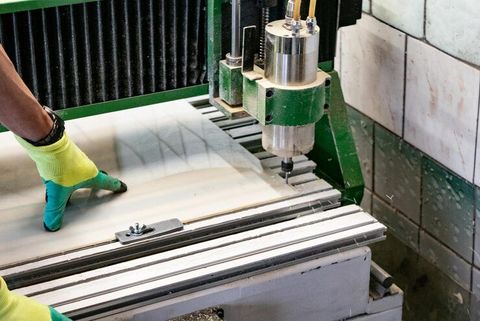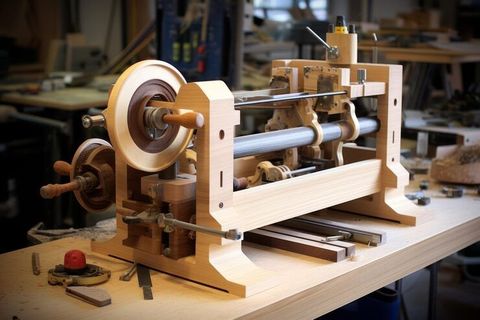
Needle looms are specialized textile machines used to interlace fibers or yarns and form fabrics. The term is sometimes used to describe needle-punching equipment for nonwoven textiles, although needle looms and needle-punching machines are technically different types of machinery. Understanding this distinction is important when examining textile production equipment and its industrial applications.
Conventional weaving looms interlace lengthwise yarns, known as warp yarns, with crosswise yarns, known as weft yarns. Needle-punching machines use barbed needles to entangle fibers mechanically, creating a bonded nonwoven fabric without requiring conventional weaving.
Both technologies support textile manufacturing, but they use different mechanisms and produce materials with different structures and performance characteristics.
Understanding Needle Loom Technology
A needle loom used in conventional weaving may form narrow fabrics, ribbons, tapes, elastic bands, and other specialized textile products. Its needles, guides, and associated mechanisms help control yarn movement and fabric formation.
Needle-punching machinery, by comparison, is designed to process loose fibers or a prepared fiber web. Barbed needles repeatedly penetrate the material, carrying fibers through different layers and mechanically entangling them.
The resulting fabric can be engineered for thickness, density, strength, porosity, and surface characteristics.
Main Types of Equipment
Textile manufacturers select machinery according to the material and production process.
Narrow-fabric needle looms: Produce ribbons, tapes, straps, and other narrow woven materials.
Needle-punching machines: Mechanically entangle fibers to create nonwoven fabrics.
Pre-needling machines: Stabilize loose fiber webs before more intensive processing.
Finishing needle looms or machines: Improve the structure or surface characteristics of an existing textile, depending on the equipment configuration.
Automated textile production lines: Combine fiber preparation, web formation, needling, finishing, and winding.
Although these systems share some terminology, their operating principles and applications should be evaluated separately.
How Needle-Punching Machines Work
A typical needle-punching process begins with fiber preparation. Fibers are opened, blended where necessary, and distributed into a web using suitable web-forming equipment.
The web passes through a needle board containing multiple barbed needles. As the needles penetrate the fiber structure, they carry selected fibers through the material, creating mechanical entanglement.
Repeated penetration increases the integrity of the fiber web. The finished material may then undergo additional processes such as heat treatment, calendaring, coating, cutting, or winding.
The precise configuration depends on the intended product, fiber composition, required thickness, and production rate.
Key Machine Components
Common components of needle-punching machinery include:
Needle boards and barbed needles
Needle beams and drive mechanisms
Fiber-web feeding systems
Infeed and delivery rollers
Web-support plates
Needle-penetration adjustment systems
Conveyors and winding units
Safety guards and control systems
The condition and alignment of these components influence fabric consistency, machine reliability, and production efficiency.
Why Needle Loom Technology Matters
Textile manufacturing depends on equipment that can produce materials with consistent structure, predictable mechanical properties, and suitable production rates.
Needle-based textile processes support both conventional narrow-fabric weaving and the production of nonwoven materials used in numerous industrial sectors.
Industrial Applications
Needle-punched fabrics are used in applications where properties such as filtration, cushioning, insulation, separation, and fluid permeability are important.
Examples include:
Geotextiles: Materials used in soil separation, drainage, erosion control, and selected civil engineering applications.
Automotive textiles: Felt components used for acoustic insulation, interior protection, and cushioning.
Filtration media: Fabrics designed to capture particles in air or liquid filtration systems.
Construction materials: Selected insulation layers, protective fabrics, and building components.
Floor coverings: Underlays, felt backing, and related textile materials.
Industrial felts: Materials used in equipment protection and specialized manufacturing processes.
Conventional needle looms also support the production of narrow woven products used in garments, luggage, safety equipment, furniture, and industrial fastening applications.
Factors Affecting Fabric Quality
Fabric performance depends on the combination of raw materials, machine settings, and downstream processing.
Important variables include fiber length, fiber fineness, web uniformity, needle type, penetration depth, punching frequency, and line speed.
For conventional needle looms, yarn tension, needle movement, warp control, and weaving speed are particularly relevant.
Manufacturers monitor these variables to reduce defects such as uneven density, weak sections, broken fibers, inconsistent width, and surface irregularities.
Recent Developments in Textile Machinery
During 2025 and 2026, textile manufacturing continued to emphasize automation, production monitoring, energy efficiency, and the development of materials with specific performance characteristics.
Automation and Digital Monitoring
Modern textile machinery increasingly incorporates programmable controls, sensors, automated material handling, and production monitoring systems.
These technologies can help operators identify changes in machine performance, detect irregularities, and maintain more consistent operating conditions.
In needle-punching applications, monitoring web thickness, machine speed, needle condition, and production output can improve process control. However, the actual benefits depend on the machine design, sensor configuration, and quality of production data.
Recycled Fiber Processing
Textile recycling remains an important area of industrial research and development. Mechanical recycling can recover fibers from selected textile waste streams, although repeated processing may shorten fibers and affect their properties.
Needle-punching processes can incorporate certain recycled fibers into nonwoven products when their length, cleanliness, and structural characteristics are suitable.
Manufacturers must evaluate recycled feedstock carefully because contamination and inconsistent fiber composition can affect product performance.
Demand for Technical Nonwovens
Nonwoven materials continue to be used in automotive components, construction, filtration, and geotextile applications.
These industries require fabrics with defined characteristics, including tensile strength, abrasion resistance, permeability, thickness, and durability. Consequently, production equipment is often configured around the performance requirements of a specific application rather than one universal fabric specification.
Because machinery development varies by manufacturer and application, current technical documentation is the most reliable basis for evaluating particular models.
Laws, Standards, and Industrial Safety
Textile machinery manufacturers and operators must consider machinery safety, workplace protection, environmental requirements, and product-specific standards. The exact obligations depend on the country where the equipment is manufactured or operated.
Machinery Safety
Industrial textile equipment contains moving rollers, drive mechanisms, needle boards, electrical systems, and other components that can create mechanical hazards.
Factories should implement appropriate guarding, emergency-stop systems, maintenance procedures, operator training, and lockout arrangements during servicing.
In the European Union, the Machinery Regulation (EU) 2023/1230 establishes requirements for machinery safety and will generally apply from 20 January 2027, replacing the previous Machinery Directive framework. Manufacturers and operators should verify the rules applicable to their equipment and the relevant implementation dates.
Textile Manufacturing in India
In India, textile manufacturing facilities must comply with applicable workplace safety, environmental, electrical, and factory-related requirements.
Depending on the facility and its operations, relevant obligations may involve state authorities, factory regulations, occupational safety requirements, and pollution-control approvals.
Businesses should verify the current legal framework applicable to their state and facility rather than assuming that one set of requirements applies to every textile plant.
Textile Quality Standards
Standards can help manufacturers evaluate the characteristics of woven and nonwoven materials.
Relevant test categories may include:
Tensile strength and elongation
Thickness and mass per unit area
Air permeability
Water permeability
Abrasion resistance
Dimensional stability
Fiber composition
Flammability, where applicable
ISO standards and recognized national testing methods can provide measurement procedures for specific textile properties. The appropriate standard depends on the intended product and its application.
Tools and Resources for Textile Manufacturing
Technical resources can help engineers, production managers, and procurement teams evaluate needle-based textile machinery.
Manufacturer Technical Documentation
Machine manuals and specification sheets typically provide information about operating speed, working width, power requirements, needle configuration, maintenance intervals, and compatible materials.
These documents should be reviewed before comparing equipment intended for different textile processes.
Production Monitoring Tools
Industrial monitoring systems can record production speed, downtime, energy consumption, and defect rates.
Useful measurements include:
Output per operating hour
Material waste percentage
Energy consumption per kilogram
Needle replacement frequency
Machine downtime
Fabric defect rate
For example, energy consumption per kilogram can be calculated by dividing electricity used during a defined production period by the kilograms of acceptable material produced during that same period.
Textile Testing Resources
Textile laboratories can evaluate fabric strength, thickness, permeability, abrasion resistance, and other application-specific properties.
Testing is especially important for geotextiles, filtration media, automotive components, and other products where consistent performance is essential.
Equipment Evaluation Checklist
| Evaluation Factor | Information to Review |
|---|---|
| Machine type | Narrow weaving loom or needle-punching machine |
| Working width | Maximum usable fabric width |
| Production capacity | Output under defined operating conditions |
| Raw materials | Compatible fibers or yarns |
| Fabric specifications | Thickness, density, strength, or width |
| Energy requirements | Electrical load and consumption |
| Safety features | Guards, emergency stops, and controls |
| Maintenance | Needle replacement and inspection intervals |
Frequently Asked Questions
What is a needle loom used for?
A conventional needle loom is used to manufacture narrow woven fabrics such as tapes, ribbons, and straps. Needle-punching machines are different equipment used to mechanically entangle fibers and produce nonwoven materials.
What is the difference between weaving and needle punching?
Weaving interlaces warp and weft yarns in a structured pattern. Needle punching uses barbed needles to entangle fibers within a web, producing a nonwoven fabric without conventional yarn interlacing.
Which industries use needle-punched fabrics?
Needle-punched materials are used in geotextiles, automotive interiors, filtration, construction, floor coverings, insulation, and industrial felts. Their suitability depends on the material properties and application requirements.
What affects needle-punching machine performance?
Important factors include fiber characteristics, web uniformity, needle design, penetration depth, punching frequency, line speed, and maintenance condition.
How can manufacturers maintain consistent fabric quality?
Manufacturers can monitor raw material quality, machine settings, needle condition, production speed, and finished-fabric properties. Regular inspections and appropriate laboratory testing help identify variations before they affect large production batches.
Conclusion
Needle looms and needle-punching machines support different but important areas of textile manufacturing. Conventional needle looms produce narrow woven materials, while needle-punching equipment creates nonwoven fabrics through mechanical fiber entanglement.
Both technologies depend on suitable machine configuration, material selection, maintenance, and process control. Developments in automation, recycled fiber processing, and technical textiles continue to influence manufacturing practices.
Understanding the distinction between equipment types, reviewing technical specifications, and following applicable safety and quality standards can help manufacturers select suitable processes and produce textiles that meet their intended performance requirements.