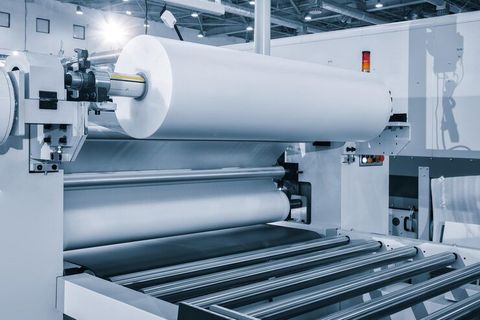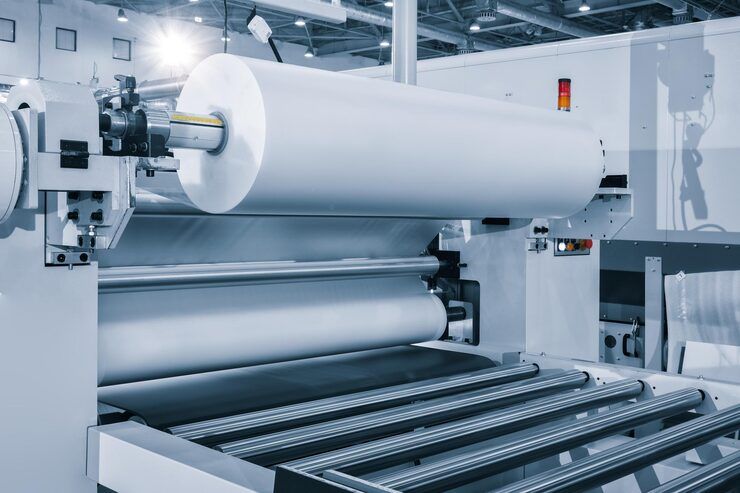
Plastic film slitting machines are industrial systems designed to divide wide rolls of plastic film into narrower rolls with specific widths. These machines are widely used in flexible packaging, food packaging, pharmaceutical packaging, agricultural films, labels, and industrial material processing.
Plastic films are commonly produced in large rolls to support continuous manufacturing. However, many downstream applications require smaller widths, precise dimensions, and consistent winding. A slitting machine performs this conversion by cutting a master roll into multiple narrower rolls while controlling tension, alignment, and winding quality.
Common materials processed by these machines include polyethylene (PE), polypropylene (PP), biaxially oriented polypropylene (BOPP), polyethylene terephthalate (PET), and multilayer barrier films. Each material has different thickness, stretching, friction, and handling characteristics, which influence machine selection and operating settings.
How Plastic Film Slitting Machines Work
A typical plastic film slitting machine contains several interconnected components that guide, cut, and rewind the film.
Unwinding unit: Holds the large parent roll and releases film into the processing line.
Web guiding system: Maintains lateral alignment and helps prevent the film from drifting.
Tension control system: Regulates film tension to reduce wrinkles, stretching, and breaks.
Slitting station: Uses knives or blades to separate the film into narrower sections.
Rewinding unit: Collects the slit sections into individual rolls.
Control panel: Allows operators to configure settings, monitor operation, and respond to faults.
The slitting process may use razor blades, rotary shear knives, or crush-cut knives. The appropriate method depends on the film material, thickness, required edge quality, and production conditions.
Main Types of Slitting Machines
Different machine configurations support different production requirements.
Manual slitting machines: Require greater operator involvement in setup and adjustment.
Semi-automatic machines: Combine operator-controlled activities with automated tension or winding functions.
Fully automatic slitting machines: Use automated controls for selected setup, positioning, cutting, and roll-handling tasks.
Center-winding machines: Wind material using drive force applied at the roll core.
Surface-winding machines: Apply drive force through contact with the roll surface.
Turret slitting rewinders: Support faster roll changes through rotating winding stations, depending on machine design.
The most suitable configuration depends on production volume, material properties, roll dimensions, and required changeover time.
Why Plastic Film Slitting Machines Matter Today
Plastic film slitting machines play an important role in modern manufacturing because packaging and industrial applications require films in different widths, thicknesses, and roll formats. Accurate slitting helps convert large production rolls into materials that match downstream processing requirements.
Manufacturers of flexible packaging, adhesive tapes, labels, protective films, and agricultural materials rely on consistent roll dimensions to maintain production quality. Slitting accuracy can influence material usage, packaging performance, and the efficiency of subsequent converting operations.
Key Industrial Applications
Plastic film slitting technology supports a wide range of industries.
Flexible packaging: Prepares films for pouches, wrappers, laminated packaging, and other packaging formats.
Food packaging: Processes films used in food wrapping and barrier packaging, subject to applicable hygiene and material requirements.
Pharmaceutical packaging: Converts selected films used in protective packaging and medical-related applications.
Label manufacturing: Processes film substrates used for pressure-sensitive labels and product identification.
Agriculture: Handles greenhouse films, mulch films, and other agricultural plastic materials.
Electronics: Converts selected polymer films used for insulation, surface protection, and technical applications.
Industrial laminates: Prepares film layers for bonding, coating, and composite material production.
Production Quality and Common Challenges
Slitting performance depends on more than the cutting blade. Incorrect tension, misaligned rollers, unsuitable blade geometry, or inconsistent winding pressure can affect the finished rolls.
Common production challenges include:
Uneven edges and excessive edge debris.
Wrinkles, telescoping, or loose winding.
Film stretching and dimensional variation.
Static electricity that attracts dust or causes handling difficulties.
Blade wear and inconsistent cutting performance.
Material waste caused by setup errors or damaged film.
Monitoring these factors helps production teams identify problems early and maintain consistent roll quality.
Recent Developments and Technology Trends in 2025–2026
Plastic film converting has continued to evolve through automation, digital monitoring, improved material handling, and growing attention to packaging waste. During 2025 and 2026, these developments remained important considerations for manufacturers evaluating slitting and rewinding equipment.
Automation and Digital Process Control
Modern slitting systems increasingly use programmable logic controllers (PLCs), human-machine interfaces (HMIs), electronic tension controls, and automated positioning systems.
These features can help operators manage repeat production settings, monitor machine conditions, and reduce manual adjustments. Depending on the machine configuration, automated functions may include knife positioning, roll diameter measurement, tension adjustment, and roll-change assistance.
Digital monitoring can also help identify recurring production problems by recording downtime, roll dimensions, operating speeds, and material waste.
Precision Cutting and Web Tension Management
Thin plastic films can stretch, wrinkle, or break when tension is poorly controlled. Manufacturers therefore continue to focus on load-cell feedback, closed-loop tension control, accurate web guiding, and suitable winding profiles.
These systems help maintain stable processing conditions across different film thicknesses and widths. However, results depend on the material, machine design, operator settings, and maintenance practices.
Recyclable and Lightweight Packaging Materials
Packaging manufacturers are increasingly examining mono-material structures, recyclable film designs, and reduced material thickness where performance requirements permit. These developments can change how films behave during slitting and rewinding.
Thin films may require more precise tension management, while multilayer structures can present different cutting and winding challenges. Manufacturers must evaluate machinability alongside barrier performance, durability, and end-of-life requirements.
Energy and Waste Management
Another important trend is the measurement of energy consumption and material losses during converting operations. Machine-level monitoring, efficient drives, preventive maintenance, and better setup procedures can help reduce avoidable waste.
The effectiveness of these measures varies by installation. Improved machine efficiency alone does not establish that a plastic packaging product is recyclable or environmentally preferable; the complete material structure and available waste-management infrastructure also matter.
Laws, Safety Standards, and Environmental Policies
Plastic film slitting machines operate within a regulatory environment covering industrial machinery safety, worker protection, plastic waste, and packaging materials. Requirements differ according to the country, facility, machine configuration, and intended use of the processed film.
Industrial Regulations in India
Several Indian laws and regulatory frameworks may affect manufacturers and facilities using plastic film slitting equipment.
Factories Act, 1948: This legislation historically established requirements relating to factory health, safety, welfare, and working conditions. Its applicability and the governing provisions must be assessed in light of India's labour-law transition and the implementation of the Occupational Safety, Health and Working Conditions Code, 2020.
Environment (Protection) Act, 1986: This provides the central framework for environmental protection and related rules, including measures concerning industrial pollution and plastic waste.
Plastic Waste Management Rules, 2016, and subsequent amendments: These rules establish requirements relating to plastic waste management. Extended Producer Responsibility (EPR) provisions are particularly relevant to covered producers, importers, and brand owners dealing with plastic packaging.
Legal Metrology requirements: Depending on the product and transaction, packaged goods and specified measuring or labelling activities may be subject to applicable Legal Metrology legislation and rules. These requirements do not automatically apply to every industrial film roll in the same way.
Workplace Safety Considerations
Operators should be trained to work safely around rotating shafts, moving webs, cutting blades, and heavy parent rolls.
Important precautions include:
Installing suitable machine guards and interlocks.
Following lockout procedures before maintenance or blade replacement.
Using appropriate lifting equipment for heavy rolls.
Providing task-specific protective equipment and training.
Maintaining emergency stops and checking safety devices.
Controlling static electricity where it presents an operational or safety risk.
Facilities should confirm the applicable legal requirements with the relevant authorities and qualified safety professionals. Compliance depends on the actual workplace and machine configuration.
Tools and Resources for Plastic Film Slitting Operations
A combination of measurement tools, machine controls, inspection procedures, and production records can help manufacturers manage slitting quality.
Useful Engineering and Production Tools
Film thickness gauges: Measure material thickness and help verify incoming film specifications.
Digital width gauges: Check the width of slit rolls against production tolerances.
Tension measurement devices: Help evaluate web tension during machine setup and operation.
Static meters: Measure electrostatic charge on film surfaces.
Roll diameter calculators: Estimate finished roll diameter from film thickness, length, and core dimensions.
Production monitoring dashboards: Record output, downtime, operating speed, and material waste.
Preventive maintenance checklists: Track blade condition, roller alignment, bearings, sensors, and drive components.
Important Operating Measurements
The following table outlines common measurements used in plastic film slitting.
Parameter | Purpose | Typical monitoring method |
|---|---|---|
Film thickness | Confirms material specifications | Thickness gauge |
Slit width | Verifies dimensional accuracy | Width gauge or calibrated measurement tool |
Web tension | Helps prevent wrinkles and stretching | Load cell or tension sensor |
Roll diameter | Supports winding and roll handling | Diameter sensor or calculator |
Edge quality | Identifies cutting defects | Visual and dimensional inspection |
Material waste | Measures production losses | Production records and material reconciliation |
A Simple Roll Diameter Calculation
For a tightly wound film roll, the approximate outer diameter can be estimated using the following relationship:
Where:
\(D\) is the finished roll's outer diameter.
\(D_c\) is the core's outer diameter before winding.
\(L\) is the length of film wound onto the roll.
\(t\) is the film thickness.
All measurements must use consistent units. The formula assumes relatively uniform thickness and tightly wound layers; actual results can vary with air gaps, film compression, and winding conditions.
Frequently Asked Questions
What is a plastic film slitting machine used for?
It divides wide plastic film rolls into narrower rolls for packaging, labels, laminates, agricultural applications, and other industrial uses.
Which materials can these machines process?
Depending on the machine design, materials may include PE, PP, BOPP, PET, and multilayer films. Blade selection, tension settings, and winding methods must match the material's properties.
What affects slitting accuracy?
Important factors include blade condition, knife alignment, web tension, film thickness, guiding accuracy, machine stability, and operator setup. Regular inspection helps identify the source of dimensional or edge-quality problems.
How can manufacturers reduce film waste?
Manufacturers can improve setup accuracy, maintain cutting blades, optimize tension settings, monitor edge quality, and record material losses. Automated positioning and repeatable production settings may also reduce setup-related waste.
What should be considered when selecting a slitting machine?
Important considerations include the film material, minimum and maximum slit widths, parent-roll dimensions, required production speed, winding method, automation level, safety features, and maintenance requirements. Compatibility with existing production equipment is also important.
Conclusion
Plastic film slitting machines are essential components of flexible packaging and industrial film converting. They transform wide rolls into narrower formats while helping manufacturers maintain dimensional accuracy, controlled winding, and consistent material quality.
Developments in automation, precision tension control, digital monitoring, and packaging material design continue to influence the technology. At the same time, machinery safety, plastic waste management, and applicable environmental requirements remain important considerations.
A well-planned slitting operation combines appropriate equipment, trained operators, accurate measurement, routine maintenance, and responsible material management. Understanding these factors helps manufacturers make informed decisions and maintain reliable production processes.