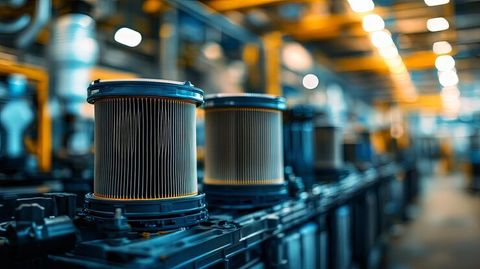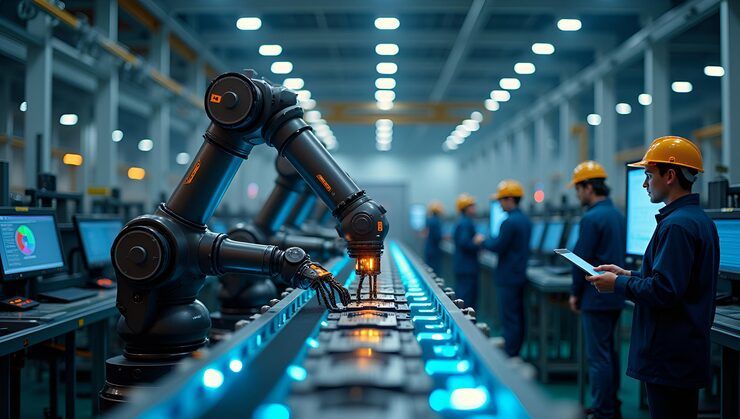
Smart manufacturing refers to the use of digital technologies, connected machines, automation, and data analysis to improve industrial production. It combines traditional manufacturing equipment with technologies such as artificial intelligence (AI), industrial robotics, the Internet of Things (IIoT), and cloud computing.
The main purpose is to help factories monitor operations, identify problems earlier, maintain consistent product quality, and coordinate production activities more effectively. Rather than depending entirely on manual inspections and fixed production schedules, smart factories use real-time information to support decisions.
Smart manufacturing is closely associated with Industry 4.0, a term describing the integration of digital systems with industrial processes. As technology develops, factories can connect machines, production lines, inventory systems, and quality control equipment within a more coordinated environment.
Core Technologies Behind Smart Factories
Several technologies form the foundation of modern industrial automation.
Industrial automation: Uses control systems, programmable logic controllers (PLCs), and automated machinery to perform repetitive production tasks.
Artificial intelligence in manufacturing: Analyzes production data to identify patterns, detect defects, and support operational decisions.
Industrial Internet of Things (IIoT): Connects machines, sensors, and monitoring devices to collect and exchange operational information.
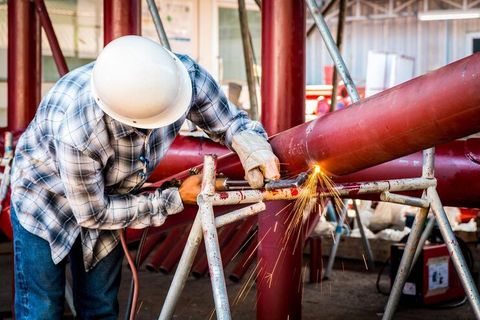
Industrial robotics: Performs tasks such as welding, assembly, packaging, material handling, and precision inspection.
Digital twins: Create virtual representations of physical machines, production lines, or entire industrial processes.
Cloud manufacturing systems: Enable authorized users to analyze production information across connected facilities.
Machine vision: Uses cameras and image-processing algorithms to inspect products and identify visible defects.
These technologies can work together. For example, sensors may detect unusual vibration in a production machine, an analytical system may identify a developing fault, and maintenance personnel may schedule an inspection before a breakdown interrupts production.
Why Smart Manufacturing Matters Today
Manufacturers face several operational challenges, including changing customer requirements, supply chain uncertainty, quality expectations, energy management, and pressure to maintain consistent production. Smart manufacturing provides methods for addressing these challenges through better information and more coordinated processes.
Improving Productivity and Product Quality
Automated production equipment can perform repetitive tasks with consistent timing and precision. When combined with sensors and inspection systems, automation can help identify production defects earlier and reduce unnecessary material waste.
Quality monitoring systems can track measurements such as dimensions, temperature, pressure, and product weight. If readings move outside an acceptable range, the system can alert operators or trigger a predefined response.
However, automation does not guarantee perfect quality. Equipment must be calibrated, processes must be properly designed, and production data must be reliable.
Predictive Maintenance and Equipment Reliability
Traditional maintenance schedules often rely on fixed intervals or inspections after a problem appears. Predictive maintenance uses information from equipment sensors and historical records to estimate when a machine may require attention.
Common indicators include:
Unusual vibration or temperature changes.
Increased motor current or energy consumption.
Changes in hydraulic pressure.
Unexpected machine cycle times.
Repeated production stoppages.
Predictive maintenance can help reduce unplanned downtime, although its effectiveness depends on sensor quality, analytical accuracy, and the type of equipment being monitored.
Supporting Workers and Industrial Safety
Smart factories can use robots and automated material-handling systems for tasks involving heavy loads, repetitive movements, or hazardous environments. Digital work instructions can also help workers follow production procedures more consistently.
At the same time, connected machinery introduces risks involving unexpected movement, cybersecurity, and human-machine interaction. Appropriate machine guarding, emergency stops, training, and access controls remain essential.
Comparing Traditional and Smart Manufacturing
Manufacturing activity | Traditional approach | Smart manufacturing approach |
|---|---|---|
Machine monitoring | Periodic manual checks | Continuous sensor monitoring |
Maintenance | Fixed schedules or reactive repairs | Data-supported predictive maintenance |
Quality inspection | Manual sampling | Automated inspection and analytics |
Production planning | Periodic schedule updates | Frequent updates using operational data |
Inventory tracking | Manual records or barcode checks | Connected tracking and automated updates |
Energy management | Periodic meter readings | Detailed energy monitoring and analysis |
The benefits vary by facility. Existing equipment, production volume, workforce skills, and the quality of digital infrastructure influence how much improvement can be achieved.
Recent Developments in Smart Manufacturing
Smart manufacturing developments in 2025 and 2026 show a growing emphasis on industrial AI, connected production systems, robotics, and factory-wide data integration. Manufacturers are increasingly exploring ways to move beyond isolated automation projects toward coordinated digital operations.
Artificial Intelligence and More Adaptive Factories
On April 16, 2026, the World Economic Forum published its Intelligent Industrial Operations Outlook 2026, examining how AI and connected technologies are changing industrial operations. The report describes a shift toward closer collaboration between people and intelligent systems, with greater emphasis on adaptive and increasingly autonomous processes.
Applications of industrial AI include:
Analyzing production data to identify recurring defects.
Supporting production planning and scheduling.
Detecting unusual machine behavior.
Helping engineers interpret equipment information.
Coordinating material movement and manufacturing workflows.
These applications still require reliable data, appropriate human oversight, and testing in real operating conditions.
New Research on AI and Manufacturing
On July 3, 2026, the US National Institute of Standards and Technology (NIST) published its 2026 Roadmap on Artificial Intelligence and Machine Learning for Smart Manufacturing. It highlights industrial data management, robotics, digital twins, advanced sensing, and the importance of trustworthy and explainable AI.
The research reflects a central challenge: advanced algorithms are only useful when they can work reliably with existing machines, control systems, and production data.
Developments in India
On February 18, 2026, India's Ministry of Electronics and Information Technology highlighted AI priorities for the manufacturing engineering technology ecosystem through a strategic industry and academic meeting and the launch of an AI for Manufacturing Engineering Technology white paper concept. The initiative emphasized responsible AI adoption, skills development, and broader participation in manufacturing innovation.
These developments indicate that smart manufacturing is not simply about adding robots. It also involves data quality, workforce preparation, cybersecurity, and the ability to integrate different technologies.
Laws, Policies, and Manufacturing Standards
Smart manufacturing is affected by workplace safety laws, machinery requirements, environmental rules, cybersecurity expectations, and data protection regulations. The applicable framework depends on the country, the facility, the industry, and the type of equipment used.
Manufacturing Regulations in India
Several laws and policy frameworks are relevant to factories adopting automation and connected technologies.
Factories Act, 1948: Historically established provisions concerning factory health, safety, and working conditions. Its current applicability must be assessed alongside India's labour-code implementation and relevant state rules.
Occupational safety legislation: India's Occupational Safety, Health and Working Conditions Code, 2020, forms part of the labour-code framework. Employers should verify applicable commencement notifications and implementing requirements.
Environment (Protection) Act, 1986: Provides a framework for environmental protection and relevant pollution-control requirements for industrial operations.
Digital Personal Data Protection Act, 2023: Relevant where manufacturing systems process personal data, such as identifiable employee information, subject to the applicable legal requirements and implementation status.
National Manufacturing Policy: Establishes a broader policy direction for strengthening India's manufacturing sector and industrial development.
International Standards and Cybersecurity
Manufacturers operating internationally may also need to consider standards and regulations relevant to their products, machinery, and digital infrastructure.
ISO 9001: Provides a framework for quality management systems.
ISO 14001: Addresses environmental management systems.
ISO 10218: Covers industrial robot safety requirements.
IEC 62443: Addresses cybersecurity for industrial automation and control systems.
EU Machinery Regulation (EU) 2023/1230: Establishes machinery safety requirements in the European Union, with general application beginning on January 20, 2027.
Compliance depends on the specific activity and jurisdiction. Standards may be voluntary, incorporated into contractual requirements, or referenced by legislation. Manufacturers should confirm the latest applicable editions and legal obligations before implementation.
Tools and Resources for Smart Manufacturing
Manufacturers can use a range of software platforms, engineering tools, and technical standards to plan and manage digital transformation.
Useful Industrial Automation Tools
Manufacturing Execution Systems (MES): Track production activities, work orders, quality records, and manufacturing performance.
Enterprise Resource Planning (ERP): Connect production planning with inventory, procurement, finance, and other business operations.
Supervisory Control and Data Acquisition (SCADA): Monitor industrial processes and support centralized control.
Computerized Maintenance Management Systems (CMMS): Organize equipment inspections, maintenance schedules, and repair records.
Digital twin platforms: Model physical equipment and processes for simulation, analysis, and planning.
Industrial IoT dashboards: Display machine readings, energy use, production output, and equipment alerts.
Key Performance Indicators
Factories can measure the results of automation using consistent operational indicators.
Metric | What it measures |
|---|---|
Overall Equipment Effectiveness (OEE) | Equipment availability, performance, and quality |
Production cycle time | Time required to complete a production cycle |
Defect rate | Proportion of products that fail quality requirements |
Unplanned downtime | Time lost to unexpected production interruptions |
Energy intensity | Energy used per unit of production |
First-pass yield | Share of products meeting requirements without rework |
These indicators help managers compare performance before and after implementation. Measurements should use consistent definitions and account for changes in product mix, production volume, and operating conditions.
Practical Implementation Resources
Engineering teams can also use risk assessment templates, machine inspection checklists, cybersecurity audits, employee training plans, and preventive maintenance logs.
Useful reference organizations include NIST for manufacturing technology guidance, the International Organization for Standardization for management and technical standards, and India's Ministry of Heavy Industries for manufacturing-related programs and policy information.
Frequently Asked Questions
What is smart manufacturing?
Smart manufacturing integrates automation, connected equipment, industrial data, and digital technologies to improve production management. It enables factories to monitor operations and make more informed decisions.
How does AI improve manufacturing processes?
AI can analyze machine data, identify patterns, detect potential defects, support maintenance planning, and help optimize production schedules. Its performance depends on data quality, appropriate validation, and human supervision.
Will automation replace workers in factories?
Automation may reduce the need for certain repetitive tasks while changing other responsibilities. It can also create demand for skills in robotics, maintenance, data analysis, and industrial cybersecurity. The effects vary by industry and implementation strategy.
What is the difference between Industry 4.0 and smart manufacturing?
Industry 4.0 describes the broader integration of digital technologies into industrial systems and supply chains. Smart manufacturing focuses on applying these technologies to improve production, quality, maintenance, and operational decision-making.
How can a small manufacturer begin adopting smart manufacturing?
A practical starting point is to identify one recurring production problem, establish baseline performance measurements, and introduce a suitable digital monitoring or automation solution. The manufacturer can then evaluate the results, train employees, strengthen cybersecurity, and expand gradually when the approach proves effective.
Conclusion
Smart manufacturing is transforming factories through industrial automation, artificial intelligence, robotics, connected sensors, and digital twins. These technologies help manufacturers improve production visibility, monitor quality, plan maintenance, and respond to operational changes.
The developments of 2025 and 2026 demonstrate growing attention to factory-wide AI integration, reliable industrial data, and collaboration between people and intelligent systems. However, successful adoption requires more than advanced equipment. Manufacturers must also consider worker safety, cybersecurity, regulatory compliance, workforce skills, and the reliability of existing infrastructure.
A gradual, measurable approach allows organizations to identify useful applications, assess their performance, and expand digital capabilities responsibly. Smart manufacturing is most effective when technology supports clear operational goals and complements the knowledge and experience of the people working in factories.