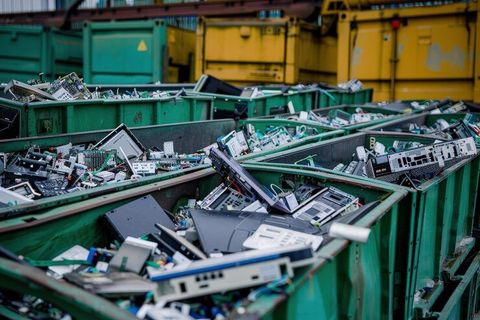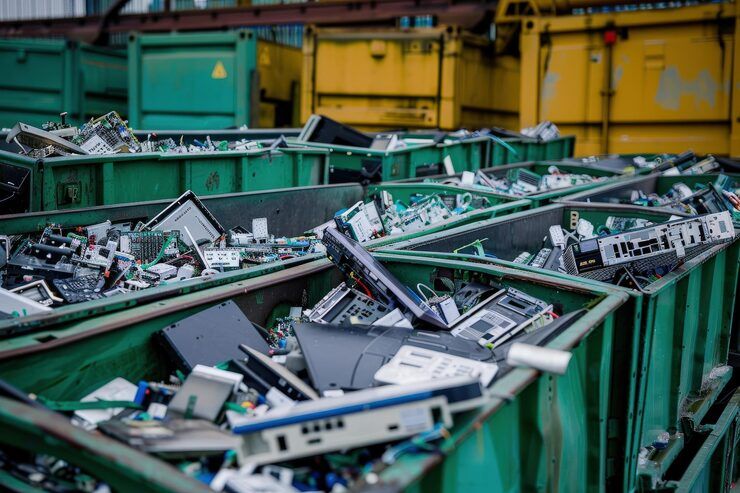
Electronic waste, commonly called e-waste, includes discarded computers, smartphones, televisions, printers, circuit boards, cables, batteries, and other electrical equipment. As technology develops and electronic devices become more widely used, managing discarded equipment has become an important environmental and industrial challenge. E-waste shredders are specialized machines designed to reduce electronic waste into smaller pieces so that materials can be separated, processed, and recovered more efficiently.
These machines are an important part of modern electronic waste recycling systems. They can process selected electronic components and equipment using rotating cutting blades, shafts, hammers, or other mechanical systems. The appropriate shredding method depends on the type, size, and composition of the incoming material.
E-waste shredders are generally used in recycling facilities, electronic waste processing plants, and specialized material recovery operations. They help prepare discarded electronics for subsequent stages, including magnetic separation, screening, density separation, and advanced metal recovery.
How E-Waste Shredders Work
The shredding process typically begins with the collection and inspection of electronic waste. Workers or automated systems identify unsuitable items, remove hazardous components where necessary, and prepare suitable materials for processing.
The material then enters a shredding chamber, where mechanical force breaks it into smaller fragments. Depending on the equipment design, the process may involve one or more stages.
Primary shredding: Reduces large electronic equipment into manageable pieces.
Secondary shredding: Produces smaller, more consistent fragments for further processing.
Screening: Separates material according to particle size.
Material separation: Helps distinguish ferrous metals, non-ferrous metals, plastics, and other fractions.
The output is not necessarily a finished recycled material. It usually requires additional processing, quality checks, and appropriate handling before recovered materials can enter manufacturing supply chains.
Why E-Waste Shredders Matter Today
The growing use of electronic equipment has increased the need for effective electronic waste management. Discarded devices contain valuable materials, including copper, aluminium, steel, and selected precious metals. They may also contain hazardous substances that require careful handling.
The United Nations reported that approximately 62 million tonnes of electronic waste were generated worldwide in 2022, while only 22.3% was documented as formally collected and recycled. This highlights the importance of improving collection systems, recycling infrastructure, and safe material recovery.
Environmental and Industrial Benefits
E-waste shredders can support several important objectives:
Resource recovery: Prepare electronic components for the recovery of metals and other reusable materials.
Waste volume reduction: Break down bulky equipment into smaller fragments that are easier to handle.
Improved processing efficiency: Support automated sorting and separation in industrial recycling facilities.
Reduced environmental pressure: Help establish controlled recycling processes that can reduce dependence on informal disposal methods.
Circular economy development: Return recovered materials to appropriate industrial supply chains.
Shredding alone does not guarantee environmental protection. The benefits depend on proper waste collection, suitable machine selection, dust management, hazardous-component removal, and responsible treatment of the resulting materials.
Industries That Use E-Waste Shredders
Different industries handle different types of electronic waste, so their equipment requirements can vary.
Industry or facility | Typical materials processed | Main purpose |
|---|---|---|
Electronics recycling | Computers, printers, and selected devices | Material separation |
IT equipment recovery | Servers, cables, and computer components | Component processing |
Industrial recycling | Electronic control units and circuit boards | Metal recovery preparation |
Consumer electronics recycling | Selected televisions and household devices | Waste size reduction |
Data centre decommissioning | Selected electronic hardware | Controlled equipment processing |
The material entering a shredder must be assessed before processing. Batteries, pressurized components, mercury-containing parts, and other hazardous items may require separate treatment rather than conventional shredding.
Recent Developments in E-Waste Shredding Technology
Electronic waste recycling technology continues to develop as regulators, manufacturers, and recycling facilities focus on material recovery, traceability, worker safety, and environmental performance.
Automation and Intelligent Sorting
Modern recycling facilities increasingly combine shredders with automated conveyors, screening equipment, magnetic separators, and sensor-based sorting systems. These technologies can help identify and separate different material fractions more consistently.
Artificial intelligence and machine vision may also support the identification of selected electronic components. However, actual performance depends on the materials being processed, contamination levels, and the design of the complete recycling line.
Better Processing and Material Recovery
Equipment development increasingly emphasizes controlled particle size, reduced material contamination, and improved separation of metals from plastics. Some facilities use staged shredding rather than attempting to process every material in one operation.
Other important developments include:
Monitoring motor loads and machine vibration to identify operating problems.
Improving blade durability for mixed electronic materials.
Integrating dust extraction and fire detection into processing lines.
Using digital records to document material flows and processing outcomes.
Designing equipment layouts that simplify maintenance and safer handling.
These developments do not eliminate the need for trained operators or regular equipment inspections.
Regulatory and International Updates
In July 2025, the European Commission published an evaluation of the European Union's Waste Electrical and Electronic Equipment (WEEE) Directive. The evaluation examined how effectively the existing framework addresses electronic waste and whether changes may be needed. It was an evaluation of the existing directive, not the introduction of a completely new shredding law.
In September 2025, the International Telecommunication Union approved Recommendation L.1037, addressing requirements for the collection, transportation, storage, dismantling, recovery, and final disposal of waste electrical and electronic equipment. Such technical guidance can help inform more consistent approaches to electronic waste management internationally.
These developments reinforce the importance of considering the complete recycling process rather than focusing exclusively on shredding capacity.
Laws, Regulations, and Environmental Compliance
Rules governing electronic waste differ between countries. A shredder's technical specifications do not automatically establish that the facility using it meets all environmental requirements. Operators must consider applicable waste classifications, permits, worker protection, emissions controls, and reporting obligations.
Electronic Waste Regulations in India
India's E-Waste (Management) Rules, 2022, established a framework that includes extended producer responsibility, registration requirements, recycling obligations, and monitoring of electronic waste management. The rules came into effect on 1 April 2023 and have subsequently been amended.
Important considerations include:
Extended Producer Responsibility (EPR): Covered producers must meet applicable obligations for electronic waste management.
Registration and compliance: Relevant producers, manufacturers, refurbishers, and recyclers must follow the registration requirements that apply to their activities.
Authorized processing: Facilities must establish that their activities comply with the applicable rules and permissions.
Recordkeeping: Required records and returns help document waste processing and compliance.
Environmental safeguards: Waste handling and processing must follow relevant requirements for pollution prevention and hazardous materials.
India's Central Pollution Control Board operates an electronic waste management portal for relevant registrations, EPR information, and regulatory guidance. The applicable requirements should be checked against current official notifications because rules and administrative procedures can change.
International Regulatory Considerations
Other regions have their own approaches to electronic waste management.
Region | Relevant framework | Key consideration |
|---|---|---|
European Union | WEEE Directive | Collection, treatment, recovery, and producer responsibilities |
India | E-Waste (Management) Rules, 2022, as amended | EPR, registration, and recycling compliance |
International operations | Applicable national and local regulations | Waste shipment, hazardous materials, and facility authorization |
Businesses processing imported or exported electronic waste should also assess applicable transboundary waste shipment rules. The legal status of a material may depend on its composition, condition, destination, and intended treatment.
Tools and Resources for E-Waste Recycling
Selecting and operating an e-waste shredder requires more than assessing its cutting mechanism. Facilities should evaluate material composition, processing capacity, safety controls, downstream separation equipment, and regulatory requirements.
Equipment Selection and Performance Assessment
Several technical factors influence shredder performance:
Throughput capacity: The quantity of material processed per hour under specified operating conditions.
Particle size: The dimensions of the shredded material required for subsequent separation.
Material composition: The proportion of metals, plastics, cables, and other components in the waste stream.
Energy consumption: Electricity required for processing a defined quantity of material.
Maintenance requirements: Blade inspection, wear monitoring, lubrication, and replacement schedules.
Safety systems: Emergency stops, machine guarding, fire detection, and dust control.
A useful starting point is to prepare a material inventory and record the expected quantity and type of incoming electronic waste. This information helps determine whether a single-stage shredder or a multi-stage recycling system is appropriate.
Useful Technical and Regulatory Resources
Resource | How it helps |
|---|---|
Central Pollution Control Board (CPCB) | Provides Indian e-waste rules, registration information, and compliance guidance |
Ministry of Environment, Forest and Climate Change | Publishes environmental notifications and regulatory amendments |
World Health Organization (WHO) | Explains health and environmental risks associated with electronic waste |
International Telecommunication Union (ITU) | Provides technical recommendations relevant to electronic waste management |
Equipment maintenance checklist | Helps track inspections, blade condition, and machine servicing |
Material recovery spreadsheet | Records incoming waste, recovered fractions, residues, and processing yields |
These resources support planning and compliance, but they do not replace professional engineering assessments or legal advice where required.
Measuring Recycling Performance
Facilities can use basic operational indicators to evaluate their processes. For example, material recovery rate can be calculated by dividing the mass of recovered materials by the mass of incoming waste and multiplying by 100.
Suppose a facility processes 1,000 kilograms of electronic waste and recovers 650 kilograms of materials suitable for further processing. Its measured recovery rate would be 65%.
This is an illustrative calculation, not a universal performance benchmark. The remaining material may include hazardous fractions, process residues, plastics, and other materials requiring additional treatment. Recovery figures should therefore be interpreted alongside material quality, contamination, and final disposal records.
Frequently Asked Questions
What is an e-waste shredder?
An e-waste shredder is an industrial machine that reduces selected discarded electronic equipment and components into smaller pieces. It prepares materials for downstream processes such as screening, magnetic separation, and metal recovery.
Which materials can an e-waste shredder process?
Depending on its design, a shredder may process selected computers, circuit boards, cables, printers, and other electronic components. Batteries and hazardous components may require removal and separate treatment before shredding. The manufacturer's operating specifications and applicable safety rules should always be followed.
How does an e-waste shredder support metal recovery?
Shredding exposes and separates material components by breaking equipment into smaller fragments. Magnetic separators, eddy-current separators, screening systems, and other technologies can then help separate different material fractions. Further refining may be necessary to recover metals at the required purity.
Are e-waste shredders environmentally safe?
They can support environmentally responsible recycling when integrated into a properly managed facility. However, shredding may generate dust, noise, heat, and potentially hazardous particles. Appropriate ventilation, filtration, fire prevention, protective equipment, and safe handling procedures are essential.
What should facilities consider when choosing an e-waste shredder?
Facilities should evaluate the types of electronic waste, required throughput, target particle size, energy consumption, maintenance needs, downstream recovery equipment, and safety features. They should also verify that the proposed process complies with relevant environmental regulations and authorization requirements.
Conclusion
E-waste shredders play an important role in modern electronic waste recycling by reducing discarded equipment into manageable fragments and preparing materials for further separation. Their contribution extends beyond waste size reduction to include support for metal recovery, resource conservation, and circular economy practices.
Effective recycling depends on the entire processing system, including waste collection, hazardous-component removal, shredding, sorting, material recovery, and responsible residue management. Automation and improved monitoring may help facilities improve consistency, but appropriate engineering controls and trained operators remain essential.
As electronic waste volumes and regulatory expectations evolve, understanding shredder technology, material recovery processes, and environmental compliance will remain valuable for recycling facilities, manufacturers, policymakers, and organizations managing electronic equipment.