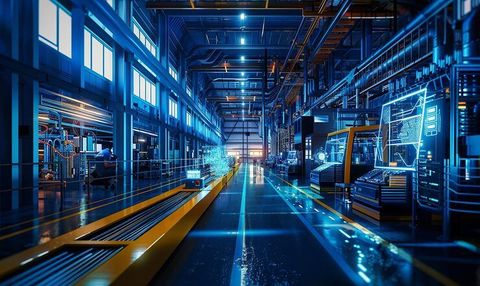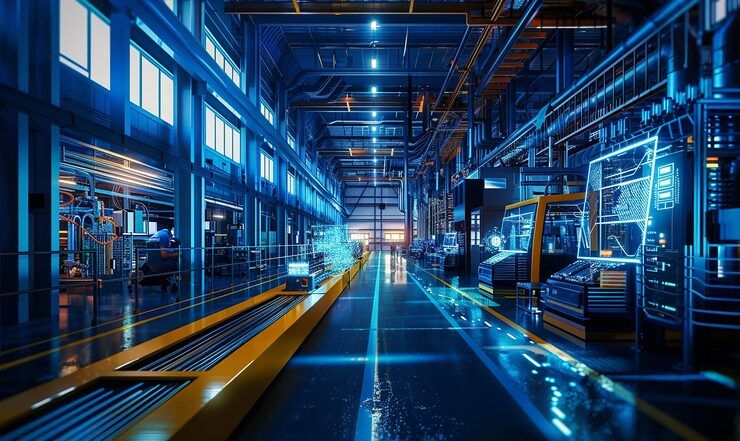
Industrial Internet of Things (IIoT) refers to the use of connected sensors, machines, software, and communication networks to collect and exchange information in industrial environments. It allows equipment and production systems to provide data about their operating conditions, performance, energy consumption, and maintenance requirements.
Industrial IoT is used in manufacturing plants, energy facilities, logistics networks, water treatment systems, agriculture, mining, and other industries. Its purpose is to make industrial operations easier to monitor, understand, and manage through reliable information.
Traditional industrial equipment often operates through separate control systems or requires workers to inspect machines manually. IIoT connects these systems with data collection and analytical tools, helping organizations identify unusual operating conditions and understand production performance.
Understanding Industrial IoT Technology
An Industrial IoT system generally combines physical equipment with digital technologies. Sensors measure conditions such as temperature, vibration, pressure, humidity, flow rate, and electrical consumption. Connected devices then transmit this information to local control systems, edge computers, or cloud-based platforms.
Software processes the collected data and presents it through dashboards, alerts, reports, and analytical models. Depending on the system, the information may help operators adjust production settings, schedule inspections, or investigate equipment problems.
The main components of an IIoT system include:
Industrial sensors: Measure physical conditions and machine performance.
Connected equipment: Collects and exchanges operational information.
Industrial gateways: Connect devices using different communication protocols.
Edge computing systems: Process data near the equipment where it is generated.
Earlier identification of abnormal operating conditions
Better maintenance scheduling
Reduced unplanned downtime
Improved equipment utilization
More informed decisions about replacement parts
Separating business networks from critical control networks
Using strong authentication and access permissions
Applying security updates through controlled procedures
Monitoring network activity
Maintaining tested backups
Establishing incident-response plans
Assessing risks before enabling remote access
Node-RED: Connects devices, applications, and data flows.
Eclipse Mosquitto: Implements an MQTT message broker for connected devices.
Grafana: Presents time-series data through dashboards and visualizations.
NIST cybersecurity guidance
IEC 62443 industrial automation and control system security standards
ISO 50001 energy management guidance
Manufacturer documentation for sensors and gateways
Industrial communication protocol specifications
The operational problem being addressed
Equipment and sensors requiring monitoring
Required measurements and sampling frequency
Network and integration requirements
Data storage and retention policies
Cybersecurity controls
Maintenance responsibilities
Performance indicators for evaluating results
Cloud platforms: Store and analyze data from connected industrial assets.
Data analytics software: Identifies patterns, anomalies, and performance trends.
Cybersecurity controls: Protect devices, networks, data, and access permissions.
Why Industrial IoT Matters Today
Industrial IoT is an important part of digital transformation because industrial organizations need accurate operational information to manage equipment, production schedules, energy use, and product quality.
Predictive Maintenance
Predictive maintenance uses equipment data to identify signs of potential failure before a breakdown occurs. Instead of relying entirely on fixed maintenance intervals, organizations can use vibration, temperature, pressure, and performance measurements to identify machines that require closer inspection.
Benefits can include:
Predictive maintenance does not guarantee that every failure can be prevented. Its effectiveness depends on sensor quality, data accuracy, analytical methods, and appropriate maintenance procedures.
Production Efficiency and Quality
Connected production systems help operators compare actual output with production targets and identify recurring problems.
For example, a food processing facility may monitor temperatures, conveyor speeds, and equipment status. A manufacturing plant may collect information about machine cycles, defects, and production interruptions.
This information can help identify bottlenecks, improve process consistency, and investigate the causes of quality problems.
Energy and Resource Management
IIoT sensors can monitor electricity consumption, compressed air, water use, fuel consumption, and other industrial resources.
Analyzing these measurements can help identify equipment that consumes more energy than expected or processes that generate unnecessary waste.
The results depend on accurate measurements and appropriate operational changes rather than connectivity alone.
Recent Developments in Industrial IoT
Developments during 2025 and 2026 have emphasized artificial intelligence, edge computing, industrial cybersecurity, and interoperable connected systems.
Artificial Intelligence at the Industrial Edge
Industrial organizations are increasingly exploring AI models that analyze equipment data close to the source. This approach can reduce the amount of information that must travel to remote computing platforms and support faster responses to certain operating conditions.
Edge AI can be particularly useful in facilities where network connectivity is limited or where low response times are important.
However, industrial AI requires testing, monitoring, and human oversight. An inaccurate prediction or inappropriate automated action can affect production quality and equipment safety.
Digital Twins and Equipment Monitoring
A digital twin is a digital representation of a physical asset, process, or system. When connected to current operational data, it can help engineers compare actual performance with expected behavior.
Industrial digital twins can support equipment monitoring, production planning, engineering simulations, and maintenance analysis.
Their accuracy depends on the quality of the underlying data and how well the digital model represents the real equipment.
Connected Industrial Networks
Industrial communication technologies continue to evolve, including private wireless networks, industrial Ethernet, and time-sensitive networking.
These technologies can support communication between sensors, controllers, machines, and analytical platforms. The appropriate network depends on latency requirements, reliability, physical conditions, security, and compatibility with existing equipment.
Key IIoT Trends
Technology | Industrial Application | Main Consideration |
|---|---|---|
AI analytics | Fault detection and forecasting | Data quality |
Edge computing | Local processing | Computing capacity |
Digital twins | Equipment simulation | Model accuracy |
Industrial wireless | Connected sensors | Network reliability |
Cloud analytics | Multi-site monitoring | Data governance |
Cybersecurity monitoring | Threat detection | Continuous oversight |
Laws, Regulations, and Industrial Cybersecurity
Industrial IoT systems can be affected by privacy laws, cybersecurity requirements, product regulations, and industry-specific safety standards. Applicable rules depend on the country, industrial sector, system architecture, and type of information collected.
Cybersecurity Frameworks
The US National Institute of Standards and Technology provides guidance for managing cybersecurity risks. Its Cybersecurity Framework 2.0, released in February 2024, organizes cybersecurity activities around six functions: Govern, Identify, Protect, Detect, Respond, and Recover.
These functions can help industrial organizations establish responsibilities, identify connected assets, protect systems, detect unusual activity, respond to incidents, and restore operations.
European Union Cybersecurity Requirements
The European Union's NIS2 Directive establishes cybersecurity and incident-management obligations for covered entities across designated sectors. Depending on the organization and national implementation, relevant sectors can include energy, transport, manufacturing, water, and digital infrastructure.
The EU Cyber Resilience Act also introduces cybersecurity requirements for products with digital elements. Its obligations apply according to the relevant product categories and implementation dates, with the main requirements scheduled to apply from December 11, 2027, and certain reporting obligations applying earlier.
Organizations should assess which requirements apply to their specific equipment, operations, and jurisdictions.
Industrial Safety and Data Protection
IIoT systems connected to industrial control equipment require safeguards that account for both cybersecurity and physical safety.
Important measures include:
Where personal information is collected, applicable privacy requirements must also be considered.
Tools and Resources for Industrial IoT
The following tools and resources can help organizations evaluate IIoT technology and plan industrial monitoring projects.
Device and Data Platforms
Industrial IoT platforms can collect sensor readings, organize equipment information, and display operational dashboards. Examples of technologies used in this field include Microsoft Azure IoT services, AWS IoT technologies, and industrial platforms provided by automation manufacturers.
Availability, product names, and platform capabilities can change, so organizations should review current technical documentation before selecting a system.
Open-Source Monitoring Tools
Tools such as Node-RED, Eclipse Mosquitto, and Grafana can support different parts of an IIoT architecture.
These tools serve different purposes and may require additional components for industrial security, data storage, device management, and integration with existing control systems.
Standards and Technical Documentation
Useful resources include:
IIoT Project Planning Checklist
Before implementing an Industrial IoT system, organizations should define:
Starting with a clearly defined operational problem makes it easier to evaluate whether the technology produces measurable improvements.
Frequently Asked Questions
What is the difference between IoT and Industrial IoT?
General IoT includes connected devices used in homes, offices, and everyday applications. Industrial IoT focuses on industrial equipment, production processes, infrastructure, and operational systems where reliability, safety, and performance are especially important.
How does IIoT support predictive maintenance?
IIoT sensors collect information about conditions such as vibration, temperature, pressure, and machine performance. Analytical software evaluates these measurements to identify abnormal patterns that may indicate a developing equipment problem.
Is Industrial IoT suitable for small manufacturing facilities?
Yes. Smaller facilities can begin with a limited monitoring project involving a few critical machines. The appropriate approach depends on equipment compatibility, technical requirements, staff capabilities, and the operational benefits expected.
What are the main risks of Industrial IoT?
Major risks include unauthorized access, insecure connected devices, inaccurate sensor readings, network interruptions, data exposure, and integration problems. In industrial environments, cybersecurity incidents can also affect physical processes and worker safety.
What is the role of edge computing in IIoT?
Edge computing processes data near the equipment that generates it. This can reduce communication delays, limit unnecessary data transmission, and allow certain monitoring functions to continue when connectivity to remote platforms is interrupted.
Conclusion
Industrial IoT connects industrial equipment, sensors, communication networks, and analytical software to provide a clearer understanding of operational performance. Its applications include predictive maintenance, production monitoring, energy management, quality control, and industrial asset tracking.
Developments in AI, digital twins, edge computing, and industrial connectivity are expanding the ways organizations can analyze equipment data. At the same time, reliable implementation requires attention to cybersecurity, system compatibility, data quality, and physical safety.
A successful IIoT project begins with a specific operational objective, appropriate technology, clear performance measures, and a realistic assessment of risks. When these elements are managed together, connected industrial systems can support more informed decisions and more reliable operations.
These components can operate together or as part of a larger industrial automation architecture.
How an Industrial IoT System Works
An IIoT implementation usually follows a sequence of connected activities.
First, sensors collect information from machinery or industrial processes. Communication networks transfer the data to an appropriate processing system. Software then evaluates the information against operating limits, historical patterns, or predictive models.
When the system identifies an unusual condition, it can notify an operator or create a maintenance alert. In appropriately designed systems, the information may also support automated adjustments through industrial control equipment.
For example, vibration sensors on a motor can detect changes in vibration patterns. Maintenance personnel can examine those measurements alongside temperature, operating speed, and historical maintenance records to determine whether an inspection is needed.
The objective is not to automate every decision. It is to provide dependable information that supports safer and more informed industrial operations.