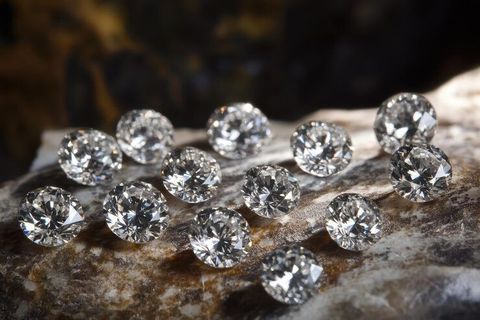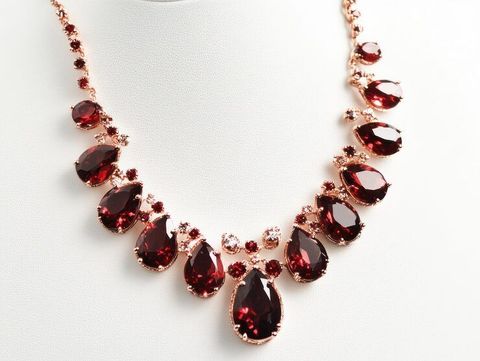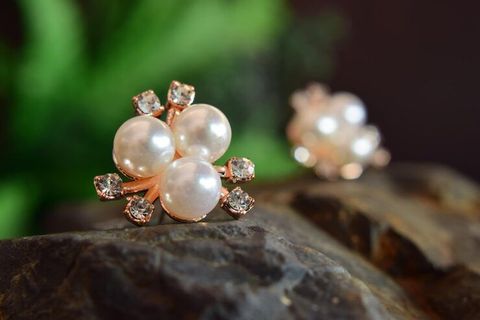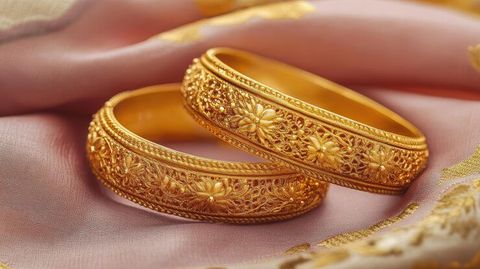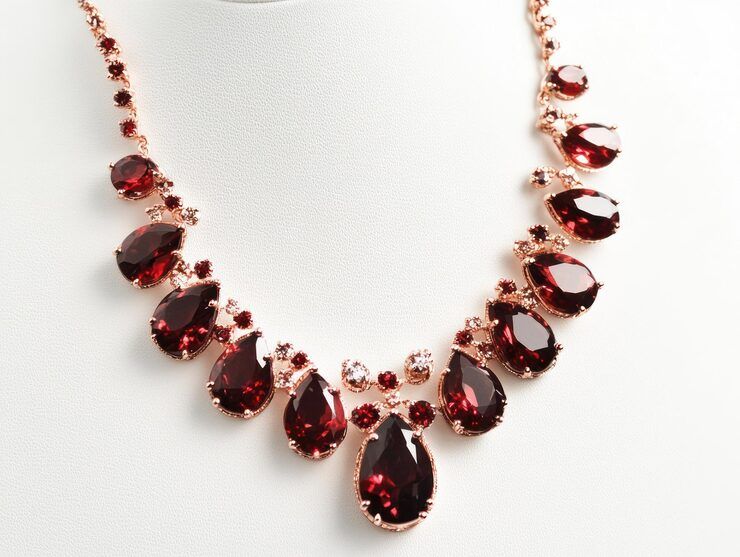
Garnet jewellery features a group of gemstones known for their rich colors, durability, and wide range of decorative applications. Although garnets are commonly associated with deep red shades, the garnet family includes stones in green, orange, pink, purple, brown, and other colors. These gemstones appear in rings, necklaces, earrings, pendants, bracelets, and decorative jewellery designs.
Garnet is not a single mineral but a group of related minerals with similar crystal structures and different chemical compositions. Important varieties include pyrope, almandine, spessartine, grossular, andradite, and uvarovite. Their differences influence color, appearance, optical properties, and suitability for different jewellery settings.
Understanding Garnet Gemstones
Garnets occur naturally in several geological environments and have been used in decorative objects and jewellery for centuries. Their colors depend partly on their chemical composition and the elements present within the crystal structure.
Almandine and pyrope are commonly associated with red garnets, while spessartine often displays orange shades. Tsavorite and demantoid are green garnet varieties that are recognized for their distinctive appearance.
Common garnet varieties include:
Almandine: Usually deep red to reddish-brown.
Pyrope: Commonly red, sometimes with vivid, dark tones.
Spessartine: Often orange to reddish-orange.
Grossular: Includes green, yellow, and orange varieties.
Andradite: Includes demantoid, a green variety known for its strong dispersion.
Uvarovite: Typically green and often found in small crystals.
Garnets vary in transparency, clarity, and brilliance. Some are transparent and suitable for faceted gemstones, while others occur as opaque or translucent materials used in beads and decorative jewellery.
Popular Garnet Jewellery Designs
Garnet's color range makes it suitable for traditional and contemporary designs. The final appearance depends on the gemstone's cut, size, setting, metal, and surrounding decorative elements.
Common jewellery styles include:
Garnet rings with solitaire or cluster settings
Garnet pendant necklaces
Stud and drop earrings
Bracelets featuring faceted garnet stones
Vintage-inspired gemstone jewellery
Garnet pieces combined with diamonds or other colored stones
Beaded necklaces and bracelets
Deep red garnets often contrast with yellow gold, while white gold and silver-colored settings can create a cooler appearance. Green garnets can be paired with neutral metals or complementary colored gemstones.
The best design depends on the intended use, personal preferences, setting durability, and the characteristics of the individual gemstone.
Why Garnet Jewellery Remains Relevant
Garnet jewellery combines natural gemstone variety with a long history of decorative use. Its range of colors makes it relevant to different jewellery traditions, from classic red gemstone rings to contemporary designs featuring green and orange stones.
Garnet as a January Birthstone
Garnet is traditionally recognized as the birthstone for January. This association makes it relevant to birthday jewellery, anniversary gifts, and personal jewellery collections.
Some people also associate garnet with commitment, friendship, protection, and vitality. These meanings belong to cultural traditions and personal beliefs rather than scientifically established gemstone properties.
Colour, Design, and Personal Style
Garnet's variety allows designers to work with several color palettes.
Deep red stones can complement traditional and vintage-inspired jewellery.
Orange garnets can provide warmer tones in contemporary designs.
Green tsavorite and demantoid garnets can create a vivid contrast with neutral metals.
Pink and purple garnets can suit softer or more unusual color combinations.
The gemstone's cut and setting influence how light interacts with the stone. Faceted garnets can display brightness and sparkle, while cabochon cuts provide a smooth, rounded surface.
Quality Factors to Understand
The main factors used to evaluate garnet gemstones include color, clarity, cut, carat weight, variety, and any treatments.
| Quality Factor | What to Examine |
|---|---|
| Color | Hue, saturation, and consistency |
| Clarity | Visible inclusions and fractures |
| Cut | Symmetry, proportions, and light return |
| Carat weight | The gemstone's measured weight |
| Variety | The specific garnet mineral type |
| Treatment | Any enhancement affecting appearance |
| Setting | Metal quality and protection around the stone |
There is no single universal grading scale that applies to every garnet variety. Descriptions such as AAA, AA, and A may be used by individual businesses, but they are not standardized grades for garnet across the industry. The Gemological Institute of America explains that garnet quality depends on the variety and the characteristics of the individual stone. <Cite refs={["turn479013search1","turn479013search4"]}/>
Recent Trends in Garnet Jewellery
During 2025 and 2026, the wider coloured gemstone jewellery market has continued to explore distinctive stones, varied textures, and designs that emphasize individual gemstone character.
An October 2026 report in the Financial Times described renewed interest in ornamental gemstones and designs that use unusual stones as focal points rather than merely as accents. Although the report was not specific to garnet, this broader trend is relevant to garnet jewellery because the mineral family includes both familiar red stones and less common green, orange, and color-changing varieties. <Cite refs={["turn479013news36"]}/>
Interest in Coloured Gemstones
Coloured gemstones provide alternatives to traditional clear gemstones in jewellery design. Garnet's broad color range supports this trend, particularly when designers select a specific variety for its distinctive appearance.
Vintage and Contemporary Designs
Vintage-inspired settings, geometric shapes, and minimalist jewellery remain useful design approaches for garnet. Antique-style metalwork can emphasize the historical character of a deep red stone, while simple settings can draw attention to unusual colors.
Greater Attention to Gemstone Identification
Gemstone identification and disclosure are important considerations in modern jewellery. Buyers and jewellery professionals increasingly rely on documented information about mineral identity, treatments, and whether a stone is natural, laboratory-created, or an imitation.
A gemological report can be particularly useful when identifying less common garnet varieties or evaluating a gemstone with unusual characteristics.
Laws, Regulations, and Gemstone Disclosure
Jewellery regulations differ between countries. Relevant rules may cover accurate product descriptions, gemstone treatments, precious-metal purity, consumer protection, imports, and the documentation of certain materials.
Gemstone Disclosure in the United States
The US Federal Trade Commission's Jewelry Guides explain how jewellery descriptions should represent gemstone identity, treatments, composition, and other material characteristics accurately.
The guidance addresses natural gemstones, laboratory-created stones, imitations, and treatments that may affect a gemstone's appearance or value. Businesses should avoid descriptions that could mislead consumers about the nature of a stone. <Cite refs={["turn479013search7","turn479013search10"]}/>
Jewellery Regulations in India
In India, jewellery businesses must follow applicable consumer-protection and product-description requirements. The Bureau of Indian Standards operates the hallmarking framework for specified precious-metal jewellery, including gold and silver categories covered by applicable requirements.
Metal hallmarking and gemstone identification are different matters. A hallmark can provide information about the precious-metal component, but it does not independently establish the identity, origin, or treatment history of a garnet.
For significant gemstone purchases, clear documentation of the stone's identity and any known treatment can help establish what the jewellery contains.
Ethical Sourcing and Origin Information
Garnets occur in several countries, including India, Brazil, Kenya, Madagascar, Sri Lanka, Tanzania, and other regions. Different varieties have different geological distributions.
Origin claims should be supported by appropriate documentation when they are important to a gemstone's description. A gemstone's color alone does not reliably establish where it was mined.
Tools and Resources for Garnet Jewellery
Several resources can help people understand gemstone characteristics and jewellery maintenance.
Gemological Reference Guides
The Gemological Institute of America provides educational information about garnet varieties, identification, gemstone quality, durability, and care.
These resources can help readers distinguish almandine, pyrope, spessartine, tsavorite, demantoid, and other garnet varieties.
Jewellery Documentation Checklist
When examining garnet jewellery, it can be useful to record:
The stated gemstone variety
Whether the stone is natural or laboratory-created
Any known treatments
Carat weight and dimensions
Metal type and purity marking
Available gemological documentation
Care instructions
Any relevant origin documentation
Gemstone Care Resources
Gemstone care guidance is particularly useful for jewellery worn regularly. Information about hardness, toughness, inclusions, and cleaning methods can help prevent accidental damage.
For unusual or treated stones, advice from a qualified gemologist can be more appropriate than relying on general cleaning instructions.
Frequently Asked Questions
Is garnet a natural gemstone?
Yes. Garnet is a group of naturally occurring minerals used in jewellery. Laboratory-created garnets and imitation materials also exist, so identification and accurate descriptions matter.
Is garnet suitable for everyday jewellery?
Garnet can be suitable for many jewellery styles, but durability depends on the variety, setting, and pattern of use. Garnets generally measure between 6.5 and 7.5 on the Mohs hardness scale, so they can be scratched or damaged by hard impacts. Rings worn daily may benefit from protective settings. <Cite refs={["turn479013search0","turn479013search5"]}/>
How should garnet jewellery be cleaned?
Warm water, mild soap, and a soft brush are generally appropriate for garnet jewellery. Rinse away dust before wiping the stone to reduce the risk of scratches. Avoid steam cleaning, and use caution with ultrasonic equipment, especially when the gemstone contains fractures or has undergone treatment. <Cite refs={["turn479013search0","turn479013search2"]}/>
Does garnet only come in red?
No. Garnet varieties occur in red, orange, green, yellow, pink, purple, brown, and other colors. The exact color range depends on the mineral variety and its chemical composition.
Is every garnet gemstone graded using the same scale?
No. There is no universal AAA, AA, or A grading system for all garnets. Color, clarity, cut, variety, and individual characteristics should be considered together.
Conclusion
Garnet jewellery combines mineral diversity, historical significance, and a broad range of design possibilities. Its varieties extend from traditional deep red gemstones to orange spessartine and green tsavorite or demantoid, providing options for different styles and settings.
Understanding gemstone quality, durability, identification, treatment disclosure, and care can help people make informed decisions about garnet jewellery. Recent interest in distinctive coloured gemstones also highlights the importance of recognizing each variety's individual characteristics rather than treating all garnets as identical.
With accurate descriptions, suitable settings, and careful maintenance, garnet jewellery can remain a meaningful part of a personal collection for many years.