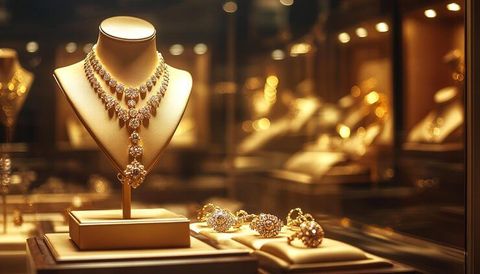
Gold jewellery has long been valued for its appearance, cultural significance, durability, and association with wealth. In many countries, it also plays a role in household savings, family traditions, inheritance, and financial planning.
However, gold jewellery is not identical to an investment in gold bullion or a financial product that tracks gold prices. The total amount paid for a jewellery piece can include the value of its gold content, craftsmanship, design, gemstones, taxes, and other charges. These components may not all be recovered when the jewellery is resold.
Understanding these differences is important for anyone comparing gold jewellery with other forms of gold investment. Gold prices can change over time, but the financial outcome of a jewellery purchase also depends on purity, transaction terms, market conditions, and the quality of documentation.
Understanding Gold Jewellery as an Asset
Gold jewellery combines a precious metal with a finished consumer product. Its value can therefore have both material and personal dimensions.
The gold content provides a measurable basis for valuation, while design, craftsmanship, cultural importance, and condition may influence its appeal to individual purchasers or collectors.
Unlike a financial instrument that represents a defined quantity of gold, a jewellery piece may include non-gold components that are treated differently during valuation.
Before making a financial comparison, it helps to distinguish between three concepts:
Intrinsic metal value: The estimated value of the actual gold content.
Retail purchase value: The amount paid for the finished jewellery, including applicable charges and taxes.
Resale value: The amount a particular transaction may return after purity testing, deductions, and other applicable adjustments.
These values can differ substantially. A piece of jewellery purchased at a particular retail price does not necessarily retain that same value in a later resale transaction.
Gold Purity and Karat Measurements
Gold purity is one of the most important factors in understanding jewellery valuation. Karat measurements indicate the proportion of gold in an alloy.
Pure gold is designated as 24 karat, while lower-karat jewellery contains a greater proportion of other metals. These metals can improve strength, durability, colour, or suitability for particular designs.
| Gold Purity | Approximate Gold Content | Common Considerations |
|---|---|---|
| 24K | 99.9% in commonly designated fine gold | Very high purity; relatively soft for many jewellery designs |
| 22K | 91.67% | Common in traditional gold jewellery |
| 18K | 75% | Often used in gemstone jewellery and detailed designs |
| 14K | 58.33% | Contains a higher proportion of strengthening alloy metals |
| 9K | 37.5% | Used in some jewellery markets |
Actual fineness should be confirmed through the product's recognized hallmark or appropriate testing rather than inferred solely from appearance.
What Buyers Often Miss Before Investing
One common misunderstanding is that the full retail price of gold jewellery represents recoverable gold value. In practice, several components can affect the amount received in a later transaction.
Making Charges and Design Premiums
Making charges cover the work involved in turning gold into a finished piece. These charges can vary according to design complexity, manufacturing methods, craftsmanship, and the pricing structure used by the retailer.
Some jewellery also carries a design premium because of intricate workmanship or distinctive features. Such premiums may not be reflected in the metal value during resale.
Gemstones and Non-Gold Components
Gemstones, enamel, clasps, solder, and other materials can complicate valuation. A transaction based primarily on gold weight may exclude some or all of the original value assigned to these components.
Before making a financial comparison, understand whether the stated weight includes stones and other non-gold materials.
Resale Deductions
The amount received when jewellery is resold depends on the transaction terms and the party assessing the item. Possible deductions can relate to purity testing, impurities, non-gold components, or refining requirements.
A written explanation of the valuation method can help clarify the difference between the gold's estimated market value and the amount payable in a particular transaction.
Recent Gold Market Trends
Gold markets experienced significant changes during 2025 and 2026, influencing jewellery affordability and consumer preferences.
According to the World Gold Council's report published on January 29, 2026, global gold jewellery demand declined from approximately 1,867 tonnes in 2024 to 1,542 tonnes in 2025, a decrease of about 18%. However, the value of global jewellery demand increased to a record US$172 billion as higher gold prices outweighed lower purchase volumes.
The Council's July 30, 2026, report also found that global jewellery demand remained under pressure during the second quarter of 2026, with demand falling approximately 17% year over year.
These figures highlight an important distinction: higher spending on jewellery does not necessarily mean consumers are acquiring more gold by weight.
Other trends include:
Greater interest in lightweight jewellery designs.
Continued use of jewellery exchange arrangements.
Increased attention to gold purity and documentation.
Comparisons between physical jewellery and other gold investment options.
Greater sensitivity to gold prices, currency movements, and taxes.
Historical market data describes past conditions; it does not establish how gold prices will perform in the future.
Laws, Hallmarking, and Tax Policies
Rules governing gold jewellery differ by country. In India, hallmarking requirements, consumer protection measures, and applicable taxes are particularly relevant.
BIS Hallmarking in India
The Bureau of Indian Standards administers India's gold hallmarking framework. Hallmarking helps identify the declared purity of gold jewellery.
Under the Hallmark Unique Identification system, commonly known as HUID, eligible hallmarked jewellery carries a unique identification code that can be checked through official BIS facilities.
Consumers should examine the hallmark and invoice details and verify the item's information through the appropriate official system where applicable. Hallmarking provides important purity information but does not guarantee that a jewellery piece will retain its original retail value.
Taxes and Documentation
Gold jewellery transactions in India can involve Goods and Services Tax (GST). The applicable treatment depends on the nature of the transaction and current tax rules.
Invoices should clearly document the jewellery description, purity, weight, applicable charges, and taxes. These records can help with future valuation, insurance documentation, or disputes.
International purchasers should also consider local import duties, customs requirements, and tax rules where relevant.
Tools and Resources for Gold Jewellery Valuation
Several resources can help consumers understand the financial components of a jewellery purchase.
Bureau of Indian Standards: Hallmarking requirements and HUID verification.
World Gold Council: Research on gold prices, jewellery demand, and global market trends.
Official tax guidance: Current GST and consumer taxation rules in the relevant country.
Jewellery invoices and valuation reports: Records of purity, weight, stones, and transaction terms.
Gold price calculators: Tools for estimating the metal value based on weight, purity, and a specified gold price.
A simple metal-value calculation is:
For example, 10 grams of 22K gold contains approximately 9.167 grams of pure gold. The estimated metal value can be calculated using the relevant pure-gold price, but this figure excludes making charges, taxes, gemstones, and transaction-specific deductions.
Frequently Asked Questions
Is gold jewellery a reliable investment?
Gold jewellery can retain material value, but its financial performance depends on gold prices, purity, initial charges, and resale conditions. It should not be assumed to provide a guaranteed return.
Which gold purity is commonly used for jewellery?
Common purities include 22K, 18K, and 14K. The appropriate choice depends on the design, durability requirements, local standards, and personal preferences.
Do making charges increase resale value?
Not necessarily. Making charges cover manufacturing and craftsmanship, but they may not be recovered during resale. The treatment depends on the transaction terms and the jewellery's characteristics.
Why is hallmarking important?
Hallmarking provides information about declared gold purity and supports verification. It helps consumers assess the metal content but does not determine the future market price or guarantee a particular resale amount.
How can the value of gold jewellery be estimated?
An estimate can be prepared using the net gold weight, purity, and current gold price for the relevant market. The final transaction amount may differ because of deductions, taxes, and other applicable terms.
Conclusion
Gold jewellery combines precious-metal value with craftsmanship, cultural significance, and personal use. Understanding purity, making charges, gemstone valuation, resale deductions, hallmarking, and taxes helps clarify how jewellery differs from other forms of gold investment.
Market developments during 2025 and 2026 illustrate how rising gold prices can increase the total value of jewellery demand even while the quantity of gold purchased declines. These trends reinforce the importance of evaluating both financial considerations and personal preferences.
Before making a decision, review the jewellery's documentation, verify its purity, understand the applicable transaction terms, and compare the estimated recoverable metal value with the full amount payable. Gold prices fluctuate, and jewellery should not be treated as a guaranteed source of profit or a substitute for a carefully considered financial plan.