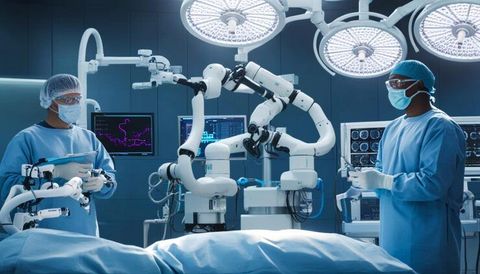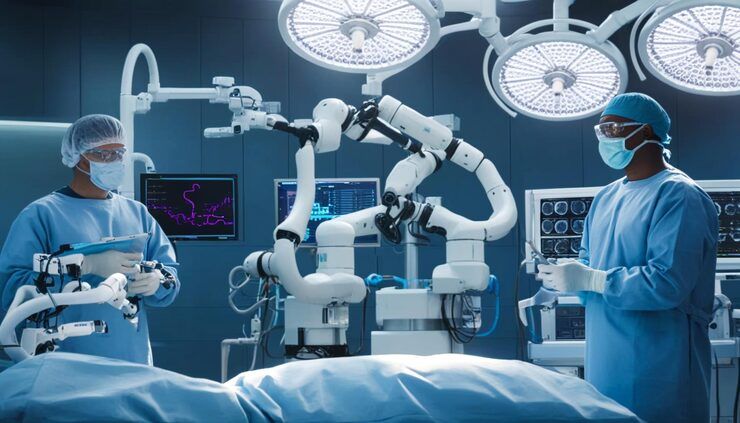
Robotics in surgery refers to the use of computer-controlled instruments, robotic arms, cameras, and specialized software to assist surgeons during medical procedures. These systems are designed to help clinicians perform complex movements with precision while viewing the operating area through advanced imaging technology.
Robotic-assisted surgery is used in several medical specialties, including urology, gynecology, general surgery, thoracic surgery, and selected orthopedic procedures. The technology does not generally replace the surgeon. Instead, the surgeon controls the system and makes the clinical decisions throughout the operation.
The development of surgical robotics is closely connected with advances in minimally invasive surgery, digital imaging, computer engineering, and medical instrument design. These technologies aim to improve access to difficult anatomical areas while supporting controlled movements and detailed visualization.
Understanding Surgical Robotics
A typical robotic surgery system contains several interconnected components. The surgeon operates from a console or control interface, while robotic arms hold and move surgical instruments positioned near the patient.
A camera provides a magnified view of the operating area. Depending on the system, the surgeon may receive a three-dimensional image and use hand controls to direct instrument movements.
Common components include:
Surgeon console: Allows the surgeon to control instruments and view the surgical field.
Robotic arms: Position and move instruments during the procedure.
Endoscopic camera: Provides an internal view of the operating area.
Surgical instruments: Perform tasks such as cutting, grasping, suturing, and dissection.
Imaging systems: Help clinicians examine anatomical structures.
Control software: Translates the surgeon's movements into instrument movements and supports system monitoring.
The exact configuration varies by manufacturer, specialty, and procedure.
How Robotic-Assisted Surgery Works
Robotic-assisted surgery typically begins with anesthesia, patient positioning, and preparation of the surgical area. The clinical team then places the required instruments and camera through small incisions or other appropriate access points.
The surgeon controls the instruments while monitoring the operating field. Depending on the procedure, the system may support fine movements, improved visualization, and instrument articulation within confined spaces.
Robotic systems operate within defined technical and safety limits. They do not independently make clinical decisions in conventional surgeon-controlled procedures.
After the operation, the care team monitors the patient and provides appropriate recovery instructions.
Why Robotics in Surgery Matters
Robotic-assisted surgery has become an important area of medical technology because it can help surgeons perform certain procedures through minimally invasive approaches. Its relevance depends on the operation, the patient's condition, the surgeon's training, and the capabilities of the available system.
Potential Clinical Benefits
Depending on the procedure, robotic assistance may provide:
Magnified views of anatomical structures
Greater instrument articulation in confined spaces
Controlled movements during delicate tasks
Support for minimally invasive surgical techniques
Improved ergonomics for surgeons
Consistent positioning of cameras and instruments
In appropriate cases, minimally invasive surgery may reduce incision size, postoperative discomfort, or hospital recovery time compared with some traditional open procedures. However, these outcomes are not guaranteed, and robotic assistance does not automatically produce better results.
Applications Across Medical Specialties
Robotic systems are used in several areas of modern medicine.
Urology: Robotic assistance is commonly used for procedures such as prostate removal and selected kidney operations.
Gynecology: Certain hysterectomies and other pelvic procedures may be performed using robotic-assisted techniques.
General surgery: Selected hernia repairs, colorectal procedures, and operations involving the abdomen may use surgical robotics.
Thoracic surgery: Robotic systems can support selected operations involving structures within the chest.
Orthopedic surgery: Some systems assist with planning and execution during joint replacement and other orthopedic procedures. These systems may use robotic guidance to help surgeons position instruments or prepare bone surfaces.
The suitability of each approach depends on clinical evidence, patient characteristics, and the experience of the surgical team.
Recent Developments in Surgical Robotics
During 2025 and 2026, surgical robotics continued to develop through improvements in imaging, instrument design, digital planning, and regulatory evaluation.
Expansion of Robotic Surgery Systems
Medical technology manufacturers continued developing robotic platforms for different surgical specialties. These systems vary in their instrument designs, imaging capabilities, operating methods, and intended procedures.
An important trend is the development of specialized systems rather than relying exclusively on one platform for multiple types of surgery.
Artificial Intelligence and Surgical Data
Artificial intelligence is increasingly being studied for surgical planning, image interpretation, workflow analysis, and the assessment of surgical performance.
Research also examines whether computer vision can identify instruments, recognize surgical steps, and help clinicians review procedural data.
These applications remain subject to different levels of clinical validation. Experimental capabilities should not be confused with established autonomous surgery.
Single-Port and Flexible Robotic Systems
Some newer platforms focus on placing multiple instruments through a single access point or using flexible instruments to reach difficult anatomical areas.
The potential advantages depend on the procedure and patient. Single-port techniques can also introduce technical challenges, including instrument crowding and restricted movement.
Important Considerations in 2025–2026
Developments in surgical robotics should be evaluated through published clinical studies, regulatory decisions, and evidence about patient outcomes.
Technology Area | Main Objective | Important Consideration |
|---|---|---|
Robotic instrument control | Precise instrument movement | Surgeon training |
Advanced imaging | Better visualization | Image quality and interpretation |
AI-assisted analysis | Support planning and review | Clinical validation |
Single-port systems | Reduce access points in selected procedures | Procedure suitability |
Orthopedic robotics | Support surgical alignment and planning | Patient-specific anatomy |
Remote connectivity | Support technical communication | Cybersecurity and reliability |
The presence of advanced technology alone does not establish that a procedure is safer or more effective than an alternative.
Laws, Regulations, and Patient Safety
Surgical robotics is regulated as part of the broader medical device and healthcare framework. Requirements differ between countries, but generally address device safety, clinical evidence, manufacturing quality, labeling, training, and post-market monitoring.
Medical Device Regulation in the United States
The US Food and Drug Administration regulates medical devices, including surgical robotic systems. Depending on the device and its classification, regulatory pathways may include premarket notification, De Novo classification, or premarket approval.
Regulatory authorization applies to specified intended uses. It does not mean that every possible procedure using a device has been established as safe and effective.
Healthcare institutions must also follow applicable requirements for equipment maintenance, clinical practice, infection prevention, and patient safety.
Medical Device Regulation in Europe
In the European Union, medical devices are governed primarily by the Medical Device Regulation, Regulation (EU) 2017/745.
The framework includes requirements related to device safety, clinical evaluation, conformity assessment, post-market surveillance, and reporting of serious incidents.
Manufacturers and healthcare institutions must follow applicable rules according to their responsibilities and the type of device involved.
Medical Device Regulation in India
In India, medical devices are regulated under the Medical Devices Rules, 2017, and relevant provisions of the Drugs and Cosmetics Act, 1940, as applicable.
The Central Drugs Standard Control Organisation oversees important medical device regulatory functions. Requirements can include licensing, quality systems, safety documentation, and regulatory oversight depending on device classification and intended use.
Patient Consent and Clinical Responsibility
Before robotic-assisted surgery, patients should receive clear information about the procedure, potential benefits, risks, alternatives, and the possibility of changing to another surgical approach if necessary.
The surgeon remains responsible for clinical decisions in conventional surgeon-controlled robotic procedures. Hospitals should also ensure that personnel are trained to operate the system and respond to technical problems.
Tools and Resources for Surgical Robotics
Several resources help patients, healthcare professionals, and researchers understand surgical robotics.
Regulatory Databases
Official medical device databases can help verify device authorization, intended uses, safety notices, and regulatory updates.
Useful resources include:
US Food and Drug Administration medical device databases
European medical device regulatory information
India's Central Drugs Standard Control Organisation
National health authority guidance
Manufacturer instructions for use and safety documentation
Clinical Research Resources
Medical research databases help users examine evidence about robotic-assisted surgery.
When reviewing a study, consider the type of procedure, number of participants, comparison group, follow-up period, complication rates, and whether the findings apply to the patient population being considered.
Training and Simulation
Surgical simulation systems can help clinicians practise instrument control, suturing, camera positioning, and procedural coordination in a controlled environment.
Training requirements vary by device, institution, specialty, and professional standards. Simulation does not replace supervised clinical training or appropriate competency assessment.
Patient Discussion Checklist
Patients considering robotic-assisted surgery can discuss the following questions with their medical team:
Why is robotic assistance appropriate for this procedure?
What alternatives are available?
What are the main risks and expected recovery considerations?
How experienced is the surgical team with this procedure?
What happens if the robotic system cannot be used?
What follow-up care will be required?
These questions support informed decision-making without assuming that one surgical method is suitable for everyone.
Frequently Asked Questions
What is robotic-assisted surgery?
Robotic-assisted surgery uses computer-controlled instruments and imaging technology to help a surgeon perform an operation. In conventional systems, the surgeon controls the instruments and remains responsible for clinical decisions.
Is robotic surgery better than traditional surgery?
Not in every situation. Some procedures may benefit from robotic assistance, while others may have similar outcomes with laparoscopic or open techniques. The appropriate approach depends on the procedure, clinical evidence, and the patient's circumstances.
Does a surgical robot operate independently?
Most established surgical robotic systems require direct surgeon control. Some experimental technologies can automate limited tasks under controlled conditions, but this is different from a fully autonomous system independently performing an operation.
What are the potential risks of robotic surgery?
Risks can include bleeding, infection, injury to nearby structures, anesthesia-related complications, and technical problems. The specific risks depend on the procedure, the patient's health, and the surgical system being used.
How can patients evaluate a robotic surgery system?
Patients can discuss the system's intended use, clinical evidence, the surgeon's experience, available alternatives, and relevant regulatory authorization with their healthcare team.
Conclusion
Robotics in surgery represents an important development in medical engineering, combining advanced instruments, imaging, computer control, and specialized surgical techniques. Its applications extend across urology, gynecology, general surgery, thoracic surgery, and selected orthopedic procedures.
Recent developments in artificial intelligence, flexible instruments, and procedure-specific robotic platforms continue to expand research possibilities. However, technological progress must be evaluated alongside clinical evidence, regulatory oversight, patient safety, and the experience of the surgical team.
Robotic assistance is not automatically the best option for every operation. Understanding its capabilities, limitations, risks, and alternatives helps patients and healthcare professionals make informed decisions based on individual clinical needs and established medical evidence.