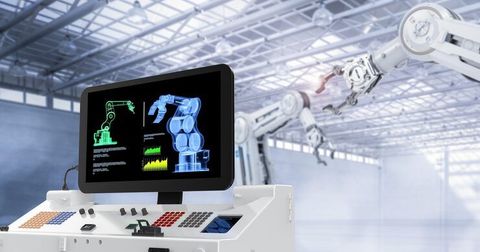
Artificial intelligence (AI) infrastructure refers to the computing systems, software, energy resources, and physical facilities required to develop, train, and operate AI models. It includes graphics processing units (GPUs), specialized AI accelerators, data centers, high-speed networking equipment, cloud computing platforms, storage systems, and cooling technologies.
The rapid adoption of generative AI, machine learning, and large language models has increased demand for these resources. Businesses, research institutions, technology companies, and governments are investing in infrastructure capable of processing enormous quantities of data and supporting increasingly complex AI applications.
However, building and maintaining this infrastructure requires substantial capital investment. High-performance chips, electricity, advanced cooling systems, specialized buildings, and network connections all contribute to the financial requirements of AI computing.
What Drives AI Infrastructure Expenses?
Several interconnected factors influence the amount organizations spend on AI infrastructure.
AI chips and GPU computing: Advanced processors are expensive to manufacture, and high-performance systems often require multiple accelerators operating together.
Data center construction: AI facilities need suitable buildings, electrical infrastructure, backup power, security, and specialized cooling.
Cloud computing infrastructure: Organizations using rented computing capacity must account for accelerator usage, storage, networking, and data transfer.
Energy consumption: AI workloads can require substantial electricity, particularly when large clusters operate continuously.
Cooling technology: High-density computing equipment generates considerable heat and may require liquid cooling or other advanced thermal management systems.
Networking and storage: Training large models requires rapid communication between processors and efficient access to extensive datasets.
These expenses vary according to model size, workload, utilization, hardware configuration, and the scale of deployment. Consequently, two organizations using AI may have very different infrastructure requirements.
Why Rising AI Infrastructure Expenses Matter
The growing financial requirements of AI infrastructure affect how organizations plan technology investments and develop digital strategies. Infrastructure decisions influence operating budgets, research capabilities, product development timelines, and the ability to expand AI applications.
Impact on Businesses and Technology Companies
Large technology companies often invest in dedicated data centers and advanced computing clusters. Smaller organizations may depend on cloud platforms to avoid building their own facilities, although cloud usage can become expensive when workloads are continuous or poorly optimized.
The main challenges include:
Balancing AI performance against computing expenditure.
Estimating future electricity and data center requirements.
Choosing between dedicated hardware and cloud computing.
Managing the financial risks of rapidly changing technology.
Maintaining sufficient computing capacity as demand increases.
For example, a company training a large language model may need thousands of accelerators operating together. An organization using AI for document classification or customer support may require substantially less computing power, especially when using smaller models.
Effects on Consumers, Researchers, and the Wider Economy
Infrastructure expenditure can influence the pricing and availability of AI-powered applications. However, infrastructure expenses are only one factor in determining the final price of a product or subscription.
Universities and research laboratories may face challenges obtaining enough computing capacity for advanced experiments. Governments must also consider electricity infrastructure, environmental impacts, domestic semiconductor capabilities, and national technology priorities.
At the same time, investment in AI infrastructure can support innovation in semiconductor manufacturing, data center engineering, renewable energy, cooling systems, and high-speed networking.
Comparing Major Infrastructure Expense Categories
Infrastructure component | Main financial driver | Long-term consideration |
|---|---|---|
GPUs and AI accelerators | Hardware acquisition and replacement | Performance and useful lifespan |
Data centers | Construction and electrical systems | Capacity and expansion requirements |
Electricity | Workload demand and energy rates | Power availability and efficiency |
Cooling systems | Heat removal and thermal management | Reliability and water consumption |
Networking | High-speed interconnects | Bandwidth and communication delays |
Cloud computing | Usage, storage, and data movement | Workload optimization and utilization |
The table shows why AI infrastructure planning involves more than purchasing processors. The entire computing environment must operate efficiently to support sustainable deployment.
Recent Developments in AI Infrastructure During 2025–2026
Investment in AI computing continued to expand during 2025 and 2026, with technology companies focusing on larger data centers, specialized processors, advanced memory, and electricity infrastructure. These developments highlight the growing financial commitments required to support increasingly demanding AI workloads.
Rising Global Infrastructure Investment
On September 2, 2026, PwC projected that cumulative global investment in AI infrastructure could reach approximately US$31.6 trillion through 2050. Its outlook highlighted recurring semiconductor upgrades and electricity availability as major influences on long-term investment.
In July 2026, IDC raised its forecast for worldwide AI infrastructure spending to US$497 billion for the year, reflecting continued demand for accelerated computing systems.
These figures are forecasts, not confirmed final spending totals. Different research organizations also use different definitions of AI infrastructure, so their estimates should not be directly compared without examining their methodology.
Advanced Chips and Memory Technologies
AI infrastructure increasingly relies on specialized accelerators and high-bandwidth memory. These components help processors handle the large datasets and calculations required for model training and inference.
Important developments include:
New generations of GPU computing platforms designed for demanding AI workloads.
Custom AI accelerators developed by major cloud computing companies.
Advanced memory systems that improve data transfer between processors and storage.
More integrated server designs that combine processors, networking, and cooling.
Although newer hardware can improve performance, organizations must consider its acquisition expenses, electricity requirements, compatibility, and replacement cycles before upgrading.
Data Center Electricity and Cooling
Electricity availability has become a major consideration in AI infrastructure planning. High-density computing clusters require reliable power distribution, backup systems, and effective heat management.
Some operators are exploring liquid cooling, renewable electricity procurement, improved energy monitoring, and more efficient data center designs. These approaches can improve resource efficiency, although their effectiveness depends on the facility and workload.
Laws, Policies, and Government Programs
AI infrastructure is affected by regulations covering data protection, cybersecurity, electricity, environmental protection, construction, and semiconductor supply chains. The applicable requirements depend on where a facility operates and which organizations use its computing resources.
India's AI Infrastructure Policy
India's AI development strategy includes the IndiaAI Mission, approved by the Union Cabinet on March 7, 2024, with an outlay of approximately ₹10,372 crore.
The initiative supports shared computing capacity, AI research, datasets, domestic model development, and broader participation in AI innovation. During 2025 and 2026, government updates highlighted efforts to expand access to computing resources and strengthen India's AI ecosystem.
In December 2025, the Office of the Principal Scientific Adviser released a white paper on making AI infrastructure more accessible. India also published AI governance guidelines in November 2025, followed by further government communications in 2026.
These initiatives are relevant to infrastructure planning because public computing programs can help researchers and smaller organizations access advanced hardware without independently constructing large computing facilities.
International Regulations and Environmental Requirements
Other jurisdictions also influence the development and operation of AI infrastructure.
European Union: The AI Act establishes obligations for certain AI systems and general-purpose AI models, with requirements phased in according to the applicable provisions. Data protection rules may also affect AI data processing.
United States: Federal and state policies, electricity regulation, environmental permits, semiconductor export controls, and data protection requirements can affect AI infrastructure projects.
International environmental standards: Energy efficiency, water use, emissions, and electronic waste management are increasingly relevant to data center planning.
Regulatory obligations differ by jurisdiction. Organizations should distinguish between binding legislation, government guidance, voluntary standards, and proposed policy changes.
Tools and Resources for AI Infrastructure Planning
Organizations can use financial models, technical benchmarks, energy calculators, and monitoring platforms to understand their computing requirements and evaluate different infrastructure strategies.
Useful Tools
Cloud pricing calculators: Estimate expenditure for virtual machines, GPUs, storage, and network usage based on selected configurations.
GPU benchmarks: Compare processor performance across model training, inference, and other computing workloads.
Energy usage calculators: Estimate electricity consumption from computing capacity, utilization, and operating hours.
Data center efficiency metrics: Power Usage Effectiveness (PUE) compares total facility energy with the energy used by IT equipment.
FinOps platforms: Help teams monitor cloud usage, identify unused resources, and allocate spending across projects.
AI model evaluation tools: Measure model performance, latency, throughput, and resource utilization.
Example of an AI Computing Expense Estimate
Consider a hypothetical AI workload that runs on eight accelerators for 10 hours per day over 30 days.
Measurement | Example |
|---|---|
Number of accelerators | 8 |
Daily operating time | 10 hours |
Monthly operating days | 30 |
Monthly accelerator-hours | 2,400 |
Illustrative rate per accelerator-hour | US$2 |
Estimated monthly compute expense | US$4,800 |
This simplified example excludes storage, networking, electricity charged separately, taxes, and other infrastructure expenses. The assumed hourly rate is illustrative, not a current market quotation.
Calculations like this help organizations estimate computing requirements before selecting a deployment model.
Frequently Asked Questions
Why is AI infrastructure becoming more expensive?
Growing demand for advanced processors, high-bandwidth memory, data center capacity, electricity, and cooling equipment contributes to rising infrastructure expenses. Supply constraints and rapid hardware replacement can add further pressure.
What is the largest expense in AI infrastructure?
The largest component varies by project. AI accelerators and servers can represent a substantial initial investment, while electricity, cooling, cloud usage, and hardware upgrades contribute to ongoing expenses.
Can smaller companies develop AI without building data centers?
Yes. Smaller organizations can use cloud computing, shared research facilities, managed GPU platforms, or smaller AI models. Selecting the appropriate model size and limiting unnecessary computing can help manage expenditure.
How can organizations improve AI infrastructure efficiency?
Organizations can monitor accelerator utilization, optimize model size, select efficient hardware, schedule workloads carefully, reduce unnecessary data movement, and improve cooling performance. Regular benchmarking helps determine whether these measures maintain acceptable AI performance.
Will AI infrastructure expenses eventually decrease?
Some expenses per unit of computing may decline as hardware improves, software becomes more efficient, and infrastructure utilization increases. However, total spending may continue rising if demand for AI computing grows faster than efficiency improves. Future outcomes will depend on technology, electricity availability, supply chains, and adoption patterns.
Conclusion
The rising financial requirements of AI infrastructure reflect the growing computing power needed to develop and operate modern artificial intelligence systems. Advanced processors, memory, data centers, electricity, cooling, and networking all contribute to the resources required for large-scale AI deployment.
Developments during 2025 and 2026 demonstrate that infrastructure planning is becoming a strategic priority for technology companies, research institutions, governments, and businesses across multiple industries.
Organizations can respond by evaluating computing needs carefully, monitoring resource utilization, comparing infrastructure options, and incorporating energy efficiency into long-term planning. As AI technology evolves, balancing performance, affordability, reliability, and environmental responsibility will remain essential to sustainable AI development.