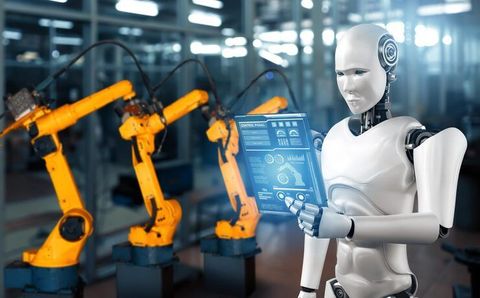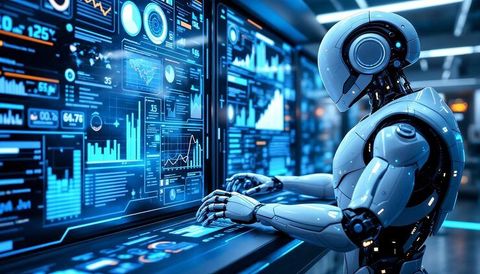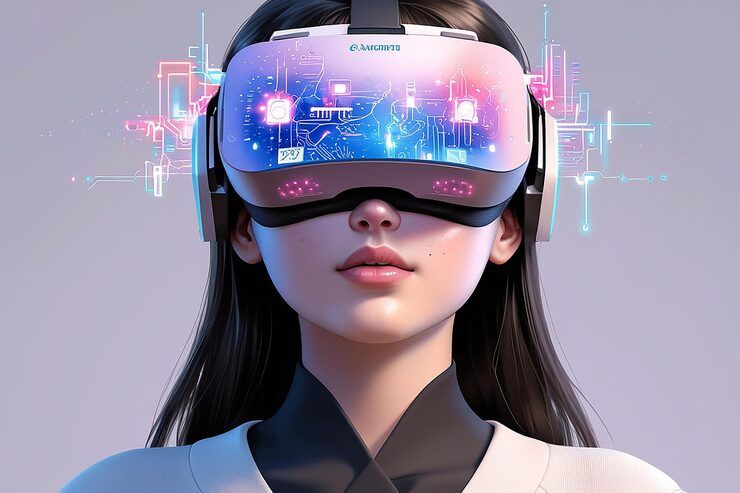
AI avatars in the metaverse are digital representations of people, fictional characters, or virtual identities that use artificial intelligence to interact with users and digital environments. Unlike traditional avatars, which generally follow predefined animations or user commands, AI-powered avatars can incorporate natural language processing, speech recognition, machine learning, and generative AI to respond dynamically.
The metaverse refers to interconnected or immersive digital environments where people can communicate, explore virtual spaces, participate in activities, and interact with digital objects. These environments may use virtual reality (VR), augmented reality (AR), desktop applications, or mobile devices.
AI avatars make these experiences more interactive by enabling conversations, personalized assistance, and more natural digital communication. Depending on their design, they may represent an individual, act as a virtual guide, simulate a character, or support learning in a digital environment.
How AI Avatars Work
An AI avatar combines several technologies to interpret information and produce responses. A user might communicate through text, voice, gestures, or movements, depending on the platform.
Common technologies include:
Natural language processing: Helps an avatar understand and generate human language.
Machine learning: Supports pattern recognition and adaptation based on permitted data and system design.
Generative AI: Produces conversational responses, descriptions, and other digital content.
Computer vision: Interprets selected visual information, such as facial expressions or body movements.
Speech synthesis: Converts generated text into spoken audio.
Real-time 3D rendering: Displays the avatar and its movements in a virtual environment.
For example, an AI-powered museum guide could answer questions about an exhibit, provide explanations in different languages, and direct visitors through a virtual gallery. The quality of its responses depends on the underlying AI model, available information, and platform capabilities.
Types of AI Avatars
AI avatars can serve different purposes based on their appearance, behavior, and level of autonomy.
Personal digital avatars: Represent individuals in virtual meetings, social environments, or immersive experiences.
Conversational avatars: Communicate through text or speech and respond to user questions.
Virtual learning characters: Explain concepts, conduct simulations, and support educational activities.
Digital brand representatives: Present information about an organization's products, processes, or activities.
AI-driven fictional characters: Participate in interactive storytelling, games, and virtual worlds.
Digital human avatars: Use realistic facial features, expressions, and synthesized speech to resemble human communication.
Not every digital character is AI-powered. Some avatars use fixed animations and scripted dialogue, while others generate responses dynamically using artificial intelligence.
Importance of AI Avatars in the Metaverse
AI avatars are changing how people communicate, learn, collaborate, and participate in virtual environments. By combining interactive digital characters with conversational AI, metaverse platforms can create experiences that feel more responsive than conventional online interfaces.
Applications Across Different Industries
AI avatars have potential applications in several fields.
Education and training: Virtual instructors can explain difficult concepts, answer questions, and guide learners through simulations.
Healthcare education: Digital characters can demonstrate general health information and simulate communication scenarios. They should not replace qualified medical professionals.
Retail and product visualization: Virtual representatives can explain product features and help users explore digital representations of physical objects.
Tourism and cultural heritage: AI guides can describe historical locations, explain cultural traditions, and support multilingual interaction.
Corporate collaboration: Digital avatars can participate in virtual meetings, training exercises, and collaborative environments.
Entertainment and gaming: AI-driven characters can respond to player decisions and support interactive storytelling.
Benefits and Limitations
AI avatars can make virtual environments more accessible by supporting different languages, communication styles, and interaction methods. They can also help users practice tasks in simulated environments before performing them in real-world settings.
However, these benefits depend on the quality of the underlying technology. AI-generated responses may contain errors, and realistic avatars may create misleading impressions about a character's identity or knowledge.
Important limitations include:
Dependence on computing power and reliable network connections.
Privacy risks involving voice recordings, facial features, and movement data.
Potential bias in speech recognition or avatar representation.
Difficulty distinguishing simulated expressions from genuine human emotions.
Accessibility challenges for people with certain disabilities or limited access to immersive devices.
Responsible design requires clear disclosure, appropriate data protection, and safeguards against impersonation.
Recent Developments in AI Avatars
During 2025 and 2026, generative AI, real-time speech systems, digital humans, and interactive virtual characters continued to develop. These advances are influencing how AI avatars are designed and used in immersive digital environments.
More Natural Conversations
Modern conversational AI can support more fluid dialogue, multilingual communication, and responses that take previous exchanges into account. When integrated with a digital character, these capabilities can make virtual interactions feel more natural.
Some systems combine speech recognition, language models, voice generation, and facial animation to synchronize spoken responses with an avatar's expressions and movements.
Nevertheless, natural-sounding conversation does not necessarily indicate accurate information or human-level understanding. Developers must consider response quality, latency, and appropriate boundaries.
Generative 3D Characters
Generative AI tools are increasingly used to assist with character concepts, textures, facial animation, and virtual environment development. These capabilities can simplify parts of the digital character creation process.
The following table summarizes key technology trends.
Technology trend | Main capability | Potential application |
|---|---|---|
Conversational AI | Context-aware dialogue | Virtual guides |
Real-time speech synthesis | Generated spoken responses | Digital presenters |
AI facial animation | Expressions synchronized with speech | Digital humans |
Generative 3D tools | Assisted character creation | Virtual worlds |
Motion tracking | Translation of physical movement | Immersive experiences |
Multimodal AI | Processing text, audio, and visual inputs | Interactive simulations |
Greater Attention to AI Transparency
On August 2, 2026, transparency obligations under Article 50 of the European Union's AI Act began applying. These provisions address disclosure when people interact directly with certain AI systems and the marking or disclosure of specified AI-generated or manipulated content, subject to the applicable conditions and exceptions.
This development is relevant to conversational avatars, synthetic digital humans, and virtual characters that could be mistaken for real people. Organizations operating internationally should assess which rules apply to their specific products and audiences.
Laws and Policies Affecting AI Avatars
AI avatars can involve personal data, synthetic media, biometric information, intellectual property, and online safety. The applicable rules depend on where users are located, where an organization operates, and how its technology is used.
Regulatory Considerations in India
India's legal framework includes several laws that may affect AI avatar development and deployment.
Information Technology Act, 2000: Relevant provisions address certain forms of identity theft, impersonation, privacy violations, and unlawful digital content. These provisions may become relevant when an avatar is used to impersonate someone or distribute harmful synthetic media.
Digital Personal Data Protection Act, 2023: This legislation establishes a framework for processing digital personal data, subject to its scope, applicable provisions, and commencement arrangements. Organizations should assess their obligations when collecting or processing identifiable user information through avatars.
Information Technology Rules, 2021: Applicable requirements concerning online intermediaries and digital content may be relevant to platforms hosting avatar interactions or user-generated synthetic media.
Practical Compliance Measures
Organizations developing or operating AI avatars should consider the following safeguards:
Explain clearly when users are interacting with an AI-generated character.
Obtain appropriate permission before using a real person's likeness or voice.
Collect only the personal information necessary for the intended purpose.
Protect recordings, account information, and biometric data through suitable security controls.
Establish procedures for reporting impersonation, harassment, and harmful content.
Review applicable age-related protections when children may use the platform.
These measures provide a practical starting point, but they do not replace a legal assessment of the specific application.
Tools and Resources for AI Avatar Development
Different platforms support avatar creation, conversational intelligence, 3D modeling, and immersive application development. The appropriate combination depends on the intended environment and the level of technical complexity.
Commonly Used Development Tools
Unity: A real-time development platform used to create interactive 3D applications and virtual environments.
Unreal Engine: A development engine used for immersive experiences, animation, and realistic digital characters.
Blender: A 3D creation application for modeling, rigging, animation, and rendering.
NVIDIA Audio2Face: Technology designed to generate facial animation from audio inputs.
MetaHuman: A framework for creating realistic digital human characters.
Speech recognition and text-to-speech tools: Technologies that enable spoken interaction with virtual characters.
AI model evaluation frameworks: Tools for testing conversational accuracy, response consistency, and safety.
How to Evaluate an AI Avatar Platform
Before selecting a platform, consider its technical capabilities and intended use.
Evaluation factor | Questions to consider |
|---|---|
Visual quality | Does the avatar meet the required design standards? |
Conversational accuracy | Can it respond reliably to relevant questions? |
Integration | Does it work with the selected virtual environment? |
Data privacy | How are recordings and personal information handled? |
Accessibility | Are captions, keyboard controls, and alternative inputs supported? |
Performance | Does the application respond smoothly on target devices? |
Safety | Are there safeguards against impersonation and harmful outputs? |
Testing with representative users can help identify usability problems before a wider deployment.
Frequently Asked Questions
What is an AI avatar in the metaverse?
An AI avatar is a digital character that uses artificial intelligence to communicate or respond to users within a virtual environment. It may represent a person, a fictional character, or an automated virtual guide.
How are AI avatars different from traditional avatars?
Traditional avatars generally rely on user-controlled movements or predefined behaviors. AI avatars can additionally generate conversational responses, interpret selected inputs, and adapt their behavior according to the system's design.
Can AI avatars communicate in multiple languages?
Yes. AI avatars can support multiple languages when their underlying language models, speech recognition systems, and voice-generation tools support them. Accuracy and pronunciation can vary across languages.
Are AI avatars safe to use?
They can be used responsibly when appropriate safeguards are in place. Users should consider privacy settings, data collection practices, identity verification, and the possibility of inaccurate or manipulated content.
What is the future of AI avatars in the metaverse?
Future development may include more natural conversations, improved real-time animation, multilingual interactions, and deeper integration with immersive environments. Adoption will depend on technical performance, user trust, accessibility, and regulatory compliance.
Conclusion
AI avatars are an evolving part of the metaverse, combining digital identity, conversational artificial intelligence, and immersive technology. Their applications extend across education, entertainment, tourism, training, and virtual collaboration.
Advances in generative AI and real-time animation are making digital characters more interactive, while privacy, transparency, and identity protection remain important challenges.
The long-term value of AI avatars will depend on their usefulness, reliability, and responsible implementation. By evaluating technical capabilities alongside user safety and applicable regulations, developers and organizations can make better-informed decisions about incorporating AI avatars into virtual environments.