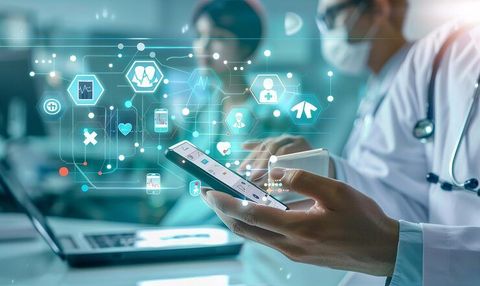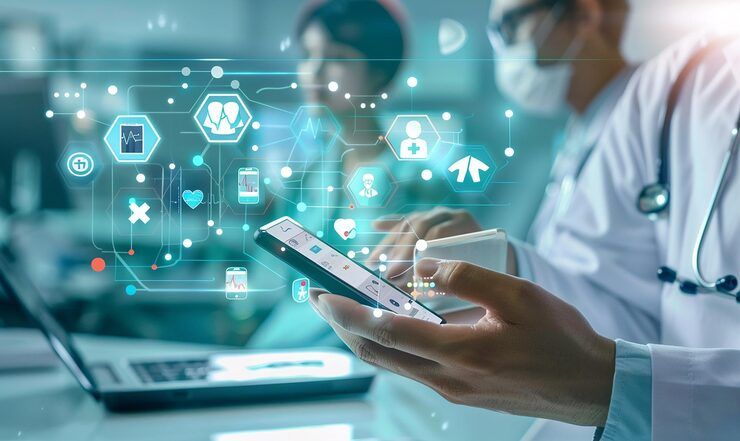
The Internet of Things (IoT) in healthcare refers to a network of connected devices that collect, transmit, and sometimes analyze health-related information through digital systems. These devices can include wearable fitness trackers, smart medical sensors, connected heart monitors, digital thermometers, and equipment used to monitor patients in hospitals.
Traditional healthcare often relies on measurements taken during scheduled appointments or hospital visits. Connected healthcare technology can provide additional information between visits by recording selected health indicators and transmitting readings to authorized applications or healthcare professionals.
The term Internet of Medical Things (IoMT) describes connected devices and systems specifically designed for medical and healthcare applications. These technologies can support patient monitoring, hospital operations, medical equipment tracking, and clinical decision-making.
How Connected Healthcare Devices Work
An IoT healthcare system typically includes four main components:
Connected sensors: Measure indicators such as heart rate, temperature, blood oxygen saturation, or blood glucose, depending on the device.
Communication technology: Transfers readings through Bluetooth, Wi-Fi, cellular networks, or other supported connections.
Data platforms: Store, organize, and display information for authorized users.
Monitoring applications: Present readings, identify configured alerts, and help users review changes over time.
For example, a connected blood pressure monitor may record a person's readings and transmit them to a smartphone application. Depending on the system, the information may then be shared with a healthcare professional for review.
Not every connected device is intended for diagnosis or treatment. Consumer wellness devices and regulated medical devices have different capabilities, accuracy requirements, and intended uses.
Why IoT Matters in Modern Healthcare
Healthcare systems increasingly use digital technology to support patient observation, improve information availability, and coordinate care. Connected devices can help collect measurements outside traditional clinical settings, particularly for people who need ongoing monitoring.
Remote Patient Monitoring
Remote patient monitoring uses connected medical devices to collect health information while a patient remains outside a healthcare facility. Depending on the clinical situation, monitoring may include blood pressure, blood glucose, heart rate, oxygen saturation, or body weight.
Potential applications include:
Monitoring selected chronic conditions between appointments.
Recording recovery indicators following a medical procedure.
Supporting observation of patients in their homes.
Helping clinicians review changes in measurements over time.
Reducing the need for some routine in-person measurements when remote monitoring is clinically appropriate.
Remote monitoring does not eliminate the need for medical examinations or emergency care. Measurements must be interpreted in context, and patients need clear instructions about when to contact a healthcare professional.
Connected Hospitals and Medical Equipment
IoT technology can also support hospital operations. Connected systems may track the location and status of selected medical equipment, monitor refrigerator temperatures for temperature-sensitive medicines, and measure environmental conditions in clinical areas.
These applications can help staff identify equipment availability, detect abnormal conditions, and maintain operational records.
Benefits and Limitations
Application | Potential benefit | Important limitation |
|---|---|---|
Remote patient monitoring | More frequent health measurements | Readings may be incomplete or inaccurate |
Wearable sensors | Tracks selected indicators over time | Not every device is medically validated |
Connected hospital equipment | Improves visibility of equipment status | Connectivity failures can interrupt tracking |
Smart medicine storage | Monitors temperature conditions | Sensors require calibration and maintenance |
Digital alerts | Flags readings that meet configured criteria | Alerts may be missed or triggered unnecessarily |
The overall value of IoT in healthcare depends on data quality, reliable connectivity, privacy safeguards, clinical oversight, and integration with existing medical workflows.
Recent Developments in IoT Healthcare Technology
During 2025 and 2026, connected healthcare technology continued to develop alongside advances in artificial intelligence, medical device cybersecurity, and digital health records. These developments reflect a growing focus on making connected medical systems more reliable, secure, and useful in clinical environments.
Artificial Intelligence and Connected Medical Devices
Healthcare platforms increasingly combine sensor readings with analytical software to identify patterns and highlight measurements that may require attention. For example, a monitoring platform may flag repeated changes in heart rate or blood glucose readings for review.
Important developments include:
Improved analysis of long-term patient monitoring data.
Automated alerts based on configurable clinical thresholds.
Integration of wearable devices with digital health records.
Greater attention to the accuracy and explainability of automated analysis.
These technologies support clinical assessment but do not replace professional judgment. Automated alerts can be inaccurate, and their usefulness depends on the quality of the underlying data.
Medical Device Cybersecurity in 2026
In February 2026, the United States Food and Drug Administration issued updated final guidance addressing cybersecurity considerations for medical devices, including documentation recommended for certain premarket submissions. This development highlights the importance of protecting connected medical devices throughout their design and operational life.
Healthcare organizations must consider unauthorized access, software vulnerabilities, insecure communication, and interruptions to connected equipment. Security updates and risk assessments are particularly important for devices that monitor patients or support critical clinical functions.
Growth of Digital Health Infrastructure
Digital health initiatives increasingly emphasize interoperable records, remote monitoring, and the secure exchange of health information. However, connecting devices to a digital platform does not automatically guarantee that information can be shared accurately between different healthcare systems. Compatibility, data standards, consent, and access controls remain important considerations.
Laws, Regulations, and Healthcare Policies
IoT in healthcare involves medical device regulation, patient privacy, information security, and rules governing clinical practice. Requirements differ across countries, so organizations must determine which laws apply to their devices and operations.
India's Digital Health and Privacy Framework
Several important policies influence connected healthcare in India.
Digital Personal Data Protection Act, 2023: Establishes a framework for processing digital personal data, including requirements concerning lawful data processing and individual rights, subject to applicable provisions and exemptions.
Digital Personal Data Protection Rules, 2025: Notified in November 2025, these rules establish implementation details under the Act. Their provisions have phased commencement dates, so organizations must check which obligations are in force at the relevant time.
Ayushman Bharat Digital Mission (ABDM): Supports the development of interoperable digital health infrastructure in India. Its framework includes provisions and guidance concerning the secure handling and exchange of digital health information.
Telemedicine Practice Guidelines, 2020: Establish requirements for eligible medical practitioners conducting teleconsultations, including patient identification, consent, professional judgment, and medical record handling.
Medical device manufacturers and healthcare institutions must also consider applicable medical device regulations, including relevant requirements under India's Medical Devices Rules, 2017.
Key Compliance Considerations
Organizations implementing IoT healthcare systems should evaluate:
Patient consent and appropriate handling of personal health information.
Encryption and authentication for connected devices.
Access controls and audit records for sensitive information.
Software updates and vulnerability management.
Device accuracy, testing, and applicable regulatory classification.
Data retention, incident response, and applicable reporting obligations.
Compliance depends on the specific technology and its intended use. General wellness products may be treated differently from medical devices intended to diagnose, monitor, or treat health conditions.
Tools and Resources for Connected Healthcare
Healthcare teams can use several categories of tools to evaluate, manage, and maintain IoT systems.
Device Monitoring and Data Management Tools
Remote patient monitoring dashboards: Display readings collected from connected medical devices.
Electronic health record systems: Organize patient information and clinical documentation.
Device management platforms: Track connected devices, software versions, and connectivity status.
Clinical alert systems: Flag measurements that meet configured thresholds.
Cybersecurity monitoring tools: Help detect suspicious access and potential system vulnerabilities.
Data visualization software: Presents changes in measurements over time through charts and reports.
Standards and Technical Resources
Useful resources include the following:
Central Drugs Standard Control Organisation (CDSCO): Information about medical device regulation in India.
Ministry of Health and Family Welfare: Digital health initiatives and healthcare policies.
National Health Authority: Information on the Ayushman Bharat Digital Mission.
World Health Organization: Guidance on digital health strategies and responsible technology adoption.
FDA medical device guidance: Regulatory information and technical guidance relevant to medical devices in the United States.
These resources can help healthcare teams understand regulatory expectations, assess device suitability, and establish appropriate data protection procedures.
Frequently Asked Questions
What is IoT in healthcare?
IoT in healthcare involves connected devices that collect and transmit health-related information. Examples include wearable monitors, connected blood pressure devices, glucose monitors, and hospital equipment sensors.
How does IoT support remote patient monitoring?
Connected devices record selected health measurements and transmit them to authorized applications or healthcare professionals. This can help clinicians review trends between appointments and identify readings that may require further assessment.
Is IoT healthcare technology secure?
Security depends on device design, software maintenance, network protection, and access controls. Encryption, strong authentication, timely updates, and regular security assessments can reduce risks, but no connected system is entirely immune to cyber threats.
What are the main challenges of IoT in healthcare?
Common challenges include data privacy, cybersecurity, unreliable connectivity, device accuracy, compatibility between systems, and the management of large amounts of health information. Healthcare organizations must also ensure that monitoring alerts are meaningful and that patients understand how to use their devices.
Is IoT suitable for every patient?
No. Suitability depends on the patient's health needs, the type of device, accessibility, digital literacy, and clinical guidance. Some patients may benefit from remote monitoring, while others require direct examination or different approaches to care.
Conclusion
IoT in healthcare connects medical devices, sensors, applications, and data platforms to support patient monitoring and healthcare operations. Its applications range from wearable health trackers and remote patient monitoring to hospital equipment management and connected medical devices.
Advances in artificial intelligence, digital health infrastructure, and cybersecurity are expanding the capabilities of connected healthcare systems. At the same time, privacy, data accuracy, interoperability, and regulatory compliance remain essential considerations.
Successful implementation requires appropriate technology, secure data management, reliable monitoring, and clinical oversight. When these elements work together, IoT can support better-informed healthcare decisions while helping professionals manage patient information more effectively.