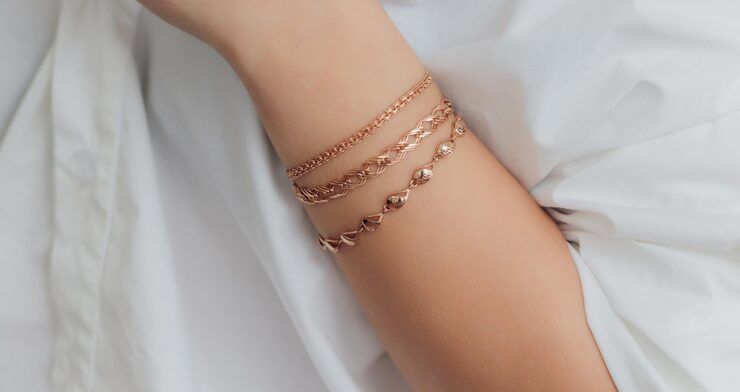
Adjustable minimal bracelets are lightweight jewelry pieces designed around simple shapes, restrained decoration, and flexible sizing. Unlike rigid bracelets that depend on a fixed circumference, adjustable designs use mechanisms such as sliding beads, knots, chains, cords, or extension elements to accommodate different wrist sizes.
The minimal aesthetic generally emphasizes clean lines, small decorative elements, subtle textures, and versatile materials. Common examples include thin metal chains, cord bracelets, delicate bangles with adjustment mechanisms, and bracelets featuring a single small gemstone or symbolic element.
The concept exists partly because wrist dimensions vary considerably between people. An adjustable construction can make sizing more flexible while allowing the bracelet to maintain a simple appearance.
Common Adjustable Mechanisms
Different mechanisms provide different levels of flexibility:
Sliding bead systems: A bead moves along a cord or chain to change the circumference.
Sliding knots: Frequently used with textile, leather, or synthetic cords.
Extension chains: Add several adjustment positions at the clasp.
Lobster-clasp chains: Combine a conventional clasp with multiple attachment points.
Magnetic systems: Use magnetic components for easier fastening.
Wrap designs: Use additional material to create several wearing positions.
The choice of mechanism affects durability, appearance, comfort, and ease of adjustment.
Common Materials
Adjustable minimal bracelets can be produced using many materials, including:
| Material | Typical Characteristics | Common Design Approach |
|---|---|---|
| Sterling silver | Bright appearance and workable metal | Fine chains and small charms |
| Gold | Traditional precious-metal appearance | Delicate chains and minimalist details |
| Stainless steel | Durable and relatively resistant to corrosion | Everyday geometric designs |
| Titanium | Lightweight and strong | Contemporary minimalist designs |
| Leather | Flexible and tactile | Cord and wrap constructions |
| Cotton or nylon cord | Lightweight and adaptable | Sliding-knot bracelets |
| Gemstones | Adds color or focal detail | Small beads or accent elements |
Material selection can influence weight, appearance, maintenance requirements, and suitability for different environments.
Why Adjustable Minimal Bracelets Matter Today
Minimal jewelry has become closely associated with versatile wardrobes and understated styling. Adjustable construction adds another practical dimension because the same piece can accommodate different wrist measurements without requiring a rigid size.
This is relevant to consumers, designers, jewelry manufacturers, fashion researchers, and retailers studying trends in fine jewelry, minimalist jewelry, personalized bracelets, and delicate jewelry design.
Flexible Sizing
Traditional bracelets may require accurate wrist measurements before selection. Adjustable designs reduce the dependence on a single fixed circumference.
This can be particularly useful when the wearer prefers a looser or closer fit depending on the occasion.
Everyday Versatility
A simple bracelet can work with different clothing styles because it does not rely heavily on elaborate decoration.
Minimal designs are commonly associated with:
Neutral styling
Layering with other bracelets
Office and casual wardrobes
Subtle personal expression
Gender-neutral jewelry concepts
Simple gift selections
Layering and Stacking
Adjustability can also make bracelet stacking easier. Several thin bracelets can be worn together while being positioned at slightly different points around the wrist.
Designers therefore consider not only the appearance of one bracelet but also how its width, texture, color, and fastening mechanism interact with other pieces.
Personalization
Small initials, birthstones, symbols, engraved elements, and selected colors can introduce personalization without making the overall design visually complex.
This has contributed to interest in personalized jewelry design, custom bracelet concepts, and minimal gemstone jewelry.
Recent Global Trends in Adjustable Minimal Bracelets
Jewelry design continued to evolve through 2025 and into 2026, with broader fashion trends influencing bracelet shapes, materials, personalization, and digital shopping experiences.
Continued Interest in Minimal Styling
During 2025–2026, understated jewelry remained relevant across fashion and lifestyle categories. Thin chains, small pendants, restrained textures, and stackable pieces continued appearing across contemporary jewelry collections.
Minimalism is not limited to precious metals. Designers increasingly combine metals, cords, recycled materials, ceramic components, and colored stones.
Personalization and Modular Design
Personalization has expanded beyond engraved names. Adjustable bracelets can incorporate interchangeable charms, removable beads, multiple fastening positions, and modular elements.
These approaches allow a relatively simple base design to change visually without requiring a completely different bracelet.
Sustainability and Material Transparency
Environmental considerations have become increasingly important in jewelry discussions. Consumers and industry organizations have paid greater attention to recycled metals, responsible sourcing, product durability, and supply-chain transparency.
For minimal bracelets, longer-lasting construction can also reduce the frequency with which a piece needs replacement.
Digital Jewelry Research
Digital tools now allow users to investigate materials, dimensions, gemstone characteristics, metal standards, and design history before making decisions.
Online visualization, virtual fitting concepts, digital catalogs, and smartphone measurement tools are also influencing how people research jewelry.
Global Market Comparison
| Market | Common Design Interest | Important Considerations |
|---|---|---|
| United States | Layering and personalization | Metal disclosure and consumer information |
| European Union | Minimal styling and sustainability | Product safety and chemical restrictions |
| United Kingdom | Fine jewelry and understated designs | Hallmarking and consumer rules |
| Japan | Refined and compact designs | Precision and craftsmanship |
| South Korea | Fashion-led minimal jewelry | Trend-driven styling |
| Australia | Casual and contemporary pieces | Material and product information |
| Canada | Everyday minimalist jewelry | Consumer labeling and quality expectations |
Laws, Standards and Policies Across Major Markets
Adjustable minimal bracelets are generally governed by jewelry-material rules, consumer-protection requirements, precious-metal standards, chemical restrictions, and product-labeling frameworks. Requirements differ by country.
United States
In the United States, jewelry businesses need to provide accurate information about precious-metal content and avoid deceptive descriptions. The Federal Trade Commission provides guidance concerning jewelry and precious-metal marketing terminology.
The use of terms such as gold, silver, platinum, or gemstone descriptions should accurately represent the material or characteristic being described.
European Union
The European Union has extensive rules affecting consumer products and chemical substances. REACH restrictions can be relevant to certain substances used in jewelry components, including restrictions concerning nickel release from articles that come into prolonged skin contact.
This is particularly relevant for bracelets with metal clasps, chains, beads, or other components that remain against the skin.
United Kingdom
The United Kingdom has specific hallmarking requirements for certain precious-metal articles. Hallmarks can provide information about metal purity and the organization responsible for testing and marking.
The applicable requirements depend on the type, weight, and precious-metal composition of the article.
Other International Markets
Countries such as Canada, Australia, Japan, and various European and Asian markets have their own requirements concerning consumer information, precious-metal descriptions, chemical substances, and product safety.
Designers working internationally should verify requirements in each destination market rather than assuming that one country's jewelry rules apply globally.
Tools and Resources for Bracelet Research
Several digital and practical resources can help with design research, sizing, material evaluation, and compliance.
Useful Tools
Digital wrist-measurement guides: Help estimate wrist circumference using a ruler or printable template.
Jewelry CAD software: Supports the development of precise bracelet geometry and clasp mechanisms.
3D modeling applications: Help visualize thickness, proportions, and adjustment components.
Material reference databases: Provide information about metal characteristics and gemstone properties.
Gemstone reference tools: Help researchers understand hardness, durability, color, and treatments.
Hallmark databases: Useful for researching precious-metal marks in different countries.
Unit-conversion calculators: Convert wrist measurements between millimeters, centimeters, and inches.
Digital design mood boards: Help compare shapes, textures, materials, and color combinations.
Jewelry inventory templates: Track bracelet dimensions, materials, components, and design variations.
Regulatory databases: Help identify applicable chemical, labeling, and consumer-product requirements.
Basic Wrist Measurement
A flexible measuring tape can be wrapped around the wrist at the intended wearing position. If a tape is unavailable, a strip of paper or thread can be placed around the wrist and then measured against a ruler.
The measurement should be recorded before selecting the adjustment range. Designers should also consider whether the intended style requires a close fit, moderate movement, or additional room.
Frequently Asked Questions
What makes a bracelet adjustable?
An adjustable bracelet contains a mechanism that changes its effective circumference. Sliding beads, knots, extension chains, and multiple clasp positions are common approaches.
Are adjustable bracelets suitable for different wrist sizes?
Many adjustable designs can accommodate a range of wrist measurements. The actual range depends on the mechanism, bracelet length, and construction.
Which materials are common for minimalist bracelets?
Sterling silver, gold, stainless steel, titanium, leather, cotton, nylon, and various gemstones are commonly used. Material selection depends on appearance, durability, weight, and intended use.
Can adjustable bracelets be worn in layers?
Yes. Thin adjustable bracelets are often suitable for layering because their size and position can be changed independently. Different widths, textures, and materials can create visual contrast.
What should be checked when researching jewelry internationally?
Important factors include material composition, precious-metal purity, hallmarking, chemical restrictions, labeling requirements, gemstone descriptions, and consumer-protection rules in the relevant market.
Conclusion
Adjustable minimal bracelets combine a simple visual language with flexible sizing. Their construction can involve sliding beads, knots, extension chains, multiple clasp positions, or other mechanisms that allow the wearer to modify the fit.
The category spans a broad range of materials, from precious metals and gemstones to stainless steel, titanium, leather, and textile cords. Design choices influence durability, comfort, maintenance, appearance, and compatibility with other jewelry.
Global jewelry trends during 2025 and 2026 have continued to emphasize minimal styling, personalization, modular elements, sustainability, and digital research. These trends have encouraged designers to consider both visual simplicity and practical functionality.
Regulatory requirements also matter. Jewelry intended for international markets may need to meet rules concerning precious-metal descriptions, hallmarking, chemical substances, consumer information, and product safety. Requirements vary considerably between jurisdictions.
For anyone researching adjustable minimalist bracelets, delicate jewelry design, personalized bracelets, or fine jewelry trends, the most useful starting points are accurate wrist measurements, material information, adjustment mechanisms, durability considerations, and applicable market regulations.
The combination of adaptable sizing and understated design gives adjustable minimal bracelets a broad place within contemporary jewelry. Their continued development is likely to involve more modular construction, material transparency, digital design tools, and personalization while retaining the clean aesthetic associated with minimalist jewelry.