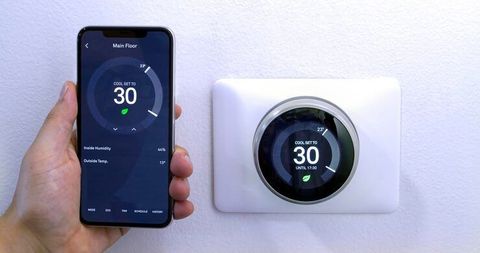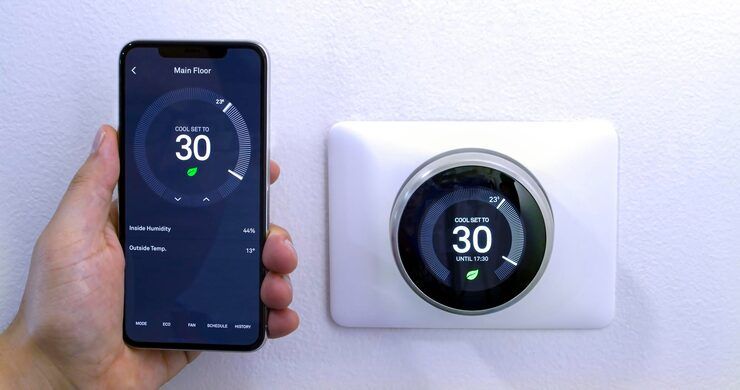
Smart temperature sensors are electronic devices that measure temperature and communicate readings to another device, monitoring system, or digital platform. Unlike basic thermometers, many smart sensors can transmit measurements automatically, record historical data, and generate alerts when temperatures move outside defined limits.
These devices are used in manufacturing plants, buildings, laboratories, food storage facilities, data centers, transportation systems, and environmental monitoring networks. They help organizations understand temperature changes and respond when conditions may affect equipment, materials, products, or operating processes.
Smart temperature monitoring combines sensing technology with digital communication, data processing, and, in some applications, automated control. The design of a system depends on the required accuracy, measurement range, operating environment, communication method, and response time.
Understanding Smart Temperature Sensors
A smart temperature sensor typically combines a sensing element with electronic circuitry that processes measurements. Depending on the design, it may also contain a microcontroller, analog-to-digital converter, memory, wireless radio, or network interface.
The sensing element detects temperature changes and converts them into an electrical signal. The electronics then interpret the signal and make the resulting measurement available to a connected system.
Common sensor technologies include:
Thermistors: Temperature-sensitive resistors often used in appliances, HVAC systems, and compact monitoring devices.
Resistance temperature detectors (RTDs): Sensors that measure temperature through changes in electrical resistance, commonly used where stable and accurate measurements are important.
Thermocouples: Devices that generate a small voltage related to the temperature difference between two junctions, often used across broad temperature ranges.
Semiconductor sensors: Integrated electronic components used in consumer electronics, building systems, and digital monitoring equipment.
Infrared temperature sensors: Devices that estimate surface temperature by detecting infrared radiation without direct physical contact.
Not every temperature sensor is wireless or connected to the internet. A smart system may use a wired sensor connected to a controller, while another may transmit readings through Bluetooth, Wi-Fi, cellular networks, or other communication technologies.
How Smart Temperature Monitoring Works
A typical smart temperature monitoring system follows several stages.
Measurement: The sensor detects the temperature of air, a surface, a liquid, or another suitable target.
Signal processing: Electronics convert the sensor output into a readable temperature value and may apply calibration corrections.
Data transmission: Readings are sent to a local controller, computer, gateway, or cloud-based monitoring platform.
Analysis and alerts: Software compares measurements with configured limits and identifies unusual conditions.
Response: An operator can investigate the issue, or an authorized control system may activate equipment such as ventilation, refrigeration, or heating.
For example, a cold-storage facility can monitor temperatures at multiple locations and receive an alert if a refrigerator begins operating outside its permitted range.
Why Smart Temperature Sensors Matter
Temperature affects product quality, equipment performance, energy consumption, and operational safety. Continuous monitoring can help identify changes earlier than occasional manual measurements.
Industrial Automation
Manufacturing processes often require temperatures to remain within defined operating ranges. Excessive heat can damage components, while insufficient heating or cooling can affect product consistency.
Smart sensors can supply temperature data to industrial control systems, allowing operators to observe conditions and investigate abnormal readings.
Building Management and Energy Efficiency
Heating, ventilation, and air-conditioning systems use temperature measurements to regulate indoor conditions. Networked sensors can help building managers identify uneven temperatures, investigate equipment problems, and adjust control strategies.
Energy savings depend on system design, building conditions, control settings, and actual operating behavior; sensors alone do not guarantee lower energy consumption.
Food Storage and Transportation
Temperature monitoring is important for refrigerated warehouses, food processing facilities, and temperature-sensitive transportation.
Automated records can help identify periods when storage conditions move outside specified limits. However, reliable food-safety management also requires appropriate procedures, equipment maintenance, and corrective actions.
Healthcare and Laboratories
Laboratories and healthcare facilities may use temperature monitoring for refrigerators, specimen storage, research equipment, and controlled environments.
The required accuracy and monitoring frequency depend on the application. Regulated environments may also require documented calibration, traceable records, and validated monitoring procedures.
Recent Developments in Smart Temperature Sensor Technology
During 2025 and 2026, sensor development continued to emphasize lower power consumption, wireless connectivity, improved integration, and more advanced data analysis.
Growth in Wireless Industrial Monitoring
Industrial monitoring systems increasingly combine wireless sensors with gateways and centralized dashboards. This architecture can reduce the need for extensive signal cabling in suitable installations and make it easier to monitor equipment distributed across large facilities.
Wireless performance still depends on distance, building materials, interference, battery capacity, and the selected communication protocol.
Edge Computing and Predictive Maintenance
Edge computing allows sensor data to be processed near the equipment being monitored instead of sending every measurement to a remote platform.
For temperature monitoring, local processing can help identify abnormal patterns, trigger rapid alerts, and continue selected functions when internet connectivity is unavailable.
Predictive maintenance systems may combine temperature readings with vibration, current, pressure, and operating-time data. These combined measurements can provide more context when evaluating equipment condition.
Improved Sensor Integration
Manufacturers continue to integrate temperature sensing, digital interfaces, calibration functions, and communication electronics into compact components.
Integrated designs can simplify system development, although installation quality, sensor placement, calibration, and environmental protection remain important to measurement reliability.
Because specific sensor releases and performance figures vary by manufacturer, technical specifications should be checked against the exact component and its documentation.
Laws, Standards, and Regulatory Considerations
Smart temperature sensors may be subject to measurement, electrical safety, radio communication, cybersecurity, and industry-specific requirements. The applicable rules depend on the country and intended use.
Measurement Accuracy and Calibration
The International Organization for Standardization publishes standards covering measurement systems, quality management, and calibration-related practices. The International Electrotechnical Commission also develops standards relevant to electrical and electronic equipment.
For demanding applications, calibration should be performed using appropriate reference equipment and documented procedures. Measurement uncertainty, sensor drift, installation conditions, and the required operating range should be considered.
Radio and Wireless Compliance
Wireless temperature sensors must comply with applicable radio-frequency and electromagnetic compatibility requirements in their intended markets.
In the United States, the Federal Communications Commission regulates radio-frequency devices. In the European Union, applicable products may need to meet requirements under the Radio Equipment Directive and other relevant legislation.
Requirements depend on the device design, radio technology, installation, and market.
Industry-Specific Requirements
Some applications have additional obligations:
Food safety: Temperature controls and records may be required under applicable food-safety rules.
Pharmaceutical storage: Monitoring may need documented calibration, qualification, and controlled records.
Industrial facilities: Electrical safety, hazardous-area classification, and equipment protection may apply.
Buildings: Sensor systems may need to comply with applicable building and energy regulations.
Data centers: Temperature monitoring may form part of facility management and operational resilience procedures.
Organizations should consult the relevant regulator and technical standards for their specific application.
Tools and Resources for Smart Temperature Monitoring
Several resources can help with sensor selection, installation, calibration, and data interpretation.
Sensor Selection Tools
Manufacturer selection guides and datasheets help compare measurement range, accuracy, response time, electrical interface, power requirements, and environmental protection.
Important specifications include:
Measurement range
Accuracy and resolution
Response time
Operating humidity
Communication protocol
Power consumption
Enclosure protection
Calibration requirements
Monitoring Dashboards and Data Loggers
Temperature monitoring software can display live readings, historical trends, alert thresholds, and downloadable records.
Data loggers are particularly useful when measurements must be retained for later review. Before selecting a platform, confirm its data retention, export capabilities, alert configuration, and connectivity requirements.
Calibration and Measurement Resources
Calibration laboratories, reference thermometers, and documented measurement procedures help establish confidence in temperature readings.
The National Institute of Standards and Technology in the United States publishes technical information related to temperature measurement, metrology, and measurement standards.
Practical Evaluation Table
| Evaluation Factor | What to Check |
|---|---|
| Accuracy | Maximum permitted measurement error |
| Temperature range | Lowest and highest expected temperatures |
| Connectivity | Wired, Bluetooth, Wi-Fi, or other network options |
| Power | Battery life or electrical supply |
| Data logging | Recording frequency and storage capacity |
| Alerts | Configurable limits and notification methods |
| Environment | Dust, moisture, vibration, and chemical exposure |
| Calibration | Recommended intervals and traceability |
Frequently Asked Questions
What is a smart temperature sensor?
A smart temperature sensor measures temperature and provides readings through integrated electronics, digital interfaces, or communication networks. Some models also record measurements and support automated alerts.
How accurate are smart temperature sensors?
Accuracy varies by technology, model, measurement range, calibration, and installation conditions. Some applications require very precise measurements, while others can operate with wider tolerances. The manufacturer's datasheet should be consulted for the specified accuracy.
Can smart temperature sensors work without the internet?
Yes. Wired sensors and many wireless systems can operate locally through controllers, gateways, or data loggers. Remote dashboards and cloud-based notifications may require internet connectivity, depending on the system design.
Where are wireless temperature sensors commonly used?
They are used in buildings, industrial equipment, warehouses, laboratories, refrigerated storage, transportation, and environmental monitoring. Suitability depends on the sensor's temperature range, communication coverage, and environmental protection.
Do smart temperature sensors require calibration?
Calibration may be necessary to verify measurement accuracy and identify drift. The appropriate interval depends on the sensor, operating environment, required measurement confidence, and applicable industry requirements.
Conclusion
Smart temperature sensors provide a practical way to measure, record, and monitor temperature across industrial, commercial, scientific, and residential environments. By combining sensing elements with digital electronics and communication systems, they can help operators identify abnormal conditions and make better-informed decisions.
Developments in wireless monitoring, edge computing, sensor integration, and predictive maintenance are expanding the ways temperature data can be used. However, reliable results still depend on suitable sensor selection, correct installation, appropriate calibration, and effective monitoring procedures.
Organizations evaluating a smart temperature monitoring system should consider measurement accuracy, operating range, connectivity, power requirements, data management, and regulatory obligations. A carefully designed system can support more consistent monitoring and help improve operational visibility across a wide range of applications.