Gardens by the Bay is a large horticultural attraction in central Singapore that combines landscaped gardens, plant collections, conservatories, public spaces, architecture, environmental education, and technology.
Located beside Marina Bay, the Gardens form part of Singapore's broader effort to integrate greenery into a highly urban environment. The attraction includes Bay South Garden, Bay East Garden, and Bay Central Garden, with Bay South containing many of the best-known features.
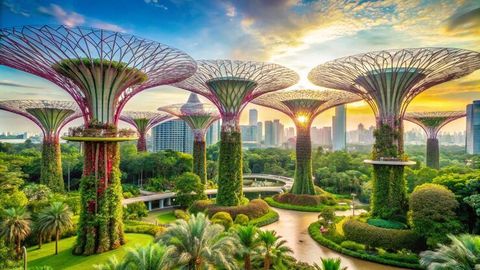
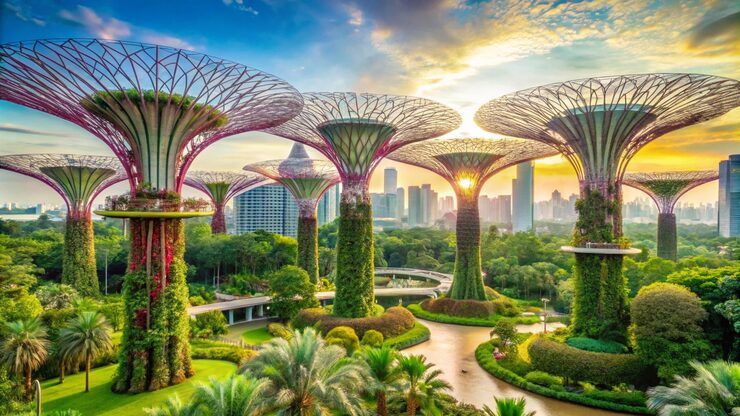
The site is particularly recognized for its Supertree Grove, Flower Dome, Cloud Forest, Floral Fantasy, waterfront landscapes, and changing horticultural displays.
According to Gardens by the Bay, the Gardens contain more than 1.5 million plants from every continent except Antarctica. (gardensbythebay.com.sg)
Major Attractions at Gardens by the Bay
| Attraction | Main Feature | Suitable Interest |
|---|---|---|
| Supertree Grove | Vertical garden structures | Architecture and evening views |
| Flower Dome | Mediterranean and semi-arid plants | Horticulture |
| Cloud Forest | Mountain landscape and plants | Nature and climate education |
| Floral Fantasy | Indoor floral displays | Design and horticulture |
| OCBC Skyway | Elevated path between Supertrees | Views and photography |
| Supertree Observatory | Elevated city and garden views | Skyline observation |
| Bay East Garden | Waterfront landscapes | Walking and outdoor recreation |
| Active Garden | Fitness and outdoor activities | Wellness and recreation |
Why Gardens by the Bay Matters
Gardens by the Bay represents more than a conventional botanical attraction. It demonstrates how greenery can be integrated into a dense modern city.
Singapore has limited land and a large urban population, so creating accessible green spaces requires careful planning. Gardens by the Bay provides an example of how horticulture, architecture, public recreation, tourism, education, and environmental awareness can be combined within one urban landscape.
The Gardens also provide opportunities for visitors to learn about plants from different climatic regions without traveling between those regions.
Urban Sustainability and Education
Several features of Gardens by the Bay are designed around environmental concepts.
Visitors can explore subjects such as:
- Plant adaptation
- Tropical horticulture
- Biodiversity
- Water management
- Energy efficiency
- Urban greenery
- Climate conditions
- Conservation
- Sustainable landscape design
The Cloud Forest, for example, recreates a cool, moist mountain environment and contains plants associated with tropical montane regions.
The Supertrees combine architectural structures with vertical planting and environmental functions, making them an easily recognizable example of Singapore's integration of technology and greenery.
A Living Urban Landscape
The Gardens also form part of Singapore's wider City in Nature approach.
The National Parks Board explains that Singapore's long-term strategy involves expanding nature networks, naturalising gardens and parks, restoring nature in urban areas, and connecting green spaces. (nparks.gov.sg)
Gardens by the Bay fits within this broader national context by bringing large-scale greenery into the Marina Bay urban environment.
Recent Developments at Gardens by the Bay
The Gardens continued to introduce new programmes, attractions, infrastructure changes, and sustainability activities during 2025 and 2026.
Nature and Sustainability Tours
Gardens by the Bay announced a new programme of Nature and Sustainability Tours beginning in 2026.
The programme is planned to expand over three years to 11 tour routes, including new biodiversity walks and a pollinator-focused tour. The biodiversity walks are designed to involve participants in observing and documenting wildlife within the Gardens. (gardensbythebay.com.sg)
This represents a shift toward using the Gardens not only as a visitor attraction but also as a setting for environmental education and citizen participation.
Singapore Garden Festival 2026
The Singapore Garden Festival took place in July 2026, with Gardens by the Bay serving as one of its principal locations.
The official information listed the festival from July 4 to July 12, with festival operating hours of 10:00 a.m. to 10:00 p.m. and last entry at 9:30 p.m. (gardensbythebay.com.sg)
The festival provides another example of how horticulture and landscape design are used as cultural programming.
Bridge Construction in 2026
A significant infrastructure change began on May 4, 2026.
Construction of a bridge connecting Bay South Garden and Bay East Garden resulted in a temporary restriction on cycling along the Waterfront Promenade. Pedestrians continue to have access, although their route is slightly diverted. (gardensbythebay.com.sg)
Visitors planning cycling routes around Marina Bay should therefore check the latest access information.
Satay by the Bay Changes
Gardens by the Bay announced that Satay by the Bay would close from October 1, 2026, as part of plans for a refreshed waterfront dining area associated with the Wetlands by the Bay development. (gardensbythebay.com.sg)
This illustrates that the Gardens' wider waterfront environment continues to evolve.
2026 Sustainability Recognition
In 2026, Bay South Garden and Bay East Garden received BCA Green Mark Version 7 Platinum Super Low Energy certification, with an additional Super Low Energy certification noted for the two gardens. (gardensbythebay.com.sg)
Recent Developments at a Glance
| Development | Date/Period | Main Significance |
|---|---|---|
| New Nature and Sustainability Tours | 2026 | Biodiversity and environmental education |
| Singapore Garden Festival | July 2026 | Horticulture and landscape design |
| Bay South–Bay East bridge construction | From May 4, 2026 | Temporary cycling diversion |
| Satay by the Bay closure | From October 1, 2026 | Waterfront redevelopment |
| Green Mark recognition | 2026 | Sustainable building and garden performance |
Laws, Policies and Environmental Management
Gardens by the Bay operates within Singapore's wider framework for environmental protection, public-space management, greenery planning, and urban development.
Singapore's City in Nature Strategy
The National Parks Board's City in Nature strategy is part of the Singapore Green Plan 2030.
The strategy aims to expand green networks, strengthen biodiversity, restore nature within urban areas, and connect green spaces across the island. (nparks.gov.sg)
Gardens by the Bay contributes to this broader national approach through its extensive plant collections, landscaped areas, biodiversity programmes, and environmental education.
Greenery and Tree Conservation
In July 2025, NParks published updated guidelines covering greenery provision and tree conservation for development projects.
The guidelines include requirements and procedures related to tree conservation, green buffers, greenery provision, and development-plan submissions. (nparks.gov.sg)
These policies demonstrate that greenery is considered within Singapore's development planning rather than treated only as decorative landscaping.
Biodiversity Conservation
Singapore's updated Nature Conservation Masterplan was published in June 2026.
The plan strengthens the country's long-term approach to biodiversity conservation and reflects increased emphasis on community participation, natural heritage, and conservation activities. (nparks.gov.sg)
Gardens and urban green spaces contribute to this wider biodiversity network.
Visitor Rules at Gardens by the Bay
Gardens by the Bay has its own visitor guidelines.
Visitors are expected to protect plants and avoid damaging or climbing vegetation. Littering is prohibited, and open fires are not permitted.
The Gardens are smoke-free, while cycling and several wheeled recreational activities are restricted within the Gardens. Dogs are permitted in certain outdoor areas but not inside the conservatories and selected attractions. (gardensbythebay.com.sg)
Personal photography is generally welcomed, but commercial filming and photography require prior approval. Tripods are also restricted in certain circumstances, including weekends and public holidays within the Gardens. (gardensbythebay.com.sg)
Remote-controlled aerial devices, including drones, are not permitted at Bay South, Bay East, or Bay Central Gardens. (gardensbythebay.com.sg)
Tools and Resources for Visiting Gardens by the Bay
Digital planning resources can help visitors understand opening hours, attractions, routes, and temporary changes.
Official Gardens by the Bay Website
The official website provides current information about:
- Opening hours
- Attractions
- Events
- Visitor guidelines
- Maps
- Accessibility
- Transport
- Current advisories
- Seasonal programmes
The official visit-planning page should be checked shortly before traveling because construction, closures, and special events can affect access. (gardensbythebay.com.sg)
Gardens Map
The Gardens map can help visitors plan routes between the conservatories, Supertree Grove, waterfront areas, restaurants, rest areas, and other attractions.
A route plan is particularly useful because the Gardens cover a substantial area.
Public Transport Maps
Singapore's MRT network provides convenient connections to the Marina Bay area. Visitors can combine rail travel with walking routes through Marina Bay.
Digital navigation applications can help identify station exits and walking paths.
Weather Applications
Singapore has a tropical climate with heat, humidity, and rainfall throughout the year.
Before visiting outdoor areas, travelers can check:
- Hourly rainfall forecasts
- Temperature
- Thunderstorm warnings
- Humidity
- UV conditions
Indoor conservatories can provide a useful alternative during periods of heavy rain, although their own operating conditions should be checked.
Sustainability Resources
Visitors interested in the environmental aspects of the Gardens can consult NParks resources covering City in Nature, biodiversity conservation, greenery planning, and responsible behavior in parks. (nparks.gov.sg)
Simple Visit Planning Table
| Planning Area | What to Check |
|---|---|
| Attractions | Conservatories, Supertrees and outdoor gardens |
| Opening hours | Current official schedule |
| Weather | Rain, heat and thunderstorms |
| Transport | MRT stations and walking routes |
| Accessibility | Lifts, paths and mobility facilities |
| Photography | Current tripod and filming rules |
| Events | Festivals and seasonal displays |
| Construction | Current diversions and closures |
Frequently Asked Questions
What is Gardens by the Bay known for?
Gardens by the Bay is particularly known for the Supertree Grove, Flower Dome, Cloud Forest, waterfront gardens, and large-scale horticultural displays. It combines plant collections with architecture, technology, environmental education, and public recreation.
How many plants are at Gardens by the Bay?
Gardens by the Bay states that the site contains more than 1.5 million plants from every continent except Antarctica. (gardensbythebay.com.sg)
Can visitors take photographs at Gardens by the Bay?
Personal photography is generally permitted. However, commercial photography and filming require prior approval, and tripod restrictions apply in certain areas and circumstances. Drone use is prohibited within the Gardens. (gardensbythebay.com.sg)
Are Gardens by the Bay suitable for families?
Yes. The Gardens contain outdoor spaces, plant displays, educational attractions, and family-oriented areas. Strollers and mobility aids are permitted, although visitors with strollers are advised to use lifts rather than escalators for safety reasons. (gardensbythebay.com.sg)
What is happening at Gardens by the Bay in 2026?
Several developments are taking place during 2026, including new Nature and Sustainability Tours, the Singapore Garden Festival, bridge construction affecting cycling access, changing waterfront facilities, and new environmental and horticultural programmes. (gardensbythebay.com.sg)
Conclusion
Gardens by the Bay is an important example of how Singapore combines urban development with large-scale greenery, horticulture, architecture, environmental education, and public recreation.
Its Supertrees, conservatories, waterfront gardens, plant collections, and educational programmes make it both a major visitor destination and part of Singapore's wider City in Nature strategy.
Recent developments in 2026 show that the Gardens continue to evolve. New biodiversity-focused tours, the Singapore Garden Festival, infrastructure changes, waterfront redevelopment, and sustainability recognition are shaping the visitor experience. (gardensbythebay.com.sg)
The Gardens also illustrate how environmental planning operates within a dense city. Singapore's greenery guidelines, biodiversity strategies, and conservation programmes provide a broader policy context for understanding the role of large urban gardens. (nparks.gov.sg)
For visitors, the most practical approach is to check the official Gardens by the Bay website before arrival, review current advisories, plan around weather conditions, and follow rules protecting plants, wildlife, public spaces, and other visitors. This makes it easier to experience the Gardens while understanding the environmental ideas behind one of Singapore's most distinctive urban landscapes.