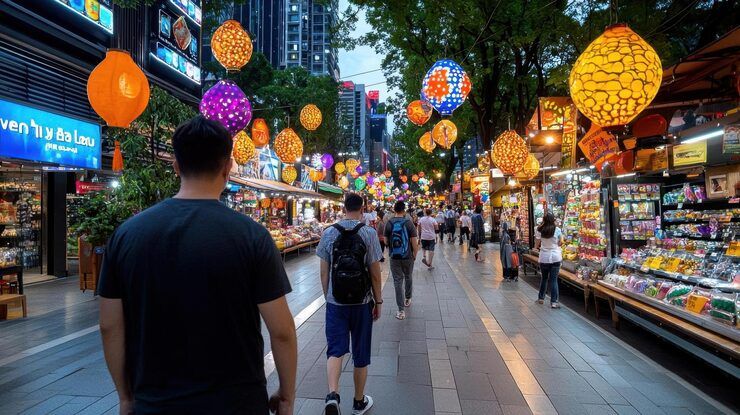
Seoul modern market tours combine traditional Korean market culture with contemporary food, shopping, transportation, architecture, and urban life. These markets are not simply places to find food or everyday goods. They are active neighborhood spaces where long-established trading traditions meet changing consumer habits and international tourism.
Markets such as Gwangjang, Namdaemun, Tongin, and Mangwon have distinct identities. Gwangjang is known for food stalls and traditional market culture, while Namdaemun is one of Korea's largest traditional markets. Tongin is recognized for its historic alleyways and lunchbox experience, and Mangwon has developed a strong connection with younger visitors and the surrounding neighborhood.
The word “modern” in this context refers to the way Seoul's markets are evolving while retaining their traditional character. Changes can include improved pedestrian areas, digital information, accessibility features, cultural programmes, and new approaches to tourism.
A market-focused itinerary may include:
- Korean street food and traditional dishes
- Local ingredients and produce
- Hanbok and textile-related shopping areas
- Historic market architecture
- Neighborhood culture
- Seasonal festivals
- Nighttime food districts
- Modern pedestrian improvements
Why Seoul Market Tours Matter
Traditional markets provide a useful way to understand Seoul beyond major palaces, museums, and contemporary shopping districts.
For international visitors, markets can introduce everyday Korean food culture and neighborhood life in a compact setting. For researchers and students, they also demonstrate how traditional commercial districts adapt to changing urban conditions.
Markets are important to local communities because they connect merchants, residents, visitors, food producers, and surrounding businesses. Seoul's municipal policies increasingly treat traditional markets as cultural and tourism assets as well as neighborhood economic spaces.
The variety between markets is one of their main attractions.
| Market | Area | Main characteristics | Useful focus |
|---|---|---|---|
| Gwangjang | Jongno | Historic food and textile market | Street food and traditional culture |
| Namdaemun | Jung-gu | Very large traditional marketplace | Food, goods and urban history |
| Tongin | Jongno | Compact historic market | Lunchbox culture and local food |
| Mangwon | Mapo | Neighborhood market | Food and contemporary local culture |
| Gyeongdong | Dongdaemun | Large produce and herbal market | Ingredients and traditional commerce |
Gwangjang Market's official Seoul tourism listing describes food stalls, clothing areas, and a history dating to the early twentieth century. Namdaemun, meanwhile, has thousands of stores around the historic southern gate area.
Recent Updates and Trends in 2025–2026
Namdaemun Market redevelopment
A major recent development concerns Namdaemun Market. In November 2025, the Seoul Metropolitan Government announced the Namdaemun Market Area Innovation Project, designed around six major improvements.
These include a design arcade, improved pedestrian routes, a walkway with views toward Sungnyemun Gate, a Namsan connection, an elevated walkway, and improved entrance and public areas.
The first major outcome was the opening of a 135-metre design arcade on 17 November 2025. Its design draws inspiration from the eaves of traditional Korean hanok architecture.
The wider project illustrates a broader trend: traditional markets are increasingly being considered as public cultural spaces rather than only commercial areas.
Seollal market programmes in 2026
For the 2026 Seollal holiday period, Seoul announced programmes involving 62 traditional markets and neighborhood shopping streets. Activities included traditional performances, rice-cake pounding, jegichagi, and other cultural programmes, alongside seasonal promotions.
The programmes varied by market, so visitors planning a holiday-period itinerary should check the latest market information rather than assuming every location follows the same schedule.
Night-market development
On 29 September 2026, Seoul announced six locations selected for its new “Moonlight Night Markets” initiative. The programme is part of a broader nighttime-economy strategy and uses popular food areas and local cultural resources to create evening destinations.
The city stated that management guidelines will address operating hours, noise, cleanliness, and coexistence with nearby residents. The programme is planned to expand to 25 locations by 2028.
Future visitor convenience
In September 2026, Seoul also announced plans for an integrated international payment and tourism-information application, provisionally called “OK-Seoul.” The plan includes integration with overseas payment systems, public transportation, tax-refund information, and tourist information. The city also identified traditional markets among areas where additional visitor convenience facilities could be introduced.
Rules, Policies and Market Management
Seoul's traditional markets operate within a mixture of national food, consumer, public-health, land-use, and local-government regulations.
Visitors should follow posted market rules, respect pedestrian movement, and avoid obstructing stall entrances or busy passages. Food areas can become crowded, particularly during meal periods and festivals.
Market-specific operating hours also vary considerably. Gwangjang Market's general market area is listed as operating from 9:00 a.m. to 6:00 p.m. Monday through Saturday, while its food alley operates until 11:00 p.m.
Namdaemun Market is listed as operating from midnight to 11:00 p.m. on weekdays, although individual stall schedules vary.
Tongin Market has its own schedule, with individual stores varying in hours. Its lunchbox café also has separate operating periods.
Seoul has also introduced measures aimed at improving transparency and visitor confidence in major markets. At Gwangjang Market, the city previously introduced a quantitative labeling approach designed to show food quantities alongside menu information. The initiative followed concerns about differences between displayed dishes and actual portions.
Urban planning policy is also relevant. Seoul's current planning framework includes measures for rational management of market sites as distribution patterns and land use change.
For visitors, the practical lesson is straightforward: market conditions can change, so official information should be checked shortly before a visit.
Planning a Seoul Modern Market Route
A market itinerary works best when nearby districts are combined rather than attempting to visit many markets across the city in one day.
One possible historic route is:
Gwangjang Market → Jongmyo Shrine → Tongin Market → Gyeongbokgung area
Another route can focus on central Seoul:
Namdaemun Market → Sungnyemun Gate → Namsan → Myeongdong
A neighborhood-focused route could be:
Mangwon Market → Mangwon-dong → Hangang riverside area
Travel time between markets depends on subway connections, walking conditions, crowds, and the time of day.
Market opening hours should also influence the itinerary. For example, Gwangjang's food area remains open later than its general market areas, while Tongin's lunchbox café has a narrower schedule.
Useful Tools and Resources
Several resources can help visitors prepare a Seoul market itinerary.
- Visit Seoul: Official tourism information covering major markets, neighborhoods, cultural attractions, and transportation.
- Seoul Metropolitan Government: Useful for current market programmes, urban projects, festivals, and policy announcements.
- Seoul public transportation maps: Helpful for combining markets with nearby subway stations.
- Official market pages: Useful for checking current opening arrangements and special events.
- Digital map applications: Helpful for walking directions and locating specific market entrances.
- Translation applications: Useful for reading Korean signs, menus, and product information.
- Mobile payment applications: Useful for understanding available payment methods, although accepted methods can vary between individual vendors.
- Weather applications: Important for planning walking routes during summer heat, winter cold, or periods of heavy rain.
Visit Seoul currently lists Gwangjang, Tongin, Mangwon, and other traditional markets with transportation information and operating schedules.
For Tongin Market, the official tourism guide describes its traditional brass-coin lunchbox experience and provides current visitor information updated in July 2026.
Frequently Asked Questions
What are the most popular markets for a Seoul market tour?
Gwangjang, Namdaemun, Tongin, and Mangwon are among the markets highlighted by Seoul's official tourism resources. Each has a different character, so the appropriate choice depends on whether the focus is food, history, neighborhood culture, or general market exploration.
Which Seoul market is known for traditional Korean food?
Gwangjang Market is particularly associated with traditional Korean market foods, including mung bean pancakes, gimbap, tteokbokki, fish cake, and other dishes. Its food alley has longer operating hours than the general market area.
What makes Tongin Market different?
Tongin Market is known for its dosirak lunchbox experience, in which participating vendors provide foods that can be combined through the market's designated lunchbox system. The market contains more than 70 stores according to Seoul's official tourism information.
Is Namdaemun Market suitable for a walking itinerary?
Yes. Namdaemun is a large market area near Sungnyemun Gate, Namsan, and central Seoul. Its current urban improvement programme includes new pedestrian connections and public-space improvements intended to make movement through the area easier.
Are Seoul market opening hours the same every day?
No. Hours can differ by market, food alley, individual stall, weekday, weekend, and holiday period. For example, Gwangjang's general market and food alley have different schedules, while Tongin's lunchbox café has separate operating hours.
Conclusion
Seoul modern market tours provide a way to explore Korean food culture, neighborhood life, traditional commerce, and contemporary urban development in the same itinerary. Gwangjang, Namdaemun, Tongin, Mangwon, and other markets each present a different combination of history and modern city life.
Recent developments show that Seoul is placing greater attention on pedestrian environments, cultural programming, visitor accessibility, nighttime activity, and the preservation of traditional market identity. The Namdaemun Market Innovation Project and the 2026 Moonlight Night Market initiative are two examples of this broader evolution.
For visitors, the most useful approach is to select one or two markets based on interests, check current opening information, plan transportation between locations, and allow enough time to explore without rushing.
Seoul's markets remain valuable because they connect the city's historical traditions with its contemporary urban culture, making them useful destinations for understanding how everyday life and tourism continue to develop together.