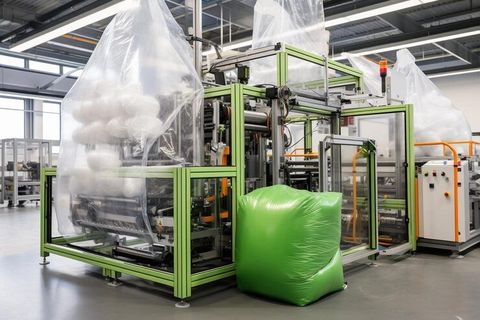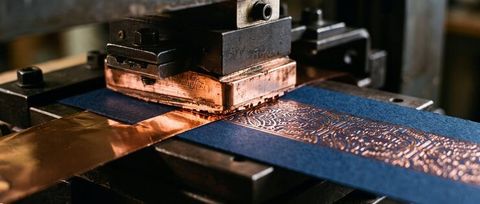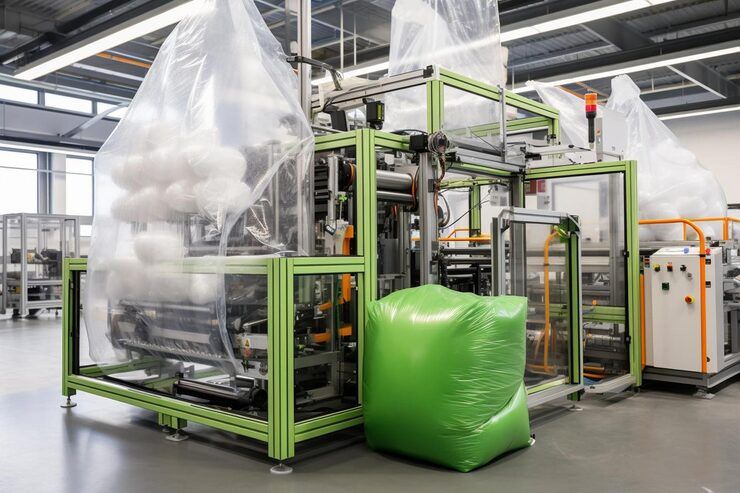
Plastic bag making machines are industrial systems used to convert plastic film into bags of different sizes, shapes, thicknesses, and designs. These machines are widely used in packaging, retail, agriculture, food distribution, healthcare, and manufacturing, where flexible packaging is required to protect, contain, or transport products.
Most plastic bags are produced from polymer films such as low-density polyethylene (LDPE), linear low-density polyethylene (LLDPE), or high-density polyethylene (HDPE). The selected material depends on the intended application, required strength, flexibility, thickness, and applicable regulations.
A plastic bag manufacturing line may include film unwinding equipment, tension-control systems, sealing units, cutting mechanisms, punching equipment, printing systems, and automated counting or stacking functions. Some facilities manufacture plastic film before converting it into bags, while others purchase prepared film rolls for further processing.
Understanding Plastic Bag Making Equipment
Plastic bag making machines perform several operations in a coordinated sequence. Depending on the design, a machine can unwind film, measure its length, create seals, cut individual bags, form handles, and collect finished products.
Common machine categories include:
T-shirt bag making machines: Produce bags with integrated handles commonly used in retail applications where permitted.
Bottom-seal bag machines: Create bags by sealing the lower edge of a folded or tubular film.
Side-seal bag machines: Form seals along the sides of plastic film to create individual bags.
Garbage bag machines: Manufacture refuse bags, including perforated rolls and bags with different thicknesses.
Flat bag machines: Produce simple bags used for packaging components and other products.
Drawstring bag machines: Incorporate a channel and drawstring mechanism into suitable bag designs.
Printing and converting systems: Add graphics, product information, identification marks, or other permitted details to packaging film.
The appropriate equipment depends on the bag design, film properties, production volume, dimensional tolerances, and required finishing operations.
How Plastic Bag Manufacturing Works
The manufacturing process typically begins with a roll of prepared plastic film. In facilities that produce their own film, polymer resin is first melted and extruded through a die to form a continuous film, which is cooled and wound into rolls.
During bag conversion, the film passes through several stages.
Film unwinding: A roll holder releases the film at a controlled speed. Tension systems help prevent wrinkles and uneven feeding.
Registration and measurement: Sensors or mechanical controls align the film and determine the length of each bag.
Heat sealing: Heated elements join selected sections of the film. Temperature, pressure, and contact time influence seal strength.
Cutting: Blades separate individual bags or create perforations for roll packaging.
Handle punching: Depending on the design, a punching unit creates handle openings or other shapes.
Inspection and stacking: Finished bags are checked for dimensions, seal integrity, visible defects, and consistency before being grouped for further handling.
Not every machine performs every operation. Some production lines use separate equipment for printing, gusset formation, perforation, or specialized closures.
Importance of Plastic Bag Making Machines
Plastic bag making machines are important because they support the conversion of plastic film into consistent packaging products at industrial scale. Automation helps manufacturers control dimensions, sealing quality, production speed, and material usage.
Packaging and Industrial Applications
Plastic bags are used in several industries, although permitted applications vary by country and local restrictions.
Retail packaging: Bags for carrying eligible products where regulations permit.
Food packaging: Suitable bags for certain food products, subject to hygiene and material requirements.
Agriculture: Film bags for seeds, soil products, and other agricultural materials.
Manufacturing: Bags used to group, protect, or organize components.
Waste management: Refuse bags and liners designed for different waste types.
Healthcare: Specialized packaging applications requiring appropriate material and hygiene controls.
Not every plastic material is suitable for every application. Food-contact packaging, for example, must meet relevant safety requirements.
Production Efficiency and Quality Control
Automated machinery can reduce repetitive manual operations and improve consistency when properly configured. Sensors and control systems can help identify incorrect film positioning, sealing variations, and production interruptions.
Important operating factors include:
Film thickness and uniformity
Sealing temperature and pressure
Cutting accuracy
Machine speed
Material waste
Electrical energy consumption
Maintenance requirements
Efficient production requires balancing output speed with the quality of the finished bag. Excessive operating speed can increase defects if sealing, cutting, or film feeding systems are not properly adjusted.
Recent Developments in Plastic Bag Manufacturing
During 2025 and 2026, plastic packaging manufacturing continued to face growing pressure to improve material efficiency, reduce waste, and adapt to changing environmental regulations.
Recycled Plastic Content
Recycled polymers have become an important consideration in flexible packaging development. Where material quality, product safety, and regulations permit, suitable recycled polyethylene can be incorporated into selected bag applications.
Manufacturers must control contamination, material consistency, melt behavior, and mechanical strength when processing recycled resin. Recycled content is not automatically suitable for food-contact packaging, which may require additional regulatory assessment.
Automation and Digital Monitoring
Modern bag making equipment increasingly incorporates programmable logic controllers, touchscreen interfaces, electronic tension control, automatic length measurement, and production monitoring.
These features can help operators adjust machine settings, identify interruptions, track output, and maintain more consistent manufacturing conditions.
Material Reduction and Packaging Design
Lightweighting involves reducing the amount of material used in a product while maintaining the required performance. In plastic bag production, this can involve optimizing film thickness, bag dimensions, sealing patterns, and structural design.
However, reducing thickness without testing can weaken bags and increase product failure. Manufacturers must evaluate load capacity, puncture resistance, seal strength, and intended use before changing specifications.
Alternatives to Conventional Plastic
Paper packaging, reusable bags, compostable materials, and other alternatives continue to influence packaging design. Each material has different manufacturing requirements and environmental characteristics.
Compostable plastics, for example, may require specific industrial composting conditions and appropriate waste collection systems. Their environmental performance depends on material composition, local infrastructure, and disposal practices.
Laws, Regulations, and Environmental Policies
Plastic bag manufacturing is affected by environmental regulations, product standards, waste-management policies, and restrictions on particular packaging formats. Requirements differ between countries and can change over time.
Plastic Bag Regulations in India
India's Plastic Waste Management Rules establish requirements for plastic waste management and producer responsibilities. Amendments introduced in 2021 prohibited the manufacture, import, stocking, distribution, sale, and use of identified single-use plastic items from July 1, 2022.
The rules also establish minimum thickness requirements for specified plastic carry bags, with a minimum of 120 microns applying from December 31, 2022. Other requirements may apply to plastic packaging, labeling, producer registration, and extended producer responsibility.
Manufacturers operating in India should verify the latest requirements with the Central Pollution Control Board and the relevant State Pollution Control Board. Not every plastic bag format is treated identically under the rules.
Regulations in the European Union
The European Union's Single-Use Plastics Directive establishes measures targeting certain plastic products and reducing their environmental impact. Separate rules address plastic packaging and packaging waste.
The EU Packaging and Packaging Waste Regulation, Regulation (EU) 2025/40, entered into force in February 2025 and generally applies from August 12, 2026, subject to specific provisions and transitional arrangements.
Its requirements address packaging design, recyclability, waste reduction, and other aspects of packaging management. Businesses manufacturing or supplying packaging in the EU should assess which obligations apply to their products and operations.
Manufacturing Safety
Industrial bag making equipment involves heated surfaces, moving rollers, cutting blades, electrical systems, and potentially pneumatic components.
Facilities should implement suitable machine guarding, emergency-stop systems, operator training, electrical safety procedures, and preventive maintenance. Applicable occupational safety rules depend on the country and workplace.
Tools and Resources for Plastic Bag Manufacturing
Technical resources can help manufacturers evaluate machinery, improve product quality, and understand regulatory obligations.
Equipment Selection Checklist
Before choosing a bag making machine, assess the following factors.
Factor | What to Evaluate |
|---|---|
Bag design | Flat, bottom-seal, side-seal, handled, or perforated bags |
Film material | LDPE, LLDPE, HDPE, or other suitable polymers |
Film thickness | Required thickness and tolerance |
Production capacity | Expected output under actual operating conditions |
Sealing system | Temperature control, pressure, and seal consistency |
Cutting mechanism | Accuracy, blade type, and maintenance |
Automation | Sensors, programmable controls, and fault monitoring |
Compliance | Environmental, packaging, and workplace requirements |
Production Calculation Tools
A spreadsheet can help estimate film consumption, production yield, and material waste.
For example, manufacturers can compare the mass of finished bags with the mass of film consumed during a production run. The difference, adjusted for inventory and other process factors, can help identify material losses.
Electricity consumption per thousand bags can also be estimated by dividing measured energy use by the number of acceptable bags produced and multiplying by 1,000.
These calculations are most useful when based on actual operating data rather than nominal machine specifications.
Useful Information Sources
Central Pollution Control Board for Indian plastic waste regulations and producer obligations.
State Pollution Control Boards for local environmental permissions.
European Commission resources for packaging and plastic legislation.
Machine manufacturer manuals for operating limits and maintenance schedules.
Polymer technical data sheets for film properties, sealing behavior, and material compatibility.
Frequently Asked Questions
What is a plastic bag making machine?
It is industrial equipment that converts plastic film into finished bags through operations such as feeding, heat sealing, cutting, punching, and stacking. Machine capabilities depend on the bag design and production requirements.
Which plastic materials are commonly used?
LDPE, LLDPE, and HDPE are commonly used polyethylene materials. Their flexibility, strength, stiffness, and processing characteristics differ, so the appropriate material depends on the intended application.
What determines the production capacity of a bag making machine?
Capacity depends on machine speed, bag dimensions, film properties, sealing time, cutting configuration, downtime, and the number of acceptable bags produced. Actual output may differ from a manufacturer's maximum rated speed.
Are plastic bag making machines affected by environmental regulations?
Yes. Manufacturers may need to comply with restrictions on particular bag formats, minimum thickness requirements, recycled-content rules, producer responsibilities, packaging standards, and waste-management regulations, depending on their location.
Can recycled plastic be used to manufacture bags?
Yes, where the recycled material is technically suitable and legally permitted. Manufacturers must evaluate contamination, strength, consistency, and application-specific requirements before using recycled polymers.
Conclusion
Plastic bag making machines are important components of the flexible packaging industry. They convert plastic film into different bag formats through controlled feeding, sealing, cutting, and finishing operations.
Developments in automation, recycled material processing, and lightweight packaging design are influencing how manufacturers approach production quality and material efficiency. At the same time, environmental regulations are encouraging businesses to reconsider packaging formats, waste generation, and the use of recycled materials.
Selecting suitable equipment requires careful evaluation of bag specifications, film properties, production capacity, energy consumption, maintenance, and applicable regulations. Effective process monitoring and quality control can help manufacturers maintain consistent output while reducing avoidable material waste and supporting responsible packaging practices.