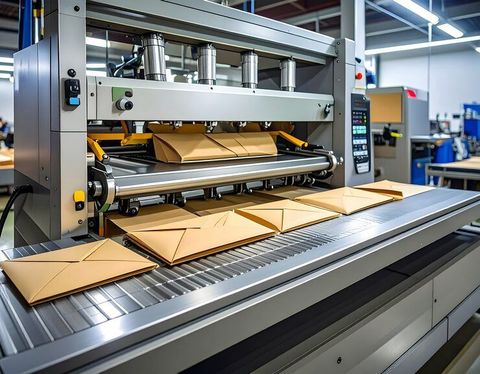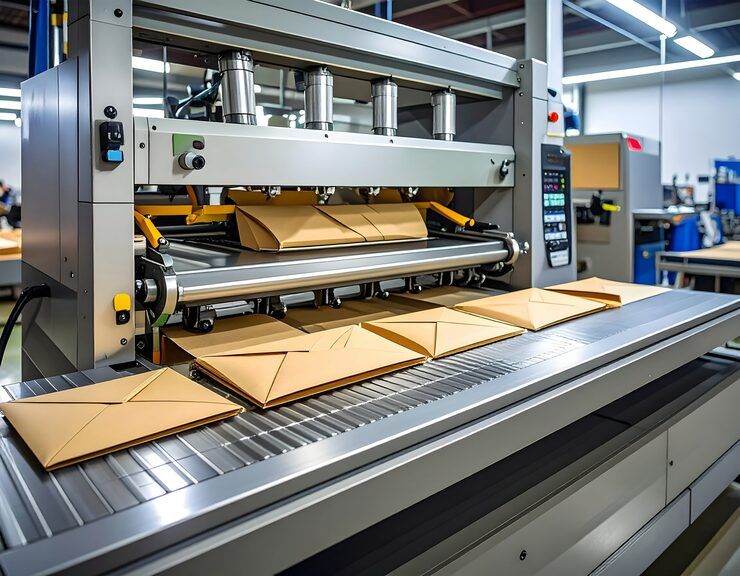
Paper bag making machines are industrial systems designed to convert paper rolls or sheets into bags used for retail packaging, food packaging, groceries, takeaway items, and general product transportation. These machines perform operations such as paper feeding, folding, cutting, gluing, forming, and, in some configurations, handle attachment.
Paper bags are widely used because paper can be manufactured from renewable fiber sources and may be recyclable when the material and local recycling system allow it. Their environmental performance depends on factors such as paper sourcing, manufacturing energy, coatings, adhesives, transportation, and the number of times a bag is reused.
Paper bag manufacturing equipment ranges from manually operated machines for small production runs to automated industrial lines designed for consistent output at higher volumes. The appropriate system depends on bag dimensions, paper weight, handle style, production requirements, and quality standards.
Understanding Paper Bag Making Equipment
A paper bag manufacturing line typically combines several mechanical and control systems. The paper is fed into the machine, shaped into a tube or bag body, cut to the required length, and sealed using adhesive or other suitable joining methods.
Depending on the design, the equipment may also form the bottom, create gussets, attach handles, and inspect finished bags.
Common machine categories include:
Flat-bottom paper bag machines: Produce bags with a flat base suitable for many retail and food packaging applications.
Square-bottom paper bag machines: Form a stable bottom that allows bags to stand upright.
V-bottom paper bag machines: Produce bags commonly used for lightweight items and certain takeaway applications.
Handle-making machines: Manufacture paper handles for compatible bag production systems.
Handle-attaching machines: Attach handles to bag bodies through automated or semi-automated processes.
Paper cutting and creasing machines: Prepare paper to the dimensions and folding requirements of a specific bag design.
Printing and converting equipment: Add branding, instructions, product information, or decorative designs before or during bag production.
Not every production line needs all these machines. Some systems integrate several operations, while others use separate equipment for printing, handle preparation, and finishing.
How Paper Bag Manufacturing Works
The exact manufacturing sequence depends on the machine configuration and bag design.
Paper feeding: A roll or stack of paper enters the production line. Feeding systems control alignment and material movement.
Printing, where required: Designs, logos, or other information may be printed before bag formation or incorporated through an integrated printing unit.
Folding and tube formation: The paper is folded into the required shape, with adhesive applied at designated points to secure the seams.
Cutting: The formed paper tube is cut into sections according to the specified bag dimensions.
Bottom formation: The machine folds and seals the bottom so the bag can hold its intended contents.
Handle attachment and finishing: Depending on the design, handles are attached and the finished bags are inspected for dimensions, adhesive strength, appearance, and structural consistency.
These stages illustrate why paper bag manufacturing is a form of paper converting: the process transforms a basic paper material into a finished product with specific functional characteristics.
Why Paper Bag Making Machines Matter
Paper bag manufacturing equipment supports the production of packaging used by retailers, food businesses, supermarkets, pharmacies, bakeries, and other industries. Consistent bag dimensions, reliable seams, and suitable paper strength are important for protecting products during handling and transportation.
Production Efficiency and Quality
Automated machinery can coordinate feeding, folding, cutting, gluing, and bag formation. This can reduce repetitive manual work and improve consistency when equipment is properly configured and maintained.
Important production considerations include:
Production speed: The number of bags produced per minute under specified operating conditions.
Material utilization: The amount of paper converted into finished bags compared with the amount consumed.
Dimensional accuracy: Consistency in bag width, length, gusset depth, and bottom formation.
Adhesive performance: The strength and reliability of glued seams.
Machine uptime: The proportion of scheduled operating time during which equipment is available.
Changeover flexibility: The ability to switch between different bag dimensions or designs.
Actual output depends on paper quality, bag complexity, operator experience, machine settings, and maintenance.
Choosing Paper and Machine Specifications
Paper selection is closely connected to the intended application. Kraft paper is commonly used because it can provide useful strength and durability, while other paper grades may be appropriate for lightweight retail packaging or specialized designs.
Before selecting equipment, manufacturers should evaluate:
Paper grammage, usually measured in grams per square metre (GSM)
Paper roll width and diameter
Bag dimensions and bottom style
Handle type and attachment method
Printing requirements
Adhesive compatibility
Required production volume
Finished-bag strength and appearance
For example, bags intended for heavier grocery items generally require different material and structural specifications from lightweight bags used for small retail products.
Recent Developments in Paper Bag Manufacturing
Developments during 2025 and 2026 highlight growing interest in automation, production flexibility, material efficiency, and packaging that can be recovered through suitable recycling systems.
Automation and Digital Monitoring
On February 13, 2026, the Association for Packaging and Processing Technologies highlighted artificial intelligence, automation, and sustainability as important packaging-industry trends. The discussion emphasized equipment flexibility, operational efficiency, and reducing avoidable downtime.
For paper bag manufacturers, related technologies can include automated machine settings, production monitoring, sensors, fault detection, and digital quality records. These systems can help identify production problems earlier, although their effectiveness depends on the equipment and implementation.
Flexible Production Lines
Manufacturers increasingly need to handle different bag sizes, paper grades, printing designs, and handle configurations. Flexible machine settings and quicker changeovers can help production lines accommodate different specifications.
This is especially relevant to businesses producing packaging for several sectors rather than a single standardized product.
Paper Packaging and Barrier Materials
In 2025 and 2026, packaging discussions increasingly focused on balancing paper recyclability with moisture resistance, grease resistance, and product protection.
Some paper bags use coatings, laminated layers, or windows to improve performance. These features can complicate recycling, depending on their composition and the capabilities of local collection and processing systems.
The environmental performance of a paper bag therefore depends on more than the base paper. Material sourcing, manufacturing energy, product durability, and end-of-life handling also matter.
Laws, Regulations, and Environmental Policies
Paper bag manufacturing is affected by packaging standards, environmental regulations, workplace safety requirements, and rules governing materials used for food contact. Specific obligations depend on the country and the products being manufactured.
Packaging Regulations in India
India's Plastic Waste Management Rules, 2016, and subsequent amendments regulate several categories of plastic packaging and carry bags.
Restrictions introduced in 2021 and implemented from July 1, 2022, prohibit identified single-use plastic items. The rules also established minimum thickness requirements for plastic carry bags, including a 120-micron requirement effective from December 31, 2022.
These measures have encouraged interest in alternative packaging formats, including paper bags, but they do not mean that every plastic packaging product is prohibited.
Paper bag manufacturers should check current requirements through the Central Pollution Control Board and the relevant State Pollution Control Board.
Food Packaging Requirements
Paper bags intended for direct food contact must meet applicable food-safety requirements. In India, the Food Safety and Standards Authority of India establishes requirements relevant to food-contact materials and packaging.
Manufacturers should verify that the paper, inks, adhesives, coatings, and other components are appropriate for the intended food application.
Environmental and Workplace Safety
Paper bag factories should manage paper dust, adhesive handling, machine noise, electricity use, and fire risks.
Appropriate measures may include:
Machine guards and emergency-stop systems
Dust collection and housekeeping procedures
Fire detection and prevention arrangements
Safe storage of adhesives and inks
Operator training
Preventive maintenance
Waste-paper segregation
Responsible wastewater and chemical management where applicable
Compliance should be assessed against the rules applicable to the specific facility and production process.
Tools and Resources for Paper Bag Manufacturing
Several technical resources can support equipment selection, production planning, and quality management.
Machine Specification Checklist
A structured specification sheet helps compare different machine configurations.
| Evaluation Factor | Information to Record |
|---|---|
| Paper material | Kraft paper or other suitable grades |
| Paper grammage | Required GSM range |
| Bag dimensions | Width, height, and gusset depth |
| Bag structure | Flat bottom, square bottom, or V-bottom |
| Handle type | Twisted paper, flat paper, or no handle |
| Production output | Target bags per minute |
| Automation | Manual, semi-automatic, or automatic |
| Quality control | Seam strength, dimensions, and appearance |
| Utilities | Electricity, compressed air, and ventilation |
| Maintenance | Inspection schedules and replacement parts |
Production Calculators and Digital Records
Spreadsheets can help estimate paper consumption, material waste, production output, and electricity use.
For example, material utilization can be calculated as:
Material utilization (%) = (Paper used in finished bags ÷ Total paper consumed) × 100
Production teams can also record rejected bags, machine downtime, adhesive consumption, and output by bag specification.
Government and Industry Resources
Useful resources include:
Central Pollution Control Board: Indian plastic-waste regulations and environmental compliance information.
Food Safety and Standards Authority of India: Food-contact packaging requirements.
Bureau of Indian Standards: Applicable product and material standards.
Packaging industry associations: Technical publications and manufacturing developments.
Equipment technical manuals: Machine capacity, paper compatibility, maintenance, and safety instructions.
These resources help manufacturers evaluate requirements using technical documentation rather than relying only on general product descriptions.
Frequently Asked Questions
What are paper bag making machines used for?
They convert paper rolls or sheets into finished bags through processes such as folding, cutting, gluing, bottom formation, and handle attachment. The bags can be used for retail, groceries, food packaging, and other applications.
What is the difference between automatic and semi-automatic paper bag machines?
Automatic machines coordinate more production stages with limited manual intervention, while semi-automatic systems require operators to perform some feeding, handling, or finishing tasks. The appropriate arrangement depends on production requirements, bag design, and available skills.
Which paper is commonly used in paper bag manufacturing?
Kraft paper is widely used because of its useful strength characteristics. Other paper grades may be suitable depending on the bag's intended load, appearance, printing requirements, and food-contact application.
How can manufacturers improve paper bag production efficiency?
Efficiency can be improved through suitable machine settings, preventive maintenance, accurate paper feeding, consistent adhesive application, operator training, and monitoring of waste and rejected products.
Are paper bags always environmentally preferable to plastic bags?
Not necessarily. Environmental performance depends on raw materials, manufacturing energy, transport, durability, reuse, coatings, and end-of-life management. Paper bags may be recyclable where suitable collection and processing systems exist, but coated or laminated formats can be more difficult to recover.
Conclusion
Paper bag making machines are an important part of the modern packaging industry. They transform paper into functional packaging through coordinated feeding, folding, cutting, gluing, bottom formation, and optional handle attachment.
Developments in automation, digital monitoring, flexible production, and material design are influencing how manufacturers approach productivity and quality. At the same time, environmental regulations and food-contact requirements make material selection and responsible manufacturing essential considerations.
Selecting suitable equipment requires evaluating paper specifications, bag dimensions, production capacity, automation, quality requirements, energy use, maintenance, and applicable regulations. Combining appropriate machinery with effective quality control and careful material management can support consistent paper bag production for a range of industrial and retail applications.