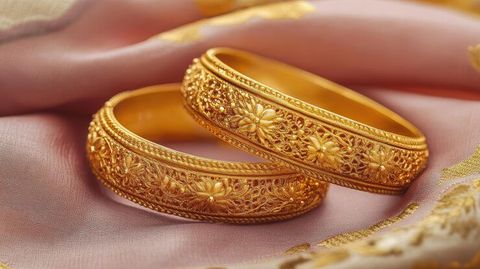
Matching couples bands are coordinated rings worn by two people to represent a relationship, shared commitment, or personal connection. They may have identical designs or complementary details that create a visual link while allowing each person to choose a style that suits their preferences.
These bands are used by dating couples, engaged partners, married couples, and people celebrating anniversaries or other personal milestones. Unlike traditional wedding bands, matching couples bands do not necessarily indicate a particular relationship status. Their meaning depends on the individuals wearing them.
Modern designs range from simple metal rings to engraved bands, textured finishes, gemstone details, and combinations of different materials. Understanding these options can help couples select rings that reflect their shared interests while remaining practical for everyday use.
Understanding Matching Couples Band Designs
Matching rings do not have to be identical. Many pairs use a shared design element, such as the same metal, engraved message, pattern, or symbol, while varying the width, shape, or finish.
Common styles include:
Classic matching bands: Simple, smooth rings with similar profiles.
Minimalist bands: Narrow designs with clean lines and limited decoration.
Engraved rings: Bands featuring dates, initials, short messages, or symbols.
Textured bands: Rings with brushed, hammered, matte, or patterned surfaces.
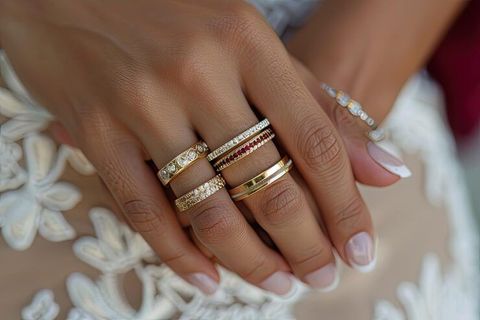
Gemstone bands: Designs incorporating diamonds or other gemstones.
Two-tone bands: Rings combining contrasting metal colors.
Contemporary bands: Geometric profiles, asymmetrical details, or mixed finishes.
The choice often depends on personal style, daily activities, comfort, and the significance attached to the rings.
Materials Used in Couples Bands
The material influences a ring's appearance, durability, maintenance requirements, and suitability for different lifestyles.
Gold remains a familiar option in jewelry, with yellow, white, and rose gold providing different visual effects. Platinum is valued for its density and corrosion resistance, while titanium and tungsten carbide are used in many contemporary designs.
| Material | Main Characteristics | Important Considerations |
|---|---|---|
| Yellow gold | Traditional warm color | Alloy composition affects hardness |
| White gold | Silvery appearance | Some finishes may require maintenance |
| Rose gold | Pinkish color | Copper content contributes to its color |
| Platinum | Dense, naturally white metal | Heavier than many alternative metals |
| Titanium | Lightweight and corrosion-resistant | Resizing can be difficult |
| Tungsten carbide | Hard and scratch-resistant | Brittle under certain impacts |
| Sterling silver | Bright appearance | Can tarnish and requires care |
Material suitability depends on the ring's construction, alloy, finish, and intended use. Some metals are easier to resize or repair than others, so these factors should be considered before choosing a pair.
Importance of Matching Couples Bands
Matching bands can provide a visible symbol of a shared relationship without requiring both individuals to have identical tastes.
Personal Meaning and Shared Identity
For some couples, matching rings represent commitment, a shared milestone, or a personal promise. Others prefer them as coordinated accessories that reflect a common interest or aesthetic.
The symbolism is personal rather than universal. There is no single design or material that carries the same meaning for every relationship.
Everyday Wear and Practicality
Couples who intend to wear their rings regularly may need to consider comfort, durability, skin sensitivity, and the demands of their daily activities.
People who work with their hands, exercise frequently, or regularly handle tools may prefer low-profile designs that are less likely to catch on clothing or equipment.
However, rings can create safety hazards around rotating machinery, and they should be removed when workplace rules or activity-specific safety guidance require it.
Individual Preferences Within a Shared Design
Coordinated rings allow each person to select an appropriate width, profile, or finish while retaining a recognizable connection between the two pieces.
For example, one person might prefer a narrow polished band while the other chooses a wider brushed version made from the same metal.
This approach combines a shared visual theme with individual comfort and style.
Recent Trends in Matching Couples Bands
During 2025 and 2026, jewelry design discussions have continued to emphasize personalization, mixed metals, distinctive finishes, and practical everyday jewelry.
Personalization and Engraving
Engraved initials, meaningful dates, short phrases, and symbolic patterns remain common ways to personalize coordinated bands.
Laser engraving has expanded the range of possible details, including fine lettering and carefully reproduced patterns. The available level of detail depends on the material, surface finish, ring thickness, and engraving technique.
Mixed Metals and Coordinated Finishes
Some contemporary designs combine different metal colors or finishes rather than relying on identical rings.
Examples include a polished band paired with a matte band, contrasting metal inlays, or complementary yellow-gold and white-metal designs.
These approaches allow couples to coordinate their rings while expressing different preferences.
Interest in Material Transparency
Consumers have also shown continued interest in understanding the origin and composition of jewelry materials, including precious-metal alloys and gemstones.
Clear documentation can help explain metal purity, gemstone characteristics, and the scope of any responsible-sourcing claims. The exact documentation available depends on the material and the manufacturer.
Because jewelry trends change across regions and designers, individual preferences remain more useful than assuming that one style is universally popular.
Laws, Standards, and Consumer Protection
The rules affecting matching couples bands depend on the country where the jewelry is manufactured, advertised, or sold. Important considerations include metal-purity descriptions, gemstone disclosures, hallmarking, product safety, and advertising accuracy.
Precious-Metal Purity and Hallmarking
Gold, silver, and platinum jewelry may be subject to national standards concerning purity marks and hallmarking.
In India, the Bureau of Indian Standards administers the hallmarking framework for applicable precious-metal jewelry. Consumers can consult official BIS information to understand hallmark identifiers and applicable requirements.
In other countries, separate national systems may regulate metal fineness and the use of purity stamps. A hallmark should be interpreted according to the relevant country's standards rather than assumed to mean the same thing everywhere.
Gemstone Descriptions
Gemstone terminology should accurately describe the material used. Natural diamonds, laboratory-grown diamonds, and diamond imitations are different categories and should not be represented as interchangeable.
Similarly, gemstone treatments, synthetic stones, and imitation materials may require appropriate disclosure under applicable consumer-protection rules.
Advertising and Product Information
Advertising claims about metal purity, durability, gemstone origin, environmental benefits, and product characteristics should be accurate and supported by evidence.
Descriptions should not imply that a particular ring guarantees relationship success, financial appreciation, or other outcomes that cannot be substantiated.
Tools and Resources for Choosing Matching Bands
Several practical resources can help couples compare designs and understand the technical details of ring selection.
Ring Size Guides
Ring-sizing charts can provide an initial estimate based on finger circumference or diameter. However, sizing can vary with ring width, temperature, and the shape of the finger.
For a more reliable result, use a suitable ring-sizing tool and confirm the size with a qualified jewelry professional when necessary.
Metal and Material Guides
Metal comparison guides explain differences in color, hardness, weight, maintenance, and resizing options.
When reviewing a material, check:
Metal purity or alloy composition
Resistance to scratching and corrosion
Suitability for daily activities
Resizing and repair limitations
Cleaning and maintenance requirements
Potential skin sensitivities
Design and Engraving Planners
A simple shared design worksheet can help couples coordinate their preferences.
| Design Element | Person One | Person Two |
|---|---|---|
| Metal color | Yellow gold | Yellow gold |
| Band width | Narrow | Medium |
| Surface finish | Polished | Brushed |
| Engraving | Initials | Matching initials |
| Profile | Rounded | Rounded |
| Main priority | Lightweight feel | Low-maintenance finish |
This example demonstrates how rings can share a design identity while accommodating different practical preferences.
Jewelry Documentation
For precious-metal or gemstone jewelry, documentation may identify the metal purity, gemstone type, dimensions, and relevant grading information.
Review the details carefully, particularly when comparing natural and laboratory-grown gemstones or different precious-metal alloys.
Frequently Asked Questions
What are matching couples bands?
Matching couples bands are coordinated rings designed around a shared visual theme, material, engraving, or symbol. They can represent a relationship or simply serve as matching personal accessories.
Do couples bands have to be identical?
No. Many couples select rings with complementary colors, different widths, or contrasting finishes. A shared engraving or design feature can create a connection without requiring identical rings.
Which metal is suitable for everyday couples bands?
Gold, platinum, titanium, and other metals can be suitable, depending on their composition and construction. The best choice depends on comfort, durability requirements, maintenance, resizing needs, and personal preferences.
Can matching bands be engraved?
Yes. Many bands can be engraved with initials, dates, short messages, or symbols. Engraving suitability depends on the metal, ring thickness, surface shape, and available space.
How can couples determine the correct ring size?
A ring-sizing tool can provide an initial estimate, but professional measurement is often more reliable. Ring width, finger shape, and temperature can affect comfort, so the fit should be checked under normal conditions.
Conclusion
Matching couples bands combine coordinated design with personal meaning. Whether they feature classic gold, platinum, contemporary metals, gemstones, or engraved details, they provide a flexible way for two people to express a shared connection while maintaining individual preferences.
Selecting suitable rings involves more than comparing appearance. Material composition, comfort, durability, maintenance, sizing, and the practical requirements of everyday activities should all be considered.
Recent design trends highlight personalization, complementary finishes, and greater attention to material information. By understanding these factors and reviewing relevant jewelry standards, couples can make informed decisions about bands that reflect their preferences and intended use.