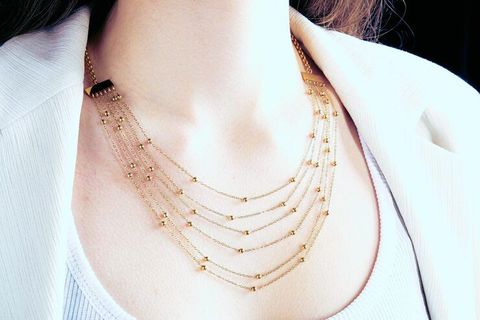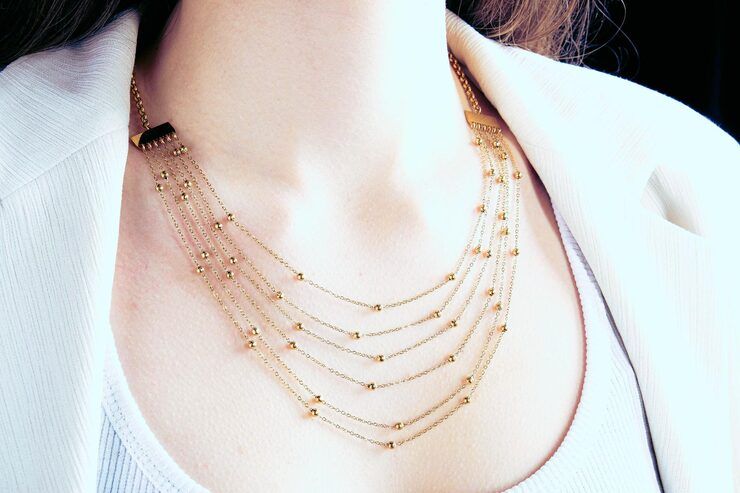
Layered chokers are necklaces designed to sit close to the neck and are worn with additional chains or necklaces of different lengths. This arrangement creates a coordinated jewellery style with several visible layers rather than relying on a single necklace.
Layered chokers can combine delicate chains, pearls, gemstones, metal bands, pendants, and decorative elements. Their appearance ranges from simple everyday jewellery to elaborate designs used for formal occasions, cultural celebrations, and evening wear.
The style has developed alongside broader jewellery trends that emphasize personal expression, mixed materials, adjustable necklace lengths, and combinations of traditional and contemporary designs.
Understanding Layered Choker Designs
A choker typically sits at the base or upper portion of the neck, although the exact position depends on its length and the wearer's neck measurements. Layered designs combine the choker with one or more longer necklaces to create visual depth.
Common arrangements include:
A thin metal choker with a longer pendant necklace
Two delicate chains with different lengths
A pearl choker paired with a simple gold chain
Gemstone chokers combined with matching necklaces
A decorative choker worn with minimalist chains
Mixed-metal necklaces combining gold-tone and silver-tone finishes
The key design principle is separation between the layers. Different necklace lengths help each component remain visible and prevent the arrangement from appearing crowded.
Popular Types of Layered Chokers
Minimalist chain chokers use fine chains and restrained decorative elements. They can be combined with longer necklaces for a subtle, coordinated appearance.
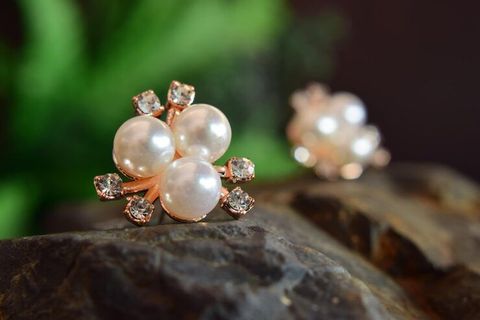
Pearl chokers incorporate individual pearls, pearl clusters, or continuous rows of pearls. Pairing them with a thin metal chain can combine traditional jewellery with a contemporary silhouette.
Gemstone chokers feature stones such as sapphires, emeralds, rubies, or colored crystals. Their color and surface characteristics can create a focal point within a layered arrangement.
Statement chokers use wider metal bands, larger decorative elements, or detailed patterns. These are often paired with simpler necklaces so that the overall design remains balanced.
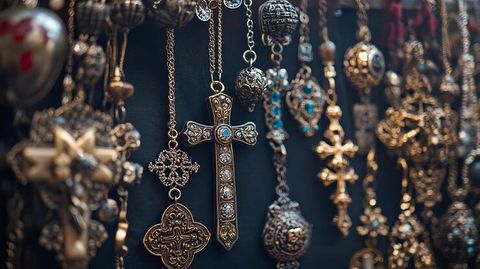
Vintage-inspired chokers may include filigree details, antique-style finishes, floral motifs, or decorative settings influenced by earlier jewellery periods.
Why Layered Chokers Matter in Contemporary Jewellery
Layered chokers are relevant to fashion because they allow people to adapt a small collection of necklaces to different outfits and occasions. The same choker can look different when combined with a pendant, a pearl strand, or a longer chain.
Personal Expression and Styling
Layering creates opportunities to express individual preferences through color, material, texture, and proportion.
For example, someone who prefers understated jewellery might combine a narrow gold-tone choker with a simple pendant. Another person might choose pearls, colored gemstones, and decorative metalwork for a more detailed appearance.
Adapting Jewellery to Different Occasions
Different combinations can suit different clothing styles.
Casual clothing can work with fine chains and small pendants.
Business or formal clothing may suit restrained metal designs.
Evening outfits can accommodate gemstone or statement chokers.
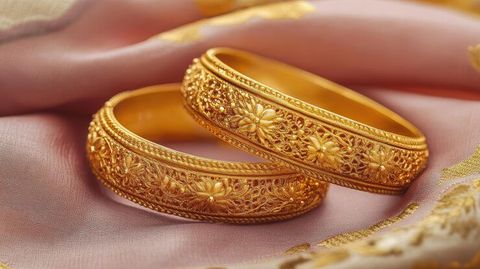
Traditional clothing can be paired with pearl, gold, or culturally inspired designs.
These are general styling considerations rather than fixed rules. Personal preference, neckline, comfort, and cultural context all influence the final combination.
Proportion and Comfort
A layered arrangement needs to balance appearance with practical wearability. A choker that is too tight may create discomfort, while necklaces with similar lengths can overlap or become tangled.
Adjustable closures and extension chains can help accommodate different neck sizes and clothing styles.
Recent Trends and Developments
Jewellery trends change across regions, designers, and fashion seasons. During 2025 and 2026, layered necklaces continued to fit into wider styling themes involving personalization, mixed metals, varied textures, and combinations of delicate and statement jewellery.
Mixed-Metal Combinations
Combining gold-tone and silver-tone jewellery has become an established styling approach. In layered chokers, mixed metals can introduce contrast without requiring every necklace to share the same finish.
The visual result depends on the proportions and design of each piece. A simple silver chain can complement a gold-tone choker when their shapes and lengths work together.
Pearls and Contemporary Designs
Pearls continue to appear in both traditional and contemporary jewellery. Modern interpretations include irregular pearl shapes, small pearl accents, and combinations with fine metal chains.
Layering pearls with minimalist necklaces can create contrast between the smooth surfaces of pearls and the reflective appearance of metal.
Personalization and Adjustable Lengths
Adjustable chains and interchangeable pendants allow wearers to change necklace arrangements according to clothing and personal preference.
Initial pendants, birthstone-inspired colors, and symbolic charms are examples of ways jewellery can reflect individual interests. Such details are design choices rather than indicators of a stone's authenticity or material quality.
Digital Jewellery Visualization
Digital design tools increasingly help jewellery designers and consumers compare proportions, metal finishes, stone arrangements, and necklace lengths before finalizing a design.
Three-dimensional modeling and computer-aided design can also assist professional jewellery production by allowing detailed examination of settings, links, clasps, and decorative elements.
| Design Trend | Common Features | Styling Consideration |
|---|---|---|
| Minimalist layering | Fine chains and small pendants | Keep visible gaps between layers |
| Mixed metals | Gold-tone and silver-tone finishes | Repeat a metal color elsewhere for cohesion |
| Pearl combinations | Pearls with delicate chains | Balance texture and necklace length |
| Gemstone accents | Colored stones or crystal details | Consider color coordination |
| Statement chokers | Wider bands or detailed designs | Keep additional layers relatively simple |
| Personalized designs | Charms and initials | Check pendant weight and chain strength |
Jewellery Regulations and Consumer Protection
Layered chokers are affected by jewellery-material standards, consumer-protection rules, product-labeling requirements, and restrictions concerning misleading descriptions. The exact rules depend on the country where jewellery is manufactured, marketed, or distributed.
Precious-Metal Hallmarking
Gold, silver, and platinum jewellery may be subject to purity-marking or hallmarking requirements, depending on the jurisdiction.
In the United States, the Federal Trade Commission publishes guidance concerning jewelry, precious metals, and the use of terms that describe gold, silver, platinum, and gemstones.
In the United Kingdom, the Hallmarking Act 1973 establishes requirements for hallmarking specified precious-metal articles, subject to applicable exemptions.
Consumers should distinguish between solid precious metal, gold-plated material, gold-filled construction, and other finishes because these terms describe different material characteristics.
Gemstone Descriptions
Gemstone descriptions should accurately distinguish natural stones, laboratory-grown stones, imitations, and treated gemstones when the applicable rules require such disclosure.
For example, laboratory-grown diamonds have the same principal chemical composition as natural diamonds but differ in origin. Jewellery descriptions should not imply that one origin is another.
Product Safety and Skin Sensitivity
Metal components may contain substances that cause skin reactions in some people. Nickel exposure is a particular consideration for sensitive skin.
Regulations vary by market. European Union REACH restrictions, for example, limit the release of nickel from certain articles intended for direct and prolonged skin contact.
Checking material descriptions and choosing appropriate jewellery components can help people make informed decisions.
Tools and Resources for Layered Chokers
Several practical resources can help with jewellery selection, design, and maintenance.
Necklace-Length Measurement
A flexible measuring tape can help determine neck circumference and estimate the length needed for a comfortable choker.
Before choosing a chain, consider:
Neck circumference
Desired position of the choker
Closure and extension-chain length
Pendant size and weight
Spacing between necklace layers
Measurements should allow for comfortable movement rather than creating unnecessary pressure around the neck.
Jewellery Design Software
Computer-aided design tools such as Rhino and MatrixGold are used in professional jewellery design. They can help designers model settings, links, pendants, and decorative arrangements.
Simple drawing tools can also be used to sketch a layered arrangement before selecting materials.
Material and Gemstone Information
The Gemological Institute of America provides educational information about gemstones, diamonds, treatments, and identification.
National consumer-protection authorities can also help explain material descriptions, hallmarking requirements, and product-labeling rules applicable in different markets.
Jewellery Care
Basic maintenance can help preserve the appearance of layered necklaces.
Store chains separately to reduce tangling.
Keep jewellery away from harsh chemicals.
Follow material-specific cleaning instructions.
Inspect clasps and links periodically.
Avoid abrasive cleaning methods on delicate finishes.
Store pearls separately from harder gemstones to reduce scratching.
Different materials require different care. For example, pearls and certain treated gemstones can be damaged by cleaning methods suitable for some solid-metal jewellery.
Frequently Asked Questions
What is a layered choker?
A layered choker is a necklace arrangement in which a close-fitting necklace is combined with one or more longer necklaces. The layers can differ in material, texture, color, or decorative detail.
How should necklace lengths be chosen for layering?
Choose lengths that create visible separation between necklaces. Adjustable chains can help accommodate different neck measurements, pendants, and clothing necklines. The ideal arrangement depends on comfort and the design of each piece.
Can gold and silver chokers be worn together?
Yes. Gold-tone and silver-tone jewellery can be combined to create contrast. Repeating one of the metal tones in another accessory can help the overall arrangement appear coordinated, although matching every accessory is not necessary.
Which materials are commonly used in layered chokers?
Common materials include gold, silver, stainless steel, gold-plated metals, pearls, gemstones, crystals, and glass beads. Material durability, maintenance needs, and potential skin sensitivity vary between products.
How can layered chokers be maintained?
Store necklaces separately, inspect clasps, and follow cleaning instructions for each material. Avoid exposing delicate jewellery to harsh chemicals, and take care when storing chains of different lengths to prevent tangling.
Conclusion
Layered chokers combine necklace lengths, textures, materials, and decorative details to create a flexible jewellery style. Their appearance can range from minimalist arrangements to elaborate combinations involving pearls, gemstones, and statement metalwork.
Understanding necklace proportions, material characteristics, comfort, and maintenance can help people choose combinations appropriate for different occasions. Recent design approaches, including mixed metals, adjustable chains, and digital visualization, provide additional ways to explore the style.
Accurate material descriptions and awareness of relevant consumer-protection rules are also important when evaluating jewellery. With attention to design, fit, and care, layered chokers can remain a versatile part of contemporary jewellery styling.