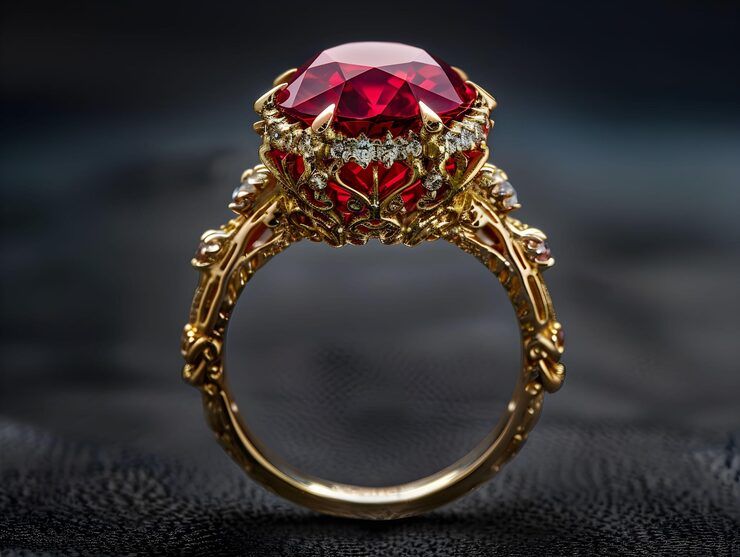
Ruby rings are pieces of jewelry featuring rubies, a red variety of the mineral corundum. Their distinctive color, durability, and long history in jewelry have made them significant in different cultures. Rubies are commonly set in gold, platinum, silver, and other jewelry metals, with designs ranging from traditional decorative rings to contemporary engagement and anniversary jewelry.
The appearance and characteristics of a ruby depend on several factors, including color, clarity, cut, carat weight, geological origin, and whether the gemstone has undergone treatment. Understanding these characteristics helps explain why two rubies of similar size can look very different.
Understanding Ruby Gemstones
Ruby is the red variety of corundum, a crystalline form of aluminum oxide. The red color is primarily associated with chromium within the mineral's structure. Corundum in other colors is generally classified as sapphire.
Ruby ranks 9 on the Mohs scale of mineral hardness, making it one of the harder natural gemstones. Diamond ranks 10 on the same scale. However, hardness measures resistance to scratching, not complete resistance to damage. A ruby can still chip or fracture if struck in the wrong place.
Natural rubies form through geological processes involving suitable mineral compositions, pressure, temperature, and surrounding rock conditions. Important ruby-producing regions have historically included Myanmar, Mozambique, Sri Lanka, Thailand, and Madagascar.
Popular Ruby Ring Designs
Ruby rings are available in a range of settings and styles. The design affects the gemstone's appearance, protection, and overall proportions.
Solitaire ruby rings: Feature one principal gemstone as the central element.
Halo ruby rings: Surround the central ruby with smaller gemstones.
Three-stone ruby rings: Combine a ruby with two additional gemstones.
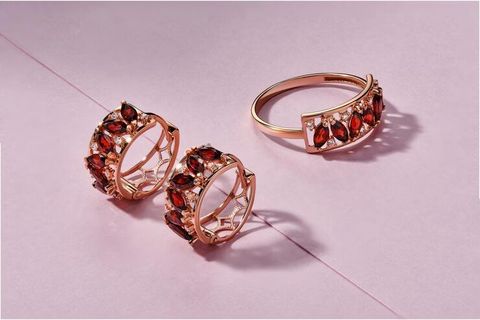
Ruby and diamond rings: Pair red gemstones with diamonds for color contrast.
Vintage-inspired rings: Use decorative metalwork and historical design influences.
Modern ruby rings: Emphasize clean lines, geometric shapes, and minimal settings.
Oval, round, cushion, pear, and emerald-style cuts can produce different visual effects. The best choice depends on the gemstone's natural shape, clarity characteristics, intended setting, and personal design preferences.
Understanding Ruby Quality
Gemstone evaluation generally considers color, clarity, cut, carat weight, and treatment. No single characteristic determines the overall quality of every ruby.
Color is especially important. Fine rubies often display a vivid red appearance, although descriptions such as pigeon-blood red are used differently across the trade and should not be treated as a universal grading standard.
Clarity refers to internal features and surface characteristics. Natural inclusions are common in rubies and can provide information about their formation and treatment history.
Recent Trends in Ruby Rings and the Gemstone Industry
During 2025 and 2026, the colored gemstone industry continued to focus on gemstone identification, treatment disclosure, responsible sourcing, and improved laboratory analysis.
Advances in Gemstone Identification
On September 30, 2025, the Gemological Institute of America published an explanation of how laboratories examine colored gemstones. The process includes identifying the gemstone, examining its characteristics, detecting treatments, and assessing geographic origin when possible.
These methods are relevant to ruby rings because natural rubies, laboratory-grown rubies, and imitation stones can have similar appearances but different origins and material characteristics.
Responsible Gemstone Sourcing
On August 28, 2025, the World Jewellery Confederation published a sustainability report examining responsible sourcing, environmental management, and social considerations across jewelry supply chains.
Responsible sourcing discussions include mining practices, working conditions, supply-chain documentation, and environmental impacts. These issues are relevant to natural rubies because gemstone extraction and processing can affect local communities and ecosystems.
Growing Interest in Gemstone Documentation
Laboratory reports and documented treatment information remain important tools for understanding gemstone characteristics. Advances in analytical methods help gemologists distinguish natural stones from laboratory-grown materials and identify certain treatments.
A report does not automatically establish that a gemstone is rare or financially valuable. It provides technical information that can support a more informed evaluation.
Laws, Regulations, and Jewelry Standards
Ruby rings are affected by consumer-protection rules, gemstone disclosure requirements, precious-metal standards, and regulations governing the origin and movement of certain materials. The exact requirements depend on the country.
Gemstone Disclosure in the United States
The US Federal Trade Commission's Jewelry Guides explain how gemstones should be described in advertising and commercial communications.
The guidance addresses distinctions between natural gemstones, laboratory-grown gemstones, imitation materials, and treated stones. It also emphasizes truthful descriptions of gemstone characteristics and material composition.
For ruby rings, clear descriptions help distinguish a natural ruby from a laboratory-created ruby or a composite material containing fillers.
Precious-Metal Hallmarking
Countries may have specific requirements for marking gold, silver, and platinum jewelry. Hallmarking systems can indicate metal purity or provide information about the responsible testing and certification authority.
For example, India's Bureau of Indian Standards administers the hallmarking framework for applicable gold jewelry and other covered products. Requirements depend on the product category and current regulations.
Consumers and jewelry professionals should check the applicable national rules rather than assuming that the same hallmarking requirements apply worldwide.
Gemstone Treatments and Origin
Ruby treatments can include heat treatment, diffusion, and fracture filling. Some treatments can significantly change a gemstone's appearance or affect its durability and evaluation.
The Gemological Institute of America explains that many rubies are heat-treated and that glass-filled rubies require particular care. Independent laboratory analysis can help identify natural or laboratory-grown origin and detectable treatments.
Geographic origin is another specialized consideration. A report may provide an origin opinion when the laboratory can determine it, but the location alone does not establish the quality of a ruby.
Tools and Resources for Ruby Ring Research
Reliable reference materials can help with gemstone identification, jewelry care, and understanding technical descriptions.
Gemological Reference Resources
The Gemological Institute of America provides educational information about ruby formation, color, clarity, treatments, origin, and gemstone identification reports.
Its resources explain how gemologists examine inclusions, optical properties, and other characteristics that may not be apparent during ordinary visual inspection.
Gemstone Evaluation Checklist
When documenting a ruby ring, the following information can help create a consistent record.
Evaluation Factor | Information to Record |
|---|---|
Gemstone identity | Natural ruby, laboratory-grown ruby, or imitation |
Carat weight | Weight of the central ruby |
Color | Hue, tone, and saturation |
Clarity | Visible inclusions and transparency |
Cut | Shape, proportions, and symmetry |
Treatment | Known or laboratory-detected enhancements |
Origin | Laboratory opinion, when available |
Metal | Gold, platinum, silver, or another material |
Documentation | Laboratory report and metal markings |
These characteristics provide a useful starting point, but they do not replace professional gemological examination.
Jewelry Care Resources
Basic jewelry care can help maintain a ruby ring's appearance.
Clean suitable ruby settings with warm water and mild soap.
Use a soft brush where appropriate.
Avoid harsh chemicals and abrasive cleaning products.
Check the setting periodically for loose stones.
Seek specialist advice before using ultrasonic or steam cleaners, particularly for treated rubies.
Store jewelry separately to reduce scratches from contact with other objects.
Glass-filled rubies may require more careful handling and should generally be cleaned with a damp cloth according to specialist guidance.
Frequently Asked Questions
Are ruby rings suitable for everyday wear?
Ruby has a Mohs hardness of 9, which makes it suitable for many jewelry applications. However, the durability of a ring also depends on its setting, gemstone treatment, and exposure to impacts. Regular inspection can help identify loose stones or damaged settings.
What determines the quality of a ruby?
Color, clarity, cut, carat weight, treatment, and, where relevant, geographic origin contribute to gemstone evaluation. Color is particularly important, but quality cannot be established from color alone.
What is the difference between natural and laboratory-grown rubies?
Natural rubies form through geological processes, while laboratory-grown rubies are created under controlled conditions. Both consist primarily of corundum and can share similar optical and physical characteristics. Laboratory testing can help distinguish them.
Do ruby rings require special cleaning?
Many rubies can be cleaned with warm water, mild soap, and a soft brush. However, certain treatments, especially fracture filling, may require special care. The cleaning method should match the gemstone's treatment and setting.
Why is a gemstone identification report useful?
An identification report provides information about a gemstone's identity and may document detectable treatments and a geographic-origin opinion. It helps clarify technical characteristics, although it does not automatically establish a particular market value.
Conclusion
Ruby rings combine gemstone science, jewelry design, craftsmanship, and cultural history. Their appearance depends on color, clarity, cut, carat weight, treatment, and the metal used in the setting.
Developments in laboratory analysis and responsible sourcing during 2025 and 2026 highlight the importance of reliable gemstone identification and transparent documentation. Understanding the difference between natural, laboratory-grown, treated, and imitation materials can help people interpret jewelry descriptions more accurately.
Careful evaluation also involves understanding precious-metal markings, checking relevant consumer-protection requirements, and following appropriate cleaning practices. With accurate information about gemstone characteristics and maintenance, ruby rings can be appreciated for both their design and their mineralogical properties.