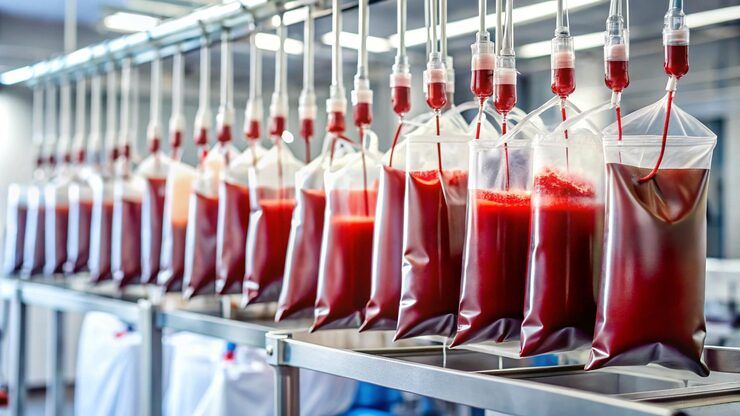
Blood bag manufacturing machines are specialized production systems used to manufacture sterile plastic containers designed for collecting, storing, processing, and transporting blood and blood components.
Unlike ordinary plastic-bag production equipment, blood bag manufacturing systems must support highly controlled medical-device production. The finished container can include tubing, collection needles, ports, transfer tubes, anticoagulant or preservative solutions, labels, and other integrated components depending on the bag configuration.
The principal manufacturing stages can include plastic-film preparation, printing, forming, sealing, tubing attachment, component assembly, inspection, sterilization, and packaging.
Modern systems may combine extrusion, high-frequency welding, heat sealing, automated assembly, leak testing, vision inspection, and computerized production controls.
How Blood Bags Are Manufactured
Blood bags are commonly manufactured from medical-grade flexible polymer films. Polyvinyl chloride has historically been widely used, although material selection depends on the intended application and applicable specifications.
A simplified production sequence includes:
Medical-grade film preparation
Printing and identification
Bag forming
Tube and port positioning
High-frequency or heat sealing
Needle and connector assembly
Anticoagulant or preservative filling where applicable
Visual and dimensional inspection
Leak and seal testing
Sterilization
Sterile packaging
Final quality verification
The exact process varies according to whether the product is a single, double, triple, quadruple, or specialized apheresis bag system.
Major Machine Categories
A blood-bag production line may contain several specialized machines rather than one standalone machine.
| Machine or System | Main Function |
|---|---|
| Film extrusion equipment | Produces medical-grade plastic film |
| Printing system | Adds required identification and markings |
| Bag-forming unit | Shapes the film |
| High-frequency welder | Creates controlled bag seals |
| Tube assembly machine | Attaches tubing and connectors |
| Filling system | Adds specified solutions when applicable |
| Leak tester | Detects seal or container leakage |
| Vision inspection | Identifies visual defects |
| Sterilization system | Produces the required sterile condition |
| Packaging equipment | Protects finished sterile products |
The selection and validation of each process are closely connected to the final medical-device specification.
Why Blood Bag Manufacturing Matters Today
Blood collection and component processing depend on containers that can maintain the required physical and biological conditions throughout their intended use.
A blood bag must therefore perform several functions simultaneously. It needs to remain sealed, maintain appropriate flexibility, support blood collection and transfer, and interact appropriately with anticoagulant or preservative solutions when included in the design.
Applications in Blood Processing
Blood bag systems can be designed for:
Whole-blood collection
Red blood cell storage
Plasma separation
Platelet processing
Blood-component transfer
Apheresis procedures
Sampling and testing
Leukocyte-reduction systems
ISO 3826-1:2019 covers conventional sterile plastic containers for the collection, storage, processing, transport, separation, and administration of blood and blood components. The standard also covers multiple-unit configurations. It was reviewed and confirmed in 2025 and remains current.
Why Process Control Is Important
Small variations in sealing temperature, pressure, welding time, film thickness, tubing position, or material characteristics can affect the finished container.
Important manufacturing controls can include:
Film thickness
Seal strength
Weld integrity
Connector alignment
Tubing dimensions
Container volume
Material compatibility
Sterility assurance
Visual appearance
Leakage resistance
A manufacturing line therefore needs controlled operating parameters and documented inspection procedures.
Recent Blood Bag Manufacturing Developments
The medical-device industry has continued to focus on automation, quality systems, material characterization, and improved manufacturing consistency during 2025 and 2026.
ISO 3826 Standards Under Revision
One of the most significant recent developments is the revision of several ISO 3826 documents.
ISO/DIS 3826-3, concerning blood bag systems with integrated features, entered the international enquiry process during 2026. The draft is intended to replace ISO 3826-3:2006 and addresses integrated features such as leukocyte filters, sampling devices, multiple-bag configurations, platelet storage bags, and needle-stick protection.
ISO/DIS 3826-4 is also under development for apheresis blood bag systems with integrated features. The draft covers systems used with automated or semi-automated blood collection procedures and includes features such as filters, sampling devices, red-cell, plasma, and platelet storage bags.
These developments show that blood-bag standardization continues to evolve alongside increasingly specialized collection and component-processing systems.
Current Conventional-Bag Standard
ISO 3826-1:2019 remains the current international standard for conventional collapsible plastic blood containers. ISO confirmed the standard in January 2025 following its systematic review.
Manufacturers working with blood-bag production equipment should therefore distinguish between standards that are currently published and draft standards that are still under development.
Automation and Inspection
Modern medical-device production increasingly incorporates automated inspection and process monitoring.
For blood bags, automation can be applied to:
Seal inspection
Tubing alignment
Component presence verification
Dimensional inspection
Print verification
Leak testing
Production traceability
Batch documentation
Machine vision and electronic data collection can help identify deviations earlier in the production process.
Laws, Regulations and Policies in India
India provides an important regulatory example because blood and blood-component collection bags are specifically included within the medical-device regulatory framework.
The Central Drugs Standard Control Organization states that medical devices in India are regulated under the Drugs & Cosmetics Act, 1940 and the Medical Devices Rules, 2017.
Medical Devices Rules, 2017
The Medical Devices Rules, 2017 apply to specified medical devices and include blood and blood-component collection bags with or without anticoagulant within the regulated framework.
This means that a company manufacturing blood bags in India must consider the applicable licensing, classification, quality-system, inspection, testing, and documentation requirements.
The precise regulatory pathway depends on the product classification and intended use.
Quality Management
Medical-device manufacturing requires documented controls covering manufacturing processes, quality assurance, testing, traceability, and production records.
CDSCO maintains regulatory material covering medical-device licensing, classification, testing laboratories, notified bodies, and other requirements under the Medical Devices Rules, 2017.
For a blood-bag production facility, equipment qualification and process validation are particularly important because the manufacturing process directly affects the characteristics of a sterile medical device.
Blood-Component Processing Requirements
India's Drugs Rules also establish requirements for blood-component preparation. The rules specify that blood components should be prepared using closed systems with appropriate single, double, triple, or quadruple plastic bags, subject to the stated provisions.
This makes the performance and integrity of the blood-bag system particularly important within the wider blood-processing workflow.
2025 Regulatory Development
In April 2025, CDSCO published a public notice concerning auto-generated Market Standing Certificates and Non-Conviction Certificates for licensed medical devices. This illustrates continuing digitization of administrative processes within India's medical-device regulatory environment.
Manufacturers should always verify the current CDSCO requirements because medical-device regulatory procedures can be amended through subsequent notifications and circulars.
Tools and Resources for Blood Bag Manufacturing
Blood-bag manufacturing requires specialized engineering, medical-device quality management, testing, and regulatory documentation.
Useful Resources
ISO 3826 standards: Reference requirements for plastic blood containers and specialized blood-bag systems.
CDSCO medical-device portal: Provides Indian regulatory information, rules, forms, notifications, and guidance.
Medical-device classification resources: Help determine the applicable regulatory category.
Process-validation templates: Useful for documenting equipment qualification and validated manufacturing parameters.
Leak-testing equipment: Used to evaluate container and seal integrity.
Seal-strength testing equipment: Helps assess the consistency of welded areas.
Vision-inspection systems: Check printing, components, and visible defects.
Dimensional measurement tools: Verify tubing, ports, film, and finished-container dimensions.
Environmental monitoring systems: Support controlled manufacturing environments.
Sterility testing resources: Used within applicable validated quality-control programs.
Batch-record templates: Help maintain manufacturing traceability.
Material compatibility testing: Evaluates interactions between polymer films, anticoagulants, preservatives, and blood components.
Key Machine Specifications
When evaluating blood bag manufacturing machines, important parameters include:
Film compatibility
Film thickness range
Sealing technology
Welding frequency or temperature control
Production capacity
Tubing compatibility
Port configuration
Automation level
Vision inspection
Leak-testing capability
Sterile-processing compatibility
Data logging
Batch traceability
Validation support
Machine throughput should not be evaluated separately from quality requirements. A high production rate is useful only when the manufacturing process can consistently meet the required specifications.
Frequently Asked Questions
What is a blood bag manufacturing machine?
It is specialized equipment used to manufacture plastic containers designed for collecting, storing, processing, and transporting blood or blood components. A complete production line can include film forming, sealing, tube assembly, inspection, sterilization, and packaging equipment.
What materials are used for blood bags?
Blood bags are generally manufactured from medical-grade flexible polymer materials. PVC has historically been widely used, while material selection depends on the product design, intended application, applicable standards, and regulatory requirements.
What standard applies to conventional blood bags?
ISO 3826-1:2019 is the current international standard for conventional sterile plastic containers used with human blood and blood components. ISO confirmed the standard in 2025 following systematic review.
Are blood bags regulated as medical devices in India?
Blood and blood-component collection bags are included within India's medical-device regulatory framework. The Medical Devices Rules, 2017 specifically reference blood and blood-component collection bags with or without anticoagulant.
Why is leak testing important for blood bags?
Leak testing helps identify defects in the container, seals, ports, or tubing connections. Maintaining container integrity is essential because blood-bag systems are intended to maintain a controlled, sterile environment throughout their specified use.
Conclusion
Blood bag manufacturing machines form part of a highly controlled medical-device production environment. Unlike general plastic packaging equipment, these systems must support the manufacture of sterile containers with defined material, sealing, dimensional, functional, and quality characteristics.
Current international standardization work shows that the technology continues to evolve. ISO 3826-1:2019 remains current for conventional blood containers, while new drafts for integrated blood-bag systems and apheresis systems are progressing through the ISO development process during 2026.
Automation is also becoming increasingly important. Vision inspection, electronic process monitoring, leak testing, automated assembly, and production traceability can help manufacturers maintain consistent processes and identify deviations.
In India, blood and blood-component collection bags fall within the medical-device regulatory framework established through the Drugs & Cosmetics Act and Medical Devices Rules, 2017.
For organizations researching blood bag manufacturing equipment, the most important considerations are applicable standards, polymer compatibility, sealing technology, component assembly, validation, sterile processing, inspection, traceability, and regulatory classification.
The long-term direction of blood-bag manufacturing is likely to involve greater automation, stronger process monitoring, advanced inspection, improved material characterization, and continued international standardization. These developments can support more controlled and consistent production of containers used throughout modern blood-collection and component-processing systems.