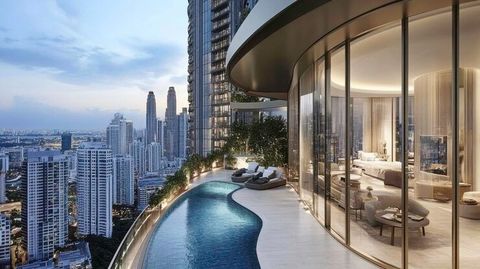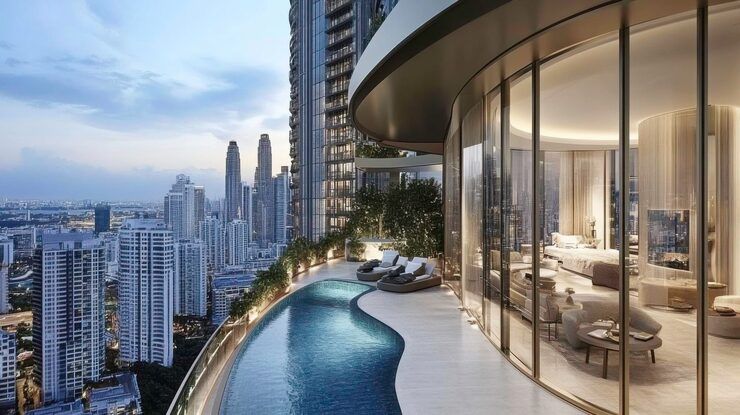
Urban luxury high-rise hotels are large hospitality properties located within tall buildings in major cities. They combine accommodation with architecture, restaurants, wellness facilities, meeting spaces, panoramic observation areas, and other amenities designed around dense urban environments.
The development of high-rise hotels is closely connected with the growth of global cities. As land becomes limited in central business districts and major tourism areas, vertical buildings allow accommodation, offices, residences, retail areas, and leisure spaces to occupy the same urban footprint.
Cities such as New York, Dubai, Singapore, London, Hong Kong, Tokyo, and Shanghai have become strongly associated with high-rise hospitality. These buildings can transform a skyline while providing travelers with views over metropolitan areas.
Luxury high-rise hotels generally emphasize architecture, interior design, location, views, privacy, technology, and personalized guest experiences. Their design must also address complex requirements involving elevators, structural engineering, fire protection, emergency evacuation, energy consumption, and building operations.
How High-Rise Hotels Are Designed
A modern high-rise hotel may divide its functions across different parts of the building.
Typical arrangements include:
Guest rooms on upper floors
Lobby and reception areas near street level
Restaurants on selected floors
Meeting and conference spaces
Fitness and wellness areas
Rooftop terraces or observation areas
Back-of-house facilities
Emergency stairways
Mechanical and electrical floors
The vertical layout can create distinct experiences within one building. Lower floors may connect strongly with the surrounding city, while upper floors can provide quieter rooms and panoramic views.
| Building element | Typical purpose | Main planning consideration |
|---|---|---|
| Lobby | Arrival and orientation | Pedestrian flow |
| Guest floors | Accommodation | Privacy and noise control |
| Upper floors | Views and premium rooms | Wind and structural movement |
| Rooftop | Dining or recreation | Safety and weather |
| Mechanical floors | Building systems | Ventilation and utilities |
| Emergency stairs | Evacuation | Fire and life safety |
| Vertical transportation | Guest movement | Elevator capacity |
Why Urban Luxury High-Rise Hotels Matter Today
High-rise hotels play an important role in international tourism because they can accommodate large numbers of travelers within established urban centers.
They are particularly relevant to business travelers, international tourists, conference participants, luxury travelers, and visitors attending major cultural or sporting events.
Efficient Use of Urban Land
Vertical development can make it possible to accommodate many functions without requiring a large horizontal site. This is especially relevant in central districts where available land is limited.
A high-rise hotel can also become part of a mixed-use development containing offices, residences, shopping areas, restaurants, and transportation connections.
This model is relevant to several high-value travel and property topics, including:
Luxury hotel accommodation
Business travel
Executive travel
Corporate travel planning
Conference travel
International tourism
Premium city hotels
Commercial real estate
Hospitality investment
Destination travel
The Importance of Location
For an urban hotel, location remains an important factor. Proximity to airports, railway stations, financial districts, convention centers, cultural attractions, shopping districts, and public transportation can influence the usefulness of a property.
A high-rise building can also provide an elevated view of the surrounding city. However, views vary according to building orientation, neighboring structures, weather, and local development patterns.
Technology and Guest Experience
Technology is increasingly integrated into high-rise hospitality. Digital room controls, mobile applications, smart lighting, automated check-in systems, connected televisions, and energy-management systems can improve building efficiency and convenience.
However, technology must operate alongside reliable human assistance and strong emergency procedures. In a tall building, communication and building management systems are particularly important because guests may be located dozens or hundreds of meters above ground level.
Recent Developments in Urban High-Rise Hospitality
The hospitality sector has continued adapting to changing travel patterns, sustainability expectations, digital technology, and urban development policies during 2025 and 2026.
Greater Focus on Building Efficiency
Modern high-rise hotels are increasingly designed around energy management. Large buildings can consume substantial amounts of electricity for air conditioning, lighting, elevators, hot water, kitchens, and ventilation.
Hotel developers are therefore incorporating technologies such as:
Smart building controls
High-efficiency lighting
Energy monitoring
Improved building envelopes
Heat-recovery systems
Water-efficiency equipment
Renewable electricity where practical
The challenge is particularly significant in hot cities, where cooling demand can be substantial.
Existing Buildings Are Receiving Greater Attention
In major cities, redevelopment and renovation of existing towers can sometimes be more practical than constructing an entirely new building. Adaptive reuse can transform older commercial buildings into hospitality properties when zoning, structural systems, floor layouts, and building regulations permit.
New York City provides an important current example. Its Existing Building Code was enacted on January 17, 2026, with the new code scheduled to become effective on July 17, 2027. Until then, existing building alterations continue under the applicable current regulations.
This transition is relevant to hotel renovations because high-rise properties frequently require periodic upgrades to façades, mechanical systems, rooms, elevators, fire protection, and interior spaces.
Transparency in Hotel Pricing
Consumer transparency has also become a major hospitality policy issue.
In New York City, a final rule announced in January 2026 addressing hidden hotel charges and unexpected payment holds was scheduled to take effect on February 21, 2026. The rule requires clearer disclosure of mandatory charges when hotel accommodation is advertised.
For travelers comparing luxury hotels, this reinforces the importance of reviewing the complete booking information rather than relying only on a headline room figure.
Laws, Regulations and Policies
New York City provides a useful regulatory example because it has a dense high-rise environment, a major international hotel market, and detailed building and zoning requirements.
Hotel Licensing
New York City introduced a new hotel licensing requirement under Local Law 104 of 2024. The requirement took effect on May 3, 2025. Hotels must comply with the licensing framework in addition to other applicable building and legal requirements.
The city's Department of Consumer and Worker Protection explains that a hotel cannot operate simply by obtaining the hotel license; it must also meet applicable building requirements, including authorization for guest occupancy.
High-Rise Building Requirements
Tall buildings face additional requirements related to construction classification, elevators, emergency exits, fire protection, and building systems.
New York City identifies buildings above 75 feet as high-rise buildings for certain regulatory purposes, with additional requirements relating to construction, elevators, egress, and fire protection.
For luxury hotels, these requirements are especially important because guests may be unfamiliar with the building and may be sleeping when an emergency occurs.
Hotel Zoning
Hotel development is also affected by zoning. New York City's Zoning Resolution regulates where transient hotels can be located and establishes conditions for certain hotel developments and conversions.
Depending on the district and project, approvals may address:
Permitted building use
Building height and bulk
Street-level design
Pedestrian movement
Access arrangements
Neighborhood impacts
Conversion of existing buildings
This illustrates why hotel development involves more than architectural design. Urban planning, building codes, fire safety, licensing, and land-use rules all influence whether a project can proceed.
Tools and Resources for High-Rise Hotel Research
Travelers, architects, investors, and hospitality researchers can use several categories of tools when evaluating urban high-rise hotels.
Travel Planning Tools
Useful resources include:
Digital maps
Public transportation applications
Airport planning platforms
Hotel comparison websites
Weather applications
Currency calculators
Travel insurance documentation
City tourism portals
These tools can help travelers compare hotel locations with airports, business districts, convention centers, and attractions.
Building and Property Research
For professional research, useful resources can include:
Municipal zoning maps
Building-code databases
Planning department websites
Property development databases
Energy-performance tools
Architectural documentation
Hotel market reports
New York City's online Zoning Resolution is one example of a public resource for researching land-use requirements and recently adopted zoning changes.
A Practical Hotel Comparison Table
Travelers can create a simple spreadsheet with:
| Factor | Hotel A | Hotel B | Hotel C |
|---|---|---|---|
| City-center location | Yes | No | Yes |
| Airport connection | Strong | Moderate | Strong |
| View orientation | East | South | West |
| Public transport | Nearby | Limited | Nearby |
| Wellness facilities | Yes | Yes | Limited |
| Meeting facilities | Extensive | Moderate | Extensive |
| Accessibility information | Verified | Verify | Verified |
This type of comparison focuses on practical characteristics rather than promotional claims.
Frequently Asked Questions
What makes a hotel a high-rise hotel?
There is no single worldwide definition. Building classifications vary by jurisdiction. In New York City, buildings above 75 feet are classified as high-rise for certain regulatory purposes.
Why are luxury hotels often located in tall buildings?
High-rise buildings can provide access to central urban locations, panoramic views, and multiple hospitality functions within a relatively compact site.
Are high-rise hotels safe?
Modern high-rise hotels are designed around structural, fire, evacuation, elevator, electrical, and mechanical requirements. Actual safety depends on the building's design, maintenance, regulatory compliance, and emergency procedures.
Can an office tower be converted into a luxury hotel?
Potentially, but the feasibility depends on zoning, building configuration, structural systems, fire protection, plumbing, ventilation, accessibility, elevators, and local regulations. A change of use may require additional approvals.
What should travelers check when choosing a high-rise hotel?
Travelers can review the location, transportation connections, room floor, accessibility, emergency information, facilities, weather conditions, and complete booking terms. Those who prefer quieter rooms may also consider how the hotel is positioned relative to roads, nightlife areas, elevators, and rooftop facilities.
Conclusion
Urban luxury high-rise hotels represent the intersection of hospitality, architecture, real estate, transportation, and modern city planning. Their vertical design allows accommodation and multiple complementary functions to operate within dense metropolitan environments.
The sector is evolving as cities focus more closely on energy efficiency, adaptive reuse, digital building systems, consumer transparency, and updated construction regulations. New York City's 2026 Existing Building Code and its hotel licensing framework illustrate how regulatory systems continue to evolve around complex urban properties.
For travelers, a high-rise hotel can provide convenient access to major city destinations and distinctive views, but practical factors such as transportation, accessibility, emergency planning, room location, and building facilities remain important.
For architects and hospitality planners, these properties demonstrate the complexity of vertical accommodation. Successful high-rise hotel development requires coordination between architectural design, structural engineering, zoning, fire protection, building systems, environmental performance, and guest experience.
As major cities continue to grow vertically, luxury high-rise hotels are likely to remain an important part of the global hospitality landscape while adapting to changing expectations around sustainability, technology, safety, and urban development.