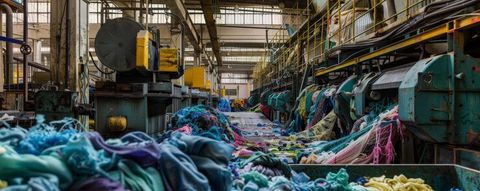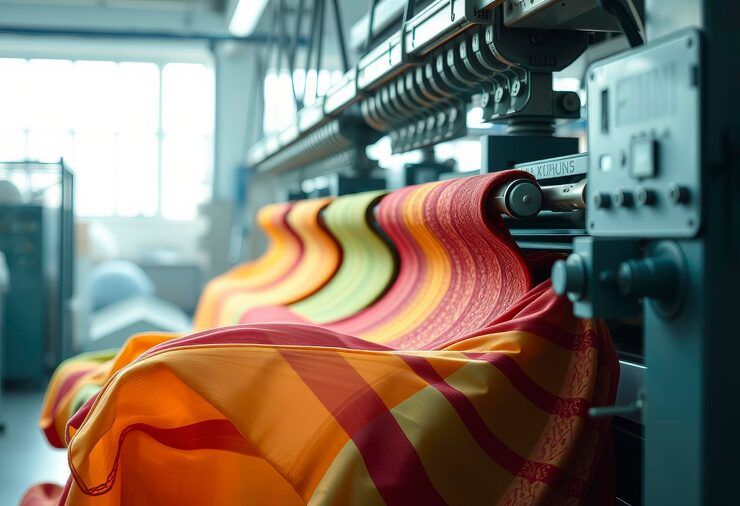
Textile printing dryers are industrial machines designed to remove moisture or apply controlled heat to printed fabrics so that inks, dyes, pigments, and other printing materials achieve the required properties. They are an important part of textile production because the quality of a printed design depends not only on the printing process but also on how the fabric is dried or cured afterward.
These machines are used in screen printing, digital textile printing, pigment printing, heat transfer printing, and other fabric decoration processes. Depending on the printing method, drying may involve evaporating water or solvents, curing a binder, or activating a heat-sensitive transfer material.
A suitable textile drying system helps manufacturers maintain consistent color appearance, fabric quality, production speed, and durability. The required equipment depends on the fabric composition, printing chemistry, production volume, and specifications of the finished textile.
Understanding Textile Printing Dryers
A textile printing dryer controls temperature, airflow, exposure time, and sometimes humidity to achieve the required drying or curing conditions. Although these processes are related, they are not identical.
Drying primarily removes moisture or volatile substances from the printed fabric. Curing involves a chemical or physical process that helps the ink or binder develop its intended properties. Some printing systems require both stages.
Common types of textile printing dryers include:
Conveyor dryers: Move printed fabric through a heated chamber at a controlled speed.
Hot-air dryers: Circulate heated air over fabric to encourage moisture evaporation.
Infrared dryers: Use infrared energy to heat suitable surfaces or printing layers.
Industrial curing ovens: Maintain controlled temperature and residence time for specific ink or binder systems.
Heat press systems: Apply controlled heat and pressure for suitable transfer-printing applications.
Radio-frequency or microwave systems: Use electromagnetic energy in specialized industrial drying applications where the material and process are compatible.
The correct system depends on the printing method. A dryer designed for water-based pigment printing may not be suitable for every solvent-based ink or heat transfer process.
How Textile Printing Dryers Work
Most industrial textile drying systems follow a series of controlled steps.
Fabric feeding: Printed material enters the dryer through a conveyor, roller arrangement, or feeding mechanism.
Temperature control: Heating elements raise the air or material temperature to the required operating range.
Moisture removal or curing: Heated air, infrared energy, or another compatible method supports evaporation or the development of the required ink properties.
Residence-time control: Conveyor speed determines how long the fabric remains inside the heated zone.
Cooling and inspection: The fabric may be cooled before inspection, winding, folding, or subsequent processing.
Operators must follow the ink manufacturer's technical instructions. Excessive heat can damage synthetic fabrics, alter colors, cause shrinkage, or affect the hand feel of the finished material.
Why Textile Printing Dryers Matter
Textile printing dryers influence production quality, manufacturing efficiency, and the consistency of printed fabrics.
Print Quality and Durability
Incomplete drying can leave moisture in the fabric or cause printed layers to remain vulnerable to smudging and handling damage. Inadequate curing may reduce resistance to washing or rubbing, depending on the ink system.
Correctly controlled drying and curing help achieve the intended finish and performance.
Important quality indicators include:
Color consistency
Print definition
Fabric dimensional stability
Resistance to rubbing
Wash durability where applicable
Surface feel
Residual moisture
Uniformity across the fabric width
The exact performance tests depend on the textile's intended use and the relevant product specifications.
Production Efficiency
Industrial textile dryers can process continuous fabric lengths and coordinate with printing machines. Correctly matched conveyor speed, heating capacity, and airflow help reduce bottlenecks between printing and finishing.
An undersized dryer may restrict production throughput, while excessive heat or unnecessarily long drying cycles can waste energy and damage sensitive materials.
Energy Management
Heating and moisture removal can represent significant energy requirements in textile finishing. Manufacturers therefore evaluate insulation, airflow, heat recovery, temperature controls, and the moisture content of incoming fabric.
Energy performance should be assessed alongside print quality and production capacity rather than through temperature settings alone.
Recent Developments in Textile Drying Technology
During 2025 and 2026, textile manufacturers continued to focus on digital printing, energy efficiency, process automation, and reduced environmental impact. These developments influence the design and operation of industrial drying equipment.
Growth in Digital Textile Printing
Digital textile printing allows designs to be produced directly from digital files, reducing the need for some traditional screen preparation steps. However, the drying and fixation requirements still depend on the ink chemistry, fabric, and printing technology.
Water-based pigment inks, reactive dyes, acid dyes, and disperse dyes may require different finishing sequences. Equipment selection therefore increasingly emphasizes compatibility with the complete digital printing workflow.
Energy-Efficient Heating Systems
Industrial equipment development continues to emphasize better temperature regulation, improved insulation, variable-speed airflow, and process monitoring. These features can help reduce unnecessary energy use when correctly matched to production requirements.
Infrared and other rapid-heating technologies can be useful for selected applications, although their effectiveness depends on material characteristics, heat distribution, and process design.
Automation and Process Monitoring
Modern textile production lines may use sensors, programmable logic controllers, and digital monitoring systems to track conveyor speed, chamber temperature, and operating conditions.
Such controls can help identify temperature variation and improve repeatability between production batches. They do not eliminate the need for physical fabric testing or routine equipment maintenance.
Laws, Regulations, and Industrial Safety
Textile printing dryers are subject to workplace safety, electrical safety, fire prevention, and environmental requirements that vary by country and application.
Energy and Environmental Regulations
In India, textile manufacturers may need to comply with applicable requirements established by the Central Pollution Control Board and State Pollution Control Boards. Requirements depend on the facility, printing chemistry, emissions, wastewater generation, and the relevant industrial classification.
Dryers that use fuels, generate process emissions, or handle volatile substances may require additional environmental controls. Water-based printing processes can have different environmental considerations from solvent-based processes.
Workplace Safety
Industrial dryers involve heated surfaces, moving conveyors, electrical systems, and potentially combustible materials. Appropriate safety arrangements may include:
Emergency-stop controls
Machine guarding
Over-temperature protection
Adequate ventilation
Fire detection and suppression systems
Electrical protection
Safe maintenance procedures
Operator training
Equipment should be operated within its documented temperature and material limits. Maintenance and cleaning should follow the manufacturer's safety instructions.
International Standards
Manufacturers exporting textile products may need to consider applicable chemical restrictions and product-safety requirements in their destination markets.
For example, the European Union's REACH framework regulates chemicals and certain substances of concern. Textile printing operations may need to assess relevant requirements based on the inks, auxiliaries, fabric, and finished product.
Environmental and safety compliance should be reviewed for the actual process and jurisdiction rather than assumed from the equipment type alone.
Tools and Resources for Textile Dryer Planning
Technical documentation and process measurements help manufacturers evaluate a drying system.
Equipment Specifications
Before selecting or configuring a textile printing dryer, review:
Maximum working temperature
Usable heating-zone length
Conveyor speed range
Fabric-width capacity
Heating method
Airflow and exhaust arrangements
Electrical or fuel requirements
Temperature uniformity
Maintenance requirements
Temperature and Residence-Time Calculations
Residence time can be estimated using the effective heated-zone length and conveyor speed.
For example, if a fabric travels through a 6-metre heated zone at 2 metres per minute, the nominal residence time is 3 minutes. Actual curing suitability must still be confirmed using the ink manufacturer's instructions and fabric testing.
Quality-Control Tools
Useful testing methods may include fabric moisture measurement, temperature logging, wash testing, rubbing tests, and dimensional-stability checks.
A production log can record fabric type, ink system, temperature settings, conveyor speed, ambient conditions, and inspection results. This makes it easier to identify variations between production runs.
Government and Technical Resources
Manufacturers can consult the Central Pollution Control Board, relevant State Pollution Control Boards, workplace safety authorities, equipment documentation, and ink technical data sheets for applicable requirements and operating guidance.
Frequently Asked Questions
What is a textile printing dryer used for?
It removes moisture or applies controlled heat to printed fabric so that the ink, dye, binder, or transfer material achieves the required finish. The exact purpose depends on the printing technology.
What is the difference between drying and curing?
Drying mainly removes moisture or volatile substances. Curing develops the intended properties of an ink or binder through a chemical or physical process. Some printing methods require both.
Which dryer is suitable for digital textile printing?
The suitable dryer depends on the ink chemistry, fabric type, production speed, and required finish. Water-based pigment inks and other dye systems can have different drying and fixation requirements.
How can textile dryer energy consumption be reduced?
Potential measures include improving insulation, optimizing airflow, maintaining heating elements, matching conveyor speed to process requirements, monitoring energy use, and evaluating suitable heat-recovery systems.
What safety precautions are important when operating a textile dryer?
Operators should follow temperature limits, maintain machine guards, use emergency stops correctly, keep combustible materials away from unsuitable heat sources, maintain ventilation, and follow documented cleaning and maintenance procedures.
Conclusion
Textile printing dryers are essential components of modern fabric printing and finishing. By controlling temperature, airflow, residence time, and moisture removal, they help manufacturers achieve consistent print quality and the intended durability of finished textiles.
Developments in digital printing, automation, and energy management are increasing the importance of process monitoring and equipment compatibility. However, the best drying method depends on the fabric, printing chemistry, production requirements, and applicable safety and environmental rules.
Manufacturers can improve process consistency by reviewing technical specifications, monitoring operating conditions, maintaining equipment, and testing finished fabric. A carefully selected and correctly operated textile drying system supports reliable production while helping manage energy use and material quality.