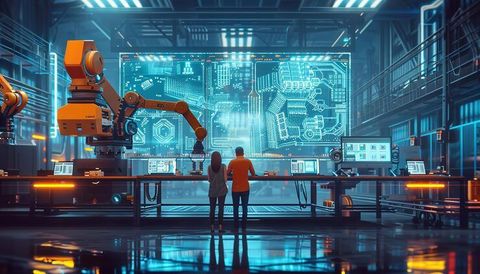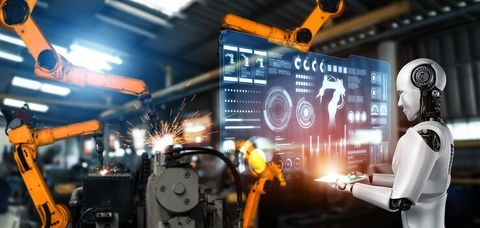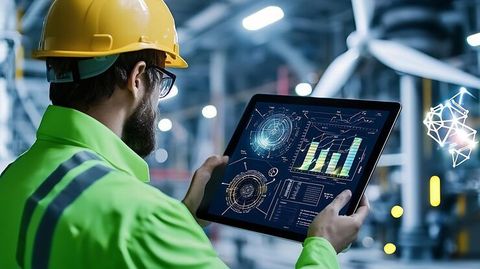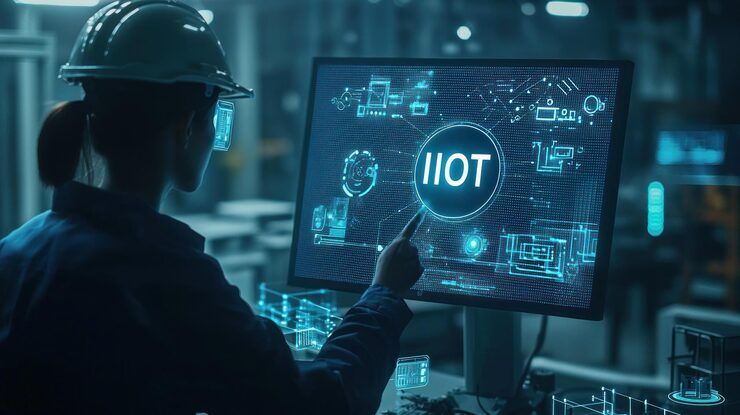
Industrial Internet of Things (IIoT) refers to the use of connected sensors, machines, industrial equipment, software platforms and communication networks to collect and exchange information across industrial environments. It connects physical operations with digital technologies, allowing organizations to monitor equipment, analyze performance and improve operational decisions.
Traditional industrial systems often depend on separate machines and manual monitoring. IIoT introduces connected infrastructure in which machines can communicate with centralized platforms and other industrial devices. This creates a continuous flow of operational information.
For example, a manufacturing facility can install sensors on production equipment to monitor temperature, vibration, pressure and operating speed. The collected information can then be analyzed to identify unusual conditions or changes in machine performance.
How Does Industrial IoT Work?
An IIoT environment generally operates through several interconnected components:
Smart Sensors: Measure physical conditions such as temperature, humidity, vibration and pressure.
Industrial Gateways: Collect information from different machines and transfer it to processing platforms.
Communication Networks: Connect equipment through industrial Ethernet, Wi-Fi, 5G and other communication technologies.
Cloud and Edge Computing: Process information locally or through centralized computing infrastructure.
Data Analytics: Identify operational patterns, equipment abnormalities and performance changes.
Industrial Automation Systems: Use information to support monitoring and machine control.
These components work together to create an intelligent industrial environment where operational information becomes available for analysis and decision-making.
Why Industrial IoT Matters in Modern Operations
Industrial IoT has become increasingly important as manufacturing, energy, transportation and logistics industries adopt digital transformation strategies.
Industrial organizations handle complex equipment, production schedules and operational information. Traditional monitoring methods may not provide sufficient visibility into every machine or production process.
IIoT addresses these challenges by connecting physical equipment with digital monitoring and analytics systems.
Improving Predictive Maintenance
Predictive maintenance is one of the most recognized applications of IIoT technology.
Connected sensors continuously monitor equipment conditions and identify unusual patterns. For example, increasing vibration levels may indicate mechanical wear, while abnormal temperatures could suggest overheating.
This information helps maintenance teams investigate potential problems before equipment failure occurs.
Supporting Smart Manufacturing
Smart manufacturing combines industrial automation, connected machinery, robotics and real-time data analytics.
IIoT allows production managers to monitor machine performance, production quantities and equipment availability through centralized dashboards.
Important applications include:
Automated production monitoring.
Machine performance analysis.
Manufacturing quality control.
Production scheduling.
Equipment condition monitoring.
Improving Supply Chain Visibility
Industrial organizations often depend on multiple suppliers, warehouses and transportation networks.
IIoT-enabled tracking systems provide information about equipment location, environmental conditions and shipment movement.
This can help organizations identify delays, monitor inventory conditions and coordinate supply chain activities.
Supporting Energy Management
Connected energy meters and industrial sensors help monitor electricity consumption across manufacturing facilities.
Organizations can analyze energy usage by machine, production line or operating period. This information supports energy efficiency planning and helps identify unnecessary consumption.
Industries Using IIoT Technology
| Industry | Common IIoT Applications |
|---|---|
| Manufacturing | Smart factories and predictive maintenance |
| Oil and Gas | Pipeline monitoring and equipment analytics |
| Automotive | Production automation and quality control |
| Energy | Smart grids and equipment monitoring |
| Logistics | Fleet tracking and warehouse automation |
| Agriculture | Smart irrigation and equipment monitoring |
| Pharmaceuticals | Environmental monitoring and production control |
Recent Industrial IoT Developments and Technology Trends (2025–2026)
Industrial IoT continues to develop through improvements in artificial intelligence, edge computing, industrial connectivity and cybersecurity.
Several developments during 2025 and 2026 highlight the growing importance of secure and connected industrial infrastructure.
Artificial Intelligence and Industrial Analytics
AI-powered industrial analytics is becoming an important part of connected manufacturing environments.
Organizations increasingly combine machine sensor information with machine learning models to identify operational patterns, detect equipment abnormalities and improve production planning.
AI can also support digital twins, which are virtual representations of physical machines, production lines or industrial facilities.
These models help engineers understand equipment behavior and evaluate operational scenarios.
Growth of Edge Computing
Edge computing processes information closer to the equipment generating it rather than transferring every data point to a distant cloud platform.
This approach can reduce communication delays and support faster responses to industrial events.
During 2025–2026, edge AI has continued gaining attention for applications involving machine vision, automated inspection and industrial robotics.
Industrial Cybersecurity Developments in 2026
In April 2026, the US National Institute of Standards and Technology (NIST) published Revision 1 of its IR 8259 guidance for IoT product manufacturers.
The updated publication emphasizes cybersecurity capabilities and the information manufacturers should provide to help customers manage risks associated with connected devices.
This development is relevant to industrial environments that depend on connected sensors, gateways and networked equipment.
Greater Attention to Zero Trust Security
In April 2026, the US Cybersecurity and Infrastructure Security Agency (CISA) and government partners published guidance on adapting Zero Trust principles to operational technology.
The guidance addresses asset visibility, identity controls and secure supply chains in industrial environments.
These developments reflect the growing importance of protecting connected industrial systems against unauthorized access and cyber threats.
Industrial Connectivity and 5G
Private 5G networks are attracting attention in manufacturing facilities, warehouses and industrial campuses.
They can support connected equipment, mobile robots and industrial monitoring applications.
The combination of 5G, edge computing and IIoT creates opportunities for more responsive industrial communication infrastructure.
Laws, Regulations and Policies Affecting Industrial IoT
Industrial IoT operates within several regulatory areas, including cybersecurity, data protection, industrial safety, critical infrastructure and electronic communications.
Requirements differ depending on the country, industry and type of connected equipment.
European Union Regulations
The European Union has introduced important regulations affecting connected industrial products and digital infrastructure.
EU Data Act
The EU Data Act became applicable on 12 September 2025.
It establishes rules concerning access to and use of data generated by connected products, including industrial machinery. It also addresses data sharing, contractual arrangements and cloud switching.
This framework is relevant to manufacturers and industrial organizations that collect information through connected equipment.
EU Cyber Resilience Act
The Cyber Resilience Act entered into force on 10 December 2024.
Its main obligations will apply from 11 December 2027, while reporting obligations for actively exploited vulnerabilities and severe incidents apply from 11 September 2026.
The regulation introduces cybersecurity requirements for products with digital elements, making it relevant to connected industrial hardware and software.
United States Cybersecurity Guidance
In the United States, industrial organizations must consider applicable federal and sector-specific cybersecurity requirements.
The NIST Cybersecurity Framework provides guidance for identifying, assessing and managing cybersecurity risks.
In January 2025, CISA and international partners published Secure by Demand guidance for operational technology owners and operators. It highlights important security considerations when selecting industrial digital products.
International Industrial Standards
Several international standards help organizations develop secure and reliable IIoT environments:
IEC 62443: Addresses cybersecurity for industrial automation and control systems.
ISO/IEC 27001: Provides a framework for information security management.
ISO 50001: Supports energy management systems.
ISO 9001: Establishes quality management principles.
ISO 13849: Addresses safety-related parts of machinery control systems.
Organizations should evaluate the regulations and standards applicable to their operating locations and industrial activities.
Tools and Resources for Industrial IoT Implementation
Several software platforms, technical frameworks and development tools support IIoT planning, implementation and monitoring.
Industrial IoT Platforms
Microsoft Azure IoT Operations: Supports connected industrial environments, edge computing and operational data integration.
AWS IoT SiteWise: Helps collect, organize and monitor industrial equipment information.
Siemens Industrial Edge: Supports industrial edge computing and data processing.
PTC ThingWorx: Provides an industrial IoT application development and connectivity environment.
IBM Maximo Application Suite: Supports asset management, equipment monitoring and predictive maintenance.
Communication and Development Technologies
MQTT: A lightweight messaging protocol used for communication between connected devices.
OPC UA: Supports secure and interoperable information exchange between industrial systems.
Modbus: A communication protocol commonly used in industrial automation.
Node-RED: A visual programming environment for connecting devices, APIs and data sources.
Grafana: Supports data visualization and monitoring dashboards.
Useful Planning Resources
Organizations can also use the following resources when evaluating IIoT projects:
Industrial network architecture diagrams.
Predictive maintenance planning templates.
Equipment inventory spreadsheets.
Cybersecurity risk assessment frameworks.
Industrial data monitoring dashboards.
Energy consumption tracking tools.
Machine performance evaluation reports.
Selecting appropriate technologies depends on equipment compatibility, network infrastructure, cybersecurity requirements and operational objectives.
Frequently Asked Questions About Industrial IoT
What Is the Main Purpose of Industrial IoT?
The main purpose of IIoT is to connect industrial equipment, sensors and digital platforms to collect and analyze operational information. This helps organizations monitor machinery, understand production conditions and make informed operational decisions.
What Is the Difference Between IoT and IIoT?
IoT includes connected devices used in everyday environments, such as smart appliances and wearable technology. IIoT focuses specifically on industrial environments, including manufacturing plants, energy infrastructure, transportation and industrial automation.
IIoT generally has additional requirements involving reliability, operational safety, cybersecurity and equipment integration.
How Does IIoT Support Predictive Maintenance?
IIoT sensors collect information about machine conditions, including temperature, vibration and pressure. Analytics systems examine this information to identify unusual patterns that may indicate equipment deterioration.
Maintenance teams can use these findings to investigate problems before unexpected equipment failure occurs.
Is Industrial IoT Secure?
Industrial IoT can be secure when organizations implement appropriate cybersecurity measures. However, connected equipment introduces risks such as unauthorized access, malware and data exposure.
Important security practices include network segmentation, encryption, strong authentication, regular software updates and continuous monitoring.
What Is the Future of Industrial IoT?
The future of IIoT is closely connected with artificial intelligence, digital twins, private 5G networks, edge computing and industrial robotics.
These technologies are expected to support more connected production environments, improved equipment monitoring and data-driven industrial operations.
Conclusion
Industrial IoT is transforming how organizations connect machinery, collect operational information and manage industrial processes. By combining smart sensors, communication networks, cloud platforms, edge computing and advanced analytics, IIoT creates greater visibility across industrial environments.
Its applications extend beyond manufacturing into energy, transportation, logistics, agriculture and other industrial sectors.
Developments in artificial intelligence, industrial cybersecurity and connected infrastructure are creating new possibilities for smart operations. At the same time, organizations must consider data protection, equipment compatibility, cybersecurity and applicable regulatory requirements.
As industrial digital transformation continues throughout 2026 and beyond, Industrial IoT will remain an important technology for developing connected, intelligent and data-driven industrial environments.