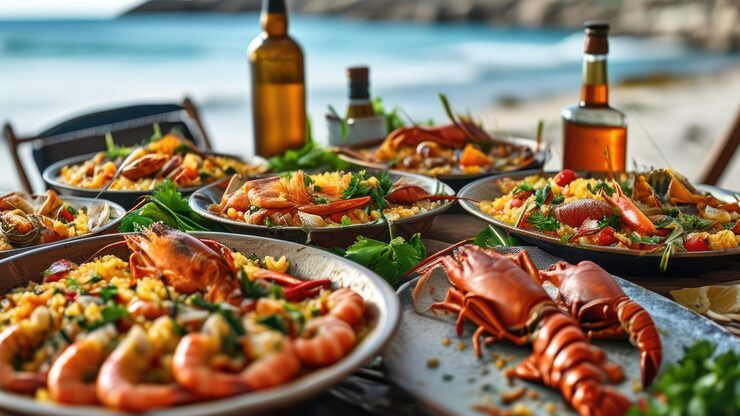
Seafood trails and coastal cuisine bring together food, geography, cultural heritage, and the communities that depend on coastal environments. A seafood trail is a planned route connecting places associated with seafood traditions, such as fishing harbors, markets, traditional food districts, aquaculture areas, and restaurants known for regional dishes.
Coastal cuisine develops through the relationship between communities and their surrounding waters. Local fishing practices, climate, available ingredients, preservation techniques, migration, and trade all influence the dishes found along a coastline.
Examples range from Mediterranean grilled fish and Portuguese seafood rice to Japanese sushi traditions, Southeast Asian seafood soups, Caribbean fish stews, and coastal North American shellfish dishes. Each region has its own ingredients, cooking methods, and cultural history.
Understanding Seafood Trails
A seafood trail can follow a coastline, connect neighboring fishing towns, or explore seafood traditions within a single city. Some routes are formally organized by tourism authorities, while others can be planned independently around local food markets, heritage locations, and regional specialties.
A well-planned trail may include:
Traditional fishing harbors
Historic fish markets
Regional seafood restaurants
Coastal food festivals
Aquaculture and shellfish-growing areas
Maritime museums
Local food-processing traditions
Coastal conservation locations
The purpose is not simply to sample different dishes. A seafood trail can also explain where ingredients originate, how they are harvested, and how coastal communities have developed distinctive culinary identities.
How Geography Shapes Coastal Cuisine
Coastal food traditions are strongly influenced by the species available in nearby waters. Cold-water regions may feature cod, herring, mussels, and salmon, while tropical coastlines may use tuna, prawns, reef-associated fish, and a wider variety of shellfish.
Cooking methods also reflect local conditions and historical influences. Smoking, salting, drying, fermenting, grilling, steaming, and pickling have helped communities preserve seafood and develop distinctive flavors.
For example, Mediterranean cuisine often emphasizes olive oil, herbs, vegetables, and grilled fish. Japanese coastal food traditions include sushi, sashimi, grilled seafood, and regional fish preparations. In parts of Southeast Asia, coconut milk, aromatic herbs, chilies, and fermented ingredients contribute to seafood curries and soups.
Why Seafood Trails and Coastal Cuisine Matter
Seafood trails help visitors understand the relationship between food, local economies, marine ecosystems, and cultural identity. They can also help coastal communities preserve culinary traditions while encouraging responsible use of marine resources.
Cultural and Economic Importance
Fishing communities have developed specialized knowledge about seasonal catches, weather patterns, preservation methods, and preparation techniques. These traditions are often passed between generations and contribute to regional identity.
Food tourism can create opportunities for fishing towns, local producers, markets, restaurants, and cultural organizations. It can also encourage visitors to explore smaller coastal communities beyond major urban destinations.
Environmental Awareness
Seafood consumption is connected to marine biodiversity, fishing practices, and the health of aquatic ecosystems. Understanding where seafood originates can help consumers ask informed questions about species, harvesting methods, and traceability.
Responsible seafood choices may help reduce pressure on vulnerable fish populations when they are guided by reliable information about species and local fisheries.
Recent Developments in Seafood and Coastal Food Tourism
Seafood production, traceability, and sustainable aquaculture have received considerable attention during 2025 and 2026.
Global Fisheries and Aquaculture Report
On June 16, 2026, the Food and Agriculture Organization of the United Nations published findings from its State of World Fisheries and Aquaculture 2026 report.
The report estimated that global fisheries and aquaculture production reached 235 million tonnes in 2024, including 195 million tonnes of aquatic animals. Aquaculture production of aquatic animals exceeded 100 million tonnes for the first time, reaching approximately 103 million tonnes.
These figures highlight the growing importance of aquaculture alongside wild fisheries. They also emphasize continuing challenges involving sustainability, climate change, food security, and equitable access to aquatic resources.
Digital Seafood Traceability in India
In 2025, India introduced its National Framework on Traceability in Fisheries and Aquaculture. The framework aims to strengthen digital tracking across the seafood supply chain, from harvesting or farming through processing and distribution.
In July 2026, the Indian government reported continued initiatives to develop seafood traceability infrastructure and strengthen food safety and quality assurance.
Digital tools such as QR codes, GPS, and integrated data systems can help document the origin and movement of seafood products. Their effectiveness depends on accurate records and consistent implementation.
Sustainable Aquaculture Guidelines
International work on sustainable aquaculture has also progressed. Guidelines published by the FAO in January 2025 provide principles for responsible aquaculture development, including environmental management, food security, and resilient production systems.
In February and March 2026, additional FAO materials focused on implementing the guidelines and communicating their recommendations.
These developments are relevant to coastal cuisine because aquaculture increasingly contributes to the seafood available in markets and restaurants.
Laws, Policies, and Seafood Safety
Seafood trails cross different jurisdictions, so the regulations governing fishing, food handling, labeling, and environmental protection depend on the country and region.
Fishing and Marine Conservation
Governments regulate fishing through measures such as seasonal closures, catch limits, protected marine areas, minimum landing sizes, and restrictions on particular fishing methods.
These measures are intended to manage fish populations and protect marine ecosystems. The exact rules vary by species and location.
Visitors exploring fishing harbors or coastal markets should recognize that some species may be subject to seasonal or regional restrictions.
Food Safety and Traceability
Seafood is a perishable food that requires appropriate handling, temperature control, storage, and preparation.
Food safety regulations in many countries establish requirements for seafood processing, hygiene, labeling, and traceability. These rules help authorities investigate contamination incidents and identify the origin of affected products.
In the European Union, fisheries legislation includes traceability requirements for covered fishery and aquaculture products throughout production, processing, and distribution.
In India, seafood exporters and relevant businesses must follow applicable food safety, export, and fisheries requirements, including relevant traceability obligations.
Sustainable Fishing Policies
International initiatives increasingly emphasize responsible fisheries management and the prevention of illegal, unreported, and unregulated fishing.
Consumers can support responsible practices by looking for credible information about the species, origin, harvesting method, and applicable sustainability certification. However, a sustainability label should be assessed according to its scope and verification standards rather than treated as a universal guarantee.
Tools and Resources for Planning Seafood Trails
Digital resources can help visitors discover regional specialties, understand seafood origins, and plan a practical coastal itinerary.
Maps and Local Food Guides
Mapping applications can help identify fishing harbors, markets, seafood restaurants, maritime museums, and nearby attractions.
When planning a route, consider:
Distance between stops
Opening hours
Local market schedules
Seasonal fishing activity
Public transportation
Walking conditions
Dietary requirements
Seafood Identification and Sustainability Guides
Seafood identification resources can help explain common species, their habitats, and their seasonal availability.
Regional fisheries authorities and reputable marine conservation organizations may publish information about vulnerable species, sustainable harvesting, and local fishing regulations.
Food Safety Resources
National food safety agencies provide guidance on seafood storage, preparation, allergies, and safe consumption.
People with seafood allergies should check ingredients and communicate their requirements clearly. Raw or undercooked seafood may carry additional risks, particularly for certain vulnerable groups.
Sample Seafood Trail Planner
Planning Element | Details to Record |
|---|---|
Destination | Coastal town or harbor |
Food tradition | Regional dishes or cooking methods |
Seafood species | Common local fish or shellfish |
Cultural stop | Market, museum, or historic harbor |
Sustainability | Available origin and harvesting information |
Practical arrangements | Opening times and transport |
Food safety | Allergy information and preparation methods |
This simple framework can be adapted to a short neighborhood walk or a multi-day coastal journey.
Frequently Asked Questions
What is a seafood trail?
A seafood trail is a planned route connecting places associated with local seafood, such as fishing harbors, markets, restaurants, food festivals, and maritime heritage sites. It combines culinary exploration with information about regional culture and seafood production.
Which destinations are known for coastal cuisine?
Examples include Portugal's Atlantic coast, Japan's coastal regions, Greece and other Mediterranean countries, Thailand, Vietnam, coastal India, the Caribbean, and parts of North America. Each region has distinctive ingredients, cooking methods, and seafood traditions.
What is sustainable seafood?
Sustainable seafood generally refers to fish or other aquatic foods produced or harvested in ways intended to maintain healthy populations and reduce environmental harm. Sustainability depends on the species, location, harvesting method, management system, and reliability of the available evidence.
How can visitors learn where seafood comes from?
Visitors can ask about the species, harvest location, production method, and season. Seafood labels, traceability records, official fisheries information, and credible certification schemes can provide additional context.
Why are seasonal seafood choices important?
Seasonality reflects changes in fish populations, breeding cycles, migration, and local fishing conditions. Choosing species according to reliable regional guidance can help visitors understand local food traditions and avoid contributing to pressure on vulnerable populations.
Conclusion
Seafood trails and coastal cuisine connect regional food traditions with marine environments, fishing communities, and local history. They provide opportunities to explore distinctive dishes while learning about seafood production, cultural heritage, and the importance of healthy aquatic ecosystems.
Recent developments in global fisheries reporting, digital traceability, and sustainable aquaculture demonstrate how the seafood sector is adapting to environmental and consumer concerns. These changes also highlight the importance of reliable information about seafood origins, food safety, and harvesting practices.
By planning routes around local traditions, checking current information, respecting fishing regulations, and considering credible sustainability guidance, visitors can gain a broader understanding of coastal cuisine and the communities that sustain it.