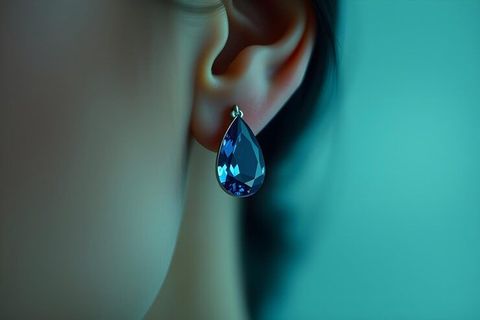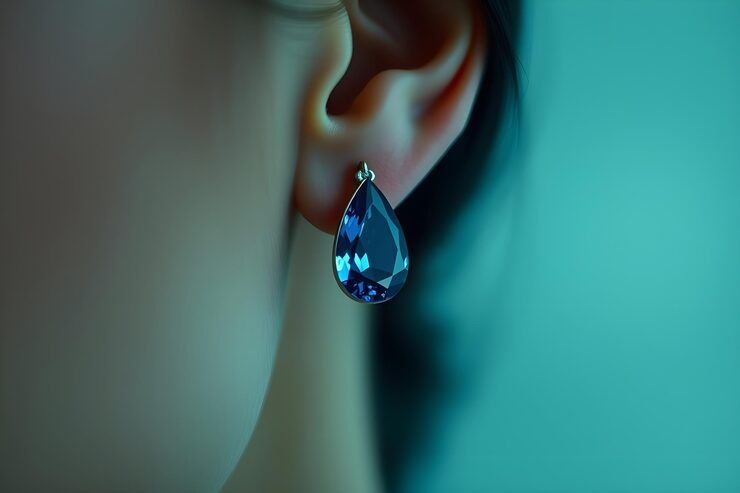
Single gemstone drop earrings are jewellery pieces designed around one prominent gemstone suspended from an earring structure. Their design can range from a simple metal setting with a single colored stone to more elaborate arrangements where the gemstone hangs beneath a small connector or decorative element.
The concept combines the visual focus of a gemstone with the movement of a drop earring. Because only one primary gemstone is emphasized, the design can make differences in color, clarity, cut, shape, and setting easier to observe.
Understanding Single Gemstone Drop Earrings
A single gemstone drop earring normally contains several basic components:
A primary gemstone
A metal setting
A connecting element
An earring post, hook, or fastening mechanism
A back or closure system
The gemstone may be natural, laboratory-grown, treated, or imitation material, depending on the design. Common choices include sapphire, ruby, emerald, amethyst, topaz, garnet, aquamarine, tourmaline, and other colored gemstones.
Common Design Structures
Single gemstone drop earrings can be categorized according to how the gemstone is attached and positioned.
| Design Type | Main Feature | Common Gemstone Shapes |
|---|---|---|
| Prong Drop | Small metal claws hold the stone | Round, oval, pear |
| Bezel Drop | Metal surrounds the gemstone | Round, square, cabochon |
| Hook Drop | Gemstone hangs from a hook | Oval, teardrop, cushion |
| Stud-and-Drop | Small upper element supports one gem | Round, pear, marquise |
| Threader Drop | Fine chain creates a longer silhouette | Round, oval, elongated |
The shape of the gemstone can significantly affect the appearance of the finished earring. Pear and marquise cuts often create a directional appearance, while round stones tend to provide a more symmetrical visual effect.
Why Single Gemstone Drop Earrings Matter Today
The popularity of gemstone jewellery is connected with broader interest in personalization, colored gemstones, craftsmanship, and individual design characteristics.
Single gemstone earrings can also provide a straightforward way to understand how gemstone properties influence jewellery appearance.
Focus on Gemstone Characteristics
With one dominant stone, characteristics such as hue, saturation, transparency, and cut become particularly visible.
For colored gemstones, color is often one of the most important visual factors. However, the relative importance of color, clarity, cut, and origin can vary considerably between gemstone varieties.
Lightweight Design Possibilities
A single-stone arrangement can allow designers to create visually distinctive earrings without using numerous gemstones.
The overall weight still depends on the gemstone's dimensions, metal type, setting, and construction. A larger gemstone may create a stronger visual effect but can also increase the weight placed on the earlobe.
Personal Style and Jewelry Coordination
Single gemstone drops can work with different clothing and jewellery combinations because the design has one primary visual focal point.
Color coordination can involve:
Matching gemstone color with clothing
Contrasting the gemstone against neutral colors
Coordinating metal tone with other jewellery
Selecting gemstone shapes that complement facial proportions
Choosing shorter or longer drops according to personal preference
High-Value Jewellery Research
Single gemstone drop earrings also connect with several areas of the international jewellery market, including colored gemstone jewellery, fine jewellery design, natural gemstone earrings, precious metal jewellery, and gemstone certification.
These topics are relevant when researching jewellery quality, gemstone identification, material disclosure, and responsible sourcing.
Recent Trends and Developments
During 2025 and 2026, the wider jewellery sector continued to show interest in colored gemstones, traceability, laboratory technology, digital identification, and responsible sourcing.
Greater Interest in Colored Gemstones
Colored gemstones remain an important area of jewellery design. Designers and consumers have continued exploring stones beyond traditional diamond-focused pieces, including sapphires, emeralds, rubies, tourmalines, spinels, and other colored gems.
For single gemstone earrings, this trend is particularly relevant because the design naturally highlights one gemstone rather than distributing attention across multiple stones.
Digital Gemstone Identification
Digital tools are increasingly being used alongside traditional gemological examination. Optical instruments, spectroscopy, imaging systems, and digital databases can help trained professionals investigate gemstone characteristics.
Technology does not eliminate the need for qualified gemological assessment. Instead, it provides additional information that can support identification and documentation.
Traceability and Responsible Sourcing
Traceability has become an increasingly important topic across the jewellery sector. Businesses and consumers are paying greater attention to gemstone origins, supply chains, treatment disclosure, and responsible sourcing practices.
For high-value colored gemstones, origin information can sometimes influence documentation and market interpretation. However, origin determination can require specialized laboratory analysis and may not always produce a definitive geographic conclusion.
Laboratory-Grown and Treated Materials
Advances in gemological technology have increased the importance of accurate disclosure for laboratory-grown and treated gemstones.
Treatments such as heating, filling, irradiation, and other enhancement processes can affect the appearance or durability of particular gemstones. Appropriate disclosure helps people understand the material they are evaluating.
International Laws, Standards and Policies
Single gemstone earrings are influenced by consumer-protection requirements, precious-metal rules, gemstone disclosure standards, import regulations, and environmental policies.
Because regulations differ between jurisdictions, jewellery businesses operating internationally need to understand the rules applicable to each destination market.
United States
In the United States, the Federal Trade Commission provides guidance concerning jewellery marketing and disclosures. Its Jewellery Guides address representations involving precious metals, gemstones, treatments, laboratory-created materials, and related terminology.
Accurate material descriptions are important when communicating whether a gemstone is natural, laboratory-created, imitation, or treated.
European Union
European jewellery businesses may need to consider consumer-information rules, product safety requirements, chemical restrictions, and precious-metal hallmarking arrangements applicable within individual member states.
The European Union's REACH framework can also be relevant to substances used in products and manufacturing processes. Requirements can vary according to material and use.
United Kingdom
The United Kingdom maintains hallmarking requirements for certain precious-metal articles. Hallmarks can provide information about metal fineness and the organization responsible for hallmarking.
Jewellery businesses should also consider consumer-protection and product-information requirements when describing gemstone and metal characteristics.
International Gemstone Standards
Laboratories and professional organizations use established gemological terminology to distinguish natural, laboratory-grown, treated, and imitation materials.
When a gemstone is accompanied by a laboratory report, the document may contain information about:
Gemstone identity
Natural or laboratory origin
Treatment indications
Measurements
Color description
Weight
Sometimes geographic origin
The precise information depends on the laboratory and gemstone type.
Tools and Resources for Gemstone Earrings
Several tools can help with jewellery research, design, evaluation, and maintenance.
Gemological Resources
Gemological reference databases: Useful for studying gemstone properties and identification characteristics.
Laboratory reports: Help document gemstone identity and relevant characteristics.
Loupe: Provides magnified visual examination of gemstones and settings.
Digital scale: Helps measure gemstone or jewellery weight.
Calipers: Useful for measuring gemstone dimensions.
Color reference systems: Assist with structured descriptions of gemstone color.
Metal-testing equipment: Helps evaluate certain precious-metal characteristics.
Jewellery CAD software: Supports digital development of earring structures and settings.
3D modelling tools: Allow designers to visualize proportions before physical production.
Jewellery care guides: Provide information about cleaning, storage, and handling.
Gemstone Comparison Table
| Gemstone | Typical Appearance | General Durability Consideration |
|---|---|---|
| Sapphire | Blue and many other colors | High hardness |
| Ruby | Red to purplish red | High hardness |
| Emerald | Green | Requires careful handling |
| Amethyst | Purple | Moderate-to-good everyday durability |
| Topaz | Multiple colors | Can be vulnerable to cleavage |
| Aquamarine | Blue to blue-green | Generally suitable with appropriate care |
| Tourmaline | Wide range of colors | Care depends on variety and structure |
Hardness alone does not determine whether a gemstone is suitable for frequent wear. Cleavage, fractures, treatments, setting design, and exposure to impact can also influence durability.
Caring for Single Gemstone Drops
Care depends on the gemstone and its treatment history. Some stones tolerate mild cleaning methods, while others can be damaged by heat, chemicals, sudden temperature changes, or ultrasonic equipment.
A general approach includes:
Store earrings separately to reduce scratching.
Keep them away from harsh household chemicals.
Check settings periodically for movement.
Use a soft cloth appropriate for jewellery.
Follow gemstone-specific cleaning guidance.
Seek professional assessment when a stone becomes loose or damaged.
Frequently Asked Questions
What are single gemstone drop earrings?
They are earrings designed around one primary gemstone that hangs below an earring post, hook, connector, or similar structure. The gemstone is normally the main visual feature.
Which gemstones are commonly used?
Sapphire, ruby, emerald, amethyst, topaz, aquamarine, garnet, and tourmaline are among the many gemstones used in drop-earring designs. Selection depends on color, durability, design, and personal preference.
Are natural and laboratory-grown gemstones the same?
No. Natural gemstones form through geological processes, while laboratory-grown gemstones are produced through controlled technological processes. Their physical and chemical characteristics can sometimes be very similar, making accurate identification and disclosure important.
How can gemstone treatments be identified?
Some treatments can be detected through gemological examination using magnification, spectroscopy, microscopy, or other laboratory techniques. The appropriate method depends on the gemstone and suspected treatment.
Can all gemstone earrings be cleaned with ultrasonic equipment?
No. Ultrasonic cleaning is not appropriate for every gemstone or treatment. Some materials can fracture, become damaged, or react poorly to vibration or heat. Gemstone-specific guidance should be followed before using specialized cleaning equipment.
Conclusion
Single gemstone drop earrings combine a focused gemstone design with the movement and structure of a hanging earring. Their appearance depends on gemstone color, cut, proportions, metal selection, setting construction, and overall length.
The design is also connected to wider developments in colored gemstone jewellery, digital gemology, laboratory analysis, traceability, and responsible sourcing. These developments make accurate material information increasingly important across international jewellery markets.
For anyone researching single gemstone earrings, colored gemstone jewellery, natural gemstone jewellery, fine jewellery design, or gemstone certification, understanding the stone itself is only one part of the process. Setting construction, durability, treatment history, metal composition, and care requirements can all influence long-term use.
International regulations also emphasize accurate descriptions and appropriate disclosure. Since requirements differ between countries, jewellery businesses and consumers should consult the relevant authority or recognized gemological laboratory when specific documentation is needed.
Overall, single gemstone drop earrings remain a flexible jewellery format because one gemstone can provide a clear visual focal point while allowing substantial variation in color, shape, metal, length, and setting style.