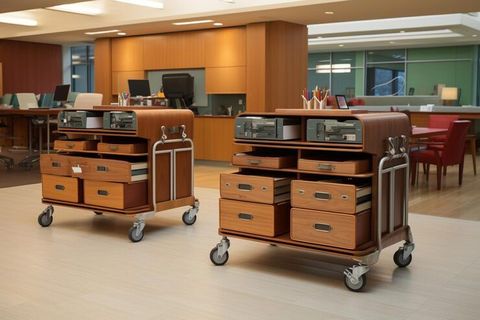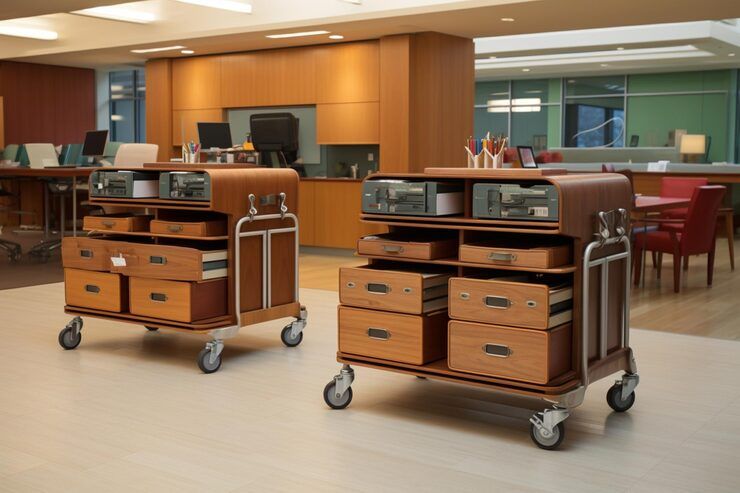
Multi-drawer portable storage carts are mobile storage units designed to organize tools, documents, supplies, components, and other frequently used items. They typically feature multiple drawers, a supporting frame, and wheels that allow users to move stored materials between work areas.
These carts are used in offices, workshops, laboratories, classrooms, healthcare environments, retail stockrooms, and homes. Their main purpose is to keep small items organized while making them easier to locate, transport, and access.
Unlike stationary cabinets, portable drawer carts can be repositioned when work requirements change. Different models vary in drawer capacity, construction materials, locking systems, wheel design, and overall dimensions. Choosing a suitable configuration depends on the items being stored, the available floor space, the required mobility, and the conditions in which the cart will operate.
Understanding Multi-Drawer Storage Cart Designs
Multi-drawer carts are available in several configurations. Compact models may contain three or four drawers, while larger units can contain numerous shallow and deep compartments.
Shallow drawers are useful for organizing small components, stationery, craft materials, and accessories. Deeper drawers can accommodate larger tools, packaging materials, documents, and other objects that require additional vertical clearance.
Common types include:
Plastic drawer carts: Lightweight units used for stationery, household supplies, craft materials, and lightweight components.
Metal drawer carts: More rigid structures commonly used in workshops and industrial environments.
Tool storage carts: Units designed around hand tools, repair equipment, and maintenance supplies.
Office storage carts: Mobile organizers for documents, stationery, files, and shared workplace materials.
Laboratory storage carts: Configurations selected for particular equipment, containers, or laboratory supplies.
Modular drawer carts: Systems with removable compartments or configurable drawer arrangements.
The material and construction should match the intended application. A lightweight plastic cart, for example, may be appropriate for stationery but unsuitable for heavy metal tools or sensitive equipment.
Main Components and Features
The performance of a portable storage cart depends on more than the number of drawers.
Drawer slides: These mechanisms guide drawers as they open and close. Their design affects movement, stability, and the maximum supported load.
Wheels and casters: Wheels determine how easily the cart moves across different surfaces. Swivel casters improve maneuverability, while locking casters help prevent unintended movement.
Frame and body: Steel, aluminum, reinforced plastic, and composite materials provide different combinations of strength, weight, and resistance to environmental conditions.
Handles: Properly positioned handles can improve control during movement and help users steer the cart through narrow spaces.
Locking mechanisms: Central locks or individual drawer locks can help restrict access to selected materials.
Drawer dividers: Removable inserts and compartments help separate small items and reduce disorganization.
Before selecting a cart, it is important to check the manufacturer's specifications for total load capacity, individual drawer limits, wheel ratings, dimensions, and locking arrangements.
Why Multi-Drawer Portable Storage Carts Matter
Organized storage can reduce the time spent searching for equipment and supplies. In environments where many small components are used throughout the day, dedicated drawers can also help maintain consistent storage arrangements.
Workplace Organization and Productivity
Workshops and maintenance departments often handle different tools, fasteners, replacement parts, and measuring equipment. A drawer-based system can assign specific locations to these items.
This arrangement can support inventory checks and make missing equipment easier to identify. However, the actual improvement depends on consistent labeling, appropriate drawer assignments, and regular maintenance.
In offices and educational settings, portable carts can consolidate stationery, documents, teaching materials, and shared supplies in one mobile unit.
Space Management
Portable carts can help make use of limited floor space, particularly in rooms where storage requirements change throughout the day.
They can be moved between workstations when necessary and positioned beneath suitable work surfaces when their dimensions allow. However, carts should not obstruct emergency exits, accessible routes, or other important circulation areas.
Applications Across Different Industries
| Environment | Typical Stored Items | Important Features |
|---|---|---|
| Workshops | Hand tools and components | Load capacity and durable drawers |
| Offices | Stationery and documents | Labeling and quiet movement |
| Laboratories | Equipment and supplies | Material compatibility and secure storage |
| Classrooms | Learning materials | Easy access and manageable weight |
| Healthcare facilities | Designated supplies | Cleaning compatibility and access control |
| Homes | Crafts, accessories, and household items | Compact dimensions and flexible compartments |
| Stockrooms | Small parts and inventory | Drawer identification and organized access |
The best configuration depends on the environment, storage requirements, and frequency of movement.
Recent Developments and Trends
During 2025 and 2026, storage and material-handling design continued to emphasize space efficiency, modular organization, durability, and ergonomic use. These are broader product-design trends rather than evidence that every manufacturer introduced a specific new cart model.
Modular Storage Systems
Modular storage has become an important consideration in workplaces where equipment, inventory, and room layouts change over time.
Storage carts with adjustable dividers, interchangeable inserts, and differently sized drawers can accommodate a wider range of items without requiring a completely different unit.
Modular designs can also support more consistent organization across multiple workstations. Compatibility should be checked before combining components from different manufacturers.
Improved Mobility and Ergonomics
Wheel design, handle placement, and drawer accessibility remain important areas of product development.
Features such as low-resistance casters, secure wheel locks, rounded handles, and drawers that open smoothly can make routine movement easier. Their effectiveness depends on floor conditions, cart weight, and the way users load the unit.
Ergonomic planning also includes positioning frequently used materials within comfortable reach and avoiding repeated bending or twisting.
Sustainable Materials and Durability
Manufacturers and organizations continue to examine material durability, product lifespan, recycled content, and packaging waste when evaluating storage equipment.
Metal units may offer structural durability for certain applications, while plastic designs may provide lower overall weight and resistance to particular types of moisture or corrosion.
Neither material is universally superior. The appropriate choice depends on loading requirements, cleaning methods, environmental exposure, repairability, and the expected operating life.
Laws, Policies, and Workplace Safety
Multi-drawer storage carts are generally ordinary workplace equipment, but their use may be affected by occupational safety requirements, accessibility standards, fire regulations, and rules for particular environments.
The applicable requirements depend on the country, industry, workplace, and stored materials.
Workplace Safety in the United States
The Occupational Safety and Health Administration establishes workplace requirements concerning hazards such as material handling, blocked exit routes, unsafe equipment, and workplace housekeeping.
Employers should evaluate whether carts are stable, appropriately loaded, maintained, and suitable for their intended use. Wheels should be locked when necessary, and carts should not be positioned where they obstruct emergency routes.
General Safety Considerations
Safe cart use includes:
Following the manufacturer's load limits.
Distributing weight evenly across drawers.
Placing heavier objects in lower drawers when appropriate.
Securing drawers before moving the cart.
Using wheel locks when the cart is stationary.
Inspecting wheels, handles, drawer slides, and fasteners.
Avoiding movement over unsuitable surfaces or steep slopes.
Keeping aisles and emergency exits clear.
For laboratories, healthcare settings, and industrial facilities, additional requirements may apply to chemical compatibility, contamination control, electrical equipment, or restricted materials.
Fire and Accessibility Requirements
Storage arrangements should not interfere with fire exits, extinguishers, electrical panels, or designated evacuation paths.
In workplaces that must comply with accessibility standards, storage equipment should also be arranged so that accessible routes and required maneuvering spaces remain clear.
Tools and Resources for Choosing a Storage Cart
A structured assessment can help compare storage carts before selecting a configuration.
Measurement and Capacity Planning
Measure the available floor space, doorway widths, aisle clearance, and the height of nearby work surfaces. Include the cart's handles and wheels when assessing its overall footprint.
Calculate the approximate total stored load by adding the weight of the items expected in each drawer. Compare this estimate with the manufacturer's overall and per-drawer load limits.
Equipment Evaluation Checklist
| Evaluation Factor | What to Check |
|---|---|
| Drawer configuration | Number, depth, and internal dimensions |
| Construction | Plastic, steel, aluminum, or composite |
| Load capacity | Total and individual drawer limits |
| Mobility | Caster type and wheel-lock mechanism |
| Security | Individual or central locking system |
| Organization | Dividers, labels, and removable inserts |
| Maintenance | Replacement wheels and drawer-slide availability |
| Environment | Moisture, cleaning agents, dust, or temperature |
| Accessibility | Handle position and ease of drawer operation |
Useful Digital Resources
Product specification sheets: Provide dimensions, materials, load limits, and assembly requirements.
Inventory spreadsheets: Record drawer contents, quantities, and replenishment requirements.
Floor-planning tools: Help check clearances and storage placement.
Maintenance checklists: Track wheel inspections, cleaning, and mechanical issues.
Workplace safety guidance: Helps identify loading, access, and storage hazards.
These resources are useful for both small workspaces and larger facilities managing multiple storage units.
Frequently Asked Questions
What are multi-drawer portable storage carts used for?
They organize and transport items such as tools, documents, stationery, small components, craft materials, and workplace supplies. Their applications depend on their construction and load capacity.
Are plastic or metal storage carts better?
Plastic carts are often lighter and may suit lightweight supplies or environments where moisture resistance matters. Metal carts can provide greater structural rigidity for heavier equipment when appropriately designed. The correct choice depends on specifications and intended use.
How much weight can a multi-drawer cart hold?
Capacity varies by model, construction, wheel design, and drawer configuration. Users should follow the manufacturer's total load limit and the separate limit for each drawer rather than assuming that all drawers support equal weight.
Do portable storage carts need locking wheels?
Locking wheels are useful when a cart must remain stationary during loading, unloading, or work. They help reduce unintended movement, although the cart should still be positioned on a suitable surface and loaded correctly.
How can a storage cart remain organized over time?
Use clear labels, assign specific categories to drawers, maintain an inventory where appropriate, and review contents regularly. Removing unnecessary items and keeping frequently used supplies accessible can help preserve an organized layout.
Conclusion
Multi-drawer portable storage carts provide a flexible approach to organizing materials across workshops, offices, laboratories, classrooms, and homes. Their usefulness depends on selecting the right drawer configuration, construction material, mobility features, and load capacity for the intended environment.
Developments in modular design, ergonomic movement, and material selection reflect the wider need for adaptable and well-organized workspaces. At the same time, safe loading, clear access routes, regular maintenance, and compliance with relevant workplace requirements remain essential.
By evaluating dimensions, storage needs, operating conditions, and safety requirements before selecting a cart, individuals and organizations can establish a more practical and consistent storage system.