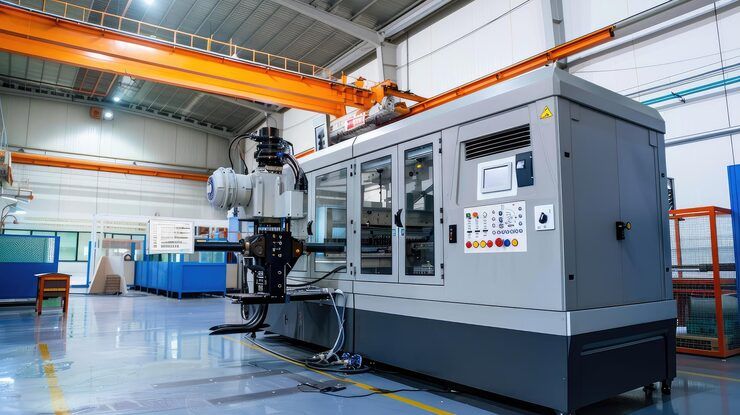
Electrical panel fabrication machines are industrial tools and automated systems used to manufacture enclosures that contain electrical components, wiring, control devices, circuit breakers, and protective equipment. These enclosures are commonly found in factories, commercial buildings, power distribution facilities, infrastructure projects, and industrial automation systems.
The fabrication process typically involves cutting sheet metal, punching mounting holes, bending panels, joining components, finishing surfaces, and preparing the enclosure for electrical assembly. Depending on the design and production volume, manufacturers may use individual machines or integrated production lines.
Electrical panel fabrication technology helps manufacturers produce enclosures with consistent dimensions, accurately positioned openings, suitable structural strength, and appropriate protection against environmental conditions.
Understanding Electrical Panel Fabrication Equipment
Electrical enclosures are manufactured from materials such as mild steel, stainless steel, and aluminum. Material selection depends on the installation environment, mechanical requirements, corrosion exposure, and intended application.
Fabrication machines shape these materials into enclosure bodies, doors, mounting plates, brackets, and supporting structures.
Common equipment includes:
CNC punching machines: Create accurately positioned holes, slots, and cutouts in sheet metal.
Fiber laser cutting machines: Cut complex shapes and openings using a concentrated laser beam.
CNC press brakes: Bend sheet metal to specified angles and dimensions.
Shearing machines: Cut sheet metal into straight-edged sections.
Welding equipment: Join metal components and enclosure structures.
Deburring machines: Remove sharp edges and surface imperfections.
Powder coating systems: Apply protective and decorative finishes.
CNC drilling and tapping machines: Prepare mounting holes and threaded connections.
Not every manufacturing facility requires all these machines. Equipment selection depends on enclosure design, material thickness, production volume, dimensional tolerances, and the finishing requirements of the final product.
How Electrical Panel Fabrication Works
The manufacturing process begins with engineering drawings and material specifications. These define the enclosure dimensions, mounting positions, ventilation openings, cable entries, door arrangements, and structural features.
Design and programming: Computer-aided design (CAD) software is used to create enclosure drawings. Computer-aided manufacturing (CAM) software converts suitable designs into machine instructions.
Sheet metal cutting: Laser cutting, shearing, or punching separates the required shapes from sheet metal.
Hole and slot processing: CNC equipment creates mounting holes, ventilation openings, cable entries, and other required features.
Bending and forming: Press brakes shape the sheet metal into doors, side panels, bases, and enclosure bodies.
Joining and finishing: Welding, fastening, grinding, and deburring prepare the components for assembly and surface treatment.
Inspection: Dimensions, alignment, surface quality, and relevant enclosure characteristics are checked against the engineering specifications.
The completed enclosure can then proceed to electrical assembly, where components are installed and wiring is completed according to the approved design.
Why Electrical Panel Fabrication Machines Matter
Electrical panels are essential to power distribution, industrial control, building automation, and equipment protection. Their enclosures must accommodate electrical components while providing appropriate mechanical protection and access for installation and maintenance.
Fabrication accuracy matters because incorrectly positioned holes, poorly aligned doors, or unsuitable dimensions can complicate assembly and affect enclosure performance.
Improving Manufacturing Accuracy
CNC-controlled machines follow programmed instructions to produce repeatable cuts, holes, and bends. This can reduce variation between components and improve consistency across production batches.
Accurate fabrication also supports standardized enclosure designs, modular assembly, and more efficient use of sheet metal.
Supporting Industrial Automation
Manufacturers increasingly use connected equipment, automated material handling, digital production planning, and machine monitoring.
These technologies can help coordinate cutting, punching, bending, and inspection while providing production data that supports maintenance and quality management.
Choosing Suitable Fabrication Technology
Selecting machinery requires consideration of several factors:
Material type: Steel, stainless steel, and aluminum have different cutting and forming characteristics.
Sheet thickness: Machine capacity must match the specified material thickness and processing requirements.
Component complexity: Intricate openings may favor laser cutting or CNC punching.
Production volume: Automated lines can be useful for repetitive, high-volume manufacturing.
Dimensional tolerances: Critical dimensions must remain within the limits specified in the engineering drawings.
Energy consumption: Electrical demand and operating efficiency affect overall production planning.
Floor space: Machine layout must accommodate material loading, unloading, movement, and maintenance.
A complete production assessment should consider the interaction between machines rather than evaluating equipment specifications separately.
Recent Developments in Electrical Panel Fabrication
Developments during 2025 and 2026 reflect broader industrial trends toward digital manufacturing, connected machinery, energy efficiency, and automated quality control.
Digital Manufacturing and CNC Integration
Modern fabrication systems increasingly connect CAD and CAM software with CNC punching, laser cutting, and bending equipment. Digital workflows help translate engineering drawings into repeatable manufacturing instructions.
During 2025, manufacturers across the sheet metal industry continued emphasizing connected production systems, automated programming, and digital monitoring. These developments are relevant to electrical enclosure manufacturing because panels often contain numerous accurately positioned openings, mounting features, and formed sections.
Automation and Production Monitoring
Automated sheet handling, robotic loading, and integrated bending systems can reduce manual material movement in suitable production environments.
Machine monitoring can also record production time, operating conditions, tool usage, and maintenance requirements. The practical benefits depend on equipment integration, operator training, and the quality of production data.
Energy and Material Efficiency
Material optimization software can arrange component layouts to reduce sheet metal offcuts. Improved cutting parameters and maintenance practices can also help control energy use and processing waste.
These measures are particularly relevant when manufacturing large batches of electrical cabinets, distribution enclosures, and industrial control panel housings.
Specific machine capabilities and performance improvements vary by manufacturer and configuration, so engineering specifications and independently verified operating data remain important.
Laws, Regulations, and Manufacturing Standards
Electrical panel fabrication is affected by machinery safety requirements, workplace regulations, electrical product standards, and environmental rules. The applicable requirements depend on the country, installation type, and intended use of the finished enclosure.
Machinery and Workplace Safety
Fabrication equipment can present hazards involving moving components, sharp sheet metal, laser radiation, electrical systems, noise, and welding operations.
Manufacturers should implement appropriate machine guarding, emergency stops, operator training, lockout procedures, ventilation, and personal protective equipment.
In the United States, the Occupational Safety and Health Administration establishes workplace requirements covering machinery, electrical safety, and other industrial hazards.
Electrical Enclosure Standards
The International Electrotechnical Commission publishes standards relevant to electrical equipment and enclosures.
IEC 60529 defines the IP Code used to classify protection provided by enclosures against access to hazardous parts, solid foreign objects, and water.
IEC 62208 addresses empty enclosures intended for low-voltage switchgear and controlgear assemblies.
In North America, UL 50 and UL 50E address enclosure construction and environmental considerations for electrical equipment. Applicable requirements depend on the product and its intended installation.
Fabrication accuracy alone does not establish compliance. The completed enclosure must meet the applicable design, material, environmental protection, and verification requirements.
Environmental and Energy Requirements
Industrial facilities may be subject to regulations covering welding fumes, metal dust, coating emissions, wastewater, and industrial waste.
Powder coating and laser processing operations require suitable ventilation, housekeeping, and environmental controls. Applicable permits and emission limits vary by jurisdiction.
Tools and Resources for Electrical Panel Fabrication
Several technical resources help manufacturers plan production, evaluate equipment, and maintain quality.
CAD and CAM Software
CAD software supports enclosure design, dimensional drawings, and component layouts. CAM software translates compatible designs into machine instructions for cutting, punching, and bending.
Digital models can also help identify interference between doors, mounting plates, cable entries, and internal electrical components before fabrication begins.
Production Planning Tools
Manufacturers can use spreadsheets or manufacturing execution systems to track:
Material consumption
Machine utilization
Production quantities
Cycle times
Scrap rates
Maintenance schedules
Inspection results
Energy use per production batch
These records support process improvement and production planning.
Equipment Evaluation Checklist
| Evaluation Factor | Key Consideration |
|---|---|
| Material capacity | Compatible metals and thickness ranges |
| Processing method | Laser cutting, punching, shearing, or bending |
| Accuracy | Required dimensional tolerances |
| Automation | Manual loading or automated material handling |
| Software | CAD/CAM compatibility |
| Safety | Guards, interlocks, extraction, and emergency stops |
| Maintenance | Tooling, consumables, and inspection requirements |
| Quality control | Measurement and verification procedures |
Technical datasheets, machine manuals, applicable standards, and manufacturer documentation should be reviewed before equipment selection.
Frequently Asked Questions
What machines are used to fabricate electrical panels?
Common machines include CNC punching machines, fiber laser cutters, press brakes, shearing machines, welding equipment, deburring systems, and powder coating equipment. The required combination depends on the enclosure design and production process.
Which materials are commonly used for electrical enclosures?
Mild steel, stainless steel, and aluminum are widely used. Selection depends on mechanical strength, corrosion resistance, weight, installation environment, and applicable product requirements.
What is the role of CNC technology in panel fabrication?
CNC technology controls machine movements according to programmed instructions. It supports repeatable cutting, punching, drilling, and bending operations and helps maintain dimensional consistency.
How do manufacturers improve enclosure quality?
Manufacturers use accurate engineering drawings, appropriate tooling, controlled fabrication processes, dimensional inspection, suitable surface finishing, and verification against applicable enclosure requirements.
Which standards apply to electrical panel fabrication?
Relevant standards can include IEC 60529 for enclosure protection ratings, IEC 62208 for certain empty low-voltage enclosures, and applicable national standards such as UL 50 and UL 50E in North America. The appropriate requirements depend on the enclosure and its intended application.
Conclusion
Electrical panel fabrication machines support the production of enclosures used in power distribution, industrial automation, building systems, and electrical infrastructure. CNC punching, laser cutting, bending, welding, and finishing equipment help manufacturers produce components that meet defined dimensions and assembly requirements.
Developments in digital manufacturing, connected machinery, automated material handling, and production monitoring continue to influence how electrical enclosures are manufactured. Their practical value depends on suitable equipment selection, reliable engineering data, trained operators, and effective quality control.
A well-planned fabrication process considers material selection, machine capacity, dimensional accuracy, workplace safety, environmental requirements, and applicable electrical enclosure standards. Combining these factors helps manufacturers produce consistent enclosures suitable for their intended operating environments.