Concrete mixer rental refers to the temporary use of equipment that combines cement, water, sand, and aggregates to produce concrete for construction projects. Instead of maintaining a mixer permanently, contractors, builders, and property owners can arrange equipment for a specific period based on project requirements. This approach is useful when concrete mixing is needed for a limited duration or when the quantity of concrete varies between projects.
Concrete mixers are used in residential construction, commercial buildings, roadwork, landscaping, foundations, pathways, and repair projects. The appropriate equipment depends on the required concrete volume, site conditions, available power, transportation arrangements, and expected working schedule.
Types of Concrete Mixers
Different mixer designs support different construction requirements.
Drum concrete mixers: Rotate a drum to combine cement, aggregates, and water. They are common in small and medium construction projects.
Portable concrete mixers: Compact units that can be moved around a site and are useful for small foundations, pathways, and repairs.
Towable concrete mixers: Mounted on trailers for transportation between locations, subject to applicable road and towing requirements.
Pan mixers: Mix materials inside a stationary circular pan using rotating mixing components. They are used for applications requiring particular mixing characteristics.
Twin-shaft concrete mixers: Use two mixing shafts to combine materials efficiently in larger production environments.
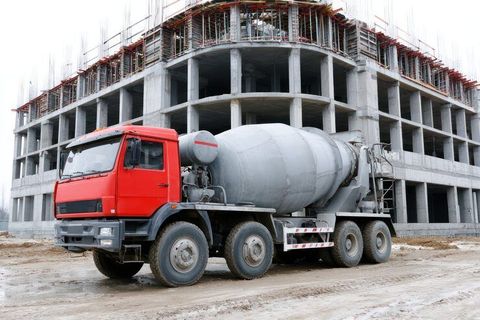
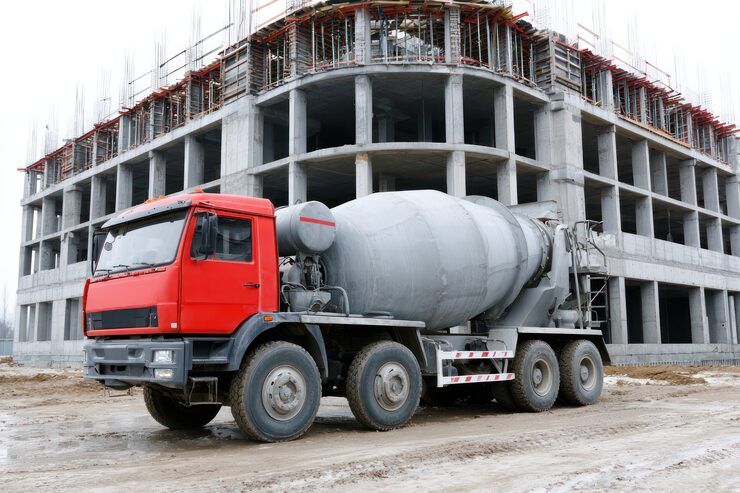
Transit mixer trucks: Transport ready-mixed concrete from a batching plant to a construction site. They generally carry concrete that has already been mixed rather than performing the same function as a conventional site mixer.
Key Equipment Specifications
Before arranging a mixer, it is important to distinguish between drum capacity, rated mixing capacity, and actual usable output. These measurements are not interchangeable.
A mixer with a large drum does not necessarily produce an equivalent volume of finished concrete in one batch. The usable quantity depends on the machine design, material proportions, and manufacturer specifications.
Important specifications include:
Drum capacity and rated batch output.
Electric motor power or engine rating.
Power supply requirements and fuel type.
Mobility, wheel configuration, and transportation needs.
Loading height, discharge arrangement, and cleaning access.
Maintenance requirements and operating instructions.
Understanding these details helps project managers select equipment that fits the work without creating unnecessary delays.
Why Concrete Mixer Rental Matters in Construction
Concrete mixing equipment plays an important role in maintaining consistent material preparation and coordinating construction activities. Temporary equipment arrangements can help contractors match machinery requirements to the duration and scale of individual projects.
Who Uses Concrete Mixing Equipment?
Concrete mixers are used by a wide range of construction professionals and property owners.
Residential builders: Prepare concrete for foundations, floor slabs, small extensions, and outdoor pathways.
Commercial contractors: Support concrete preparation for selected building and renovation activities.
Road construction teams: Mix concrete for curbs, drainage structures, and smaller pavement applications.
Landscaping professionals: Prepare concrete for garden walls, steps, posts, and outdoor structures.
Property owners: Undertake small projects where permitted and where appropriate technical guidance is available.
Main Advantages of Temporary Equipment Arrangements
Using a mixer temporarily can help project planners coordinate equipment availability with construction schedules. It may also reduce the need to store machinery between projects.
Key considerations include:
Matching machine capacity to the expected concrete volume.
Planning equipment delivery and collection.
Reducing storage requirements between construction activities.
Selecting machinery appropriate for site access and working conditions.
Establishing clear responsibility for maintenance, cleaning, and damage.
The overall financial impact depends on the rental period, transportation, fuel or electricity, operator requirements, and equipment condition. Comparing the full project expenditure with other equipment arrangements provides a more reliable assessment than looking at the rental rate alone.
Recent Developments in Concrete Mixing Equipment
Developments in construction equipment during 2025 and 2026 have included greater attention to machinery safety, operational efficiency, emissions, and equipment performance. These developments are relevant to contractors evaluating portable mixers, larger stationary units, and truck-mounted concrete mixing equipment.
Equipment Standards and Technical Specifications
In August 2025, India's Ministry of Road Transport and Highways published technical material under AIS 163, Part 2, Annex 5, addressing specific requirements for truck mixers. The document covers performance and functional requirements relevant to truck mixers used to produce or transport concrete and mortar.
This development highlights the importance of distinguishing road-going truck mixers from conventional portable concrete mixers. Their construction, transportation requirements, and technical standards can differ considerably.
Automation and Equipment Monitoring
Modern construction equipment increasingly incorporates features designed to improve operational consistency and simplify maintenance.
Examples include:
Digital controls for managing selected operating parameters.
Improved motor efficiency and variable-speed operation in applicable equipment.
Sensors that help monitor operating conditions.
Equipment tracking and digital maintenance records.
Better-designed drum mechanisms and protective guards.
Not every mixer includes these features. Their availability depends on the machine type, manufacturer, capacity, and intended application.
Environmental Considerations
Construction teams are also paying greater attention to energy use, dust exposure, noise, and waste management.
Electric concrete mixers may reduce direct exhaust emissions at the worksite compared with comparable combustion-powered equipment. However, their overall environmental impact depends on electricity generation, operating efficiency, and other factors.
Responsible handling of leftover concrete and wash water is also important because cement-containing wastewater can be highly alkaline and may harm drainage systems or the surrounding environment.
Laws, Regulations and Construction Safety in India
Concrete mixer rental and operation can involve several areas of regulation, including worker safety, electrical safety, road transportation, environmental protection, and local construction requirements.
Construction Worker Safety
India's Building and Other Construction Workers framework and applicable occupational safety rules address health and safety at construction sites. The precise legal requirements depend on the relevant legislation, rules, location, and circumstances of the project.
Employers and site managers should establish safe operating procedures for concrete mixing equipment. Important precautions include:
Keep hands, clothing, and tools away from rotating components.
Never clean or repair a mixer while it is operating.
Disconnect and isolate the power supply before maintenance.
Use appropriate guards and emergency stopping arrangements.
Wear suitable eye protection, gloves, safety footwear, and respiratory protection where required.
Keep the operating area stable, clear, and adequately illuminated.
Cement dust can irritate the respiratory system, while wet cement can cause skin irritation and chemical burns. Suitable protective equipment and hygiene practices are therefore essential.
Electrical and Transportation Requirements
Electric mixers should be connected through an appropriate electrical supply with suitable earthing, protective devices, and weather protection. Electrical installations should be assessed by qualified personnel.
Towable mixers and truck-mounted units may also be subject to applicable vehicle registration, roadworthiness, towing, and transportation requirements.
Concrete Quality and Site Management
Concrete quality depends on the correct proportions of cement, water, fine aggregates, coarse aggregates, and any specified admixtures. Adding excessive water can affect strength and durability.
Construction teams should follow the approved mix design and relevant technical specifications. Equipment operators should also ensure that the mixer is suitable for the intended material and batch size.
Applicable local building regulations, environmental requirements, and project specifications should be checked before work begins.
Tools and Resources for Planning Concrete Mixer Rental
Planning tools can help estimate equipment capacity, material quantities, scheduling requirements, and operational risks.
Useful Calculators and Planning Tools
Concrete volume calculator: Estimates the required concrete volume for slabs, foundations, columns, and other shapes.
For a rectangular slab, the basic calculation is:
Concrete volume = Length × Width × Thickness
All dimensions should be converted to metres to obtain a result in cubic metres.
Batch capacity planner: Helps estimate the number of mixing batches required for a project.
Equipment inspection checklist: Records the condition of the drum, motor, cables, guards, wheels, and other components before use.
Construction schedule planner: Coordinates mixer availability with material deliveries, labour allocation, and concrete placement.
Maintenance log: Tracks cleaning, inspections, repairs, and operating hours.
Example of Concrete Volume Planning
The following example illustrates how project dimensions affect equipment planning.
Project | Dimensions | Concrete volume |
|---|---|---|
Small slab | 3 m × 2 m × 0.10 m | 0.60 m³ |
Garden pathway | 5 m × 1 m × 0.10 m | 0.50 m³ |
Foundation section | 2 m × 2 m × 0.15 m | 0.60 m³ |
These figures represent geometric volumes only. Actual material quantities may require allowances for uneven ground, formwork, wastage, and the approved mix design.
A mixer with a usable output of 0.05 cubic metres per batch would theoretically require 12 batches for 0.60 cubic metres of concrete. The actual number may differ because of the manufacturer's recommended loading capacity and site conditions.
Equipment Selection Checklist
Before finalizing an equipment arrangement, confirm the following:
Required concrete volume and expected mixing frequency.
Drum capacity and usable output per batch.
Available electrical supply or fuel requirements.
Delivery access and space for safe operation.
Equipment condition and maintenance history.
Operator instructions and safety provisions.
Rental duration, payment terms, damage responsibility, and collection arrangements.
Frequently Asked Questions
What size concrete mixer is suitable for a small construction project?
The appropriate size depends on the concrete volume, batch frequency, site access, and available labour. Small portable mixers may suit pathways and minor repairs, while larger projects may require higher-capacity mixers or ready-mixed concrete.
How is concrete mixer rental duration determined?
The rental duration depends on the project schedule, expected mixing volume, daily working hours, site preparation, and potential delays. Planning material deliveries and concrete placement in advance can help determine the required period.
Can a concrete mixer operate on a normal electrical supply?
Some small electric mixers are designed for standard electrical supplies, but requirements vary by model. The motor rating, voltage, current, earthing, and circuit protection must be checked against the manufacturer's specifications.
What should be inspected before accepting a rented mixer?
Inspect the drum, mixing blades, motor, transmission, guards, wheels, cables, switches, and emergency controls where fitted. Confirm that the equipment operates correctly and that the supplier has provided operating instructions and relevant safety information.
Is a concrete mixer suitable for every type of concrete project?
No. Small mixers are suitable for many limited-volume applications, but large structural projects may require controlled batching, specialized mixing equipment, or ready-mixed concrete. The appropriate method depends on engineering specifications, quality requirements, and the quantity needed.
Conclusion
Concrete mixer rental is a practical equipment arrangement for construction projects that require temporary concrete mixing capacity. Selecting the correct mixer involves understanding usable batch output, project volume, site conditions, transportation, and operating requirements.
Recent developments in equipment standards, digital monitoring, and machinery design reinforce the importance of technical suitability and safe operation. Contractors should also consider worker protection, concrete quality, environmental practices, and applicable regulations.
With careful planning, appropriate equipment selection, and regular inspections, construction teams can coordinate concrete mixing more efficiently while maintaining consistent work practices and protecting workers at the site.