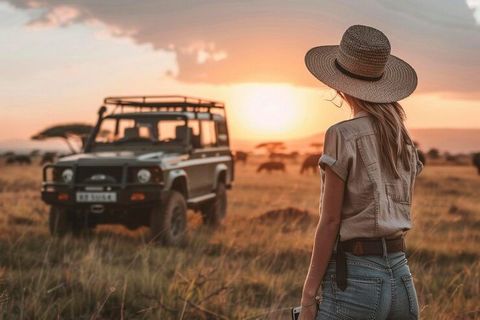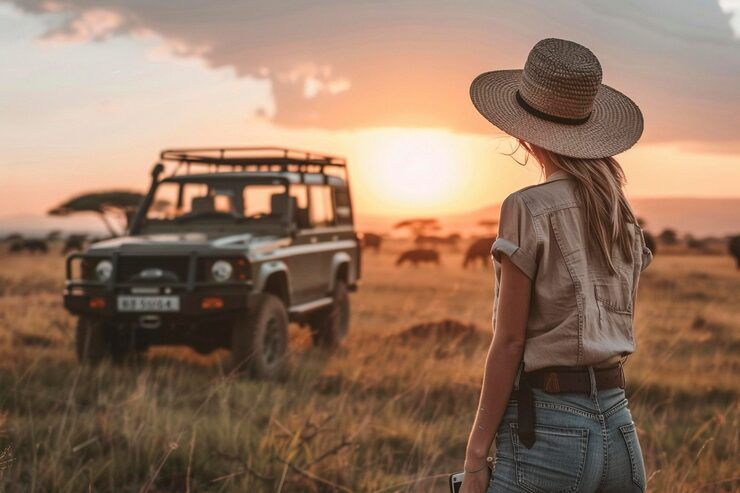
Tourist safari jeep rentals are a form of vehicle transportation used for wildlife observation, nature exploration, and travel through rugged landscapes. These vehicles are commonly associated with national parks, wildlife reserves, desert regions, mountain trails, and remote tourist destinations. Depending on the location, travelers may use an open-sided safari jeep, an enclosed four-wheel-drive vehicle, or a specially adapted vehicle designed for uneven terrain.
The term covers several arrangements. Some destinations permit visitors to drive an authorized vehicle themselves, while others require a trained local driver or an approved safari operator. In protected wildlife areas, independent driving may be restricted to protect animals, visitors, and sensitive habitats.
Safari vehicles are designed to handle conditions that ordinary passenger cars may struggle with, including gravel tracks, sandy surfaces, muddy roads, and steep approaches. However, their capabilities vary according to ground clearance, tire design, engine performance, passenger capacity, and four-wheel-drive systems.
Common Types of Safari Vehicles
Open safari jeeps: Provide broad visibility for wildlife observation and outdoor photography.
Four-wheel-drive SUVs: Offer an enclosed cabin and additional protection from dust, rain, and changing temperatures.
Modified safari vehicles: May include elevated seating, reinforced bodywork, handrails, or specialized passenger arrangements.
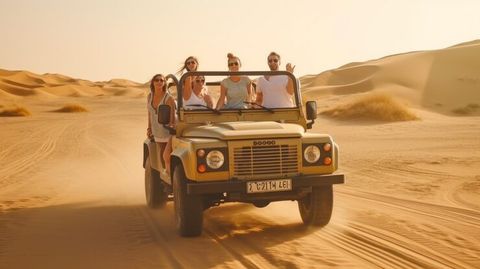
Desert exploration jeeps: Are configured for sandy terrain and remote landscapes where permitted.
Accessible safari vehicles: May include adapted entry systems or seating arrangements, depending on the operator and destination.
Choosing a vehicle involves more than appearance. Travelers should consider passenger capacity, luggage space, weather protection, accessibility, terrain suitability, and the rules governing the intended route.
Why Safari Jeep Rentals Matter for Modern Tourism
Safari transportation plays an important role in tourism because many natural attractions are located far from paved roads, public transport routes, and major accommodation areas. Suitable vehicles help visitors reach designated observation points while reducing the difficulty of navigating unfamiliar terrain.
Wildlife Observation and Nature Photography
A properly configured safari jeep can provide elevated sightlines and practical access to designated wildlife viewing areas. Photographers and nature enthusiasts may benefit from seating arrangements that allow them to observe animals without repeatedly leaving the vehicle.
Responsible wildlife observation remains essential. Visitors should maintain appropriate distances, avoid feeding animals, keep noise levels low, and follow instructions from trained guides or park authorities.
Access to Remote Destinations
Safari vehicles can support journeys through landscapes such as savannas, forests, deserts, and mountainous regions. Their usefulness depends on road conditions, seasonal weather, local restrictions, and the driver's experience.
For travelers, an appropriate vehicle can help address several practical concerns:
Navigating uneven roads and designated off-road routes.
Carrying photography equipment, water, and essential supplies.
Accommodating groups within approved passenger limits.
Managing changing weather and exposure to dust.
Reaching authorized viewing areas without disturbing protected habitats.
Tourism Planning and Environmental Responsibility
Safari transportation also affects conservation, local employment, road maintenance, and visitor management. Excessive vehicle traffic can create noise, disturb wildlife, increase erosion, and contribute to emissions.
Many destinations therefore use timed entry permits, designated tracks, vehicle quotas, or restrictions on particular types of vehicles. These measures help balance tourism activity with habitat protection.
Travelers comparing safari vehicle arrangements should evaluate the overall journey rather than focusing exclusively on vehicle specifications. Driver qualifications, emergency procedures, park permissions, route conditions, and environmental practices are equally important.
Recent Developments and Trends in Safari Jeep Tourism
Safari tourism continues to evolve as governments, conservation organizations, and tourism operators place greater emphasis on passenger safety, responsible wildlife viewing, and environmental protection. Developments during 2025 and 2026 illustrate how vehicle arrangements and access procedures can change between destinations.
Greater Focus on Passenger Safety
In August 2025, India's Ministry of Tourism reported that adventure safety guidelines had been developed with the Adventure Tour Operators Association of India and circulated to states and union territories for adoption or updating of safety protocols. The announcement emphasized safety standards and compliance with relevant licensing requirements.
In May 2026, Karnataka authorities directed changes to safari transportation in tiger reserves and wildlife sanctuaries, including replacing open safari vehicles with safer buses. The announcement followed a fatal incident at an elephant camp and highlighted the importance of reviewing passenger protection in wildlife tourism.
New Wildlife Tourism Experiences
On August 6, 2026, the Ladakh administration approved plans for guided high-altitude wildlife safaris focused on snow leopards and birdwatching. The proposed approach involves trained local drivers and guides, specially designed vehicles, and participation by local communities in wildlife protection and tourism.
This development illustrates how safari experiences are expanding beyond traditional forest reserves into high-altitude environments. Such destinations require additional preparation because of low temperatures, thin air, remote roads, and limited emergency facilities.
Digital Permits and Vehicle Allocation
Digital booking systems are increasingly important for managing visitor numbers and authorized safari vehicles. In September 2026, Corbett Tiger Reserve announced changes involving online booking procedures, identity document uploads, and commercial vehicle allocation for designated tourism zones.
These developments highlight three trends:
Greater attention to passenger protection and vehicle standards.
Expansion of guided nature experiences into different landscapes.
Increased use of digital permits and structured vehicle allocation.
Travelers should verify current arrangements before departure because safety requirements, seasonal closures, vehicle categories, and booking procedures can change.
Laws, Regulations, and Government Policies
Safari jeep rentals are affected by several regulatory systems. The exact requirements depend on the country, the destination, the vehicle's purpose, and whether the journey takes place inside a protected area or on public roads.
Wildlife Protection and National Park Rules
In India, the Wildlife (Protection) Act, 1972, provides a legal framework for wildlife protection and the management of protected areas. National parks and wildlife sanctuaries may impose additional entry restrictions, authorized routes, vehicle limits, and visitor conduct requirements.
Depending on the destination, travelers may need to follow rules concerning:
Entry permits and designated safari timings.
Approved vehicles and authorized drivers.
Minimum distances from wild animals.
Restrictions on leaving the vehicle.
Prohibitions on littering, feeding wildlife, and making excessive noise.
The applicable rules may differ between parks, so requirements for one reserve should not be assumed to apply elsewhere.
Vehicle Registration and Transport Permits
Vehicles operating on public roads must meet the applicable registration, insurance, fitness, and driver-licensing requirements. Commercial passenger transportation may also require specific permits.
India's All India Tourist Vehicles (Permit) Rules, 2023, and subsequent amendments form part of the regulatory framework for eligible tourist vehicles traveling across state boundaries. The requirements applicable to a particular vehicle depend on its category and operating arrangement.
A traveler arranging safari transportation should confirm that the vehicle is authorized for the intended journey and that any required park permissions are valid.
Seasonal Restrictions and Environmental Policies
Some wildlife destinations close during particular months because of monsoon conditions, breeding seasons, conservation activities, or road safety concerns. For example, Gir Jungle Safari in Gujarat has a published annual closure from June 16 to October 15.
Environmental rules may also limit vehicle numbers, restrict off-road driving, or establish quieter observation practices. Travelers should respect these measures even when a route appears physically accessible.
Tools and Resources for Planning a Safari Jeep Journey
Preparing before departure can help travelers compare vehicle arrangements, understand route conditions, and avoid unexpected complications.
Useful Planning Resources
Official national park websites: Check permitted safari zones, entry requirements, seasonal closures, visitor rules, and authorized vehicle arrangements.
Government tourism departments: Review destination-specific regulations and official travel information.
Navigation applications: Use mapping tools to estimate road distances, identify meeting points, and plan travel to park entrances. Remote areas may have limited mobile coverage.
Weather forecasting applications: Check rainfall, temperature, wind, and local weather warnings before a trip.
Vehicle inspection checklists: Record tire condition, seat belts, brakes, emergency equipment, and other relevant safety features.
Travel insurance documentation: Review coverage for road travel, guided activities, medical evacuation, and remote-area emergencies.
Wildlife identification guides: Learn about local species and their behavior before entering a reserve.
Safari Jeep Comparison Table
| Feature | Open safari jeep | Enclosed 4x4 SUV | Adapted safari vehicle |
|---|---|---|---|
| Wildlife visibility | Usually high | Depends on windows | Depends on design |
| Weather protection | Limited | Usually better | Varies |
| Dust protection | Limited | Usually better | Varies |
| Rough-road capability | Model-dependent | Model-dependent | Model-dependent |
| Accessibility | May be limited | Model-dependent | May include adaptations |
| Common use | Wildlife viewing | Mixed terrain and longer journeys | Specific visitor needs |
No vehicle type is automatically the safest or most suitable in every situation. Travelers should evaluate the actual vehicle, route, passenger requirements, and applicable safety rules.
Practical Preparation Checklist
Before confirming arrangements, travelers can review the following items.
Confirm the safari date, departure time, and authorized route.
Verify the vehicle's permitted passenger capacity.
Check whether a park permit and a separate vehicle arrangement are required.
Ask about seat belts, weather protection, and emergency procedures.
Review luggage restrictions and accessibility arrangements.
Carry identification and relevant reservation details.
Pack suitable clothing, drinking water, and essential medication.
Check weather conditions and seasonal restrictions.
This preparation is particularly important for remote wildlife destinations, where medical assistance and replacement transportation may not be immediately available.
Frequently Asked Questions
What is a tourist safari jeep?
A tourist safari jeep is a vehicle used to explore wildlife reserves, natural landscapes, and rugged travel routes. Depending on the destination, it may be open-sided, enclosed, or specially adapted for guided nature experiences.
Do travelers need a special permit for a safari jeep?
Permit requirements depend on the destination. Some national parks require separate entry permits and authorized safari vehicles, while other areas may allow different arrangements. Travelers should check the official rules before departure.
Is an open safari jeep suitable for every traveler?
No. Open vehicles provide broad visibility but offer limited protection from rain, dust, wind, and temperature changes. Travelers with mobility requirements, young children, or particular safety concerns should confirm whether a suitable alternative is available.
When is the best time to plan a wildlife safari?
The best period depends on the destination, wildlife activity, climate, and park operating calendar. Dry seasons may improve visibility in some regions, while other destinations have specific viewing seasons or temporary closures. Local guidance is essential.
What should travelers check before entering a safari vehicle?
Travelers should confirm that the vehicle is authorized, maintained, and appropriate for the route. They should also check passenger capacity, seat belts where fitted or required, driver qualifications, emergency arrangements, and instructions for observing wildlife safely.
Conclusion
Tourist safari jeep rentals are an important part of wildlife tourism, outdoor exploration, and travel through remote landscapes. Selecting an appropriate vehicle requires consideration of terrain, passenger comfort, safety features, accessibility, permits, and environmental responsibilities.
Recent developments in India during 2025 and 2026 demonstrate a growing emphasis on passenger safety, digital booking procedures, and new guided wildlife experiences. However, regulations and arrangements vary considerably between destinations.
By checking official information, preparing for local conditions, and following conservation guidelines, travelers can make informed decisions and experience natural environments responsibly. A well-planned safari should prioritize the safety of visitors, the welfare of wildlife, and the long-term protection of the landscapes that make these journeys possible.