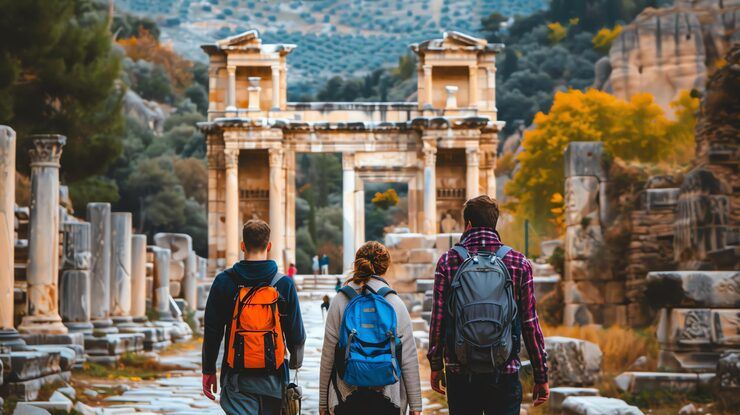
Athens combines one of Europe's largest modern urban areas with archaeological landscapes dating back thousands of years. At the center of this historical environment stands the Acropolis, a rocky hill containing monuments that became important symbols of classical Greek civilization.
An Acropolis hike is different from a wilderness trek. Most routes combine paved pedestrian streets, stone pathways, archaeological areas, urban hills, stairs, and established walking paths. Visitors can connect the Acropolis with places such as Philopappos Hill, the Ancient Agora, Areopagus Hill, Plaka, and the Acropolis Museum.
Understanding the Acropolis Landscape
The Acropolis rises approximately 150 metres above sea level and dominates the historic center of Athens. Its best-known monument is the Parthenon, constructed during the fifth century BCE and dedicated to Athena.
Other important structures include the Erechtheion, Temple of Athena Nike, Propylaea, and remains associated with the Sanctuary of Artemis Brauronia.
The surrounding archaeological landscape extends beyond the summit. The southern slopes include the Theatre of Dionysus and Odeon of Herodes Atticus, while nearby pedestrian routes connect the hill with additional historic areas.
The Acropolis and its monuments have been included on the UNESCO World Heritage List since 1987, reflecting their international cultural and architectural significance.
Common Acropolis Walking Routes
Visitors can approach the archaeological area from several directions. A typical route begins near the Acropoli Metro station and continues toward Dionysiou Areopagitou, one of the major pedestrian streets surrounding the site.
Other walking combinations include:
- Acropolis and southern slope
- Acropolis and Ancient Agora
- Acropolis and Plaka
- Acropolis and Philopappos Hill
- Acropolis and Areopagus Hill
- Acropolis Museum and archaeological site
- Acropolis and Anafiotika
- Historic center walking circuits
These routes allow visitors to combine archaeology with city views and traditional neighborhoods.
Comparing Popular Walking Areas
| Walking Area | Main Character | Terrain | Typical Interest |
|---|---|---|---|
| Acropolis | Major ancient monuments | Stone and uphill paths | Archaeology |
| Philopappos Hill | Green urban hill | Trails and slopes | Panoramic views |
| Areopagus Hill | Rocky viewpoint | Uneven rock | Acropolis views |
| Ancient Agora | Archaeological landscape | Paths and gentle slopes | Ancient civic history |
| Plaka | Historic neighborhood | Streets and stairs | Architecture |
| Dionysiou Areopagitou | Pedestrian route | Mostly paved | Easy urban walking |
Why Acropolis Hikes Matter
Walking provides a useful way to understand how ancient Athens developed geographically. Instead of seeing monuments as isolated structures, visitors can observe their relationship with hills, civic spaces, religious sites, theaters, and later neighborhoods.
Understanding Ancient Athens
The Acropolis was primarily a religious and ceremonial center rather than an ordinary residential district.
Below it, other areas served different purposes. The Ancient Agora became an important center of political, social, religious, and commercial life, while theaters on the slopes reflected the role of drama and public performance.
Walking between these locations provides geographical context that may be less obvious when each attraction is considered separately.
Urban Recreation
Athens also uses its historic hills as important public spaces. Philopappos Hill provides walking paths through vegetation and archaeological remains while offering broad views toward the Acropolis and the surrounding city.
This makes the wider Acropolis landscape relevant to both cultural tourism and urban recreation.
Heritage Education
Walking routes can introduce visitors to subjects including:
- Classical Greek architecture
- Archaeology
- Ancient religion
- Greek mythology
- Theater history
- Democratic institutions
- Historic urban planning
- Monument conservation
Interpretive signs and museum collections can provide additional context for structures encountered outdoors.
Managing Visitor Concentration
The Acropolis is among Greece's most visited archaeological attractions. Managing visitor movement is therefore important for protecting monuments and maintaining safe access.
Timed entry arrangements, designated routes, opening schedules, and temporary restrictions during extreme weather can help authorities manage large numbers of visitors.
Recent Updates and Trends
Visitor management and climate conditions have become increasingly important topics around the Acropolis during 2025 and 2026.
Timed Visitor Entry
Greece uses timed entry for the Acropolis archaeological site. Visitors select an entry time when arranging admission through the country's official archaeological ticketing platform.
The system is intended to distribute visitors across the day rather than concentrating large groups during a limited period.
This is particularly relevant during the main travel season, when Athens receives substantial international visitor numbers.
Extreme Heat Management
High summer temperatures remain an important issue for outdoor archaeological sites in Athens.
During periods of extreme heat, Greek authorities have previously introduced temporary midday closures or adjustments at the Acropolis to reduce heat exposure. Similar precautions remain relevant when severe temperature warnings are issued.
Visitors planning summer walks should check official announcements shortly before arrival because weather-related arrangements can change rapidly.
Conservation Work
Conservation of the Acropolis is a continuous process rather than a single restoration project.
The Acropolis Restoration Project involves interdisciplinary work on monuments including the Parthenon, Propylaea, Temple of Athena Nike, and Erechtheion. Archaeologists, architects, civil engineers, conservators, and specialist craftspeople contribute to this work.
Modern restoration aims to preserve surviving ancient material while addressing structural stability and damage accumulated over centuries.
Accessibility Developments
Accessibility has become another important part of archaeological-site management.
The Acropolis has infrastructure intended to improve access for visitors with reduced mobility. Because the site is located on a steep archaeological hill and conditions can change during maintenance or weather events, visitors requiring accessibility arrangements should review current official information beforehand.
Greek Laws and Heritage Policies
The Acropolis is protected under Greek cultural heritage legislation and international heritage frameworks.
Protection of Antiquities
Greece's cultural heritage framework places archaeological monuments under strong legal protection.
Law 3028/2002 on the Protection of Antiquities and Cultural Heritage in General establishes major principles governing the protection, conservation, research, management, and presentation of Greek cultural heritage.
The law covers ancient monuments, archaeological sites, historic places, and cultural objects.
Archaeological Site Rules
Visitors must follow the regulations established for archaeological areas.
Typical restrictions can include:
- Remaining within authorized visitor areas
- Avoiding contact with protected monuments
- Following staff instructions
- Respecting barriers and restricted zones
- Following photography and filming requirements
- Avoiding activities that could damage archaeological material
- Following temporary weather-related restrictions
The precise rules can vary according to the site and activity.
Commercial Photography and Filming
Ordinary personal photography is different from organized professional filming or photography.
Certain professional activities at Greek archaeological sites can require authorization from cultural authorities. Visitors planning specialized filming should therefore review current requirements from Greece's Ministry of Culture rather than relying on general visitor rules.
UNESCO Heritage Protection
The Acropolis has been a UNESCO World Heritage property since 1987.
UNESCO describes the site as containing architectural masterpieces that strongly influenced later art and architecture. World Heritage recognition also places emphasis on preserving the site's authenticity, integrity, and cultural significance.
Tools and Resources for Acropolis Walking
Digital and official resources can make planning easier, particularly because opening hours and weather conditions can change.
Hellenic Heritage Digital Platforms
Greece's official cultural heritage platforms provide information about archaeological sites, museums, monuments, opening schedules, and visitor arrangements.
The official archaeological ticketing system is particularly useful for checking current Acropolis entry times.
Acropolis Museum Resources
The Acropolis Museum provides extensive information about objects discovered on the Acropolis and its slopes.
Museum collections can help explain:
- Parthenon sculpture
- Archaic Acropolis finds
- Religious practices
- Architectural decoration
- Everyday objects
- Excavation discoveries
Visiting the museum before or after the archaeological area can provide additional historical context.
Digital Maps
Mapping applications are useful for planning routes between the Acropolis and nearby attractions.
Visitors can examine:
- Walking distances
- Elevation changes
- Metro stations
- Pedestrian streets
- Archaeological entrances
- Viewpoints
- Nearby museums
Weather and Heat Information
Weather information is particularly important between late spring and early autumn.
Useful measurements include temperature, UV levels, wind conditions, precipitation, and official heat warnings.
Simple Walking Plan
A practical walking sequence might look like this:
Acropoli Metro → Dionysiou Areopagitou → Acropolis southern slope → Acropolis summit → Areopagus → Ancient Agora → Plaka
Visitors seeking additional outdoor walking can extend the route toward Philopappos Hill.
Actual duration depends on weather, visitor numbers, archaeological-site access, personal walking speed, and time spent at individual monuments.
Frequently Asked Questions
Is the Acropolis hike difficult?
The Acropolis involves uphill walking, stone surfaces, stairs, and potentially slippery sections. It is not generally considered a long wilderness hike, but the terrain and summer temperatures can make the climb more demanding for some visitors.
What should visitors wear for an Acropolis walk?
Stable walking footwear is useful because some ancient stone surfaces can be uneven or slippery. Weather-appropriate clothing, sun protection, and sufficient drinking water are also important, particularly during warmer months.
Can the Acropolis and Philopappos Hill be explored together?
Yes. Philopappos Hill is close to the Acropolis and can be incorporated into a wider walking route. It provides paths, archaeological features, vegetation, and viewpoints toward the Acropolis.
When is walking around the Acropolis most comfortable?
Morning and later-day periods can provide more moderate conditions than midday during warmer months. However, opening schedules and seasonal conditions vary, so current official information should be checked before visiting.
Does the Acropolis require timed entry?
Timed admission arrangements are used for the Acropolis archaeological site. Visitors should check Greece's official archaeological ticketing platform for the current schedule and entry procedures because arrangements can change.
Conclusion
Athens Acropolis hikes combine archaeology, urban walking, historic neighborhoods, viewpoints, and cultural education within a relatively compact part of the Greek capital.
The Acropolis itself provides insight into classical architecture and ancient religious life, while nearby locations such as the Ancient Agora, Philopappos Hill, Areopagus, Plaka, and the Acropolis Museum place the monuments within a broader historical landscape.
Modern visitor management is also part of the experience. Timed admission, conservation work, accessibility measures, archaeological regulations, and heat-related precautions demonstrate the challenge of maintaining public access while protecting a World Heritage property.
Planning with official archaeological information, digital maps, museum resources, and current weather guidance can help visitors understand both the ancient landscape and the modern measures used to preserve it.