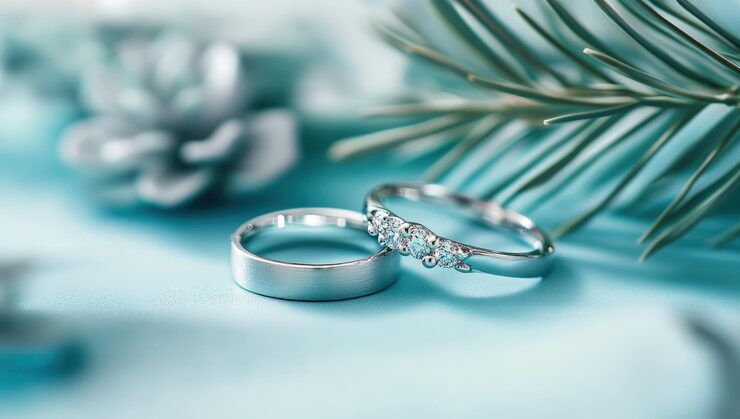
Minimalist engagement rings are jewellery designs built around simplicity, restrained decoration, clean lines, and balanced proportions. Instead of using elaborate halos, multiple gemstones, or highly detailed metalwork, minimalist rings generally emphasize one central gemstone and a relatively uncomplicated setting.
The style can include traditional diamonds, fancy colored diamonds, laboratory-grown diamonds, or colored gemstones such as sapphires, emeralds, and rubies.
Minimalism is not a specific ring construction or gemstone grade. It is primarily a design approach. A ring can therefore be minimalist while using different metals, gemstones, shapes, and setting techniques.
Common Minimalist Ring Designs
Several designs fit naturally within the minimalist category:
Solitaire engagement rings
Bezel-set rings
Six-prong or four-prong settings
Thin-band engagement rings
Low-profile rings
East-west gemstone settings
Simple three-stone designs
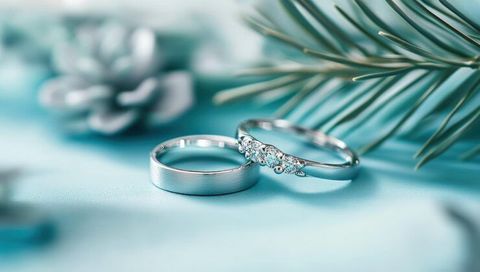
Plain metal bands with small accent stones
Minimalist halo variations
A solitaire setting is one of the clearest examples because the central gemstone becomes the main visual element without extensive surrounding decoration.
Popular Diamond Shapes
The central gemstone strongly influences the character of a minimalist ring.
| Shape | General Visual Character | Common Minimalist Application |
|---|---|---|
| Round brilliant | Classic and symmetrical | Solitaire |
| Oval | Elongated appearance | Thin-band settings |
| Emerald cut | Linear and geometric | Bezel or simple prong |
| Pear | Curved and tapered | Contemporary solitaire |
| Cushion | Soft rectangular outline | Simple four-prong setting |
| Marquise | Long and pointed | East-west or vertical setting |
| Princess | Square and structured | Modern minimalist designs |
The shape should be considered together with the ring's band width, setting height, finger proportions, and intended wearing pattern.
Why Minimalist Engagement Rings Matter Today
Minimalist engagement rings are relevant to the wider diamond engagement ring, fine jewellery, custom engagement ring, gold engagement ring, and platinum engagement ring categories.
Their restrained design can make the central gemstone particularly prominent while reducing visual complexity.
Simplicity and Everyday Wear
A lower-profile ring can be practical for people who frequently use their hands. A simpler setting may also reduce the number of decorative elements that can catch on clothing.
However, durability depends on the specific construction. A thin band is not automatically fragile, and a larger setting is not automatically stronger. Metal thickness, alloy, setting design, gemstone dimensions, and workmanship all influence structural performance.
Different Gemstone Choices
Minimalist designs are not limited to traditional colorless diamonds. GIA highlighted colored gemstones such as sapphire, ruby, emerald, spinel, and aquamarine in its December 2025 educational discussion of diamond alternatives for engagement rings.
This allows minimalist design principles to be applied to a much broader range of gemstones.
Metal Selection
Common metals include:
Yellow gold
White gold
Rose gold
Platinum
Silver for some fashion-oriented designs
Gold purity influences the metal's composition and characteristics. Platinum is naturally white and has a different density and alloy structure from gold.
For a minimalist ring, the metal can contribute significantly to the overall appearance because there are fewer decorative elements competing with the band and setting.
Recent Engagement Ring Trends in 2025–2026
Engagement-ring design continued to diversify during 2025 and 2026, with greater visibility for colored gemstones, laboratory-grown diamonds, alternative diamond shapes, and simplified settings.
Growing Interest in Diamond Alternatives
In December 2025, GIA published an updated educational article discussing alternatives to traditional diamond engagement rings. It highlighted sapphire, ruby, emerald, spinel, aquamarine, and other gemstones as options with different colors and characteristics.
This trend is relevant to minimalist rings because a simple setting can allow the natural color of a gemstone to become the primary design feature.
Laboratory-Grown Diamonds
Laboratory-grown diamonds have become an established category within the modern jewellery industry. GIA's research has documented significant increases in the size and quality of laboratory-grown diamonds and continued development of CVD and HPHT growth technologies.
In June 2025, GIA announced a change in how it would assess D-to-Z laboratory-grown diamonds. Beginning October 1, 2025, its revised assessment system began using descriptive categories such as Premium and Standard rather than the color and clarity nomenclature traditionally developed for natural diamonds.
This development demonstrates why documentation should clearly distinguish natural diamonds from laboratory-grown diamonds.
Lightweight Jewellery
High gold prices have also influenced jewellery design. The World Gold Council reported that global jewellery demand volume declined during 2025 while the value of jewellery demand reached a record level, reflecting the influence of elevated gold prices on jewellery consumption.
Lightweight construction has consequently become an important design consideration in several markets. Minimalist engagement rings naturally accommodate this approach through narrower bands, streamlined settings, and efficient use of metal.
Mixed Metals and Alternative Shapes
Contemporary minimalist designs increasingly experiment with mixed-metal bands, asymmetrical settings, elongated gemstone shapes, and east-west orientations.
These approaches retain a simple overall structure while introducing a distinctive design feature.
Laws, Hallmarking and Jewellery Policies in India
India provides an important regulatory example because applicable gold jewellery is covered by BIS hallmarking requirements in designated districts and categories.
Hallmarking concerns the precious-metal component of an engagement ring. It does not determine the diamond's natural or laboratory-grown origin, quality grade, treatment, or geographic origin.
BIS Gold Hallmarking
The Bureau of Indian Standards explains that hallmarking provides an official indication of precious-metal content in covered articles. Applicable gold jewellery can carry the BIS logo, purity/fineness information, and a six-digit Hallmark Unique Identification number.
Recognized gold fineness grades include:
14K — 585
18K — 750
20K — 833
22K — 916
23K — 958
24KS — 995
A minimalist 18K gold engagement ring and a minimalist 14K gold engagement ring may have very similar designs but different gold-purity specifications.
2026 Hallmarking Updates
BIS's mandatory hallmarking framework was amended during 2025 and 2026. The current BIS page lists amendments dated July 31, 2025, March 2, April 28, and August 3, 2026, and was updated September 1, 2026.
On March 2, 2026, BIS added seven districts under the sixth phase of mandatory hallmarking coverage, including districts in Punjab, Uttar Pradesh, Maharashtra, Tripura, Bihar, Rajasthan, and Madhya Pradesh.
Because the framework can change, current BIS information should be checked for the relevant district and jewellery category.
Diamond Disclosure
Diamond information is separate from metal hallmarking. For example, a laboratory report can identify a diamond as natural or laboratory-grown and provide relevant gemological information.
For digital jewellery advertising, accurate descriptions are particularly important. The U.S. Federal Trade Commission's Jewelry Guides state that laboratory-grown diamonds should be clearly identified as laboratory-grown or laboratory-created rather than being represented as mined diamonds.
This principle is useful for international jewellery content because claims about gemstone origin and characteristics should be clear and verifiable.
Tools and Resources for Minimalist Engagement Rings
Evaluating a minimalist engagement ring involves examining the gemstone, setting, metal, dimensions, and documentation.
Useful Resources
GIA Diamond Reports: Provide laboratory information about eligible diamonds.
GIA education resources: Explain diamond cut, color, clarity, carat weight, treatments, and laboratory-grown diamonds.
BIS Care App: Useful for checking HUID information on applicable hallmarked gold jewellery in India.
BIS Hallmarking Portal: Provides current information about India's hallmarking framework.
Ring-size guides: Help determine appropriate ring dimensions.
Digital calipers: Useful for measuring band width and gemstone dimensions.
Jewellery loupe: Allows close examination of settings and gemstone characteristics.
Diamond proportion references: Help explain relationships between cut proportions and appearance.
CAD jewellery software: Allows ring designs to be modeled digitally before physical production.
3D ring configurators: Can help visualize gemstone shapes, band profiles, and setting heights.
Factors Worth Comparing
When researching a minimalist engagement ring, consider:
Central gemstone type
Natural or laboratory-grown origin
Diamond shape
Diamond grading information
Gemstone dimensions
Metal type
Gold purity
Band width
Setting style
Setting height
Ring size
Clasp or structural elements
Available documentation
A larger gemstone does not automatically make a ring more visually balanced. Proportion between the center stone, band, setting, and finger can have a significant effect on the overall appearance.
Frequently Asked Questions
What is a minimalist engagement ring?
A minimalist engagement ring is a design that emphasizes simplicity, clean lines, restrained decoration, and balanced proportions. Solitaire rings and simple bezel or prong settings are common examples.
Are minimalist engagement rings only made with diamonds?
No. Minimalist rings can use diamonds, laboratory-grown diamonds, sapphires, emeralds, rubies, aquamarines, and other gemstones. The defining characteristic is the design approach rather than the gemstone.
What is the best setting for a minimalist engagement ring?
There is no single setting that is universally best. Solitaire prong, bezel, and low-profile settings are common minimalist choices. The appropriate setting depends on gemstone shape, durability, desired appearance, and everyday wearing conditions.
Can laboratory-grown diamonds be used in minimalist engagement rings?
Yes. Laboratory-grown diamonds can be used in the same general ring-setting styles as natural diamonds. They should be clearly identified as laboratory-grown, and documentation should accurately describe the stone's origin.
Does a BIS hallmark certify the diamond?
No. A BIS hallmark relates to the purity of applicable precious-metal jewellery. It does not certify the diamond's origin, cut, color, clarity, treatment, or laboratory-grown status.
Conclusion
Minimalist engagement rings demonstrate how a simple design can place emphasis on proportion, gemstone character, metal selection, and everyday practicality. The style includes many variations, from classic solitaire rings to bezel-set gemstones, thin bands, east-west settings, and simple three-stone designs.
The recent jewellery landscape has also expanded beyond traditional colorless diamond designs. GIA's 2025 educational material highlighted colored gemstones as engagement-ring alternatives, while developments in laboratory-grown diamond documentation demonstrate the importance of accurately identifying gemstone origin.
Gold-market conditions have further encouraged attention to lightweight jewellery and efficient metal use, making streamlined ring structures particularly relevant to contemporary design discussions.
In India, BIS hallmarking provides an important framework for identifying the purity of applicable gold jewellery. The hallmark and a diamond laboratory report serve different purposes and should not be treated as substitutes for one another.
For anyone researching minimalist engagement rings, the most useful factors to examine are gemstone origin, diamond or gemstone characteristics, setting design, metal purity, band proportions, ring dimensions, and available documentation.
Minimalist jewellery ultimately shows that an engagement ring does not require elaborate decoration to have a distinctive identity. Careful proportions, thoughtful material selection, and a well-designed setting can create a clear and enduring visual style.