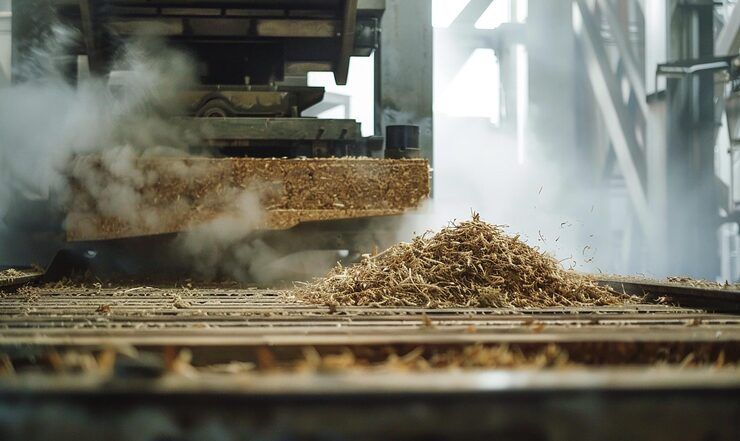
Wood dust collectors are industrial systems designed to capture and remove airborne dust, wood chips, and fine particles generated during woodworking and manufacturing operations. These systems are commonly used in furniture factories, sawmills, cabinet workshops, carpentry facilities, and wood-processing plants.
Cutting, sanding, drilling, routing, and grinding wood can release particles of different sizes. Larger chips may fall near machinery, while finer dust can remain suspended in the air and spread throughout a workplace. A properly designed dust collection system captures these materials near their source and directs them through ducts to a filtration unit.
Wood dust collection is important for workplace air quality, equipment cleanliness, production efficiency, and fire prevention. The appropriate system depends on the type of woodworking machinery, dust characteristics, airflow requirements, facility layout, and applicable safety regulations.
Understanding Wood Dust Collection Systems
A typical wood dust collector consists of a collection hood, ductwork, a fan, a filtration unit, and a container for collected material. Some facilities use a central system connected to several machines, while smaller workshops may use individual collectors.
The collection hood captures dust near the point where it is generated. Ductwork transports the contaminated air to the collector, where filters separate dust from the air stream. The collected material is then stored in a designated container for appropriate handling.
Common types of wood dust collectors include:
Baghouse dust collectors: Use fabric filter bags to separate dust from moving air.
Cartridge dust collectors: Use compact filter cartridges to capture fine particles.
Cyclone dust collectors: Use centrifugal force to separate larger particles before further filtration.
Portable dust extractors: Serve individual machines or smaller workshop areas.
Central dust collection systems: Connect several machines to a shared extraction network.
High-vacuum extraction systems: Capture dust from equipment that requires relatively high suction at smaller collection points.
The choice depends on particle characteristics, required airflow, pressure losses, filter performance, and the number of machines operating simultaneously.
How Wood Dust Collectors Work
A wood dust collection system generally follows several stages.
Dust capture: A hood or extraction port collects airborne particles close to the cutting, sanding, or machining operation.
Air transportation: A fan moves dust-laden air through ducts. Proper duct sizing and airflow help reduce unwanted dust accumulation.
Particle separation: Cyclones or other pre-separation equipment remove larger chips and heavier particles when included in the system.
Filtration: Filter bags or cartridges capture finer dust particles. The performance depends on filter media, system design, maintenance, and operating conditions.
Dust disposal: Collected material is transferred into suitable containers or handling systems to reduce exposure and prevent dust from escaping into the workplace.
Some systems use pulse-jet cleaning or other mechanisms to remove accumulated dust from filters. Effective filter cleaning helps maintain airflow, although the process must be compatible with the filter design and the characteristics of the collected material.
Why Wood Dust Collectors Matter
Wood dust collection addresses several workplace and operational concerns. Fine wood dust can irritate the respiratory system, and occupational exposure may contribute to respiratory problems. Certain types of wood dust are classified as carcinogenic to humans, making exposure control an important workplace health measure.
Effective extraction also helps prevent dust from accumulating on machinery, electrical equipment, floors, and work surfaces.
Health and Workplace Safety
Wood dust can affect workers in furniture manufacturing, carpentry, sawmilling, cabinet production, and other woodworking activities.
Appropriate extraction can reduce airborne exposure when the system is properly designed and maintained. It should be combined with suitable work practices, housekeeping, exposure assessment, and respiratory protection where required.
Fire and Explosion Prevention
Wood dust is combustible. Fine particles suspended in air can create an explosive atmosphere under certain conditions, particularly when an ignition source is present.
Important preventive measures include:
Controlling dust accumulation
Preventing ignition sources
Maintaining extraction equipment
Assessing combustible-dust hazards
Providing appropriate grounding and bonding
Using suitable explosion protection where required
Following safe procedures for emptying dust containers
A dust collector should not be assumed to eliminate every fire or explosion hazard. Risk assessment must consider the complete extraction system, ductwork, filters, dust storage, and surrounding production equipment.
Industrial Productivity
Excessive dust can interfere with machinery, obscure work surfaces, contaminate finished products, and increase cleaning requirements.
A properly maintained dust extraction system helps keep work areas cleaner and supports more consistent operating conditions. However, performance depends on correct system sizing, hood placement, duct design, and routine inspection.
Comparing Common Dust Collector Types
| System Type | Main Function | Typical Application |
|---|---|---|
| Cyclone collector | Separates larger particles through centrifugal force | Initial separation in wood processing |
| Baghouse collector | Filters dust through fabric bags | Larger woodworking facilities |
| Cartridge collector | Captures fine particles using filter cartridges | Manufacturing and machining facilities |
| Portable extractor | Collects dust near individual machines | Small workshops |
| Central extraction system | Collects dust from multiple machines | Furniture factories and production plants |
No single system is suitable for every facility. Fine dust control may require more than one separation stage, while high-volume chip collection places different demands on equipment.
Recent Developments in Dust Collection Technology
Developments during 2025 and 2026 have continued to emphasize improved filtration, energy efficiency, automated monitoring, and combustible-dust risk management.
Smarter Airflow Monitoring
Industrial facilities increasingly use pressure sensors, airflow monitoring, and automated controls to identify changes in dust collector performance.
A rise in filter pressure drop can indicate dust accumulation or a need for filter maintenance. Airflow measurements can also help identify blocked ducts, leaking connections, or poorly balanced extraction branches.
These technologies support preventive maintenance, although monitoring equipment must be selected and calibrated for the specific installation.
Filter and Energy Efficiency
Modern industrial filtration systems increasingly focus on filter-media performance, automated cleaning, and fan controls that respond to operating demand.
Variable-frequency drives can adjust fan speed in compatible systems, potentially reducing electricity consumption when airflow requirements decrease. Actual savings depend on the system design, operating schedule, and required capture velocity.
Increased Attention to Combustible Dust
Combustible-dust management remains an important issue in woodworking and other industries that process organic materials.
In the United States, the National Fire Protection Association has continued developing standards and guidance for combustible-dust hazard prevention. Facilities should verify the current edition and applicability of relevant standards rather than relying on older design assumptions.
These developments highlight the importance of combining effective filtration with engineering controls, routine inspections, and documented safety procedures.
Laws, Regulations, and Safety Policies
Wood dust collection requirements vary by country, industry, workplace size, and the type of material being processed.
United States Occupational Safety
The Occupational Safety and Health Administration establishes workplace requirements relevant to wood dust exposure, ventilation, housekeeping, and combustible materials.
OSHA's woodworking guidance emphasizes effective local exhaust ventilation and suitable dust collection arrangements. Employers must assess applicable standards and maintain safe working conditions based on their operations.
Combustible-dust hazards may also require consideration of fire protection, explosion prevention, electrical equipment suitability, and housekeeping procedures.
European Union Requirements
European workplaces are subject to occupational safety and chemical-agent requirements implemented through European Union legislation and national laws.
The EU framework on carcinogens, mutagens, and reprotoxic substances includes requirements relevant to occupational exposure to hardwood dust. Employers must evaluate exposure and implement appropriate protective measures under applicable national rules.
Machinery and industrial filtration equipment may also be subject to relevant product safety, workplace installation, and environmental requirements.
India and Industrial Safety
In India, industrial dust collection can be affected by applicable occupational safety legislation, factory requirements, state regulations, and pollution-control rules.
The Central Pollution Control Board and State Pollution Control Boards oversee relevant environmental matters within their respective responsibilities. Specific obligations depend on the facility, industrial process, emissions, and local regulatory framework.
Businesses should verify current requirements with the relevant authorities and qualified safety professionals before installing or modifying a dust collection system.
Tools and Resources for Wood Dust Collection
The following resources can support system planning, performance assessment, and workplace safety.
Engineering and Design Tools
Industrial ventilation calculations help determine required airflow, duct dimensions, pressure losses, and fan performance.
Useful planning information includes:
Number and type of woodworking machines
Required capture airflow at each hood
Duct diameter and length
Filter area and filtration characteristics
Fan pressure and motor power
Dust disposal arrangements
Fire and explosion protection requirements
System calculations should be checked against the equipment manufacturer's technical specifications and applicable engineering standards.
Monitoring and Maintenance Tools
Differential-pressure gauges help monitor filter resistance, while airflow instruments can assess whether extraction points are receiving adequate air movement.
A maintenance checklist can record filter condition, duct inspections, fan vibration, unusual noise, leakage, dust-container levels, and cleaning activities.
Safety and Compliance Resources
OSHA publications, National Fire Protection Association standards, European occupational safety guidance, and relevant Indian regulatory authorities can provide information about exposure control and combustible-dust management.
Professional industrial hygienists and ventilation engineers can help evaluate complex installations and verify system performance.
Frequently Asked Questions
What is a wood dust collector used for?
A wood dust collector captures and separates wood dust, chips, and other particles generated by woodworking machinery. It helps control airborne contamination, reduce dust accumulation, and support workplace safety.
What is the difference between a cyclone and a baghouse collector?
A cyclone separates particles primarily through centrifugal force and is commonly used for larger particles. A baghouse uses fabric filters to capture finer dust. Some systems use both stages to improve overall collection performance.
How do I determine the correct dust collector capacity?
Capacity depends on the number of machines, required capture airflow, duct layout, particle characteristics, filter resistance, and simultaneous operating conditions. A qualified ventilation assessment is preferable to selecting equipment solely by motor power.
Can wood dust cause a fire or explosion?
Yes. Fine wood dust is combustible, and suspended dust can create an explosion hazard under certain conditions. Effective housekeeping, ignition control, appropriate system design, and risk assessment are important preventive measures.
How often should dust collector filters be maintained?
Maintenance frequency depends on dust loading, filter type, operating hours, and manufacturer instructions. Pressure-drop monitoring, scheduled inspections, and performance checks can help identify when cleaning or filter replacement is necessary.
Conclusion
Wood dust collectors are important components of woodworking safety and industrial air filtration. By capturing dust close to its source, transporting it through appropriately designed ductwork, and separating particles through suitable filtration equipment, these systems help control airborne exposure and reduce workplace contamination.
Recent developments in monitoring, automated filter cleaning, energy management, and combustible-dust prevention demonstrate the importance of treating dust collection as a complete engineering and safety system rather than an isolated machine.
Selecting suitable equipment requires an assessment of airflow, filtration performance, dust characteristics, energy requirements, maintenance needs, and applicable regulations. Consistent inspections, effective housekeeping, and appropriate safety controls are essential for reliable long-term operation.