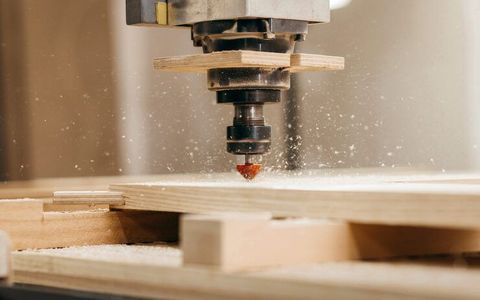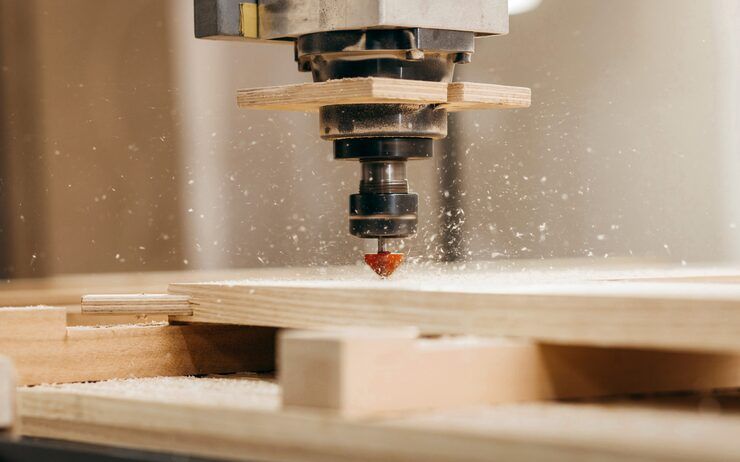
Wood routers are woodworking tools designed to cut, shape, trim, and create decorative or functional profiles in wood and wood-based materials. They use a rotating cutting bit to remove material, allowing users to produce grooves, rounded edges, joints, recesses, and intricate patterns.
Wood routers are used in furniture manufacturing, cabinetmaking, carpentry, interior design, cabinetry, sign production, and woodworking workshops. Depending on the equipment and cutting bit, a router can perform simple edge finishing or more complex operations involving precise dimensions and repeated patterns.
Modern wood routing equipment ranges from compact handheld tools to large computer numerical control (CNC) machines. The appropriate option depends on the material, required accuracy, workpiece dimensions, production volume, and complexity of the design.
Understanding Wood Router Technology
A typical wood router contains an electric motor, a collet that holds the cutting bit, a base that supports the tool, and controls for adjusting cutting depth. When the motor rotates the bit at high speed, its cutting edges remove material from the workpiece.
Handheld routers are guided manually or along a template, fence, or guide rail. CNC wood routers use programmed movements to control the cutting tool along specified paths.
Common wood router types include:
Fixed-base routers: Maintain a selected cutting depth during operation.
Plunge routers: Allow the cutting bit to move vertically into the material.
Compact routers: Support smaller trimming and edge-shaping tasks.
Combination routers: Use interchangeable bases for different operations.
CNC wood routers: Automate cutting paths using computer-controlled movements.
Industrial router machines: Handle larger workpieces and repeated manufacturing operations.
Each type has different capabilities. A handheld router may suit individual furniture projects, while CNC equipment can support detailed designs and repeatable production.
Common Woodworking Applications
Wood routers are useful for producing consistent shapes and accurately positioned cuts.
Typical applications include:
Creating grooves and channels
Cutting recesses for hinges and hardware
Shaping decorative edges
Producing cabinet door profiles
Trimming laminated surfaces
Cutting joints for furniture assembly
Engraving patterns and lettering
Machining plywood and medium-density fiberboard
Creating templates and repeated components
The cutting bit determines the shape of the resulting cut. Straight bits, round-over bits, chamfer bits, flush-trim bits, and dovetail bits are common examples.
How Wood Routing Works
The process begins with selecting a suitable router bit and establishing the required cutting depth. The workpiece is then secured to a stable surface, and the operator guides the router or programs the CNC machine.
For many operations, several shallow passes produce better control than one deep cut. The correct feed rate and rotational speed depend on the material, bit diameter, cutting geometry, and manufacturer's recommendations.
Accurate routing also depends on preparation. Measuring the workpiece, testing the setup on scrap material, and checking the cutting path can help reduce errors.
Why Wood Routers Matter
Wood routers contribute to accuracy, repeatability, and design flexibility in both traditional woodworking and modern manufacturing.
Precision and Consistency
Routers can produce repeatable grooves, edge profiles, and joints when used with suitable guides or programmed cutting paths.
This is particularly important in cabinetmaking, where components must fit together correctly. Consistent routing can reduce material waste caused by inaccurate cuts and repeated adjustments.
Furniture and Interior Manufacturing
Furniture manufacturers use routers to shape components for tables, cabinets, doors, shelving, decorative panels, and built-in storage.
In interior projects, routing can help create decorative edges, recessed handles, concealed joints, and detailed surface patterns.
CNC Woodworking Automation
CNC routers extend these capabilities by controlling tool movement through computer-generated instructions. A digital design can be converted into toolpaths that determine where the cutter moves and how deeply it cuts.
Depending on machine configuration, CNC routing can support complex curves, repeated components, lettering, relief patterns, and nested cutting layouts.
Choosing the Right Router
The correct equipment depends on the intended work rather than one specification alone.
| Selection Factor | What to Consider |
|---|---|
| Material | Solid wood, plywood, MDF, or laminated panels |
| Cutting depth | Required groove or recess depth |
| Motor power | Material hardness and workload |
| Collet size | Compatibility with router bits |
| Speed control | Suitable rotational speed for each operation |
| Base design | Fixed, plunge, or interchangeable base |
| Dust extraction | Dust collection and workplace cleanliness |
| Work volume | Occasional projects or repeated production |
| CNC capability | Need for automated, programmed cutting |
The router, bit, and workholding arrangement should be considered together to achieve appropriate results.
Recent Developments in Wood Router Technology
Developments during 2025 and 2026 reflect broader trends in woodworking automation, digital design, dust management, and manufacturing efficiency. Specific product features vary by manufacturer and model.
Growth of CNC Woodworking
CNC woodworking continues to connect digital design with automated manufacturing. Computer-controlled routing can help workshops reproduce complex shapes and manage repeated cutting tasks with consistent dimensions.
Modern CNC workflows may integrate computer-aided design (CAD), computer-aided manufacturing (CAM), toolpath simulation, and digital production planning. These tools help operators identify potential collisions, check cutting sequences, and reduce setup errors before machining begins.
Improved Digital Workflow
Woodworking software increasingly supports three-dimensional modeling, material layout, and automated nesting. Nesting software arranges multiple components on a sheet to help use the available material efficiently.
These capabilities are particularly relevant to cabinetmaking, signage, furniture components, and panel processing. However, results depend on correct machine calibration, suitable tooling, and the accuracy of the digital design.
Dust Collection and Workplace Health
Woodworking dust remains an important occupational safety concern. Fine particles generated during routing can affect respiratory health and accumulate around machinery.
During 2025 and 2026, dust control continued to be an important consideration in woodworking equipment planning. Effective systems can include extraction hoods, appropriately sized dust collectors, suitable filtration, and regular maintenance.
A dust collector should be selected according to the machine's airflow requirements and the characteristics of the material being processed.
Energy Efficiency and Material Use
Manufacturers continue to focus on efficient motors, improved cutting tools, optimized machining paths, and better material utilization.
Reducing unnecessary passes and selecting suitable cutting parameters can help limit wasted material and excessive energy use. Actual improvements depend on the equipment, workload, maintenance, and operating practices.
Laws, Policies, and Workplace Safety
Wood routers are subject to workplace safety requirements that vary by country. Relevant rules can cover machine guarding, electrical safety, dust exposure, noise, training, and personal protective equipment.
Occupational Safety in the United States
The Occupational Safety and Health Administration (OSHA) establishes workplace requirements for machinery and woodworking operations in the United States.
Applicable requirements may address machine guarding, safe operating procedures, electrical hazards, and control of occupational exposure to wood dust.
Employers should identify hazards associated with rotating cutters, flying chips, accidental contact, and unsecured workpieces. Guards should remain in place where required, and damaged or incorrectly installed components should be addressed before operation.
Wood Dust and Ventilation
Wood dust can cause respiratory irritation, allergic reactions, and other health effects. Certain wood species and fine dust exposures present additional risks.
Appropriate controls may include:
Local exhaust ventilation
Dust collection at the cutting point
Suitable respiratory protection when required
Regular cleaning using appropriate equipment
Maintenance of extraction systems
Training on dust-related hazards
Compressed air should not be used indiscriminately to disperse accumulated wood dust because this can create airborne exposure and additional hazards.
Safe Router Operation
Operators should follow the machine manufacturer's instructions and use appropriate protective equipment.
Important practices include securing the workpiece, checking bit condition, disconnecting power before changing bits, keeping hands away from the cutting area, and waiting for the cutter to stop completely before setting the tool down.
CNC machines require additional attention to enclosure interlocks, emergency stops, programmed travel limits, and safe access during operation.
Tools and Resources for Wood Routing
Several tools can help plan woodworking projects and improve routing accuracy.
CAD and CAM Software
CAD software is used to create technical drawings and three-dimensional models. CAM software converts designs into machine instructions and toolpaths.
These applications can help with cabinet layouts, furniture components, decorative panels, and CNC machining. Users should confirm that the software supports the specific machine and controller.
Router Bit Selection Guides
Bit charts and manufacturer documentation explain cutting profiles, shank dimensions, recommended speeds, and material compatibility.
Useful information includes:
Bit diameter and cutting length
Shank size
Maximum rotational speed
Recommended feed rate
Suitable material types
Cutting depth limitations
Measuring and Setup Tools
Accurate routing can depend on reliable measuring and alignment equipment.
Common tools include digital calipers, combination squares, straightedges, depth gauges, router guides, clamps, and templates.
Maintenance Checklist
Before starting a routing task, inspect the machine and work area.
Check the cutting bit for wear or damage.
Confirm that the collet holds the bit securely.
Inspect the power cable and controls.
Secure the workpiece and guide system.
Verify the cutting depth and speed settings.
Confirm that dust extraction is operating.
Check that guards and safety devices are in place.
Regular inspection can help identify equipment problems before they affect machining quality or workplace safety.
Frequently Asked Questions
What is a wood router used for?
A wood router cuts grooves, shapes edges, creates recesses, produces joints, trims surfaces, and forms decorative patterns in wood and wood-based materials.
What is the difference between a handheld router and a CNC router?
A handheld router is guided manually or with a template or fence. A CNC router follows programmed toolpaths, making it suitable for automated cutting and repeated designs.
Which router bits are commonly used for woodworking?
Straight bits, round-over bits, chamfer bits, flush-trim bits, and dovetail bits are commonly used. The correct bit depends on the desired cut, material, and machine compatibility.
Can wood routers cut plywood and MDF?
Yes. Suitable routers and cutting bits can process plywood and medium-density fiberboard. Correct speed, feed rate, cutting depth, workholding, and dust extraction are important for quality and safety.
What safety precautions are important when using a wood router?
Secure the workpiece, use appropriate guards and protective equipment, control dust, check the cutter before operation, and disconnect power before changing bits. Follow the manufacturer's instructions and applicable workplace safety requirements.
Conclusion
Wood routers are versatile woodworking tools used to shape, trim, groove, engrave, and machine a wide range of wood-based materials. Their applications extend from individual furniture projects to automated industrial production.
Handheld routers provide flexibility for many conventional woodworking tasks, while CNC wood routers support programmed movements and repeatable designs. Choosing appropriate cutting bits, controlling dust, securing materials, and maintaining equipment are important for achieving consistent results.
Recent developments in digital manufacturing, CNC programming, dust collection, and material optimization continue to influence woodworking practices. By combining suitable equipment with accurate planning, regular maintenance, and responsible safety procedures, users can improve machining quality and make more effective use of materials.