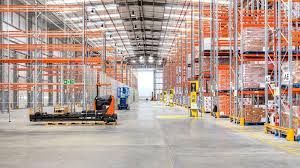
Warehouse rental and ownership are two common approaches businesses use to establish storage, distribution, and logistics facilities. Both provide space for inventory, equipment, packaging, and operational activities, but they create different financial commitments and levels of responsibility.
Renting a warehouse generally allows a business to occupy a property under a lease agreement without purchasing the underlying real estate. Ownership involves acquiring the property and taking responsibility for its long-term management, maintenance, financing, and potential appreciation or depreciation.
The appropriate approach depends on a company's financial position, operational requirements, growth expectations, location, and long-term business strategy. A distribution company with changing storage requirements may prioritize flexibility, while a manufacturer with stable operations may consider property ownership as part of its long-term asset planning.
Understanding Warehouse Rental
Warehouse rental typically involves a lease agreement that defines the rental period, payment schedule, permitted activities, maintenance responsibilities, renewal conditions, and other obligations.
Businesses can often choose between different warehouse sizes and locations without committing to the full purchase of commercial property. However, the flexibility depends on the lease terms, local market conditions, and availability of suitable buildings.
Common warehouse rental arrangements include:
Short-term leases for temporary storage requirements
Long-term commercial leases for established operations
Industrial warehouse leases with specialized facilities
Distribution-center leases near transportation networks
Shared or multi-tenant warehouse arrangements
Renting can help preserve capital for inventory, equipment, technology, staffing, and other operational priorities. Nevertheless, rental payments, annual increases, deposits, and lease-related expenses must be included in financial planning.
Understanding Warehouse Ownership
Warehouse ownership means acquiring commercial or industrial property for a company's own operations or investment purposes.
Ownership provides greater control over property modifications, subject to planning rules, building regulations, financing agreements, and other legal requirements. It can also provide long-term asset value, although property prices and investment returns are never guaranteed.
Typical ownership responsibilities include:
Property acquisition and financing
Building maintenance and repairs
Property taxes and insurance
Structural improvements
Security and fire protection
Environmental compliance
Future renovation and expansion planning
Ownership may suit businesses that expect stable demand for warehouse space over an extended period. However, it ties capital to real estate and can reduce financial flexibility if the company needs to relocate or respond to a sudden change in demand.
Why the Rental Versus Ownership Decision Matters
The choice between renting and owning a warehouse affects cash flow, financial risk, operational flexibility, and long-term asset planning.
Financial Planning and Cash Flow
Renting generally requires recurring lease payments and may involve deposits, annual rent increases, and maintenance obligations. Ownership usually requires a larger initial financial commitment, financing arrangements where applicable, and ongoing property expenses.
Businesses should evaluate the full financial picture rather than comparing monthly rent with a mortgage payment alone.
Operational Flexibility
A rented warehouse can make it easier to relocate when customer demand, distribution networks, or inventory requirements change. However, early termination clauses, renewal conditions, and limited availability can reduce this flexibility.
Owning a warehouse can provide greater control over the facility and its layout. It may be useful when a company requires specialized storage systems, loading infrastructure, temperature-controlled areas, or substantial building modifications.
Long-Term Asset Planning
Owned property may appreciate over time, but market values can also decline. Rental arrangements avoid direct exposure to changes in the property's market value, although lease obligations remain.
Companies should consider their expected operating period, expansion plans, borrowing capacity, and alternative uses for their capital before deciding.
Recent Developments in the Warehouse Property Market
Warehouse property markets have continued to evolve during 2025 and 2026, influenced by e-commerce, manufacturing activity, third-party logistics providers, and demand for modern distribution facilities.
Strong Leasing Activity in India
According to Colliers' January 14, 2026, industrial and warehousing market report, leasing across India's eight major industrial and warehousing markets reached 36.9 million square feet during 2025, representing annual growth of 16%.
Third-party logistics companies accounted for approximately 32% of leasing activity. Engineering, manufacturing, and e-commerce businesses also contributed to demand. New warehouse supply reached 41.7 million square feet during the year, while rental increases in prominent industrial clusters generally ranged from 5% to 10%.
These figures indicate continued demand for suitable logistics space, although market conditions vary by city, building quality, and location.
Demand for Modern Warehouses
During 2025, industry reports highlighted increasing interest in modern facilities with efficient layouts, improved transportation access, and infrastructure suitable for advanced inventory management.
In 2026, demand has continued to be influenced by manufacturing expansion, e-commerce distribution, and third-party logistics operations. These developments can affect both rental negotiations and the long-term value of warehouse property.
Businesses should evaluate local vacancy rates, new construction, transportation connections, and expected demand rather than assuming that every warehouse market will experience the same growth.
Laws, Regulations, and Property Policies
Warehouse rental and ownership are subject to different legal requirements depending on the country, state, and municipality. Businesses should examine property rights, permitted land use, building regulations, taxation, and environmental obligations before committing to a facility.
Commercial Lease Agreements
A commercial warehouse lease should clearly define:
Lease duration and renewal conditions
Rental payment arrangements and adjustments
Responsibility for repairs and maintenance
Permitted warehouse activities
Insurance and liability requirements
Property alterations and improvements
Early termination provisions
Dispute resolution procedures
The exact legal requirements vary by jurisdiction. Legal review can help identify unclear obligations before an agreement is signed.
Property Ownership and Land Use
Warehouse ownership requires verification of title, zoning, building approvals, access rights, and any restrictions affecting the property.
Industrial facilities may also need to comply with fire protection, environmental permits, structural safety, drainage, and workplace regulations.
In India, relevant requirements may include state-level land-use rules, local building regulations, fire-safety approvals, and applicable Goods and Services Tax provisions. The specific requirements depend on the property's location and intended use.
Tax and Accounting Considerations
Rental payments and property ownership can receive different accounting and tax treatment. Ownership may involve depreciation, financing interest, property taxes, and capital expenditure, while rental arrangements generally involve lease accounting and recurring occupancy expenses.
In India, businesses should assess applicable income-tax provisions and GST treatment with a qualified tax professional. Accounting standards, including Ind AS 116 where applicable, can also influence how lease commitments are presented in financial statements.
Tools and Resources for Warehouse Planning
Several analytical tools can help compare warehouse rental and ownership objectively.
Warehouse Financial Comparison Spreadsheet
A spreadsheet can compare expected expenses and cash flows under both arrangements over a selected period.
Useful inputs include:
Initial capital requirement
Annual rental payments
Expected rental increases
Financing interest and repayments
Property taxes and insurance
Maintenance and renovation expenses
Expected holding period
Estimated resale value
Discount rate for present-value analysis
The analysis should include both recurring expenses and less frequent payments, such as major repairs or facility upgrades.
Commercial Property Market Research
Industrial property reports can help businesses understand local rental trends, vacancy rates, new supply, and demand from logistics operators.
Government land records, municipal zoning information, and property registration records can also help verify important details about a potential warehouse location.
Logistics and Warehouse Management Software
Warehouse management systems can help businesses estimate space utilization, inventory turnover, picking efficiency, and storage requirements.
These measurements can clarify whether a company needs a larger facility, a different layout, or a location closer to suppliers and customers.
Warehouse Rental Versus Ownership Comparison
| Factor | Rental | Ownership |
|---|---|---|
| Initial capital | Generally lower | Generally higher |
| Occupancy payments | Recurring rent | Financing or capital commitment |
| Property control | Subject to lease | Greater control, subject to regulations |
| Relocation | Often easier, depending on the lease | May require selling or retaining the property |
| Maintenance | Depends on lease terms | Owner generally bears responsibility |
| Property appreciation | No direct ownership benefit | Potential benefit, not guaranteed |
| Long-term planning | Depends on lease stability | Greater control over long-term use |
| Financial flexibility | Capital may remain available for operations | More capital may be tied to real estate |
Frequently Asked Questions
Is renting or owning a warehouse better for a growing business?
Renting may suit businesses with uncertain expansion plans or changing storage needs. Ownership may suit companies with stable requirements and sufficient capital. The better option depends on the operating period, financial position, and local property market.
What expenses should be included in a warehouse comparison?
Consider rent, deposits, financing, insurance, maintenance, taxes, utilities, building improvements, and potential relocation expenses. Ownership analysis should also account for the property's expected future value and the opportunity to use capital elsewhere.
Can warehouse ownership support long-term investment planning?
Yes. An owned warehouse can form part of a company's property assets and may appreciate over time. However, appreciation is not guaranteed, and property ownership introduces maintenance obligations, market exposure, and potential liquidity constraints.
How long should a business plan to use a warehouse?
There is no universal period. The appropriate planning horizon depends on operational stability, growth forecasts, lease conditions, financing arrangements, and the time needed to recover major facility investments.
What should businesses check before choosing a warehouse?
Review location, transport access, permitted use, building condition, storage capacity, fire safety, lease terms or property title, maintenance obligations, and the likely financial impact over the intended occupancy period.
Conclusion
Warehouse rental and ownership each provide different advantages for long-term business planning. Renting can preserve capital and provide flexibility, while ownership can increase control over the facility and create a long-term property asset.
The decision should account for cash flow, financing, maintenance, legal requirements, operational needs, and market conditions. Recent developments in India's warehousing market also demonstrate the importance of monitoring local demand, new supply, and rental trends.
A structured financial comparison, supported by reliable property information and realistic operating forecasts, can help businesses choose an arrangement that aligns with their long-term objectives.
Disclaimer: The information provided in this article is for informational purposes only. We do not make any claims or guarantees regarding the accuracy, reliability, or completeness of the information presented. The content is not intended as professional advice and should not be relied upon as such. Readers are encouraged to conduct their own research and consult with appropriate professionals before making any decisions based on the information provided in this article.