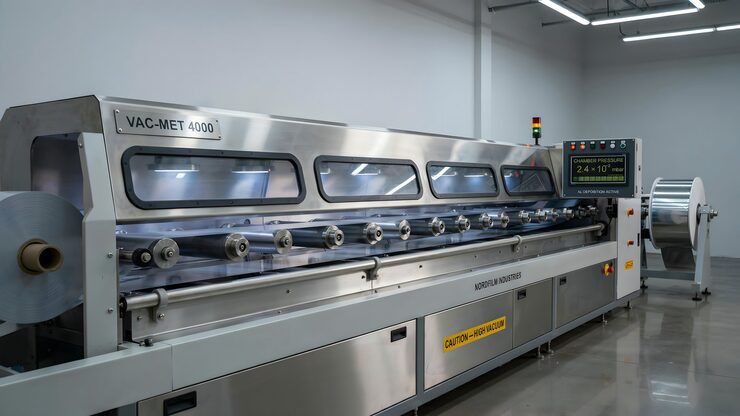
Vacuum forming machines are thermoforming systems that heat a plastic sheet until it becomes flexible and then use vacuum pressure to draw the material over a shaped mold. After cooling, the formed sheet retains the mold geometry and can be trimmed into a finished component.
The technology is used for packaging, automotive interiors, medical products, electronics housings, appliance components, industrial trays, displays, and many other molded plastic parts. It exists because manufacturers need a repeatable method for creating lightweight three-dimensional shapes from sheet materials.
How the Process Works
A typical vacuum forming cycle has several stages:
Sheet loading and positioning
Controlled heating
Mold positioning
Vacuum application
Material forming
Cooling
Part release
Trimming and inspection
Heating must be controlled carefully because different polymers respond differently to temperature. Common materials include ABS, HIPS, PET, PVC, PP, PE, and acrylic, depending on the application and regulatory requirements.
Main Machine Types
Vacuum forming equipment can range from compact manual systems to highly automated production lines.
| Machine Type | Typical Application | Main Characteristic |
|---|---|---|
| Manual | Prototypes and small batches | Operator-controlled cycle |
| Semi-automatic | Medium production | Automated heating or forming stages |
| Automatic | Higher-volume production | Integrated controls and material handling |
| Inline thermoforming | Packaging and continuous production | Forming linked with downstream operations |
Machine selection depends on sheet dimensions, material thickness, mold geometry, cycle time, heating method, automation level, and required inspection.
Vacuum forming is particularly useful when a part has relatively shallow or moderate depth and requires a large surface area. More complex geometries may require pressure forming, twin-sheet forming, injection molding, or other manufacturing methods.
Why Vacuum Forming Matters Today
Vacuum forming remains important because it can produce large lightweight components while allowing manufacturers to adapt molds and part designs for different applications.
The technology affects packaging producers, automotive manufacturers, medical-device companies, appliance makers, electronics manufacturers, aerospace suppliers, and industrial equipment producers.
Packaging and Food Applications
Thermoforming is widely associated with trays, containers, blister-style packaging, lids, and protective inserts. PET and other polymers can be selected for applications requiring transparency, stiffness, or particular barrier characteristics.
Packaging producers increasingly evaluate material thickness, recycled content, recyclability, and overall material efficiency when developing thermoformed parts.
Automotive Manufacturing
Automotive applications include door panels, trunk components, interior liners, wheel-arch components, protective covers, and other lightweight structures.
Reducing component mass can contribute to vehicle efficiency, making lightweight thermoformed components relevant to both conventional and electric vehicle platforms.
Medical and Technical Components
Vacuum forming can produce trays, equipment covers, protective housings, and controlled-shape components. Where products are intended for healthcare or food-contact applications, material selection and manufacturing controls must match applicable regulatory requirements.
Material Efficiency
Modern systems increasingly focus on precise heating, optimized forming, accurate trimming, and recovery of suitable production scrap. Better process control can reduce inconsistent thickness and unnecessary material use.
Recent Developments in Vacuum Forming
During 2025 and 2026, thermoforming development continued to focus on automation, energy management, digital controls, recycled materials, and improved process consistency.
Greater Use of Servo-Controlled Systems
Industry reporting in 2026 has highlighted movement toward servo-driven forming and machine-motion systems. Servo control can provide precise movement profiles and repeatable positioning, which can be valuable for automated thermoforming production.
Digital control also makes it easier to monitor parameters such as temperature, forming time, vacuum pressure, movement, and cycle data.
More Automated Production
Modern vacuum forming machines increasingly combine programmable controls, robotic handling, automatic sheet loading, machine vision, and automated trimming.
These systems can connect multiple production stages and reduce manual intervention. Data collection can also help identify changes in heating performance, forming consistency, or equipment operation.
Recycled and Lower-Impact Materials
Packaging regulations and sustainability programs are encouraging greater attention to recycled polymer content and material recovery.
In the European Union, the Packaging and Packaging Waste Regulation entered into force in February 2025 and began applying across the EU on 12 August 2026. The framework addresses packaging design, waste reduction, recyclability, recycled materials, labeling, and substances of concern. The European Commission also published implementation guidance during 2026.
The United Kingdom also updated its Plastic Packaging Tax framework in 2026. From 1 April 2026, the rate became £228.82 per tonne for qualifying plastic packaging components below the applicable recycled-content threshold.
These developments can influence material selection, packaging design, documentation, and recycling strategies for thermoformed products.
Faster Digital Monitoring
Manufacturers are increasingly using sensors and production software to record:
Heating-zone temperatures
Vacuum levels
Cycle duration
Sheet identification
Mold temperature
Part dimensions
Trim accuracy
Production quantities
Inspection results
This information can help engineers identify process variation and improve consistency.
Laws, Regulations and Policies Across Major Markets
Vacuum forming machines are affected by two broad areas of regulation: machinery safety and the rules governing the materials or products being manufactured.
European Union
The EU Machinery Regulation 2023/1230 is scheduled to apply from 20 January 2027 and establishes health and safety requirements for machinery placed on the EU market. It will replace the existing Machinery Directive framework. The regulation addresses machinery design, conformity assessment, technical documentation, and safety requirements.
For vacuum forming equipment, manufacturers and importers should review applicable requirements for guarding, controls, emergency functions, electrical systems, documentation, and conformity procedures.
Packaging manufacturers also need to consider the EU Packaging and Packaging Waste Regulation and related requirements concerning packaging design, materials, recyclability, and waste reduction. The PPWR began applying on 12 August 2026.
United Kingdom
The UK Plastic Packaging Tax is relevant to qualifying plastic packaging components with less than 30% recycled plastic. HM Revenue & Customs states that organizations manufacturing or importing at least 10 tonnes of finished plastic packaging components within the relevant period may need to register. The rate from 1 April 2026 is £228.82 per tonne.
For thermoformed packaging producers, material composition records and recycled-content documentation can therefore become important.
The UK also introduced changes concerning chemical recycling and mass-balance accounting, with relevant measures taking effect from 2027.
United States
In the United States, manufacturers and operators may need to consider workplace safety requirements administered by the Occupational Safety and Health Administration, including machine guarding and hazardous-energy controls.
Additional requirements can apply when vacuum-formed components are used for food-contact packaging, medical products, automotive applications, electrical equipment, or other regulated products. The applicable rules depend on the material, product category, manufacturing location, and intended market.
Other Major Markets
Canada, Japan, South Korea, Australia, China, and other manufacturing markets maintain their own machinery, workplace safety, packaging, environmental, and product regulations.
Organizations operating internationally should review requirements in every market where equipment or formed products are manufactured, imported, or distributed. Requirements can vary according to the machine, material, intended application, and destination.
Tools and Resources for Vacuum Forming
Several engineering and production tools can help with machine selection, part development, process control, and compliance planning.
Useful Tools
CAD software for mold and part geometry
Thermoforming simulation software for material-flow analysis
Polymer temperature and processing references
Sheet-thickness calculators
Vacuum-flow and pressure calculations
Mold-design templates
PLC and HMI programming tools
Machine-vision inspection systems
Infrared temperature measurement
Digital vacuum gauges
Thickness measurement equipment
Production data and traceability software
Recycling and material-identification databases
Regulatory databases from government agencies
Important Machine Specifications
When comparing an industrial vacuum forming machine, consider:
Maximum sheet dimensions
Heating-zone configuration
Heating technology
Forming area
Vacuum capacity
Mold compatibility
Maximum material thickness
Cycle-time range
Automation level
Trimming integration
Robot compatibility
Energy monitoring
Safety controls
Data connectivity
A machine with a high theoretical throughput may not achieve that rate under every production condition. Material type, sheet thickness, mold design, heating time, cooling time, trimming, inspection, and changeover requirements all influence practical output.
Frequently Asked Questions
What is a vacuum forming machine?
A vacuum forming machine heats a plastic sheet and uses vacuum pressure to draw it against a mold. After cooling, the formed sheet retains the required shape and can be trimmed.
What materials can be vacuum formed?
Common materials include ABS, HIPS, PET, PVC, PP, PE, and acrylic. The appropriate material depends on temperature behavior, mechanical requirements, appearance, regulatory conditions, and the intended application.
What industries use vacuum forming?
Major applications include packaging, automotive, medical products, electronics, appliances, industrial equipment, aerospace components, retail displays, and protective products.
What is the difference between vacuum forming and injection molding?
Vacuum forming shapes a heated sheet over a mold using vacuum pressure. Injection molding introduces molten polymer into a mold. Vacuum forming can be useful for large, relatively thin parts, while injection molding is commonly used for more complex three-dimensional components and detailed geometries.
What should be considered when selecting a vacuum forming machine?
Key factors include sheet size, material type, thickness range, heating method, forming area, vacuum capability, mold dimensions, automation, cycle requirements, trimming, inspection, safety controls, and data integration.
Conclusion
Vacuum forming machines remain an important part of modern plastics manufacturing because they can create lightweight, large-area, and repeatable components from heated polymer sheets.
The technology is used across packaging, automotive, medical, electronics, appliances, aerospace, and industrial applications. Recent development has emphasized automation, servo control, digital monitoring, material efficiency, and greater attention to recycled content.
Regulatory requirements are also becoming increasingly important. Machinery manufacturers must consider equipment safety and conformity requirements, while packaging producers must pay closer attention to material composition, recyclability, recycled content, and waste-management rules.
For organizations researching industrial vacuum forming equipment, thermoforming machinery, automated plastic forming systems, or packaging production equipment, the most important factors include material compatibility, heating control, forming accuracy, mold design, vacuum performance, automation, inspection, energy management, and applicable regulations.
As manufacturing becomes more digitally connected and sustainability requirements continue to evolve, vacuum forming is likely to remain a flexible production technology while adapting to new materials, automated controls, and circular-material strategies.