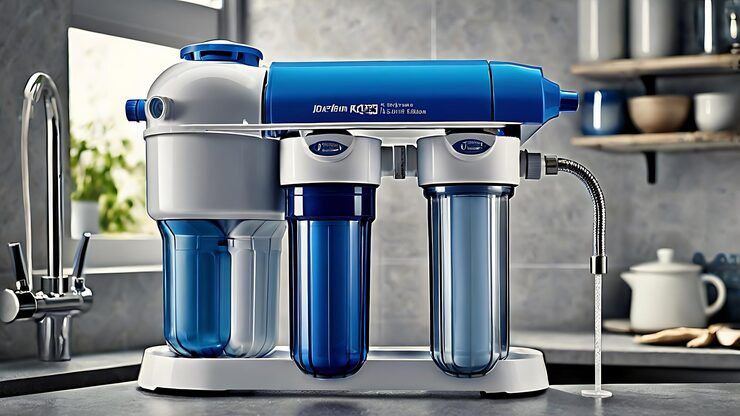
Ultraviolet (UV) water purifiers use ultraviolet light to inactivate microorganisms that may be present in water. The technology is used in residential drinking water systems, commercial buildings, laboratories, healthcare facilities, and municipal water treatment plants. It provides a physical disinfection process without requiring the addition of a chemical disinfectant during the UV treatment stage.
UV water purification commonly uses UV-C radiation, a wavelength range that can damage the genetic material of microorganisms. When bacteria, viruses, and certain protozoa receive a sufficient UV dose, their ability to reproduce and cause infection can be reduced or eliminated, depending on the organism and treatment conditions.
How UV Water Purifiers Work
A typical UV water purifier contains a UV lamp, a protective quartz sleeve, a treatment chamber, and controls that regulate system operation. Water flows through the chamber while the lamp exposes it to ultraviolet radiation.
The effectiveness of treatment depends on several factors, including UV intensity, exposure time, water flow rate, lamp condition, and water clarity. Suspended particles and dissolved substances can interfere with UV transmission, potentially shielding microorganisms from sufficient exposure.
Common components include:
UV-C lamp: Produces ultraviolet radiation for microbial inactivation.
Quartz sleeve: Separates the lamp from water while allowing UV light to pass through.
Flow control system: Maintains the intended water flow through the treatment chamber.
Pre-filtration unit: Removes suspended particles that could interfere with UV treatment.
UV intensity sensor: Monitors the strength of ultraviolet radiation in systems equipped with this feature.
Alarm or automatic shutoff: Alerts users or stops water delivery when a system detects a fault, depending on its design.
UV treatment is different from filtration. A sediment filter physically removes certain particles, while UV radiation inactivates susceptible microorganisms. Neither process automatically removes every dissolved contaminant.
Importance of UV Water Purifiers Today
Safe drinking water is essential for households, schools, hospitals, workplaces, and communities. Water may become contaminated through damaged distribution pipes, inadequate treatment, unsafe storage, or contamination of groundwater and surface water.
UV water purification provides a method of microbial disinfection, particularly where water quality needs additional treatment before consumption. Its effectiveness depends on whether the equipment is correctly designed for the incoming water and maintained according to its specifications.
Who Uses UV Water Purification?
UV water treatment is used in several settings:
Residential households: For treating drinking water when microbial contamination is a concern.
Restaurants and food preparation facilities: To support drinking water hygiene and suitable food preparation practices.
Healthcare environments: As part of appropriately designed water treatment systems.
Schools and institutions: To support water safety where source water conditions require additional disinfection.
Municipal treatment plants: To provide a disinfection stage within larger drinking water treatment processes.
Industrial facilities: For selected process water applications where microbial control is necessary.
Benefits and Limitations
UV purification has several important characteristics. It does not normally change the taste or smell of water, and the disinfection stage does not require adding a chemical disinfectant. It can also inactivate a range of microorganisms when an adequate UV dose reaches them.
However, UV treatment has limitations:
It does not remove dissolved salts, heavy metals, or most other dissolved chemical contaminants.
It does not reduce water hardness or total dissolved solids (TDS).
It cannot reliably disinfect cloudy water if suspended particles shield microorganisms.
It generally provides no lasting disinfectant residual after water leaves the treatment chamber.
Its effectiveness can decline if the lamp becomes weak, the quartz sleeve becomes dirty, or water flows too quickly.
For these reasons, water testing is important before selecting a purification method. Some sources require sediment filtration, activated carbon, reverse osmosis, or other treatment stages alongside UV disinfection.
Recent Developments in UV Water Purification
Research and development during 2025 and 2026 continued to examine UV light-emitting diodes, improved reactor design, and more precise monitoring of disinfection performance.
UV-C LED Technology
Traditional UV water purifiers commonly use mercury-based lamps. UV-C light-emitting diodes, known as UV-C LEDs, are being studied as an alternative for water disinfection.
Potential advantages include compact equipment designs, rapid switching, mercury-free light sources, and flexibility in choosing operating wavelengths. However, actual performance depends on LED output, reactor design, energy consumption, and the required disinfection dose.
Advances in Reactor Validation
Recent research has investigated UV-C LED treatment for controlling microorganisms such as Legionella pneumophila in water treatment applications. Researchers examine how operating conditions, water flow, and calculated UV dose influence disinfection performance.
These studies highlight the importance of evaluating complete treatment systems rather than relying only on the rated output of an individual lamp.
Broader Water Treatment Research
Researchers have also investigated UV-based wastewater treatment for addressing pathogens and selected emerging pollutants. These applications differ from ordinary household drinking water purification, but they demonstrate the broader role of ultraviolet technologies in water management.
Such developments do not mean every new UV purifier has the same capabilities. Consumers and facility managers should examine independently validated performance information and the specific contaminants addressed by the equipment.
Laws and Policies Affecting UV Water Purifiers
Water purification systems are influenced by drinking water quality standards, product safety requirements, public health regulations, and environmental rules. Requirements vary between countries and may distinguish household equipment from municipal and commercial treatment installations.
Drinking Water Regulations in India
India uses several standards and regulatory frameworks relevant to drinking water safety and purification equipment.
Bureau of Indian Standards (BIS): Develops Indian Standards for drinking water quality and water treatment equipment. IS 10500 addresses drinking water quality, while standards for UV-based water treatment equipment establish relevant technical requirements.
Water (Prevention and Control of Pollution) Act, 1974: Establishes a framework for preventing and controlling water pollution.
Environment (Protection) Act, 1986: Provides powers to establish environmental standards and regulate environmental pollution.
Public drinking water programmes: Government initiatives such as the Jal Jeevan Mission have focused on improving access to household tap water and strengthening drinking water quality monitoring.
Product Standards and Compliance
India's water purification framework includes provisions addressing certain domestic and commercial purification systems, water conservation, and the management of discarded components. Specific obligations depend on the type of technology and the applicable rules.
Requirements for reverse osmosis systems should not automatically be assumed to apply identically to every UV-only purifier. Combined reverse osmosis and UV systems may be subject to requirements relevant to more than one treatment technology.
Before selecting a system, check the applicable product standard, certification status, drinking water quality requirements, and local public health guidance. A purifier's certification for one treatment function does not establish that it removes every possible contaminant.
Tools and Resources for Water Quality Management
Water testing and equipment monitoring help determine whether UV treatment is appropriate and whether the system continues to operate as intended.
Useful Tools
Water quality testing kits: Provide preliminary measurements for selected parameters such as pH, hardness, and chlorine.
Laboratory microbial testing: Can assess indicators of microbial contamination, including total coliforms and E. coli, using appropriate sampling procedures.
TDS meters: Measure electrical conductivity and estimate total dissolved solids. They do not directly measure microbial safety.
UV intensity monitors: Measure UV output in systems equipped with suitable sensors.
Flow meters: Help verify that water passes through the treatment chamber within its designed operating range.
Maintenance logs: Record lamp replacement, quartz sleeve cleaning, inspection dates, and system alarms.
Technical Resources and Reference Materials
Environmental and public health professionals use drinking water standards, laboratory testing procedures, technical manuals, and water treatment guidance to evaluate water safety.
A practical water quality checklist can include:
| Parameter | Why it matters |
|---|---|
| Turbidity | Cloudy water can reduce UV transmission |
| Microbial indicators | Help assess potential microbial contamination |
| TDS | Indicates the approximate concentration of dissolved substances |
| UV intensity | Helps verify operating conditions in supported systems |
| Flow rate | Influences the time available for UV exposure |
| Lamp condition | Affects the available UV output |
Testing should be selected according to the water source and potential contamination risks. For drinking water safety, laboratory testing is more informative than relying solely on the appearance, taste, or smell of water.
Frequently Asked Questions
Do UV water purifiers remove bacteria and viruses?
UV systems can inactivate many bacteria, viruses, and other susceptible microorganisms when the water receives an adequate validated UV dose. Performance varies by organism and operating conditions. A properly designed and maintained system is essential.
Does UV purification remove TDS and heavy metals?
No. UV disinfection does not remove dissolved salts, arsenic, lead, or other dissolved chemical contaminants. Additional treatment, such as reverse osmosis or a contaminant-specific filtration method, may be necessary depending on laboratory results.
Is UV-purified water safe to drink?
UV-treated water can be microbiologically safe when the source water is suitable for the treatment process and the system operates correctly. UV treatment alone does not establish that water is chemically safe. Testing the source water and using appropriate treatment stages remain important.
How often should a UV lamp be replaced?
Replacement intervals depend on the lamp type, operating hours, and manufacturer's specifications. Some conventional UV lamps are rated for approximately 9,000 hours of operation, but the actual replacement schedule varies. A lamp that still glows may no longer provide sufficient germicidal output.
Is a UV purifier sufficient for borewell water?
Not necessarily. Borewell water can contain microorganisms, dissolved salts, iron, fluoride, arsenic, or other contaminants, depending on local geology and sanitary conditions. Water testing should determine whether UV treatment alone is suitable or whether pre-filtration and additional treatment are needed.
Conclusion
UV water purifiers use ultraviolet radiation to inactivate microorganisms and support drinking water safety. Their usefulness depends on water clarity, UV dose, flow rate, equipment condition, and the characteristics of the incoming water.
Developments in UV-C LED technology, monitoring systems, and reactor validation are expanding research into water disinfection. Nevertheless, UV purification is not a universal solution for every water quality problem.
The most appropriate approach combines water testing, correctly selected treatment technology, routine maintenance, and compliance with applicable standards. Understanding these factors helps households and organizations make informed decisions about drinking water quality and long-term water safety.