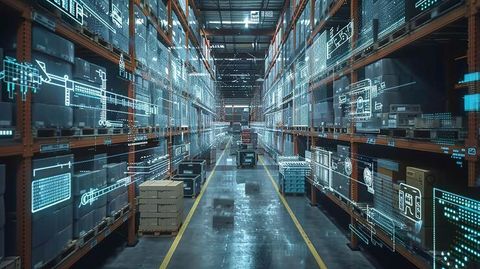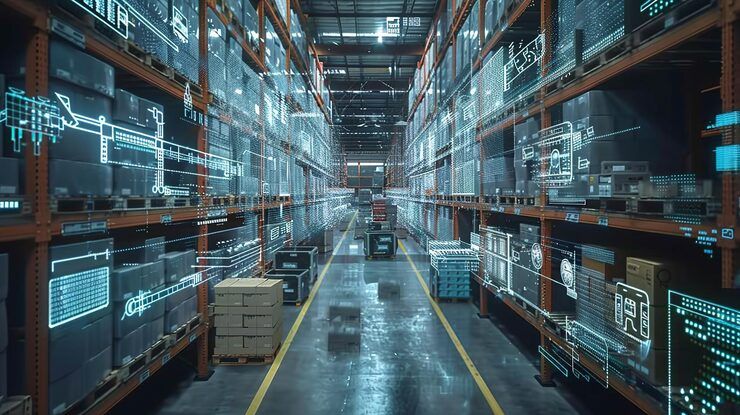
Warehouse automation integration is the process of connecting warehouse equipment, software platforms, inventory databases, and material-handling systems so they operate as a coordinated environment. It combines physical automation with digital information management to support the movement, storage, tracking, and dispatch of goods.
Modern warehouses handle products across multiple stages, including receiving, inspection, storage, picking, packing, and shipping. When these activities rely on disconnected systems or manual information transfers, errors, delays, and inventory discrepancies can occur.
Automation integration helps coordinate these activities by connecting technologies such as warehouse management systems, autonomous mobile robots, conveyor systems, barcode scanners, automated storage equipment, and enterprise resource planning platforms.
The appropriate integration approach depends on warehouse size, product characteristics, order volume, existing infrastructure, and operational requirements.
Understanding Warehouse Automation Integration
Warehouse automation is not limited to installing robots or conveyor belts. Effective integration requires equipment and software to exchange accurate information and respond to operational changes.
A warehouse management system (WMS) generally coordinates inventory records, storage locations, picking tasks, and order processing. A warehouse control system (WCS) may coordinate equipment such as conveyors, sorters, and automated storage machinery. A warehouse execution system (WES), where used, helps coordinate work across people, equipment, and software.
Enterprise resource planning (ERP) platforms can connect warehouse activities with purchasing, manufacturing, accounting, and broader business processes.
Common components include:
Warehouse management systems
Automated storage and retrieval systems
Autonomous mobile robots
Conveyor and sorting systems
Barcode and radio-frequency identification technologies
Robotic picking equipment
Inventory sensors
Warehouse control and execution software
Enterprise resource planning platforms
Data analytics and reporting tools
These components perform different functions. Their value depends on how well they exchange information and coordinate tasks.
How Integration Works
A typical integrated warehouse begins with an inventory or order event. When a shipment arrives, the WMS records the products and assigns appropriate storage locations. Scanning equipment confirms the goods, while automated handling equipment moves them to designated areas.
When an order is received, the system identifies the required items, coordinates picking activities, updates inventory records, and communicates relevant information to packing and shipping operations.
An integrated workflow may follow this sequence:
Order received → Inventory verified → Picking assigned → Goods collected → Packing confirmed → Shipment recorded
Data exchange can occur through application programming interfaces, standardized messaging, industrial communication protocols, or middleware that connects systems using different technologies.
Reliable integration also requires error handling, cybersecurity controls, accurate product data, and monitoring of equipment performance.
Why Warehouse Automation Integration Matters
Warehouse integration is important because distribution operations must coordinate physical movement with constantly changing inventory and order information.
Inventory Accuracy
Connected scanning systems and inventory software can reduce discrepancies between recorded stock and actual stock. Automated updates also help prevent situations in which an item appears available in the database but cannot be located physically.
Operational Efficiency
Integrated workflows reduce unnecessary information entry and improve coordination between receiving, storage, picking, and dispatch.
Automation can also help prioritize urgent orders, allocate tasks according to equipment availability, and identify operational bottlenecks.
Supply Chain Visibility
Connecting warehouse systems with ERP and transportation platforms can improve visibility across purchasing, inventory, order fulfillment, and shipment tracking.
This information helps managers identify delays, understand inventory movement, and make more informed planning decisions.
Worker Safety
Automation can reduce some repetitive lifting, long-distance material movement, and exposure to certain handling tasks. However, robots and automated machinery introduce other hazards that require appropriate separation, guarding, training, and emergency procedures.
Key Performance Indicators
Warehouses can measure integration performance using operational indicators.
| KPI | What It Measures |
|---|---|
| Inventory accuracy | Agreement between recorded and physical stock |
| Order cycle time | Time between order release and completion |
| Picking accuracy | Percentage of orders picked correctly |
| Throughput | Units or orders processed over a period |
| Equipment availability | Time equipment remains operational |
| Order fulfillment rate | Percentage of orders completed as required |
| System downtime | Periods when critical systems are unavailable |
These measures provide a baseline for identifying problems and evaluating whether integration changes are improving performance.
Recent Developments in Warehouse Automation
Warehouse automation continues to evolve through robotics, artificial intelligence, machine vision, and improved communication between industrial equipment and business software.
Artificial Intelligence and Robotics
During 2025, warehouse technology development continued to emphasize AI-enabled robotics, machine vision, and systems capable of handling a wider range of products and tasks.
On March 18, 2025, NVIDIA announced new robotics technologies and simulation capabilities designed to support the development of autonomous machines and physical AI applications. These technologies are relevant to warehouse environments where robots must perceive objects, navigate spaces, and interact with changing physical conditions.
AI can support task prioritization, visual identification, route planning, and operational forecasting. However, performance depends on data quality, suitable equipment, and validation under actual warehouse conditions.
Greater System Interoperability
During 2025 and 2026, industrial automation development continued to emphasize standardized communication, software integration, and coordination between robots and warehouse management platforms.
Interoperability matters because warehouses frequently combine equipment from different manufacturers. Common interfaces and well-documented data formats can simplify communication and reduce dependence on isolated systems.
Digital Twins and Simulation
Digital twins and simulation tools allow organizations to model warehouse layouts, material flows, robot routes, and equipment capacity before changing a live operation.
These models can help identify congestion, estimate throughput, compare layout alternatives, and test operational scenarios. Their accuracy depends on the quality of input data and how closely the model represents real operating conditions.
Cybersecurity and Connected Equipment
As warehouse equipment becomes more connected, cybersecurity has become an increasingly important part of industrial integration.
Organizations need to protect operational networks, manage access permissions, maintain software, monitor unusual activity, and establish recovery procedures for critical systems.
Laws, Regulations, and Safety Policies
Warehouse automation requirements vary by country and jurisdiction. Relevant rules may cover machinery safety, occupational health, electrical systems, fire protection, data protection, and industrial cybersecurity.
Industrial Safety in the United States
The Occupational Safety and Health Administration establishes workplace safety requirements in the United States. Applicable standards can cover machine guarding, hazardous energy control, electrical safety, powered industrial trucks, and other workplace hazards.
Facilities integrating automated conveyors, robotic cells, and storage machinery should assess how equipment affects existing pedestrian routes, emergency exits, maintenance access, and employee responsibilities.
Lockout/tagout procedures are particularly important when maintenance requires isolation of hazardous energy sources.
Machinery Safety and Risk Assessment
Industrial automation projects should include risk assessments covering both normal operations and foreseeable failures.
Important considerations include:
Emergency stops and safe shutdown procedures
Physical barriers and protective sensors
Safe robot operating zones
Maintenance access
Electrical isolation
Fire prevention
Pedestrian and vehicle separation
Operator training
Applicable machinery and electrical standards depend on the equipment and jurisdiction. Organizations should confirm the relevant requirements before commissioning a system.
Data Protection and Cybersecurity
Integrated warehouses may process employee information, supplier records, customer details, and shipment data.
Depending on the location and data involved, privacy laws and cybersecurity requirements may apply. Access controls, encryption, audit logs, network segmentation, and secure backups can help protect critical information.
Tools and Resources for Warehouse Integration
A successful integration project typically combines software documentation, process mapping, simulation, equipment monitoring, and performance analysis.
Warehouse Management and ERP Software
WMS platforms help coordinate inventory and warehouse workflows, while ERP platforms connect warehouse operations with broader business activities.
Before integration, teams should document the data exchanged between systems, including product identifiers, stock quantities, storage locations, order statuses, and shipment details.
APIs and Industrial Communication
Application programming interfaces support data exchange between software platforms. Industrial protocols and equipment-specific interfaces connect software with machinery, sensors, and controllers.
Technical documentation should specify data formats, update frequency, error responses, authentication, and recovery behavior.
Simulation and Analytics
Warehouse simulation software can help evaluate equipment placement, picking routes, throughput, and congestion.
Dashboards and reporting tools can track inventory accuracy, order cycle time, equipment availability, and downtime.
Integration Planning Checklist
Before implementation, organizations should establish:
Existing system inventory
Warehouse process maps
Equipment compatibility requirements
Data ownership and synchronization rules
Network and cybersecurity requirements
Safety and compliance assessments
Testing and acceptance criteria
Employee training plans
Backup and recovery procedures
A phased implementation can make it easier to validate individual workflows before connecting the entire warehouse.
Frequently Asked Questions
What is warehouse automation integration?
It is the process of connecting warehouse machinery, software, sensors, and inventory systems so they exchange information and coordinate activities such as receiving, storage, picking, packing, and dispatch.
Which systems are commonly integrated in an automated warehouse?
Common systems include warehouse management software, ERP platforms, warehouse control systems, conveyor controllers, robotic systems, barcode scanners, RFID equipment, and inventory databases.
Can existing warehouses adopt automation integration?
Yes. Existing facilities can integrate selected technologies in stages. The approach depends on equipment compatibility, software architecture, layout constraints, network infrastructure, and operational requirements.
How is warehouse automation integration measured?
Common indicators include inventory accuracy, picking accuracy, order cycle time, throughput, equipment availability, downtime, and order fulfillment performance. Measurements should be compared with a reliable baseline.
What are the main challenges of warehouse automation integration?
Common challenges include incompatible systems, inconsistent data, cybersecurity risks, equipment downtime, changing workflows, employee training, and coordination between automated and manual activities.
Conclusion
Warehouse automation integration connects physical equipment, inventory software, business applications, and operational data into a coordinated warehouse environment. When implemented carefully, it can improve inventory visibility, support consistent workflows, reduce avoidable errors, and provide better information for operational decisions.
Recent developments in AI-enabled robotics, simulation, interoperability, and industrial cybersecurity are expanding the capabilities of automated warehouses. However, successful integration still depends on reliable data, compatible systems, appropriate safety controls, and realistic performance targets.
Organizations should begin by documenting existing processes, identifying integration requirements, assessing risks, and defining measurable objectives. A structured implementation approach helps ensure that warehouse technology supports operational needs while maintaining safety, reliability, and regulatory compliance.