Statement ear cuffs are decorative jewellery pieces designed to create a noticeable visual effect around the ear. Unlike conventional earrings that normally require a pierced ear, many ear cuffs attach around the outer cartilage through pressure, while some designs combine a cuff with a conventional earring or piercing.
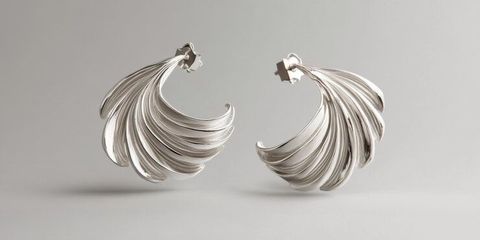
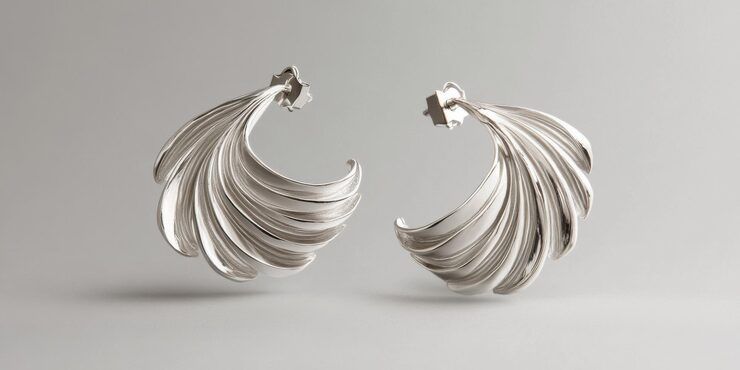
The term “statement” refers to the visual character of the piece. Statement ear cuffs can use broad metal shapes, layered structures, gemstones, textured surfaces, sculptural curves, or unusual geometric forms to create a stronger appearance than minimal ear jewellery.
Their design gives wearers another way to experiment with jewellery without relying entirely on traditional earring formats.
Common Statement Ear Cuff Designs
Several design approaches appear across contemporary jewellery collections:
Sculptural metal cuffs with curved or angular profiles
Wide ear cuffs that cover a larger area of cartilage
Double or triple-band structures
Cuffs combined with chains or small drops
Gemstone and crystal-accented designs
Hammered, brushed, polished, or textured surfaces
Asymmetrical designs intended for one ear
Minimal cuffs combined with larger earrings
Materials can include gold, silver, platinum, stainless steel, titanium, brass, and other metal alloys. Gemstones, pearls, crystals, enamel, and decorative glass can also be incorporated.
Statement Cuffs Compared With Conventional Earrings
| Feature | Statement Ear Cuffs | Conventional Earrings |
|---|---|---|
| Attachment | Often grips outer ear | Usually uses a post, hook, or other fitting |
| Piercing | Many designs do not require piercing | Commonly requires pierced ears |
| Visual scale | Often bold or sculptural | Ranges from minimal to dramatic |
| Placement | Outer ear or cartilage | Usually earlobe or piercing point |
| Styling | Often used as a focal detail | Frequently used as a pair |
The exact wearing method depends on the design, so fit and construction should always be considered before extended wear.
Why Statement Ear Cuffs Matter Today
Statement ear cuffs are relevant to contemporary jewellery because they combine personal expression with flexible styling. Their placement allows designers to work with the shape of the ear itself rather than concentrating only on the earlobe.
They can also create a layered appearance without requiring multiple new piercings. This makes ear cuffs relevant to people exploring different jewellery arrangements, asymmetrical styling, and contemporary fashion aesthetics.
Supporting Personal Style
A statement cuff can become the central jewellery element of an outfit or work as part of a larger ear arrangement.
Common styling approaches include:
Wearing one large cuff on one ear
Pairing a sculptural cuff with a small stud
Combining thin cuffs with hoops
Matching metal tones across several pieces
Using asymmetry to create visual contrast
Coordinating gemstone colors with clothing
Comfort and Fit
A statement piece needs to balance appearance with practical wearability. Excessive pressure can make an ear cuff uncomfortable, while a loose structure may shift during movement.
Important considerations include:
Ear shape
Cuff opening and adjustment
Overall weight
Contact points
Surface smoothness
Metal composition
Intended wearing duration
A properly designed cuff should remain stable without requiring excessive pressure.
Recent Statement Ear Cuff and Jewellery Trends
Jewellery trends during 2025 and 2026 have continued to emphasize expressive proportions, sculptural forms, mixed materials, and individual styling.
Vogue's Spring 2025 jewellery trend report highlighted oversized jewellery, layered cuffs, eclectic forms, natural materials, and strong decorative elements across runway collections.
In August 2026, ELLE reported that statement earrings were becoming even larger and more dramatic, with runway examples from Valentino, Saint Laurent, Dior, and other fashion houses emphasizing oversized and highly expressive forms.
These developments are relevant to statement ear cuffs because the broader movement toward larger-scale ear jewellery creates room for sculptural cuff designs.
Key Directions for 2025–2026
Current design directions include:
Oversized silhouettes
Sculptural metalwork
Asymmetrical arrangements
Layered ear jewellery
Organic and nature-inspired shapes
Mixed textures
Geometric structures
Darker or more dramatic styling
Decorative gemstone details
Another important direction is the combination of minimal and maximal elements. A large cuff can be paired with a very small stud, creating contrast rather than matching every piece.
Digital Jewellery Discovery
Online visual platforms have also changed how people discover jewellery styles. Search tools, fashion publications, digital catalogues, social platforms, and virtual styling tools allow users to compare shapes and combinations before selecting a particular design.
For jewellery brands and designers, accurate product information has therefore become increasingly important alongside visual presentation.
Jewellery Laws, Material Rules and Policies Around the World
Statement ear cuffs can be affected by different rules depending on their materials, destination market, and whether they contain precious metals or regulated substances. There is no single worldwide jewellery law, so manufacturers and consumers should check the requirements of the relevant market.
United States
In the United States, the Federal Trade Commission's Jewelry Guides provide guidance on truthful descriptions involving precious metals, gemstones, pearls, and related jewellery characteristics. The guidance emphasizes accurate representation of qualities such as metal content, size, weight, and other material information.
This is particularly relevant when a statement ear cuff is described as gold, platinum, silver, gemstone-set, or made from a particular alloy.
European Union
The European Union has specific restrictions on certain chemicals in jewellery under REACH. Nickel restrictions apply to earrings and other articles intended for direct and prolonged skin contact. The rules include limits on nickel release, including a 0.5 μg/cm²/week threshold for relevant prolonged-contact jewellery and a lower migration limit for certain posts inserted into pierced body parts.
EU guidance also identifies restrictions involving substances such as cadmium in certain jewellery articles. The European Commission's Access2Markets information was updated in November 2025 and continues to identify chemical restrictions relevant to jewellery products.
These requirements make material selection and laboratory testing important considerations for jewellery intended for EU markets.
United Kingdom
The United Kingdom has its own hallmarking framework for precious-metal jewellery. GOV.UK states that certain gold, silver, platinum, and palladium articles above specified weight thresholds require a legally recognized hallmark.
For international jewellery businesses, the distinction between UK and EU hallmarking requirements is also important because Great Britain changed its recognition arrangements for newly imported stock after January 1, 2021.
International Considerations
When a statement ear cuff is intended for multiple markets, useful compliance checks include:
Metal purity documentation
Nickel-release testing where relevant
Restricted-substance testing
Hallmark requirements
Accurate material descriptions
Gemstone disclosure
Country-specific labeling
Packaging and consumer-information requirements
Tools and Resources for Statement Ear Cuffs
Several resources can help with design research, material identification, styling, and regulatory review.
Useful Resources
Jewellery design software: Useful for developing 3D cuff shapes and testing proportions.
CAD tools: Help designers model curved ear structures and attachment mechanisms.
Material reference guides: Useful for comparing gold alloys, silver, titanium, platinum, and steel.
Digital calipers: Help measure cuff dimensions and opening sizes.
Jewellery scales: Useful for checking the weight of larger designs.
Magnification tools: Help inspect surface finishing, hallmarks, and small construction details.
Nickel-release testing resources: Important when jewellery is intended for markets with nickel restrictions.
FTC Jewelry Guides: Useful for understanding accurate jewellery descriptions in the United States.
EU REACH resources: Useful for reviewing chemical restrictions affecting jewellery.
GOV.UK hallmarking guidance: Useful for understanding UK precious-metal marking requirements.
A design checklist can also help evaluate a statement ear cuff before production:
Is the cuff comfortable?
Does it remain stable during normal movement?
Are the edges smooth?
Is the metal composition documented?
Is the weight appropriate?
Does the design suit different ear shapes?
Are required markings present?
Are material claims accurate?
Frequently Asked Questions
What is a statement ear cuff?
A statement ear cuff is a prominent jewellery piece designed to sit around part of the outer ear. It commonly uses a larger, sculptural, textured, or decorative design to create a noticeable visual effect.
Do statement ear cuffs require ear piercings?
Not necessarily. Many ear cuffs attach around the outer cartilage without a piercing. However, some hybrid designs combine a cuff with a conventional earring component and may therefore require a piercing.
Which materials are commonly used for ear cuffs?
Common materials include gold, silver, platinum, stainless steel, titanium, brass, and various metal alloys. Some designs also include gemstones, crystals, pearls, enamel, or decorative glass.
Can statement ear cuffs be worn with other earrings?
Yes. A statement cuff can be combined with studs, hoops, drops, or smaller cuffs. A common styling approach is to use one prominent piece with simpler jewellery elsewhere on the ear.
Why is metal composition important?
Metal composition can affect durability, appearance, weight, comfort, and skin compatibility. Certain markets also regulate substances such as nickel and cadmium in jewellery, making material documentation particularly important.
Conclusion
Statement ear cuffs have become an important part of contemporary ear jewellery because they provide a distinctive way to create visual impact around the natural shape of the ear.
The category covers a broad range of designs, from simple curved bands to large sculptural structures incorporating gemstones, textures, chains, and mixed materials. Current 2025–2026 jewellery trends show continued interest in oversized proportions, expressive shapes, layered cuffs, and unconventional styling.
Material selection is equally important. Metal composition, weight, surface finishing, and construction can influence comfort and durability, while regulations in markets such as the United States, European Union, and United Kingdom affect how jewellery materials and precious-metal content should be described and managed.
For anyone researching statement ear cuffs, designer ear cuffs, sculptural earrings, gold ear cuffs, or contemporary jewellery trends, the most useful factors to examine are design proportions, attachment method, material composition, comfort, craftsmanship, and applicable market requirements.
As jewellery design continues to move toward individuality and expressive proportions, statement ear cuffs are likely to remain a flexible format for combining fashion, structure, and personal styling.