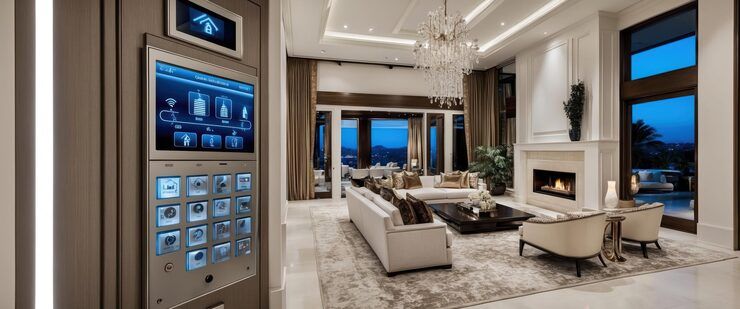
Smart room automation in hotels refers to the use of connected devices and control systems to manage lighting, temperature, curtains, entertainment, and other room functions. These technologies allow guests to adjust their surroundings through wall panels, mobile applications, voice interfaces, or centralized room controls.
Traditional hotel rooms often rely on separate switches, thermostats, and remote controls. Smart room systems can connect these functions, helping guests manage their environment through a more consistent interface. Depending on the installation, the system may also communicate with hotel management platforms to support maintenance, room preparation, and energy monitoring.
Smart hotel technology has developed alongside the growth of the Internet of Things (IoT), building automation, wireless connectivity, and energy-efficient equipment. Its purpose is not simply to add digital features, but to improve room usability, support operational planning, and manage energy consumption.
Understanding Smart Hotel Room Automation
A smart hotel room usually combines sensors, connected devices, control software, and communication networks. The exact configuration depends on the building, room category, guest requirements, and existing infrastructure.
Common components include:
Smart lighting: Allows guests to adjust brightness and, where supported, lighting color or preset scenes.
Intelligent thermostats: Regulate room temperature according to selected settings and system conditions.
Automated curtains and blinds: Control natural light and privacy.
Occupancy sensors: Detect room activity for selected lighting and energy-management functions.
Connected entertainment: Integrates televisions, streaming interfaces, and other compatible devices.
Room control panels: Provide a central interface for adjusting several room functions.
Hotel management integration: Connects room status and selected control information with operational software.
Some installations use a single control platform, while others connect equipment from different manufacturers. Compatibility, network reliability, and ease of maintenance are therefore important considerations.
How Smart Room Automation Works
A typical automated room begins with a guest selecting a setting through a control panel, application, or compatible voice interface. The system sends the instruction to the relevant device, which adjusts the room environment.
For example, a guest may select a preferred temperature and reduce the lighting brightness. The thermostat and lighting controller respond independently or through a coordinated scene.
Hotels can also configure selected functions around room occupancy, check-in status, or maintenance requirements. These functions should be designed carefully so that energy-saving automation does not override a guest's reasonable comfort preferences.
Why Smart Room Automation Matters in Hotels
Smart room automation can improve guest comfort while helping hotel teams monitor room conditions and manage building systems more consistently. Its value depends on how well the technology fits the hotel's operations and the needs of its guests.
Guest Comfort and Personalization
Connected room controls allow guests to adjust temperature, lighting, and curtains according to their preferences. Some systems remember selected settings during a stay, subject to privacy rules and hotel policies.
Useful features include:
Preset lighting for reading, relaxing, or sleeping
Adjustable room temperature
Automated curtains and blinds
Simple control of television and entertainment systems
Accessible control interfaces for different guest needs
Controls should remain intuitive. A room with many advanced features can become difficult to use if basic functions such as lighting and temperature are hidden behind complicated menus.
Energy Management
Heating, ventilation, and air conditioning (HVAC) systems account for a significant portion of energy use in many hotels. Smart thermostats, occupancy sensors, and building management platforms can help monitor and regulate these systems.
For example, a hotel may adjust heating or cooling when a room is unoccupied, provided that the settings maintain appropriate indoor conditions and respect guest preferences.
Actual energy savings depend on the building, climate, occupancy patterns, equipment efficiency, and system configuration. Automation alone does not guarantee a particular reduction in energy consumption.
Hotel Operations and Maintenance
Connected equipment can help maintenance teams identify unusual operating conditions, such as a thermostat that fails to reach its target temperature or a sensor that stops communicating.
When integrated with hotel management software, selected room information can also help staff coordinate room preparation and maintenance activities.
Recent Developments in Smart Hotel Technology
Developments during 2025 and 2026 highlight growing interest in practical room automation, connected building systems, and energy management.
Hotel Technology Trends in 2025
A Hotels.com survey published on September 9, 2025, reported that 56% of surveyed hotels felt pressure to keep upgrading their technology. The survey also noted that many hotels were prioritizing practical features such as customizable lighting, smart televisions, and connected room controls.
The findings suggest that useful, easy-to-operate technology remains important alongside newer developments such as AI-powered guest interfaces and automated assistance.
Building Automation and Energy Efficiency in 2026
On May 29, 2026, the European Commission announced that the revised Energy Performance of Buildings Directive would begin applying through national implementation from May 30, 2026.
The framework includes provisions concerning building automation, energy performance, and indoor environmental quality. Its specific requirements depend on building type, technical thresholds, national implementation, and applicable exemptions.
These developments are relevant to hotels because heating, cooling, ventilation, lighting, and other building systems can be connected through automation platforms.
Greater Attention to Cybersecurity
As hotel rooms become more connected, protecting networks and guest information becomes increasingly important. Modernization projects increasingly need to consider secure device configuration, software updates, access permissions, and the separation of guest networks from building-control systems.
Laws, Regulations, and Data Protection
Smart room automation is affected by several areas of regulation. Requirements vary according to the hotel's country, building type, equipment, and the information collected by its technology.
Building Energy Regulations
In the European Union, the revised Energy Performance of Buildings Directive, Directive (EU) 2024/1275, establishes a framework for improving building energy performance and modernizing technical systems.
It includes requirements for building automation and control systems in certain non-residential buildings, subject to applicable thresholds and feasibility conditions. Hotels operating in EU countries should review national implementation rules before planning major building upgrades.
Guest Privacy and Data Protection
Smart hotel rooms may process information about occupancy, device usage, guest preferences, or voice interactions. Hotels should determine what information is necessary, explain relevant data practices, restrict access, and apply appropriate retention periods.
In the European Union, the General Data Protection Regulation (GDPR) can apply when personal data is processed. In India, the Digital Personal Data Protection Act, 2023, and the applicable 2025 rules are relevant to covered personal-data processing, subject to their provisions and commencement arrangements.
Hotels should avoid collecting unnecessary information through connected room equipment. Voice-enabled devices and personalization features require particular attention to transparency, permissions, and data handling.
Electrical and Fire Safety
Automated lighting, thermostats, motorized curtains, and connected electrical devices must be installed and maintained according to applicable electrical and building safety requirements.
Hotels should also ensure that automation does not interfere with fire alarms, emergency lighting, evacuation procedures, or other essential safety systems.
Tools and Resources for Smart Hotel Automation
Hotels evaluating room automation can use technical documentation, energy-monitoring tools, and structured assessment templates.
Building Management Systems
Building management systems (BMS) can monitor and control equipment such as HVAC units, lighting circuits, pumps, and ventilation systems. A hotel may use a BMS to review energy consumption, operating schedules, equipment status, and maintenance alerts.
Hotel Property Management Systems
A property management system (PMS) organizes information such as room status, reservations, check-in, and check-out. When appropriately integrated, it can communicate selected room-status information to automation platforms.
Integrations should be tested to prevent incorrect room states or unintended changes to guest settings.
Energy Monitoring and Planning
Energy dashboards and smart meters can help compare electricity consumption across rooms, floors, or time periods. These records can help identify unusual usage patterns and evaluate whether automation changes are having the intended effect.
Useful evaluation measures include:
Electricity consumption per occupied room-night
HVAC operating hours
Lighting energy consumption
Frequency of equipment faults
Guest-reported control difficulties
Maintenance response times
Results should be compared across similar operating periods and adjusted for occupancy, weather, and seasonal conditions.
Implementation Checklist
Before introducing smart room technology, hotels should assess:
Compatibility with existing electrical and HVAC equipment
Network coverage and reliability
Device security and software-update procedures
Guest privacy and data retention
Accessibility and ease of use
Staff training requirements
Maintenance arrangements
Emergency-system compatibility
A small pilot installation can help identify usability and integration issues before a wider rollout.
Frequently Asked Questions
What is smart room automation in hotels?
It is the use of connected devices and control systems to manage room functions such as lighting, temperature, curtains, and entertainment. Some systems also integrate with hotel management and building energy platforms.
Can hotel room automation reduce energy consumption?
It can help reduce unnecessary heating, cooling, or lighting when systems are configured appropriately. Results vary according to occupancy, building design, climate, equipment, and operating practices.
Is smart room automation secure?
Security depends on device design, network configuration, software maintenance, access controls, and data-handling practices. Hotels should use appropriate security measures and avoid collecting unnecessary guest information.
Can older hotels install smart room systems?
Yes. Some technologies can be added to existing buildings, although compatibility depends on the wiring, HVAC equipment, network infrastructure, and building layout. A technical assessment helps determine suitable options.
What should hotels consider before implementing automation?
Important considerations include guest usability, equipment compatibility, energy monitoring, cybersecurity, privacy, accessibility, maintenance, and compliance with building and electrical regulations.
Conclusion
Smart room automation is becoming an important part of modern hospitality technology. Connected lighting, thermostats, curtains, sensors, and building management platforms can help hotels improve room control, monitor energy use, and coordinate maintenance activities.
Recent developments during 2025 and 2026 demonstrate growing interest in practical guest-facing technology, energy-efficient buildings, and connected infrastructure. However, the value of automation depends on reliable equipment, clear controls, appropriate integration, and measurable results.
Hotels planning an automation system should assess building requirements, guest expectations, cybersecurity, privacy obligations, and applicable regulations before implementation. A carefully planned approach can support comfortable room environments while helping hotels manage their buildings more effectively.