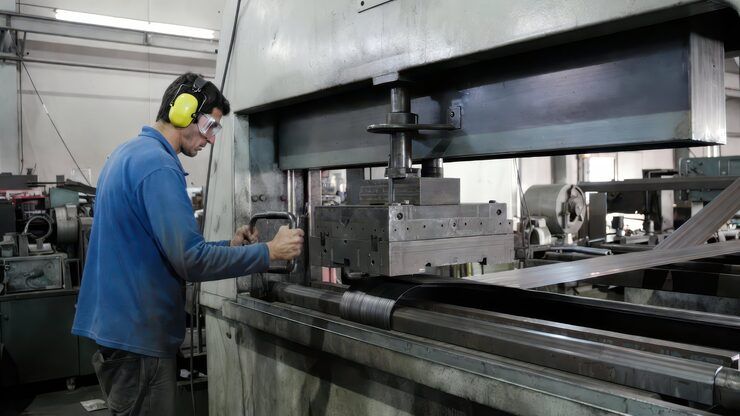
Profile cutting machines play an important role in modern manufacturing by shaping metal sheets, plates, pipes, beams, and structural sections into precise forms. These machines are widely used in metal fabrication, construction, automotive production, shipbuilding, and industrial engineering. Their capabilities range from straightforward straight-line cuts to complex shapes created through computer-controlled operations.
Understanding profile cutting technology helps manufacturers, engineers, workshop operators, and technical students identify suitable equipment, improve production accuracy, and understand the safety requirements associated with metal processing.
Understanding Profile Cutting Machines
Profile cutting machines are industrial systems designed to cut materials according to specific dimensions, outlines, and geometric patterns. Depending on the machine design, they can process flat metal sheets, thick plates, structural steel sections, and tubular profiles.
The cutting process may use mechanical blades, plasma arcs, laser beams, oxy-fuel flames, or water jets. Each method has different capabilities depending on material thickness, required precision, production volume, and the characteristics of the finished component.
Computer numerical control (CNC) technology has expanded the capabilities of profile cutting machines. CNC systems interpret digital drawings and convert them into machine movements, helping operators reproduce complex shapes with consistent dimensions.
Main Types of Profile Cutting Technology
Different cutting technologies address different manufacturing requirements. The choice depends on material composition, thickness, edge quality, operating environment, and production objectives.
Plasma profile cutting machines
Plasma cutting uses an electrically conductive, high-temperature plasma arc to melt metal and remove material from the cutting path. It is commonly used for carbon steel, stainless steel, and aluminium.
Plasma systems are particularly useful for medium- and heavy-duty metal fabrication. CNC plasma cutting tables can produce brackets, plates, machine frames, and structural components from programmed designs.
Laser profile cutting machines
Laser cutting concentrates a powerful beam of light onto a small area, melting or vaporising material along a programmed path. Fibre laser systems are widely used for sheet metal and tube processing, while other laser configurations address specialised applications.
Laser cutting is associated with narrow cutting paths, detailed shapes, and high dimensional accuracy. Results depend on the material, thickness, beam characteristics, and machine configuration.
Oxy-fuel profile cutting machines
Oxy-fuel cutting uses a fuel gas flame to heat suitable steel materials before a stream of oxygen initiates and sustains oxidation. It is often used for thick carbon steel plates and heavy structural components.
This technology is less suitable for materials such as aluminium and stainless steel when conventional oxy-fuel cutting is used, because their oxidation behaviour differs from that of carbon steel.
Mechanical and waterjet cutting systems
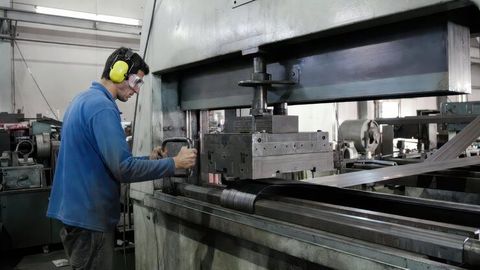
Mechanical profile cutters use blades, punches, or other physical cutting mechanisms. They can be appropriate for repetitive operations involving specific shapes and material dimensions.
Waterjet cutting uses a high-pressure water stream, sometimes combined with abrasive particles, to cut different materials without relying on a heat-based cutting process. It can be useful when limiting heat-affected areas is important.
Common Industrial Applications
Profile cutting machines support many manufacturing activities by transforming raw material into components that fit larger assemblies.
Construction and structural steel: Cutting beams, columns, plates, and connection components for buildings and infrastructure.
Automotive manufacturing: Producing brackets, frames, reinforcement parts, and selected vehicle components.
Shipbuilding: Preparing steel plates, ribs, and structural sections for vessel construction.
Agricultural machinery: Fabricating equipment frames, protective structures, and metal attachments.
Industrial equipment: Creating machine bases, enclosures, mounting plates, and support structures.
Energy infrastructure: Processing metal components used in industrial plants, renewable energy equipment, and transmission structures.
Accurate cutting can reduce dimensional inconsistencies and simplify later processes such as drilling, welding, bending, and assembly. However, overall component quality also depends on material preparation, machine calibration, and inspection procedures.
Why Profile Cutting Technology Matters
Modern production environments often require components with repeatable dimensions and increasingly complex geometries. Manual cutting can remain appropriate for simple or occasional tasks, but computer-controlled equipment is particularly useful when manufacturers need to reproduce detailed profiles across multiple production runs.
Several factors explain the importance of profile cutting technology.
Dimensional accuracy: CNC-controlled movement helps maintain specified dimensions and angles when the machine is correctly configured and maintained.
Material utilisation: Nesting software arranges component outlines on a sheet or plate to reduce unused space. Effective nesting can improve material utilisation, although actual results depend on part geometry, cutting gaps, and production constraints.
Production consistency: Programmed cutting paths reduce some forms of operator-dependent variation and support repeatable manufacturing.
Design flexibility: Digital drawings can be modified to accommodate changes in component geometry without creating an entirely new mechanical cutting arrangement.
Production planning: Integration with CAD and manufacturing software can connect engineering drawings, cutting instructions, material inventories, and production records.
The benefits are not automatic. Poor calibration, incorrect cutting parameters, unsuitable consumables, or inadequate operator training can lead to defects, excessive scrap, and equipment downtime.
Important Factors When Evaluating a Profile Cutting Machine
Selecting suitable equipment requires more than comparing the cutting speed stated in a technical specification.
Manufacturers should examine the following factors:
Material compatibility: Confirm whether the system supports the required metals, alloys, or non-metallic materials.
Maximum cutting thickness: Check the machine's rated capacity for the specific material and cutting process.
Working dimensions: Match the cutting bed or processing length to the components being produced.
Cutting precision: Review dimensional tolerances, kerf width, edge quality, and repeatability requirements.
Automation features: Consider automatic height control, material handling, tube rotation, and integration with production systems.
Software compatibility: Verify support for relevant CAD drawings, CNC formats, and nesting workflows.
Maintenance requirements: Review consumables, calibration intervals, extraction systems, and component replacement procedures.
Operator safety: Assess guarding, ventilation, electrical protection, fire prevention, and access to emergency stops.
A structured comparison of these factors helps technical teams evaluate equipment against actual manufacturing needs rather than relying on a single performance measurement.
Recent Developments and Trends in Profile Cutting Machines
Profile cutting technology continues to evolve through improvements in automation, digital manufacturing, energy management, and machine monitoring. Developments during 2025 and 2026 reflect the wider industrial movement toward connected production systems and more consistent manufacturing processes.
CNC automation and smart manufacturing
Manufacturers increasingly combine CNC profile cutting machines with CAD/CAM software, automatic material positioning, and production planning systems. These features help translate engineering designs into cutting instructions and reduce repeated manual programming.
Digital monitoring can also help operators identify interruptions, track machine utilisation, and plan preventive maintenance.
Fibre laser cutting advancements
Fibre laser technology continues to attract attention in sheet metal processing and tube laser cutting. Improvements in beam control, machine motion, and automated material handling support the production of intricate components. The practical advantages depend on the material, thickness, equipment configuration, and operating conditions.
Material optimisation and energy efficiency
Nesting software, improved cutting parameters, and more efficient machine components are important areas of development. Manufacturers are examining how to reduce scrap, compressed-gas consumption, electricity use, and unnecessary processing time.
Industrial safety and regulatory developments
In India, the Ministry of Heavy Industries published amendments concerning machinery safety in 2025. However, the ministry's official records also show that the Machinery and Electrical Equipment Safety (Omnibus Technical Regulation) Order, 2024, was withdrawn on 16 January 2026. Manufacturers and importers should therefore check the latest applicable requirements instead of assuming the earlier implementation timetable remains valid.
Laws, Regulations, and Workplace Safety in India
Profile cutting machines must be operated within the applicable industrial safety, environmental, electrical, and machinery compliance framework. Requirements can vary according to the machine type, workplace, materials processed, and whether equipment is manufactured domestically or imported.
Occupational safety requirements
India's Occupational Safety, Health and Working Conditions Code, 2020, came into force on 21 November 2025, according to India Code. It establishes a framework for occupational safety, health, and working conditions. Applicable duties and implementation requirements should be checked against current central and state rules.
Important safety practices for profile cutting operations include:
Providing suitable machine guards, emergency stops, and electrical protection.
Training operators in equipment controls and safe operating procedures.
Using appropriate eye, face, hand, and hearing protection where required.
Installing effective fume extraction and ventilation for cutting operations.
Maintaining safe storage and handling arrangements for compressed gases.
Establishing fire prevention, housekeeping, and equipment inspection procedures.
Machinery standards and conformity
The Bureau of Indian Standards (BIS) publishes relevant Indian Standards and conformity assessment information. The precise certification or conformity requirements for a particular profile cutting machine should be verified against current notifications and the applicable machine category. The withdrawal of the earlier omnibus regulation in January 2026 makes checking the latest official position especially important.
Tools and Resources for Profile Cutting
Several technical tools can help engineers and manufacturing teams plan cutting operations, prepare designs, and evaluate production performance.
CAD software: Used to create engineering drawings and define component dimensions, holes, curves, and profiles.
CAM and CNC programming software: Converts digital designs into machine-specific cutting paths and operating instructions.
Nesting software: Arranges component shapes on sheets or plates to improve material utilisation and account for cutting gaps.
Cutting parameter calculators: Help estimate suitable starting parameters for material thickness, cutting speed, gas selection, and other process variables. Manufacturer guidance remains essential.
Material utilisation spreadsheets: Track sheet dimensions, component quantities, scrap, and estimated material usage.
Maintenance checklists: Record inspections of cutting heads, nozzles, guides, electrical systems, extraction equipment, and other critical components.
BIS standards and government notifications: Help Indian manufacturers and equipment users review applicable safety and conformity requirements.
A useful production record can include material grade, thickness, cutting method, programmed dimensions, actual processing time, scrap quantity, and inspection results. Reviewing these records helps identify recurring quality issues and opportunities for process improvement.
Frequently Asked Questions
What is a profile cutting machine used for?
It cuts metal sheets, plates, tubes, and structural sections into specified shapes and dimensions. Common applications include steel fabrication, construction, automotive manufacturing, shipbuilding, and industrial equipment production.
Which profile cutting technology is suitable for thick steel?
Oxy-fuel cutting is commonly used for thick carbon steel, while plasma systems can handle a broad range of conductive metal thicknesses. The appropriate choice depends on the required thickness, edge quality, productivity, and material properties.
What is the difference between CNC plasma and laser cutting?
CNC plasma cutting uses a high-temperature plasma arc and is widely used for conductive metals, including medium- and heavy-duty plate work. Laser cutting uses a concentrated light beam and is often selected for detailed profiles and narrow cutting paths. Neither method is universally better for every application.
How can manufacturers reduce material waste?
They can use nesting software, optimise cutting layouts, select suitable cutting parameters, maintain accurate machine calibration, and inspect material before processing. The actual reduction depends on component geometry and production conditions.
What safety precautions are important when operating profile cutting machines?
Operators should follow the machine manufacturer's instructions, use required protective equipment, maintain guards and emergency stops, ensure appropriate ventilation, and follow fire and electrical safety procedures. Training and regular inspections are essential.
Conclusion
Profile cutting machines are important tools in modern metal fabrication because they transform engineering designs into accurately shaped components. Plasma, laser, oxy-fuel, mechanical, and waterjet systems each offer different capabilities for specific materials and production requirements.
Advances in CNC automation, nesting software, and digital monitoring continue to influence industrial cutting processes. At the same time, equipment selection, operator training, preventive maintenance, and regulatory compliance remain essential for reliable operations. Understanding these factors helps manufacturers and technical professionals make informed decisions about profile cutting technology and its role in efficient, safe production.