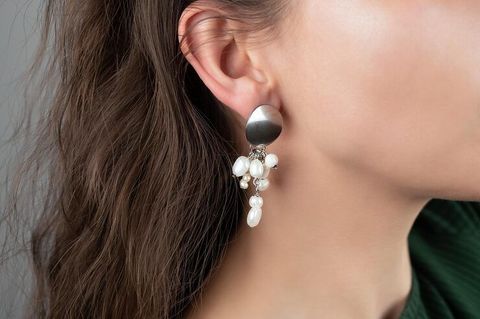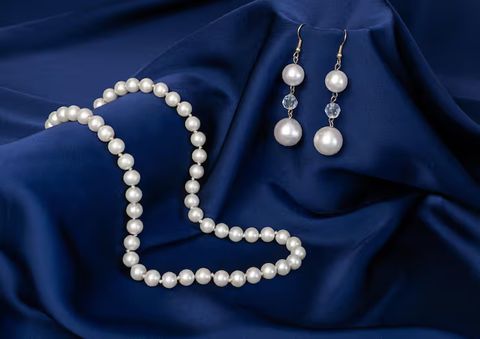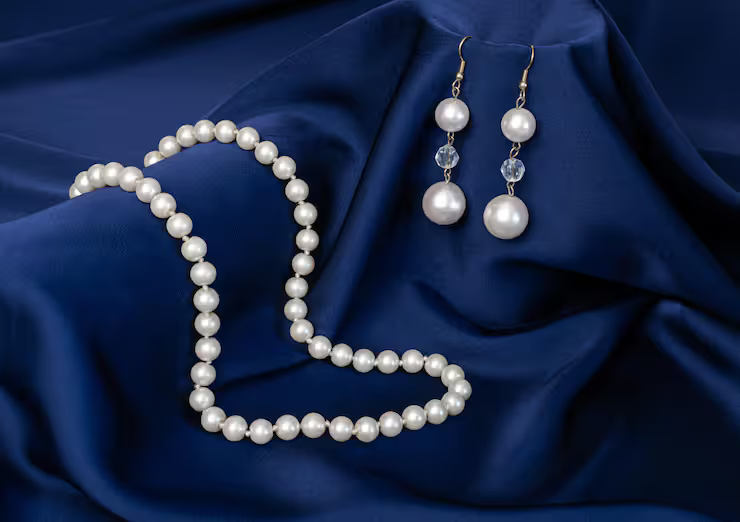
Mother’s Day pearl sets are coordinated jewellery combinations featuring pearls in two or more matching pieces. A set may include a necklace and earrings, a necklace with a bracelet, or several coordinated pieces designed around similar pearl characteristics.
Pearls are organic gemstones formed inside mollusks. Unlike diamonds and many colored gemstones, pearls develop through biological processes rather than geological crystallization.
Mother’s Day has become an important seasonal occasion for jewellery-related searches and gifting discussions in many countries. Pearl sets are particularly associated with classic jewellery because their soft luster and relatively understated appearance can work across different generations and styles.
Main Types of Pearls
Pearl sets can contain different varieties, and the type of pearl has a major influence on appearance and characteristics.
Akoya pearls: Generally known for strong luster and relatively round shapes.
Freshwater pearls: Available in many shapes, sizes, and natural colors.
South Sea pearls: Known for larger sizes and white, silver, or golden tones.
Tahitian pearls: Commonly associated with dark body colors and green, gray, blue, or purple overtones.
Cultured pearls: Pearls produced with human involvement in the cultivation process.
Natural pearls: Pearls that form without deliberate human insertion of a nucleus or tissue.
The vast majority of pearls encountered in contemporary jewellery are cultured rather than naturally formed.
What Makes a Pearl Set Coordinated?
A coordinated set does not necessarily require every pearl to be identical. Designers typically consider:
Pearl type
Body color
Overtone
Luster
Surface quality
Shape
Size
Necklace length
Earring dimensions
Metal color
| Pearl Characteristic | What It Describes |
|---|---|
| Luster | Sharpness and intensity of reflected light |
| Surface | Blemishes and surface texture |
| Shape | Round, near-round, oval, baroque and other forms |
| Size | Pearl diameter, generally measured in millimeters |
| Color | Main body color |
| Overtone | Secondary color visible over the body |
| Matching | Similarity among pearls in a coordinated set |
Why Mother’s Day Pearl Sets Matter Today
Pearl jewellery occupies an established position within the fine jewellery, pearl necklace, pearl earrings, cultured pearl jewellery, and luxury jewellery categories.
A coordinated set can simplify the design process because necklace and earrings are designed around complementary proportions, colors, and materials.
Pearl Jewellery Across Generations
Pearls have long been associated with formal jewellery, but contemporary designs include minimalist necklaces, small pearl studs, layered chains, baroque pearl pendants, and mixed-metal pieces.
This broader range allows pearl sets to move beyond traditional matching necklaces and earrings.
Why Pearl Quality Matters
Pearl quality is not determined by one characteristic. Luster, surface condition, shape, size, color, and matching all contribute to the overall appearance.
Luster is particularly important because it determines how sharply light is reflected from the pearl's surface.
A highly reflective pearl can appear visually different from a pearl with a softer or more diffuse surface even when their size and color are similar.
Matching Within a Set
Matching becomes particularly important when multiple pearls are placed next to each other.
A necklace with many pearls can show noticeable differences in color, shape, or luster if the individual pearls are poorly matched. Earrings generally require close matching because the two pieces are viewed together.
For this reason, a pearl set may be evaluated differently from a single pearl pendant.
Recent Pearl Jewellery Trends in 2025–2026
Pearl jewellery continued to evolve during 2025 and 2026, with designers combining traditional pearl forms with contemporary metals, asymmetrical arrangements, mixed materials, and minimalist structures.
Modern Pearl Designs
Contemporary pearl jewellery increasingly includes:
Small pearl studs
Pearl and gold combinations
Baroque pearl designs
Pearl pendant necklaces
Layered pearl necklaces
Mixed-metal pearl jewellery
Asymmetrical earrings
Pearl and gemstone combinations
Minimalist pearl bracelets
The trend does not mean traditional pearl necklaces are disappearing. Instead, the category has expanded to include both classic and modern interpretations.
Baroque Pearls
Baroque pearls are valued for irregular shapes rather than perfect roundness. Their individuality can make each pearl visually different.
Designers may use baroque pearls in pendants, earrings, necklaces, and contemporary Mother’s Day jewellery sets.
Lightweight Jewellery
The broader jewellery market has also experienced pressure from elevated gold prices. The World Gold Council reported that global jewellery demand volume declined 18% during 2025, while jewellery demand value increased 18% to a record US$172 billion.
In its July 2026 report, the World Gold Council identified lightweight jewellery as an adaptation to elevated gold prices in several markets.
For pearl sets, this can translate into thinner chains, smaller metal components, compact clasps, and designs that place greater emphasis on the pearl itself.
Digital Jewellery Research
Consumers increasingly research pearl characteristics online before evaluating jewellery. Digital education resources now make it easier to compare pearl types, measurements, treatments, and care recommendations.
This makes accurate product descriptions particularly important for jewellery-related digital advertising.
Laws, Hallmarking and Jewellery Policies in India
India provides an important regulatory example because jewellery containing precious metals can be subject to BIS hallmarking requirements.
It is important to distinguish between the pearl and the metal setting.
Pearls themselves are organic gemstones and are not covered by gold hallmarking. However, a pearl necklace, earring, or bracelet containing applicable gold components can fall under the relevant precious-metal framework.
BIS Gold Hallmarking
The Bureau of Indian Standards explains that hallmarking provides an official indication of precious-metal content in covered articles. Applicable gold jewellery can carry the BIS logo, purity/fineness information, and a six-digit Hallmark Unique Identification number.
Recognized gold fineness grades include:
14K — 585
18K — 750
20K — 833
22K — 916
23K — 958
24KS — 995
For example, an 18K gold pearl necklace and a 22K gold pearl necklace may contain similar pearls but have different metal-purity specifications.
Recent Hallmarking Changes
BIS continued to update India's mandatory hallmarking framework during 2025 and 2026. Its current framework lists amendments dated July 31, 2025, March 2, April 28, and August 3, 2026.
On March 2, 2026, BIS announced seven additional districts under the sixth phase of mandatory hallmarking coverage.
Because coverage and requirements can change, current BIS information should be checked for the relevant location and jewellery category.
Pearl Identification
Hallmarking should not be confused with pearl identification.
A pearl laboratory report or gemological assessment can address characteristics such as whether a pearl is natural or cultured, its type, and potentially other identifying features.
The metal hallmark answers a different question: the purity of the precious-metal component.
Tools and Resources for Mother’s Day Pearl Sets
Understanding a pearl set involves comparing pearl characteristics, metal specifications, dimensions, and care requirements.
Useful Resources
GIA pearl education: Provides information about pearl types, quality factors, treatments, and care.
BIS Care App: Useful for HUID verification of applicable hallmarked gold jewellery in India.
BIS Hallmarking Portal: Provides current information about India's precious-metal framework.
Pearl size charts: Help compare pearl diameter in millimeters.
Jewellery measurement guides: Help understand necklace and bracelet dimensions.
Digital calipers: Useful for measuring pearl and jewellery components.
Jewellery scales: Measure total jewellery weight.
Gemological references: Help distinguish cultured and natural pearl terminology.
Pearl care guides: Explain appropriate cleaning and storage practices.
Jewellery CAD software: Useful for designing coordinated necklace and earring sets.
Specifications Worth Comparing
When researching a pearl jewellery set, consider:
Pearl type
Pearl size
Pearl shape
Luster
Surface quality
Body color
Overtone
Matching
Necklace length
Earring dimensions
Metal purity
Clasp design
Documentation
A larger pearl is not automatically higher quality. A smaller pearl with stronger luster, cleaner surface characteristics, and better matching can have a very different visual appearance.
Pearl Care and Storage
Pearls are relatively soft compared with many mineral gemstones. Their surfaces can be scratched more easily than diamond or sapphire.
Good care practices include:
Wipe pearls gently with a soft cloth after wearing.
Keep pearls separated from harder jewellery.
Store them in a soft pouch or lined compartment.
Avoid prolonged exposure to chemicals and cosmetics.
Put pearl jewellery on after applying perfume or cosmetics.
Avoid abrasive cleaning materials.
Keep pearl strands properly supported during storage.
Pearl strands may also require periodic examination of their thread, knots, and clasp.
Frequently Asked Questions
What is a Mother’s Day pearl set?
A Mother’s Day pearl set is a coordinated jewellery group containing pearls, commonly including a necklace and matching or complementary earrings. Some sets may also include bracelets, pendants, or rings.
What are the main types of pearls?
The major pearl categories include Akoya, freshwater, South Sea, and Tahitian cultured pearls, along with naturally formed pearls. Each category has different typical characteristics in terms of size, color, shape, and luster.
What determines pearl quality?
Pearl quality is evaluated through characteristics such as luster, surface condition, shape, size, color, and matching. No single characteristic determines the overall appearance of a pearl.
Are pearls natural or cultured?
Both natural and cultured pearls exist. However, most pearls used in modern jewellery are cultured. A gemological assessment can help identify the pearl type.
Does a BIS hallmark certify the pearls?
No. BIS hallmarking concerns the precious-metal component of applicable jewellery. It does not certify whether pearls are natural or cultured, their quality, origin, luster, or treatment.
Conclusion
Mother’s Day pearl sets combine the traditional appeal of pearls with coordinated jewellery design. A set may contain a necklace and earrings or incorporate additional pieces, with the pearls selected according to characteristics such as luster, size, shape, color, surface condition, and matching.
The pearl jewellery category has also expanded beyond traditional round white pearls. Baroque pearls, mixed metals, minimalist settings, asymmetric designs, and smaller pearl formats have created additional contemporary design directions.
Changing gold-market conditions are another factor influencing jewellery design. Global jewellery volumes declined during 2025 while overall jewellery demand value increased, and lightweight designs became an important adaptation in several markets.
In India, BIS hallmarking provides information about the purity of applicable precious-metal components, while pearl identification requires separate gemological information. Keeping these distinctions clear helps consumers understand what different forms of documentation actually establish.
For anyone researching Mother’s Day pearl jewellery, cultured pearl sets, pearl necklaces and earrings, or fine pearl jewellery, the most useful factors to examine are pearl type, luster, surface quality, shape, size, matching, metal purity, construction, and care requirements.
Pearls ultimately remain distinctive because their beauty comes from a biological process, giving each pearl its own combination of surface character, luster, shape, and color.