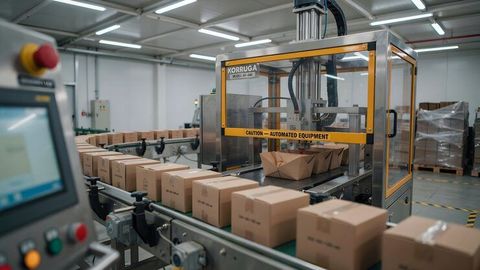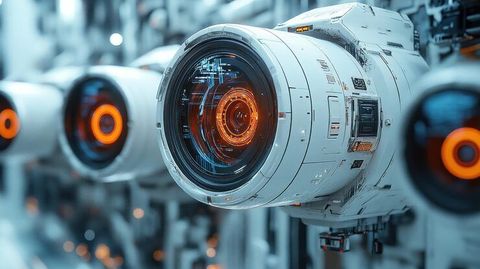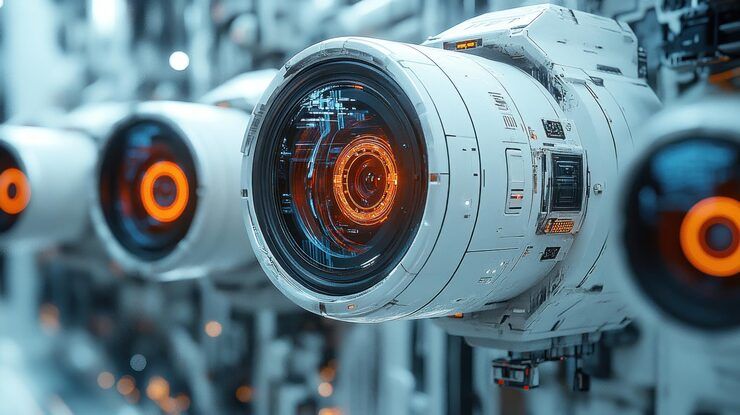
Machine learning inspection cameras are imaging systems that use artificial intelligence to examine products, components, surfaces, or processes and identify visual patterns that may indicate defects or irregularities. They combine cameras, lighting, image-processing software, and trained machine learning models to support quality inspection in industrial and commercial environments.
Traditional inspection systems often rely on fixed rules, such as checking dimensions, comparing colors, or detecting specific shapes. Machine learning systems can learn patterns from labeled images and, in some cases, identify complex defects that are difficult to describe using simple rules.
These systems are used in industries such as electronics manufacturing, automotive production, food processing, pharmaceuticals, packaging, and industrial materials. Their suitability depends on the inspection task, image quality, training data, production conditions, and required accuracy.
Understanding Machine Learning Inspection Cameras
A machine learning inspection camera is part of a wider machine vision system. The camera captures an image, and software analyzes that image to classify objects, locate features, identify defects, or determine whether an item meets specified criteria.
The system may use conventional machine learning, deep learning, or a combination of image-processing methods and trained models.
Common inspection applications include:
Detecting scratches, cracks, dents, and surface defects
Identifying missing or incorrectly positioned components
Reading printed labels and product codes
Checking packaging seals and label placement
Measuring shapes, dimensions, and alignment
Identifying contamination or unusual visual patterns
Verifying assembly completeness
Sorting products according to visual characteristics
The camera alone does not perform every task. Reliable inspection typically depends on the entire setup, including lenses, illumination, image acquisition, processing hardware, software, and production-line integration.
How AI Visual Inspection Works
Machine learning inspection generally follows a sequence of connected steps.
Image acquisition: An industrial camera captures images under controlled lighting conditions. Camera resolution, exposure, lens selection, and image timing affect the information available to the model.
Image preparation: Software may adjust image dimensions, normalize brightness, remove irrelevant regions, or prepare images for analysis.
Model inference: A trained machine learning model evaluates the image and produces an output, such as a defect classification, object location, segmentation mask, or anomaly score.
Decision and response: The inspection system compares the output with established acceptance criteria. Depending on the application, it may flag an item for review, trigger a sorting mechanism, or record the result for quality analysis.
Performance monitoring: Inspection results are reviewed to identify errors, changes in production conditions, and opportunities for model improvement.
A human operator may remain responsible for reviewing uncertain cases, validating inspection decisions, and responding to production problems.
Importance of Machine Learning Inspection Cameras
Machine learning inspection cameras are important because manufacturing quality requirements can involve complex visual details, changing product designs, and large production volumes. Automated inspection can help identify defects consistently and provide data that supports quality improvement.
Improving Manufacturing Quality Control
Traditional inspection methods may struggle when defects vary in size, shape, texture, or appearance. Machine learning models can learn from examples of acceptable and defective products, helping identify visual patterns that conventional rule-based systems may overlook.
Applications include:
Detecting microscopic surface irregularities
Identifying damaged electronic components
Checking packaging and printed labels
Inspecting automotive parts
Monitoring product assembly
Identifying unusual patterns in manufactured materials
Performance depends on the training data, inspection environment, and complexity of the task. Human review and independent quality checks may still be necessary.
Reducing Production Errors
Automated visual inspection can help identify recurring defects earlier in the production process. This allows manufacturers to investigate problems with machinery, materials, or assembly procedures before additional products are affected.
Inspection records can also help quality teams identify trends and compare defect rates across production batches.
Supporting Different Industries
Industry | Inspection Application | Main Objective |
|---|---|---|
Automotive | Surface and component inspection | Identify defects and assembly errors |
Electronics | Circuit board inspection | Detect missing or misaligned components |
Food processing | Packaging and product inspection | Identify visible irregularities |
Pharmaceuticals | Label and packaging verification | Check presentation and traceability |
Metal manufacturing | Weld and surface inspection | Identify visible defects |
Logistics | Parcel and barcode recognition | Improve identification and sorting |
Machine learning inspection is not equally suitable for every task. Defects hidden inside opaque materials, for example, may require X-ray, ultrasonic, or other sensing technologies rather than ordinary optical cameras.
Recent Developments in AI Inspection Technology
During 2025 and 2026, industrial machine vision has continued moving toward more powerful edge computing, flexible AI models, and integration with automated production systems.
AI Vision Controllers
On April 28, 2026, Cognex announced its In-Sight 6900 Vision Controller, a system using NVIDIA Jetson technology to support demanding AI processing at the production-line edge.
Edge computing allows image analysis to take place near the camera or manufacturing equipment rather than requiring every image to be processed by a separate remote computer. This can reduce communication delays and support applications that require rapid inspection decisions.
More Flexible Inspection Models
Another important trend is the development of machine learning methods that require fewer examples of particular defects. In some applications, anomaly detection models learn the characteristics of normal products and flag unusual patterns for further review.
These methods can be useful when defective examples are uncommon or difficult to collect. However, unusual visual patterns do not always indicate actual defects, so inspection thresholds and validation procedures remain important.
Integration With Industrial Automation
Machine vision systems are increasingly integrated with robotic arms, programmable logic controllers, manufacturing execution systems, and quality management software.
This integration can connect inspection results with production records and automated handling equipment. For example, a system might flag a component for secondary inspection or record a recurring defect for quality engineers.
The effectiveness of these systems depends on reliable communication, appropriate safeguards, and regular performance monitoring.
Laws, Regulations, and Quality Policies
Machine learning inspection cameras may be subject to different legal requirements depending on their industry, location, and intended use. Relevant areas include machinery safety, product quality, data protection, cybersecurity, and artificial intelligence governance.
European Union AI Regulation
The European Union's AI Act establishes a risk-based framework for artificial intelligence. As of October 2026, most of the Act's general provisions are applicable, while certain obligations for high-risk systems have later implementation dates.
Under the current implementation timeline, the relevant high-risk rules for AI systems embedded in regulated products, including certain machinery, are scheduled to apply from August 2, 2028. The precise classification depends on the system and the applicable product legislation.
Not every machine learning inspection camera automatically qualifies as a high-risk AI system. Manufacturers and operators should assess the actual intended use and applicable legal requirements.
United States Quality Requirements
In the United States, machine vision systems used in regulated manufacturing environments may need to meet industry-specific requirements.
For example, the US Food and Drug Administration's Quality Management System Regulation for medical devices became effective on February 2, 2026. Manufacturers using automated inspection within medical-device production should assess how the system fits into their documented quality processes.
Data Security and Workplace Safety
Inspection systems can generate large quantities of images and production records. Businesses should establish appropriate access controls, retention policies, cybersecurity measures, and procedures for reviewing model changes.
Physical safeguards are also important where cameras interact with production machinery. Automated rejection mechanisms, robotic systems, and conveyor equipment must be integrated with suitable machine-safety controls.
Tools and Resources for Machine Learning Inspection
Several technical resources can help organizations assess, develop, and maintain inspection systems.
Machine Vision Software
Machine vision software supports image acquisition, object detection, classification, defect segmentation, and measurement.
When evaluating software, consider:
Camera and hardware compatibility
Supported machine learning models
Image annotation capabilities
Real-time processing requirements
Integration with production equipment
Model evaluation and monitoring
Data security and access controls
Dataset and Model Evaluation
A representative image dataset is essential for reliable machine learning inspection. It should include normal products, known defect types, and realistic variations in lighting, positioning, and manufacturing conditions.
Important evaluation measurements include:
Metric | What It Measures |
|---|---|
Precision | How many flagged defects are actually defective |
Recall | How many actual defects the system detects |
False-positive rate | How often acceptable products are incorrectly flagged |
False-negative rate | How often defects are missed |
Processing latency | How long image analysis takes |
Throughput | How many items can be inspected within a given period |
A model should be evaluated on images that were not used during training. This helps reveal whether it can recognize defects under realistic production conditions.
Practical Implementation Checklist
Before deploying an inspection camera, document the inspection objective, acceptable defect thresholds, lighting conditions, production speed, and required data retention.
Then conduct a pilot test, compare automated results with expert inspection, examine false positives and missed defects, and establish procedures for monitoring performance after deployment.
Frequently Asked Questions
What is a machine learning inspection camera?
It is a camera-based inspection system that uses a trained machine learning model to classify products, identify defects, locate components, or detect unusual visual patterns.
How is AI inspection different from traditional machine vision?
Traditional systems often rely on predefined rules and thresholds. AI-based inspection learns patterns from image examples, which can help with complex or variable visual defects. Both approaches can be combined in the same system.
Can machine learning cameras detect every manufacturing defect?
No. Detection depends on camera resolution, lighting, training data, defect characteristics, and model performance. Defects that are hidden from the camera or outside its sensing capabilities may require other inspection technologies.
What data is needed to train an inspection model?
Training usually requires representative images of acceptable products and relevant defects. The required dataset size varies according to the complexity of the task, the diversity of products, and the selected model.
How can businesses evaluate inspection accuracy?
They can compare model predictions with verified inspection results and measure precision, recall, false-positive rates, false-negative rates, and processing speed. Tests should include realistic production conditions and images not used during training.
Conclusion
Machine learning inspection cameras combine industrial imaging, artificial intelligence, and automated quality control to identify visual defects and support more consistent manufacturing processes. They are used across industries where product appearance, component placement, packaging, or surface quality must be examined.
Recent advances in edge computing and flexible machine learning models are expanding the range of inspection tasks that can be performed close to production equipment. However, reliable results still depend on appropriate hardware, representative training data, careful validation, and ongoing monitoring.
Businesses considering AI-powered inspection should evaluate technical performance alongside machinery safety, quality management, cybersecurity, and applicable regulations. A well-planned inspection system can provide useful production data and help identify quality problems while keeping human oversight available for uncertain or high-impact decisions.