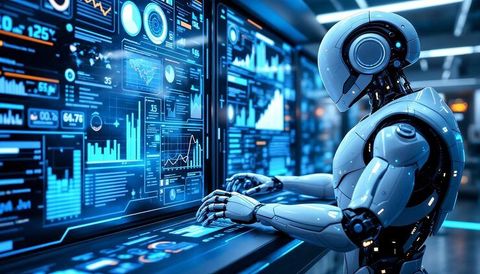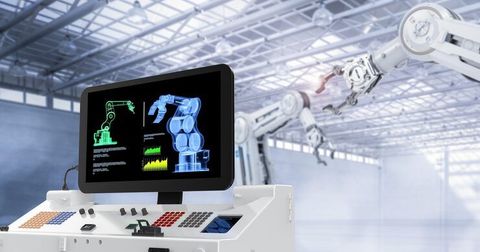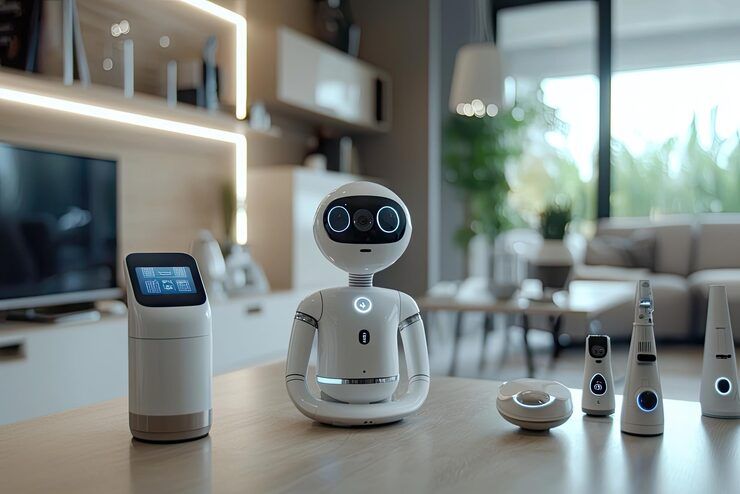
Home assistant robots are machines designed to help people complete household activities, interact with their surroundings, and manage certain everyday tasks. They combine technologies such as artificial intelligence (AI), sensors, cameras, motors, voice recognition, and navigation software to perform specific functions within a home.
These robots range from autonomous vacuum cleaners and floor-mopping devices to interactive companion robots and experimental humanoid machines. Some operate independently after setup, while others require voice commands, smartphone applications, or direct human supervision.
The development of home assistant robots reflects growing interest in smart home automation, domestic robotics, and AI-powered household technology. Their capabilities depend on the hardware, software, connectivity, and environment in which they operate.
How Home Assistant Robots Work
Most household robots follow a cycle of sensing, processing information, making decisions, and performing actions. Sensors collect information about the surroundings, and onboard software uses that information to determine what to do next.
Common technologies include:
Artificial intelligence: Helps interpret instructions, recognize objects, and make decisions within supported tasks.
Computer vision: Uses cameras and image-processing software to identify obstacles, objects, or parts of a room.
LiDAR and other distance sensors: Help certain robots map rooms and navigate around furniture.
Voice recognition: Allows users to issue supported spoken commands.
Robotic actuators: Move wheels, brushes, arms, grippers, or other mechanical components.
Wireless connectivity: Enables communication with compatible smartphones, home networks, and smart home platforms.
Not every robot includes all these technologies. A basic robotic vacuum may rely on relatively simple navigation, whereas an advanced research robot may combine cameras, depth sensors, AI models, and robotic arms.
Why Home Assistant Robots Matter Today
Household responsibilities can involve repetitive physical activities, time-consuming cleaning, and the coordination of multiple devices. Home assistant robots aim to reduce some of this workload by automating tasks that can be performed safely and reliably in a domestic environment.
Their potential relevance extends to families, older adults, people with limited mobility, technology enthusiasts, and households seeking more automated routines. However, the practical benefits vary according to the task, living arrangements, accessibility requirements, and the robot's actual capabilities.
Common Household Applications
Home assistant robots support several categories of domestic activity.
Floor cleaning: Robotic vacuum cleaners collect dust and debris, while some models also mop hard floors.
Home monitoring: Certain mobile robots can move through rooms and transmit camera or sensor information when configured for that purpose.
Interactive companionship: Social robots can respond to voice commands, provide conversation, or support structured activities.
Smart home coordination: Compatible robots can work alongside connected lights, sensors, thermostats, and other household devices.
Assisted living: Selected technologies can provide reminders or help with limited daily routines, although they do not replace professional caregiving.
Household research and experimentation: Programmable robots allow users to explore coding, navigation, sensor integration, and robotics principles.
Benefits and Practical Limitations
Automation may reduce the need for repeated manual effort on suitable tasks. Scheduled cleaning can help maintain floors, while connected systems may simplify the coordination of selected household activities.
Nevertheless, home robots have important limitations. They may struggle with stairs, loose cables, cluttered rooms, reflective surfaces, unfamiliar objects, or uneven flooring. Robots with mechanical arms can face additional difficulties when handling fragile objects or completing tasks that require fine motor control.
A household robot should therefore be evaluated according to its intended function rather than broad claims about intelligence or independence. Devices that operate near children, pets, stairs, or vulnerable individuals require particular attention to safety.
Recent Trends in Domestic Robotics
Developments during 2025 and 2026 have highlighted efforts to create robots that can perform a wider range of household activities. Researchers are exploring how improved AI models, object recognition, and robotic manipulation can help machines understand instructions and interact with everyday objects.
Notable developments include:
August 2025: The Emebo project was announced as an early-stage research effort focused on general-purpose home assistant robots. It highlighted the challenges of building robots that can function in varied household environments.
Late 2026: Some robotics companies have announced plans for limited testing or beta programs involving general-purpose home robots. These announcements should be distinguished from products that are already widely available.
Throughout 2025–2026: Research has continued into vision-language-action models, which connect visual understanding, natural-language instructions, and physical robotic actions.
A key research challenge remains reliability. A robot that can identify a cup or understand a spoken instruction may still struggle to pick up the cup safely, locate the correct shelf, or complete the task without human assistance.
Comparison of Household Robot Types
Robot category | Main function | Typical level of autonomy |
|---|---|---|
Robotic vacuum | Floor cleaning | High for routine cleaning |
Robot mop | Cleaning hard floors | Moderate to high |
Companion robot | Conversation and interaction | Depends on software |
Mobile monitoring robot | Remote room observation | Moderate |
Humanoid home robot | Multiple physical household tasks | Experimental or limited |
Educational robot | Programming and robotics learning | Depends on configuration |
Laws, Policies, and Safety Considerations
Home assistant robots can involve consumer electronics, connected cameras, personal data, wireless communication, and mechanical movement. Their legal requirements depend on where they are manufactured, marketed, and operated.
Consumer Technology Regulations in India
India does not currently have one comprehensive law dedicated exclusively to home assistant robots. Instead, several existing legal frameworks may apply, depending on the device and its capabilities.
Digital Personal Data Protection Act, 2023: Establishes a framework governing the processing of digital personal data, subject to its provisions and implementation timeline.
Digital Personal Data Protection Rules, 2025: Notified in November 2025, these rules establish implementation requirements under the data protection framework, with provisions taking effect in phases.
Consumer Protection Act, 2019: Provides a general framework for consumer rights and product-related protections.
Bureau of Indian Standards requirements: Relevant product safety and electrical standards may apply to particular devices, depending on their classification and applicable regulations.
Information Technology Act, 2000: Certain provisions may be relevant to electronic records, cybersecurity-related matters, and unlawful activities involving digital systems.
Manufacturers and users should assess which requirements apply to a particular robot rather than assuming that every device falls under identical rules.
Privacy and Household Safety
A home assistant robot equipped with cameras, microphones, or cloud-connected AI may collect sensitive information about household activities. Users should understand how this information is processed and retained.
Useful precautions include:
Review camera, microphone, and data-sharing permissions.
Use strong passwords and supported security updates.
Check whether video and voice recordings are stored locally or remotely.
Restrict remote access to trusted household members.
Keep robots away from stairs, hot surfaces, and hazardous materials unless specifically designed for those conditions.
Supervise interactions with young children, pets, and people who may be vulnerable to moving machinery.
In the European Union, the AI Act and applicable product-safety laws may also affect certain AI-enabled devices. The specific obligations depend on the system's function, risk classification, and the rules applicable to its product category.
Tools and Resources for Home Robotics
Understanding the tools behind household robots can help users evaluate capabilities, troubleshoot problems, and explore robotics technology.
Useful Software and Platforms
Home Assistant: An open-source smart home platform that can coordinate compatible devices, sensors, and household automation routines.
ROS 2 (Robot Operating System 2): A robotics software framework used to develop robot applications, navigation, and communication between components.
Gazebo: A robotics simulation environment that supports testing robot behavior and sensor configurations before physical deployment.
OpenCV: A computer vision library used for image processing, object detection workflows, and visual analysis.
Arduino: A hardware and programming platform used in educational robotics and small automation projects.
ESPHome: A platform for configuring compatible microcontrollers and integrating them with smart home systems.
These resources have different purposes. Home Assistant focuses on coordinating connected devices, while ROS 2 and Gazebo are more relevant to robotics development and simulation.
Practical Evaluation Checklist
Before choosing a household robot, consider the following factors:
Intended tasks and demonstrated performance.
Navigation accuracy and obstacle detection.
Battery life and charging requirements.
Compatibility with existing smart home equipment.
Camera, microphone, and personal data controls.
Availability of software and security updates.
Physical safety features and manufacturer guidance.
Maintenance requirements and expected operating lifespan.
A structured checklist can help compare devices according to practical needs rather than relying only on promotional demonstrations.
Frequently Asked Questions
What is a home assistant robot?
A home assistant robot is a machine designed to help with household tasks or provide interactive assistance. Examples include robotic vacuum cleaners, companion robots, and experimental humanoid robots capable of manipulating objects.
Can home assistant robots perform household tasks independently?
Some robots can complete defined tasks independently, such as cleaning mapped floors. More complex activities, including folding clothes, handling fragile objects, or preparing meals, remain difficult for many robots and may require supervision.
Are home assistant robots safe around children and pets?
Safety depends on the robot's design, sensors, moving components, and operating environment. Users should follow manufacturer instructions, supervise interactions where appropriate, and prevent access to hazardous areas.
Do home assistant robots collect personal information?
Some connected robots collect camera footage, voice recordings, room maps, usage information, or other data. The information collected varies by device. Users should review privacy settings, retention policies, and remote-access permissions.
What is the difference between a smart home assistant and a home robot?
A smart home assistant generally controls connected devices or responds to digital commands. A home robot can also interact physically with its environment through movement, sensors, and mechanical components. Some systems combine both capabilities.
Conclusion
Home assistant robots represent an evolving area of domestic robotics that combines artificial intelligence, sensors, navigation, and smart home automation. Current applications include floor cleaning, household monitoring, interactive companionship, and selected forms of assisted living.
Research into general-purpose robots is expanding the range of tasks machines may eventually perform, although reliable physical interaction remains a significant challenge. Privacy, cybersecurity, maintenance, and household safety are equally important considerations.
Understanding a robot's actual capabilities, limitations, and applicable regulations helps households make informed decisions about this technology. As AI and robotic hardware continue to develop, home assistant robots may become more adaptable, but their practical value will depend on reliability, responsible design, and safe integration into everyday life.